


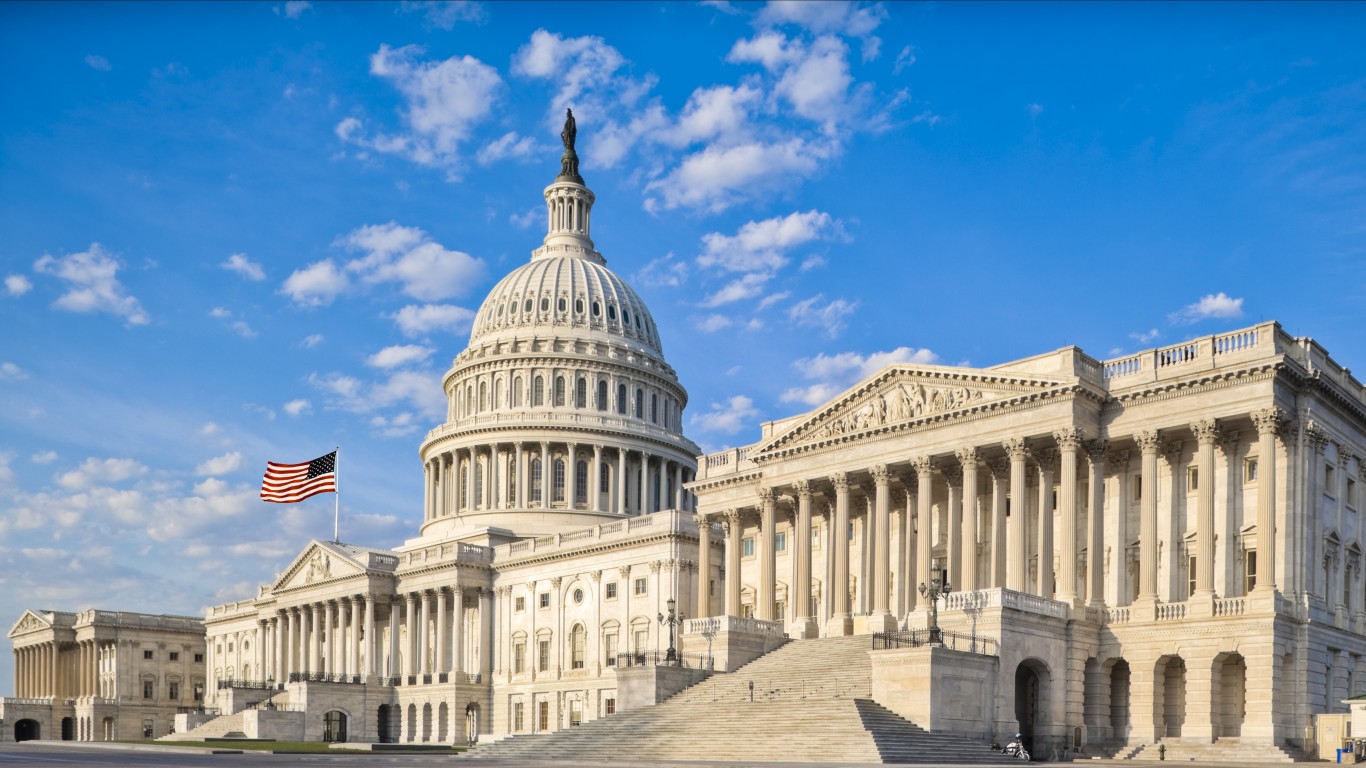
The U.S. government shutdown, now in its third day since starting on October 1, stems from a partisan standoff over federal spending priorities. Republicans pushed for deeper cuts to non-defense programs, while Democrats demanded protections for social services and immigration reforms.
With no resolution in sight, essential services continue, but about 750,000 federal workers face furloughs, delaying economic data releases like jobs reports. History shows these events average around 8 days, though the record-breaking 2018-2019 shutdown dragged on for 35 days, costing the economy billions.
So far, markets have brushed it off: the S&P 500 has risen each trading day since, including five straight gains. But history offers clear signals on what comes next.
Shutdowns Aren’t New: A 50-Year Rundown
Over the past 50 years, the U.S. has seen 21 federal government shutdowns since the first in 1976 under President Gerald Ford. These lapses occur when Congress fails to pass funding bills by the fiscal year’s start on October 1.
Early ones were brief, like the 11-day halt in 1976 over vetoed spending. Tensions peaked in the 1990s under divided government, with two multi-week shutdowns in late 1995 and early 1996 totaling 28 days combined.
The 21st century brought more frequency amid polarization. From 2013 to 2019, shutdowns hit three times, including the 16-day one in 2013 over the Affordable Care Act and the marathon 35-day impasse in 2018-2019 tied to border wall funding. No major closures happened between 1996 and 2013, but recent years show rising risks. Each episode disrupts operations but rarely derails the economy long-term, as back pay and delayed work resume quickly.
History’s Bullish Hint for Stocks Post-Shutdown
Markets often rebound stronger after these disruptions. Data from the 21 shutdowns reveals the S&P 500 averaged nearly 13% returns in the 12 months following each end. Since 1980, the returns are even better, on average the S&P 500 gained 16.95%.
During the events themselves, the index gained 0.3% on average, with gains in most cases. The 2018-2019 shutdown, despite its length, saw the S&P rise 10.3% while active, followed by a 24% surge over the next year.
This pattern holds because shutdowns prove temporary, not structural shocks. Investors focus on earnings and growth, tuning out D.C. drama. With the current shutdown barely started, the S&P’s five-day winning streak — up 0.34% on day one, 0.06% on day two, and more since — mirrors that resilience. It suggests history could repeat, potentially fueling another leg higher if resolved soon.
Why Stocks Keep Climbing Amid the Noise
Even with the shutdown, equities press on, driven by robust corporate momentum. Valuations look stretched — the S&P’s forward P/E ratio hovers near 22, above the long-term average of 17 — but gains persist. Key factors include cooling inflation, expected Federal Reserve rate cuts, and unrelenting artificial demand (AI) hype.
Tech leaders dominate. Nvidia (NASDAQ:NVDA | NVDA Price Prediction), the AI chip powerhouse, has surged 40% in 2025, pushing its market cap past $4.5 trillion. It’s locked in major deals, like a $100 billion investment in OpenAI announced in September to build 10 gigawatts of AI data centers packed with millions of its GPUs. Nvidia also partnered with Intel (NASDAQ:INTC) on custom AI infrastructure, investing $5 billion in Intel stock to integrate NVLink tech. These moves solidify its grip on AI hardware, drawing billions in orders from cloud giants.
Broader tailwinds also help: strong consumer spending, despite soft September job adds, and corporate buybacks. Energy and financials join the rally, betting on steady growth. The Dow Jones Industrial Average and Nasdaq indexes hit records too, showing broad participation.
The Hidden Risks Lurking in the Rally
Bullish vibes aside, potential pitfalls are multiplying. Overextended valuations leave little margin for error; a prolonged shutdown could spike uncertainty, delaying hiring and capital expenditures. If it stretches past two weeks — and prediction markets say the adds of its happening are 40% — it might withhold key data, making Fed decisions hazier and rattling sentiment.
AI’s promise also remains unproven. Hyped investments — hundreds of billions of dollars have poured into data centers and chips — have yielded scant returns so far. Although Nvidia’s deals dazzle, monetizing superintelligence is years off, with regulatory scrutiny rising on energy use and market dominance.
Broader worries include tariff threats from recent policy shifts and softening private payrolls, hinting at economic wobbles. A debt ceiling fight could follow, amplifying volatility.
Key Takeaway
Irrational exuberance can endure far longer than expected, and forces like AI innovation and rate relief propel stocks upward. The market could climb much higher in the near term, shrugging off the shutdown as just another blip.
Yet in this frothy setup, safeguarding against downside risk makes sense — history favors the bulls, but surprises happen.










 Top Gaining Stocks
 Top Losing Stocks