



On March 10, 2000, the Nasdaq-100 traded at 5,048.62. On October 9, 2002, it had dropped to 1,114, down 78% from its peak. If a decline occurs anywhere near that level, it will be due to several factors combined. The most likely outcome is a huge disappointment in the future of artificial intelligence (AI). Another would be raging inflation caused by tariffs. (This leaves a major war out of the equation.) A drop of the same magnitude would take the Nasdaq down over 19,000 points.
Most of the drop in the market from 2000 to 2002 was due to major overvaluation of stocks, which were part of the new internet wave. Those that dragged the market down for the most part had almost no revenue. They often raised money by going public. They ran out of money. A falling market made it impossible for most to raise any more money. Investors in those stocks were wiped out.
The panic was so severe that it even dragged down stocks with excellent business prospects, which are among the most valuable tech stocks today. Amazon.com Inc. (NASDAQ: AMZN | AMZN Price Prediction) shares fell as much as 90%. Microsoft Corp. (NASDAQ: MSFT) was a more well-established company. Its stock fell nearly 60%. Good earnings at strong tech companies did not save their investors.
Can It Happen Again?

The valuation of some of the hardest hit companies in 2000 to 2002 bears a resemblance to the valuation of AI-related companies today. OpenAI was valued at $29 billion as of May 2023. It is worth $500 billion today. Anthropic was worth $18 billion in early 2024. Its recent valuation was $183 billion. Nvidia Corp. (NASDAQ: NVDA) traded for $21 in March 2023. Today, it trades at $188 per share.
There are theories about AI valuations that are not in its favor. Among them is the fact that advances in technology will start to slow down. Another concern is that a shortage of electricity for AI data centers will hinder its growth. The most likely scenario is that AI products, which are mostly given away for free today, eventually become something that people will pay for. Revenue forecasts could be entirely wrong. Alternatively, AI could become so effective that it puts millions of Americans out of work.
Leaving aside direct stock valuation, people often overlook the fact that other factors also hurt the economy during this period. Japan went into recession, and some economists feared that it would spread. The Federal Reserve raised rates several times starting in 2002 due to concerns about inflation. Today, following President Trump’s aggressive moves, it is more likely that rates will fall, unless inflation arises.
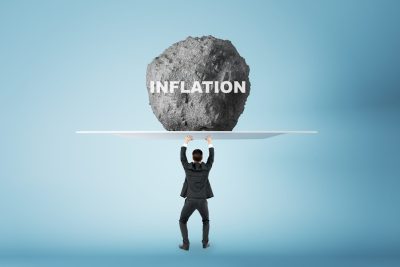
Tariffs will be the inflation trigger. It depends on their levels, duration, the countries involved, and the goods and services they affect. It also has to do with retaliation. The largest risk today is likely from China, Canada, and Mexico, America’s three largest trading partners. U.S. negotiations with China have made no significant progress. However, the central government in China can prop up its economy during a trade war in a way the United States cannot. Canada’s retaliation could center around timber and autos. Mexico’s might center on cars and agriculture.
Most investors believe there is no chance for a market reset. What they forget is that it has happened in the past.
Is a Big-Time Fall Sell-Off Coming? Play Defense With These 7 Proven Moves









 Top Gaining Stocks
 Top Losing Stocks