


Intel (Nasdaq: INTC | INTC Price Prediction) reported Q3 earnings and the stock is up 8% after-hours. While most articles will focus on the company posting adjusted EPS of $.23 (which soundly beat Wall Street estimates of a $.01 profit), the reality is this quarter was filled with fascinating storylines. On Intel’s conference call, CEO Lip-Bu Tan briefly mentioned the company’s new division focused on competing with Broadcom (Nasdaq: AVGO) for the red-hot custom chip business. There was also talk of how the company’s NVIDIA (Nasdaq: NVDA) partnership can accelerate revenue in the years ahead, and much more.
Let’s dive into the three biggest storylines from Intel’s earnings tonight. We hosted a live blog that posted more than two dozen updates, but these are the three most important reasons shares are up 8% tonight.
1.) A New Intel Division Takes Aim at Broadcom
During Lip-Bu Tan’s prepared remarks, he announced a brand-new effort targeting a soon to be very large market.
“This includes hiring promoting top architecture talent as well as reimagining our core road map to ensure it is the best-in-class features. To accelerate this effort, we recently created the Central Engineering Group, which will unify our horizontal engineering functions to drive leverage across foundational IP development, test chip design, EDA tools and design platforms.
This new structure will eliminate duplications, improve time to decision-making and enhance coherence across all product development. In addition and just as important, the group will spearhead the build-out of our new ASIC and design service business to deliver purpose-built silicon for a broad range of external customers. This will not only extend the reach of our core x86 IP, but also leverage our design strength to deliver an array of solutions from general purpose to fixed function computing.”
We’ve bolded the relevant section in this quote. The news isn’t new as Intel announced the creation of its Central Engineering Group in a September 8th blog post; however, this is the first time its management has been able to talk about the efforts on a conference call.
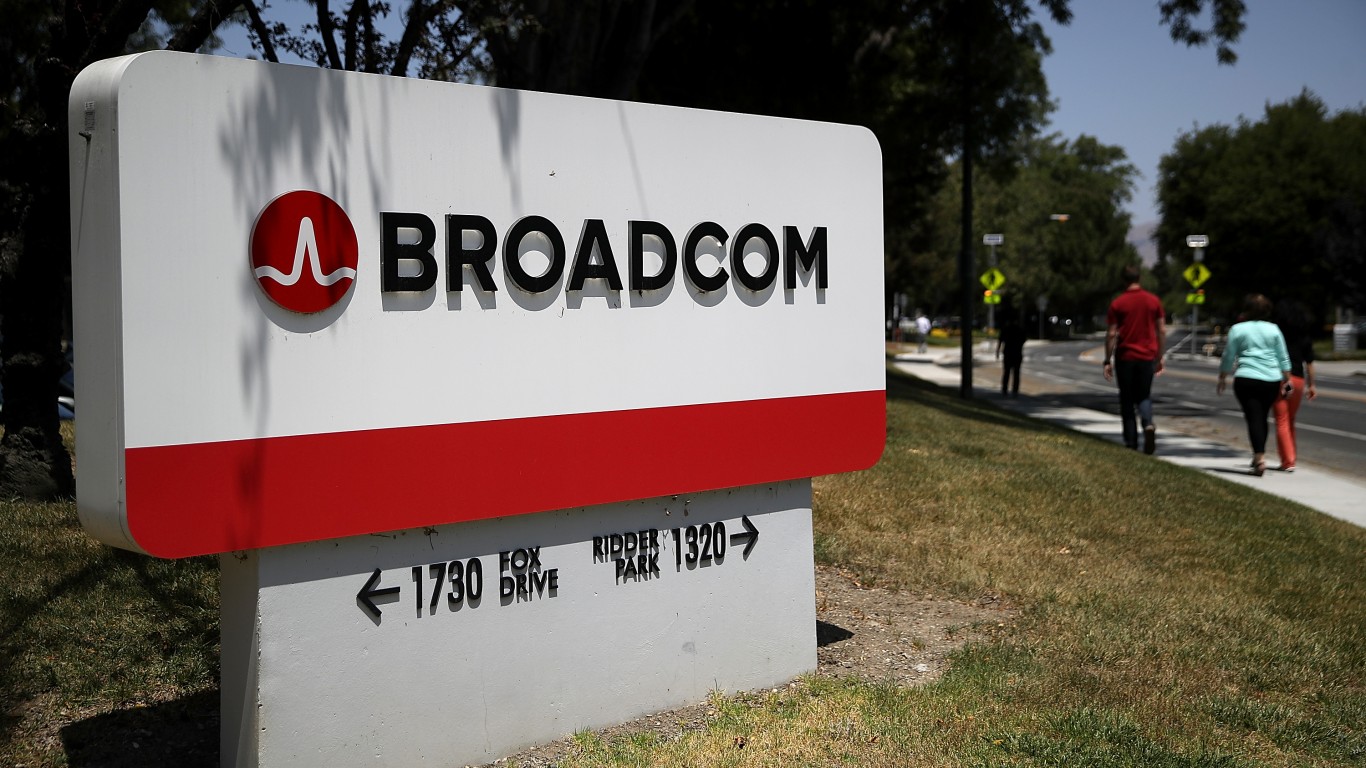
The custom chip business is absolutely booming. Broadcom is now worth more than $1.6 trillion thanks largely to the success of its custom business. Anthropic officially announced tonight that it has secured a contract with Alphabet (Nasdaq: GOOGL) to provide up to one million TPUs. Those TPUs are designed by Broadcom, who will benefit handsomely from this deal.
It’s a long road to becoming a custom chip powerhouse. Marvell (Nasdaq: MRVL) has tried battling Broadcom in this market, but investors have largely abandoned the stock this year as the impacts from its Trainium chip designs for Amazon (Nasdaq: AMZN) underwhelmed. Generally, most custom chips take several generations of work before they’re considered successful.
So, don’t expect this business line to become huge for Intel overnight, but it is a large greenfield market chasing a massive Total Addressable Market that could soon pass $100 billion annually.
2.) Partnerships with NVIDIA & Demand Exceeding Supply into 2026
Intel’s CEO Lip-Bu Tan offered a fairly lengthy discussion on the company’s partnership with NVIDIA. Here’s what he had to say:
“Let’s start with our core x86 franchise, which continues to play a critical role in the age of AI. AI is clearly accelerating demand for new compute architectures, hardware models and algorithms. At the same time is fueling renewed growth of traditional compute as the underwriting data and the resulting insights continue to rely heavily on our existing products from cloud to edge.
AI is driving near-term upside to our business, and it is a strong foundation for sustainable long-term growth as we execute. In addition, with unmatched compatibility, security and flexibility by virtue of being the largest installed base of general-purpose compute x86 is well positioned to power the hybrid compute environment that AI workloads demand, particularly for inference edge workloads and Agentic system.
It is a great starting point from which to rebuild our market position to revitalizing and rejuvenating the x86 and positioning for the new era of computing with great products and partnerships.
Our collaboration with NVIDIA is a prime example. We are joining forces to create a new class of products and experience, spanning multiple generation that accelerate the adoption of AI for the hyperscale, enterprise and consumer markets. By connecting our architectures to NVIDIA NV link we combined Intel CPU and x86 leadership with NVIDIA unmatched AI and accelerated computing strength, unlocking innovative solutions that will deliver better customer experience and provide a big hit for Intel in the leading AI platform of tomorrow.
We need to continue to build on this momentum and capitalize on our position by improving our engineering and design execution.”
It was known that Intel secured a $5 billion investment from NVIDIA last quarter before earnings tonight.
Yet, Intel dropped another quote in its earnings release that got investors excited. Specifically, Intel’s CFO said:
“Our stronger than expected Q3 results mark our fourth consecutive quarter of improved execution and reflect the underlying strength of our core markets. Current demand is outpacing supply, a trend we expect will persist into 2026.”
The key point here: As Lip Bu-Tan’s quote above shows, there is the potential for very significant revenue growth from Intel’s partnership with NVIDIA over the long run. However, what tonight showed is that even before real revenue is driven by this partnership, near-term demand for Intel’s data center and PC chips is much stronger than expected. This provides a ‘bridge’ into catalysts that should develop in 2027, like more revenue from Intel’s NVIDIA partnership and yields for their next-generation 14A node hitting ‘industry acceptable levels’ that could provide significant growth in their foundry business.
3.) Intel’s Balance Sheet Continues to Improve
Finally, as we noted in the last section, the real ramp in Intel’s business looks most likely to happen in 2027.
Until then, its a battle for the company to secure enough capital. On tonight’s call, Intel also announced they’ll be increasing capital expenditures from $17 billion this year to $27 billion next year. That’s a huge outlay, but it’s also required if the company is going to compete in the brutally capital-intensive foundry business at scale.
Here’s what Lip-Bu Tan had to say about the company’s balance sheet on tonight’s call:
“To that end, we executed on deals to secure roughly $20 billion of cash, including 3 important strategic partnerships. We exited Q3 with $30.9 billion of cash and short-term investments. In Q3, we received $5.7 billion from the U.S. government, $2 billion from SoftBank Group, $4.3 billion from the Altera closure and $900 million from the Mobileye stake sale. We expect NVIDIA’s $5 billion investment to close by the end of Q4. Finally, we repaid $4.3 billion of debt in the quarter and we will continue prioritizing deleveraging by paying maturities as they come due in 2026.”
The bottom line: there were times in the past 18 months that the most likely outcome for Intel was getting turned into a scrap sale where its pieces were broken up. Yet, the moves from Lip-Bu Tan in the past quarter go a long way to getting enough capital for the company to execute on its plans to see significant growth in 2027 and beyond.
The key word there, of course, is ‘execute.’ The future for the company looks brighter than it has in a long time, now they need to just deliver.













 Top Gaining Stocks
 Top Losing Stocks