


For as long as many of us can remember, the very best method for understanding how much you can or should spend during retirement has been guided by the 4% rule. Introduced by William Bengen in 1994, the idea was to try to make retirement spending as predictable as possible.
Unfortunately, the market looks very different today than it did in 1994, with inflation, interest rates, and life expectancy, the math has undoubtedly shifted around retirement rules. What may have been true once, investors are more hesitant to sell off shares to generate a 4% income draw every year, as it feels more and more risky to do so.
It’s for this reason that retirees are starting to look more favorably at dividend ETFs, which allow them to collect a steady cash flow without having to constantly monitor daily prices in their portfolio.
Why Dividend Income Is Replacing the 4% Rule
Under most circumstances, the 4% rule traditionally assumes that you will gradually draw from your nest egg by selling shares, and this is how you have whatever amount of money you need to live, travel, and eat in a given year.
This isn’t to say that the 4% rule hasn’t historically worked, after all, it’s popular for a reason, but a lot of people who follow it do so by textbook rules. The problem is that reality isn’t always as simple as just pulling 4% every year, as you have to navigate markets falling, expenses rising, and anytime you are withdrawing during a market downturn, it can have a lasting negative impact on long-term returns.
Now, let’s focus on dividend income, which completely changes the equation. Instead of having to depend on selling shares of a stock you own, retirees or soon-to-be retirees can live off the cash flow their dividend-focused portfolio is producing, which allows the principal to stay intact.
The Math Example
Try to think of it like this: if you have a $1 million investment in the SPDR S&P 500 ETF (NYSE:SPY | SPY Price Prediction), which has a current yield of 1.09%, you’d only earn just over $10,000 in dividends during this year.
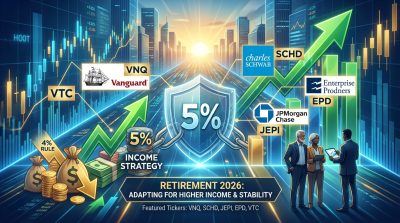
Now, think about a portfolio that invests in the Schwab U.S. Dividend Equity ETF (NYSE:SCHD), combined with the JPMorgan Equity Premium Income ETF (NYSE:JEPI), and lastly, the Amplify CWP Enhanced Dividend Income ETF (NYSE:DIVO). Combined, these three ETFs in a portfolio could generate upwards of $40,000 to $60,000 in a given year using the same $1 million investment.
The difference in the yields between these four ETFs means an opportunity to delay social security and reduce the amount of withdrawals being taken out, all while living more comfortably.
Why Dividend ETFs Are Leading This 4% to Passive Income Shift
The big takeaway here is that dividend ETFs offer the best of many worlds, including being more diversified, transparent, and generating consistent income. Instead of trying to bundle together dozens of stocks into a portfolio, ETFs have done the work for you by generating a fund full of hundreds of dividend-paying companies.
The example mentioned above, like the Schwab U.S. Dividend Equity ETF, focuses heavily on the total return of the Dow Jones U.S. Dividend 100 index. It includes big names such as Cisco, AbbVie, Coca-Cola, Lockheed Martin, Chevron, and many others that have a history of generating passive income for investors.
The same goes for the JP Morgan Equity Premium Income ETF, which uses covered calls to boost income, and it’s become incredibly popular as a result. It’s only returned 5.83% in growth this year, but it has returned $4.72 for every share owned, which means fantastic monthly dividend payouts for shareholders.
The Power of Cash Flow in Retirement
I know that I have always preferred investments that produce regular income, as it makes the ups and downs of the market feel less stressful. Every dividend payment that I receive makes me feel as if the money I have worked so hard to invest is working for me.
This is a mindset shift that goes from accumulation to income generation, so you can join myself and others who are not worried about daily market swings. Instead, you get to focus on how many dollars your portfolio produces, and this turns into a powerful mindset shift.
On top of everything else, dividend income buys something rare in retirement, which is freedom, including the freedom to travel, start a new hobby, or just feel like you have more time to enjoy life.
The 4% Rule Takeaway
Look, I wouldn’t go as far as to say that the 4% rule is dead. I don’t think that’s true, but I do think it’s being rewritten. Index funds still have a place at the table, but relying on them for selling shares during market downturns creates unnecessary risk. Instead, the new recommendation is to blend dividend ETFs and dividend growth stocks so investors can build portfolios that offer income, stability, and protection against inflation, which means far more peace of mind and an opportunity to enjoy more during retirement.














 Top Gaining Stocks
 Top Losing Stocks