


Darden Restaurants (NYSE: DRI | DRI Price Prediction) and Yum! Brands (NYSE: YUM) just reported earnings showing two fundamentally different ways to run a restaurant business. Darden missed estimates but grew earnings 26% by operating its own stores. Yum beat estimates with a 34% operating margin by franchising nearly everything.
Darden Owns the Kitchens. Yum Collects the Checks.
Darden reported Q1 revenue of $3.04 billion, missing the $3.07 billion estimate, while EPS of $1.97 fell short of the $2.02 consensus. The company still posted 4.7% same-restaurant sales growth and 24.5% net income growth year over year. Olive Garden generated $1.30 billion in revenue during the quarter, and LongHorn added $776 million. CEO Rick Cardenas said the company had “a strong start to the fiscal year with same-restaurant sales and earnings growth that exceeded our expectations.”
Darden runs company-owned restaurants, meaning higher revenue per location but also higher costs. The Q1 operating margin came in at 11.1%. The company is bringing 65 new restaurants online this year after closing the Chuy’s Tex-Mex deal. Capital spending will hit $700 million to $750 million to support expansion.
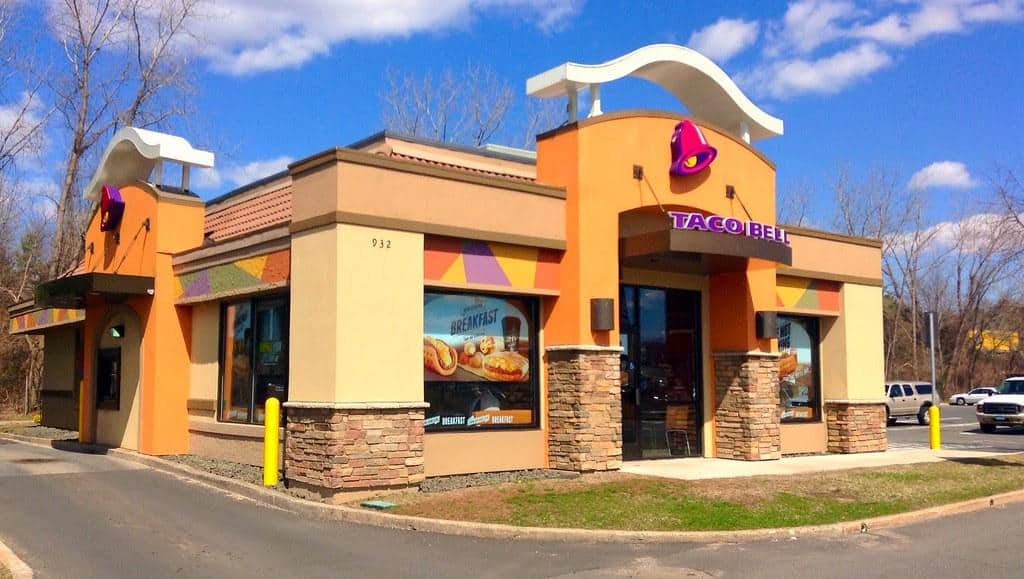
Yum reported Q3 revenue of $1.98 billion, beating the $1.97 billion estimate, and EPS of $1.58 topped the $1.48 consensus. The company operates an asset-light franchise model across 62,000 restaurants in 155 countries. That structure delivered a 33.7% operating margin in Q3, roughly three times what Darden achieved. Taco Bell drove 9% system sales growth in the U.S., and KFC expanded units by 6%. Pizza Hut declined 1%, and management is exploring strategic options for that brand.
New CEO Chris Turner laid out his priorities: “staying relevant with the next generation of consumers, leveraging our global scale to strengthen franchisees’ store-level economics, and expanding Byte across more restaurants worldwide.” Yum hit a $10 billion digital sales milestone during the quarter.
| Business Driver | Darden | Yum |
| Operating Margin | 11.1% | 33.7% |
| Growth Strategy | Acquire brands (Chuy’s) | Review divestiture (Pizza Hut) |
| Revenue Model | Company-owned stores | Franchise royalties |
| Digital Focus | Limited disclosure | $10B digital sales |
One Bets on Real Estate. The Other Bets on Royalties.
Darden’s strategy requires owning or leasing properties, hiring staff, and managing food costs. That generates $12.36 billion in trailing revenue but produces an 8.9% net margin. Yum generates $8.06 billion in revenue with a 17.9% net margin because it collects franchise fees without bearing most operational risk. Yum’s return on assets is 24%, compared to Darden’s 7.5%.
The trade-off shows up in valuation. Darden trades at 18.2 times trailing earnings. Yum trades at 28.9 times. Analysts see more upside in Darden, setting a $221.50 target price that implies 30% gains. Yum’s target of $165.56 suggests 12% upside. Darden also pays a 3.33% dividend yield, nearly double Yum’s 1.91%.
What Happens When the Consumer Weakens
Darden’s model looks vulnerable if labor costs spike or traffic slows. The company owns the downside when fewer customers walk through the door. Yum’s franchise structure insulates it from store-level volatility but exposes it to franchisee health. If operators struggle, royalty streams dry up.
Pizza Hut’s 1% sales decline is a warning sign. Management’s decision to explore strategic options suggests the brand may not fit Yum’s portfolio long term. Darden is doubling down on ownership by integrating Chuy’s and opening 65 new locations.
Two Different Risk-Return Profiles
Darden presents a lower valuation entry point with higher dividend income. The stock trades at a 37% discount to Yum on a P/E basis, and analysts see significantly more upside. The recent earnings miss contrasts with 26% net income growth and strong same-store sales.
Yum presents lower operational risk through its franchise model, which produces superior margins and cash flow. The new CEO brings fresh priorities, and the digital milestone reflects adaptation to changing consumer ordering habits. The premium valuation and Pizza Hut’s struggles represent potential headwinds.






 Top Gaining Stocks
 Top Losing Stocks