


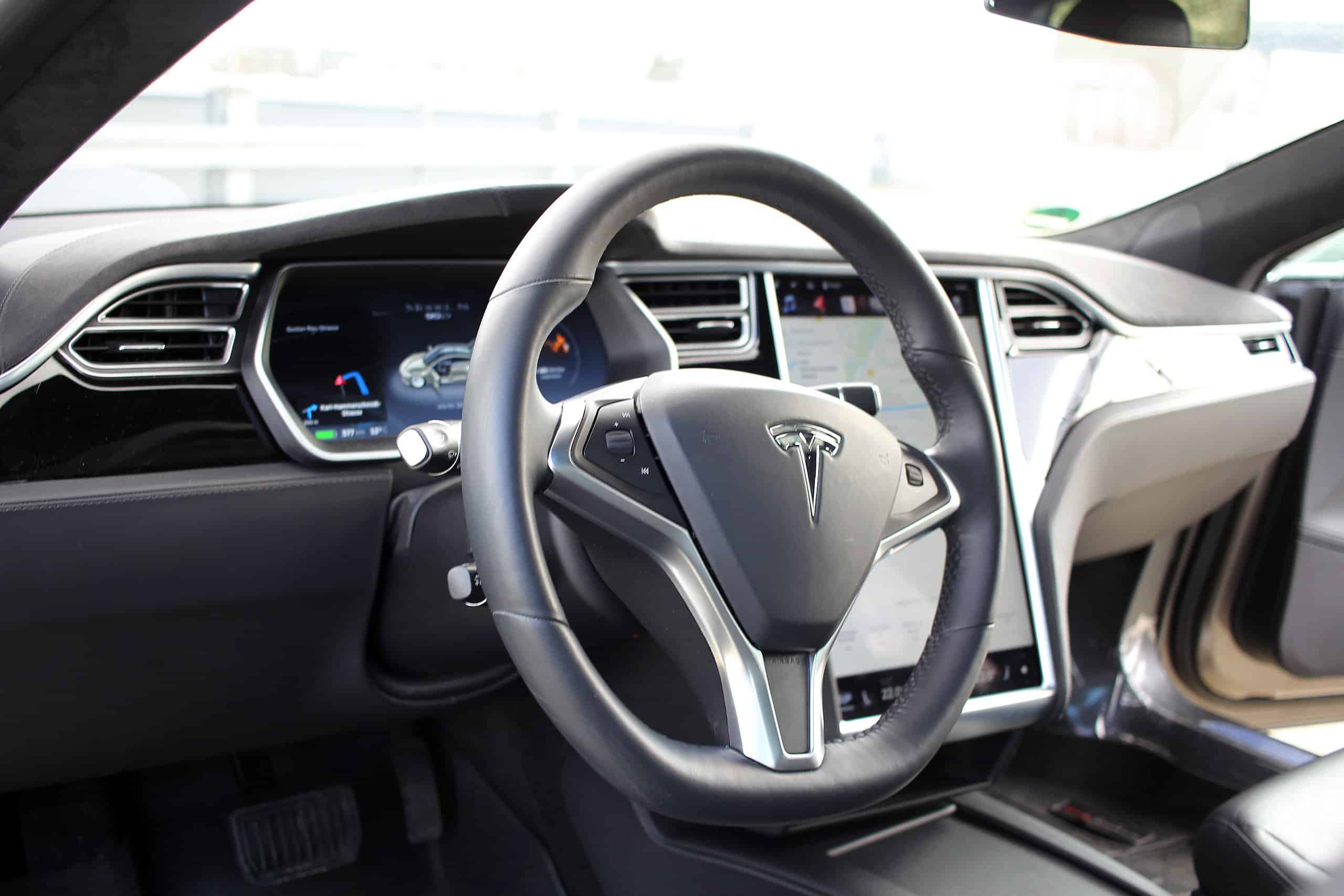
EV maker Tesla (NASDAQ:TSLA | NVDA Price Prediction) is among the most interesting growth stocks in the market to look at. It’s kind of a love-it or hate-it company, with bulls and bears seemingly entrenched in their views on the Elon Musk-led firm.
I typically take a more bearish stance on Tesla, and my view is generally pessimistic around this company and its current valuation relative to where market participants think revenue and earnings will go over time. That said, I thought it would be interesting to take the other side of my own perspective and ask the question: what would need to go right to see Tesla double from here?
I don’t have anything riding on this taking place, but Elon Musk and others in the company (never mind investors) will undoubtedly benefit in a massive way if Tesla is able to hit the new astronomical targets set for the company by Tesla’s board. A $1 trillion compensation package seems insane, but Elon Musk has hit incredible targets in the past. Let’s analyze what may need to happen for Tesla to triple from here, and how likely such a situation may be.
Growth in Tesla’s Core Business Will Need to Accelerate
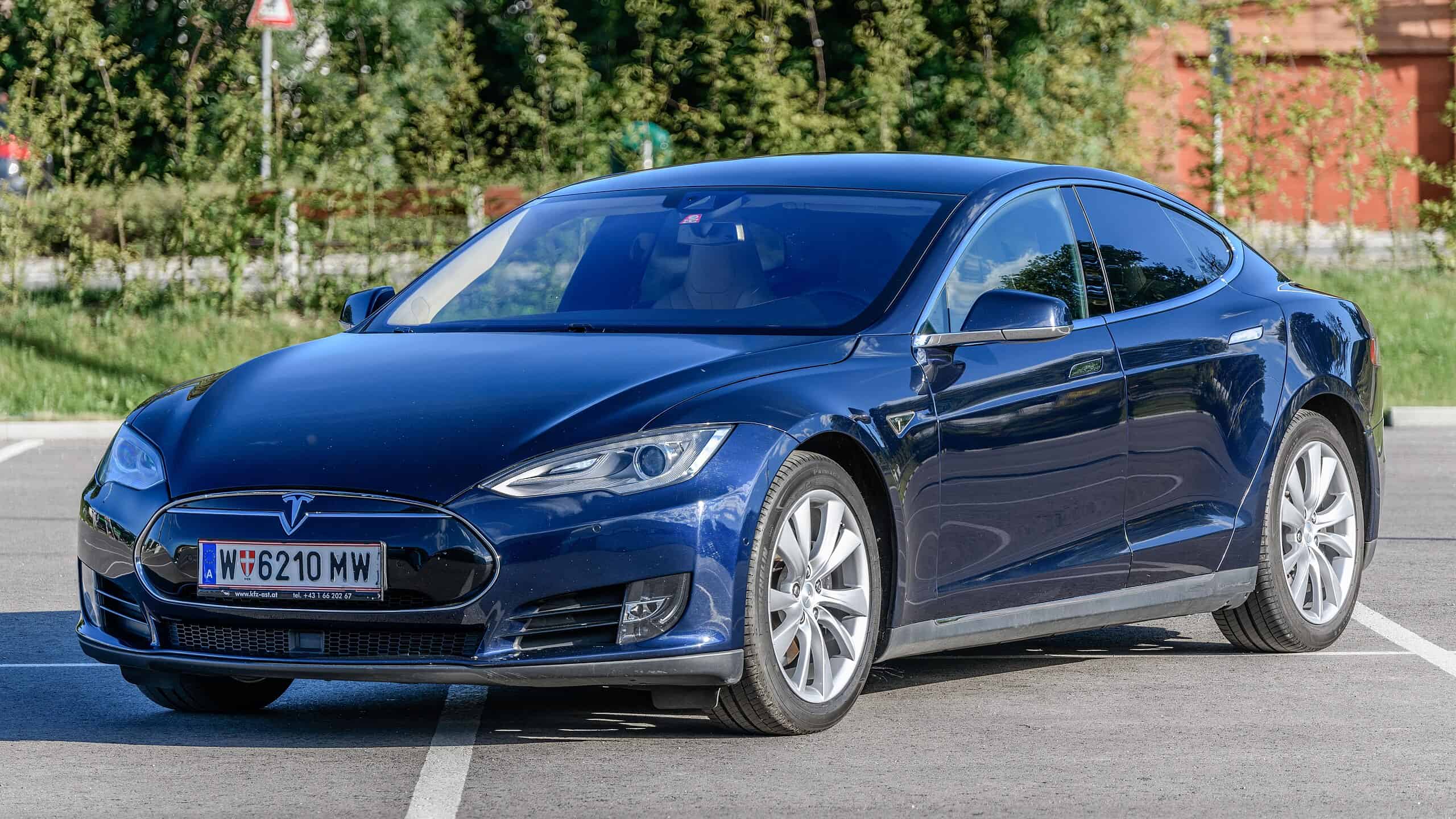
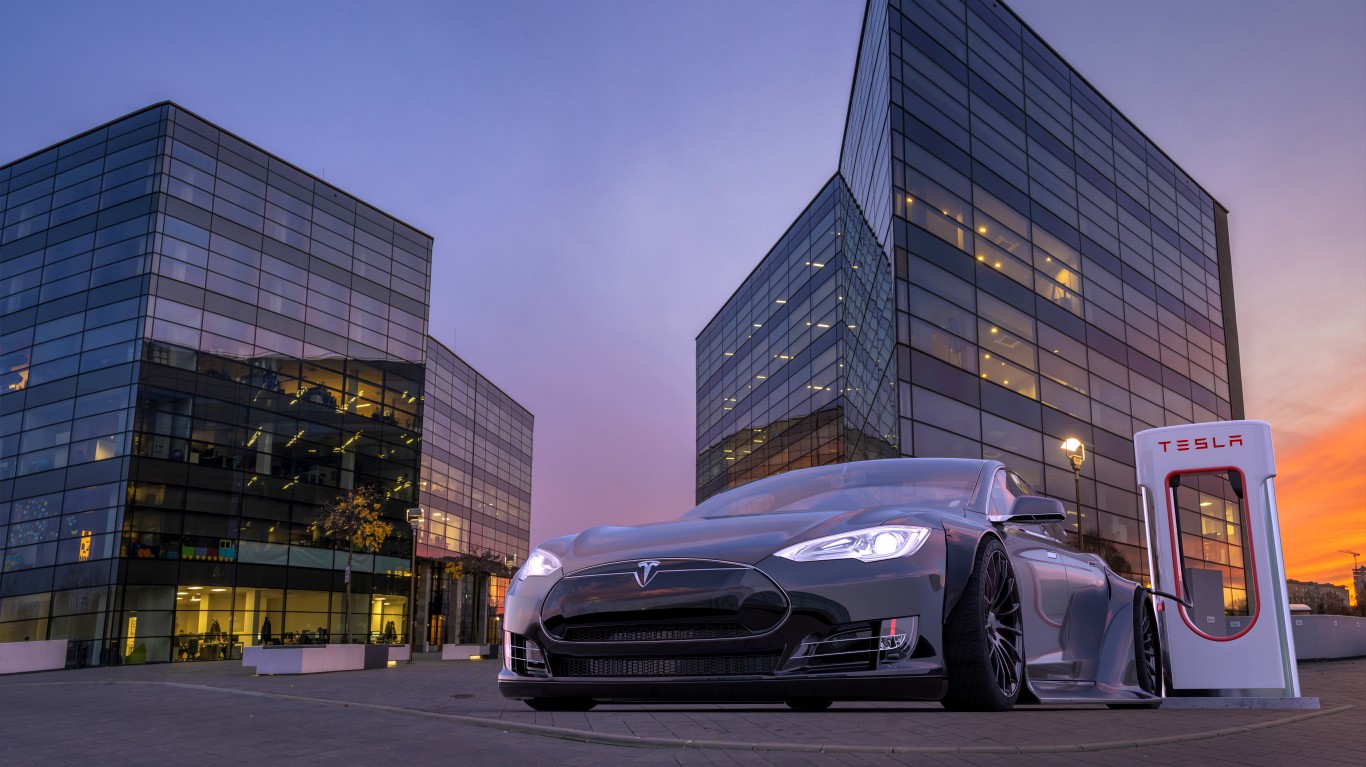
Telsa vehicle in a parking lot
No matter one’s perspective on whether Tesla is a car company, or an AI or robotics or autonomous driving company (take your pick), the reality is that EV sales still make up the lion’s share of Tesla’s revenue. And selling tax credits tied to this core business is what’s been driving the company’s profitability of late. Take Tesla’s electric vehicles out of the picture, and you don’t have much of a company to look at.
From a fundamentals perspective, I think most of the discussion around Tesla doubling from here has to revolve around the company’s core fundamentals improving. That means more EVs sold, at higher margins, to a broader consumer base.
With interest rates where they are right now, lower interest rates (and therefore lower auto loan rates) would be helpful. And while some input costs have come down from their sky-high levels during the pandemic, some sort of shift in insurance rates would be helpful as well.
But ultimately, if Tesla is able to see its earnings power accelerate driven by stronger Tesla sales, this is a stock that could meaningfully rise from here. Investors will want to see greater efficiency (leading to higher margins), surging top-line sales numbers, and newer more affordable vehicles to be able to justify a doubling of Tesla’s current valuation. All of these things are possible, and bulls might say likely – considering Musk’s recent pay package.
Meaningful Monetization of Robotaxis
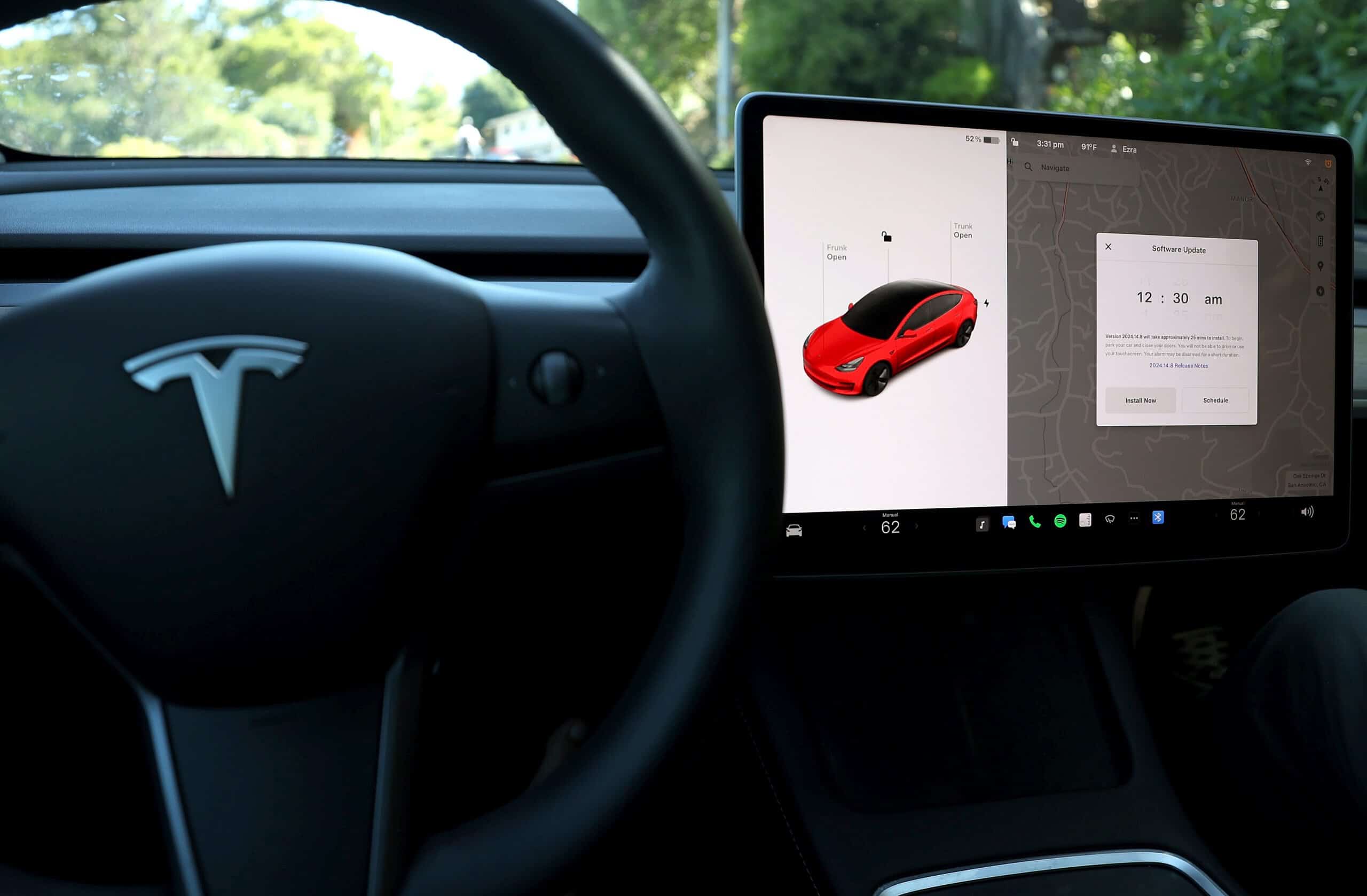
Tesla interior
Tesla’s so-called “robotaxi” fleet is getting off the ground, currently operating in a couple local markets around the country. As this business scales, investors will want to see high-margin revenue produced at an accelerating rate, to help offset what could be slower growth in the company’s core EV business.
If Tesla can show that its autonomous driving capabilities are better than its peers, and Tesla is able to take market share from Waymo and other competitors, it could be game on for this stock. That’s what bulls are hopeful for, at least.
I’ll be curious to see how this rollout ultimately progresses, and how many Tesla owners with “Full Self-Driving” (or FSD) decide to rent their vehicles out as robotaxis. My base case is that Tesla will likely utilize its production capacity to the fullest (to lower costs), with any vehicles sitting on the lot pushed into the robotaxi business. Being able to offload more vehicles to an arms-length subsidiary that operates its robotaxi network could be beneficial, and could meaningfully boost the company’s overall fundamentals.
The more this business is monetized, the more excited investors will get. It’s still early innings, so this will be a key growth driver to keep an eye on.
Other Core Businesses Will Need to Pick Up the Pace
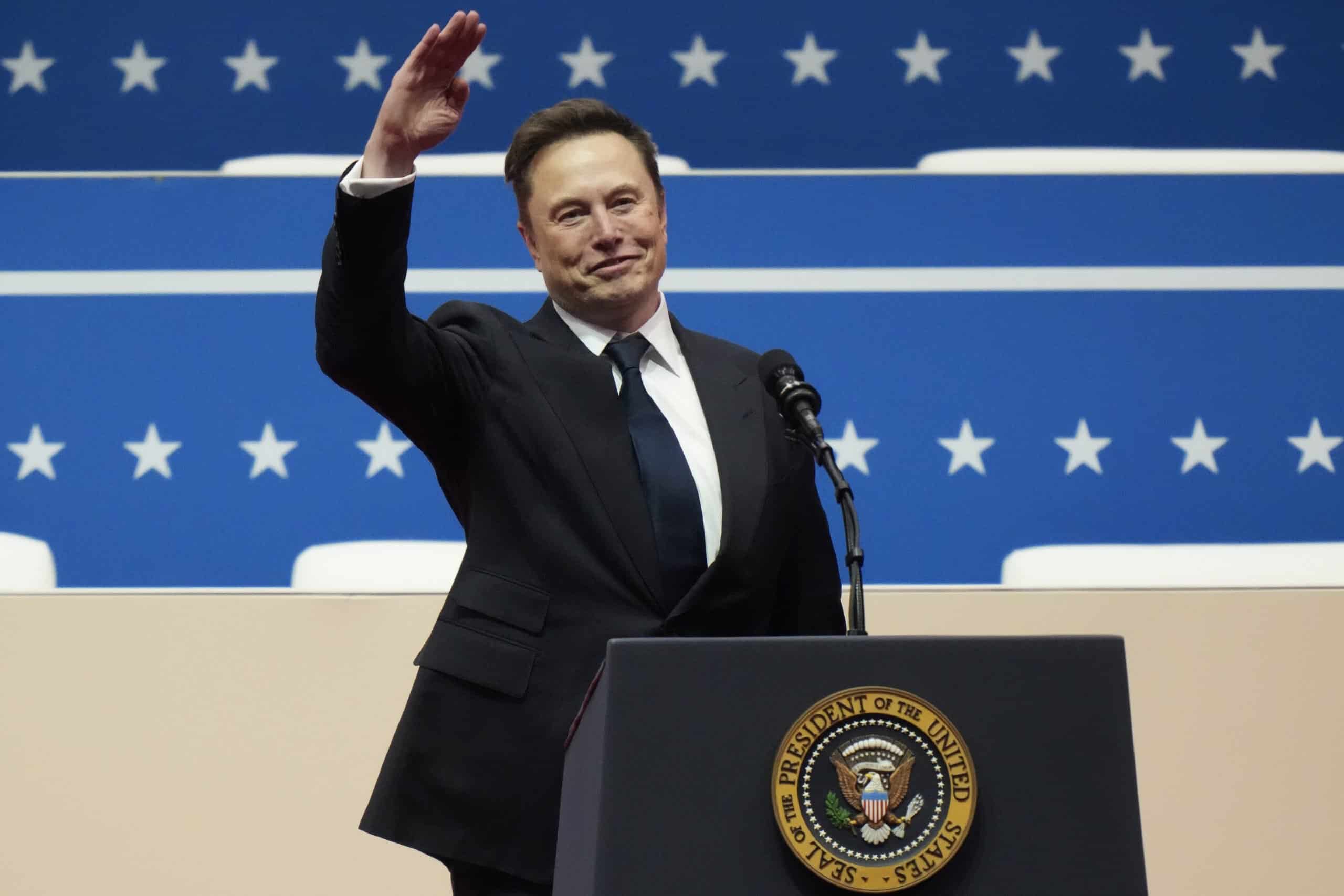
Tesla CEO Elon Musk
Whether investors are talking about Tesla’s energy business, its Optimus robots, or other AI initiatives, the reality is that in order for Tesla to double its market capitalization, these businesses will need to start operating as their own independent profit-generators.
Tesla has seen strong momentum in its core energy business, with storage deployments up more than 80% year-over-year, according to Tesla’s recent results. Some analysts have expected this business to double its revenue next year, aided by AI data center demand for grid-scale storage. This will certainly be a key growth factor investors are watching. While Tesla’s energy business is still a small slice of its overall pie, it could be a meaningful growth driver over time.
Any acceleration in the company’s AI and robotics work (Optimus) could be a big sentiment driver at least in the short-term. I think Optimus may take longer to become a “real” business, and there are other established players that have already put forward some advanced options. But if the U.S. wants to have a solid foothold in this market, I wouldn’t be surprised to see government support for this business, as robotics continues to revolutionize manufacturing efficiency and impacts the on-shoring of jobs the Trump administration clearly wants to bolster.








 Top Gaining Stocks
 Top Losing Stocks