


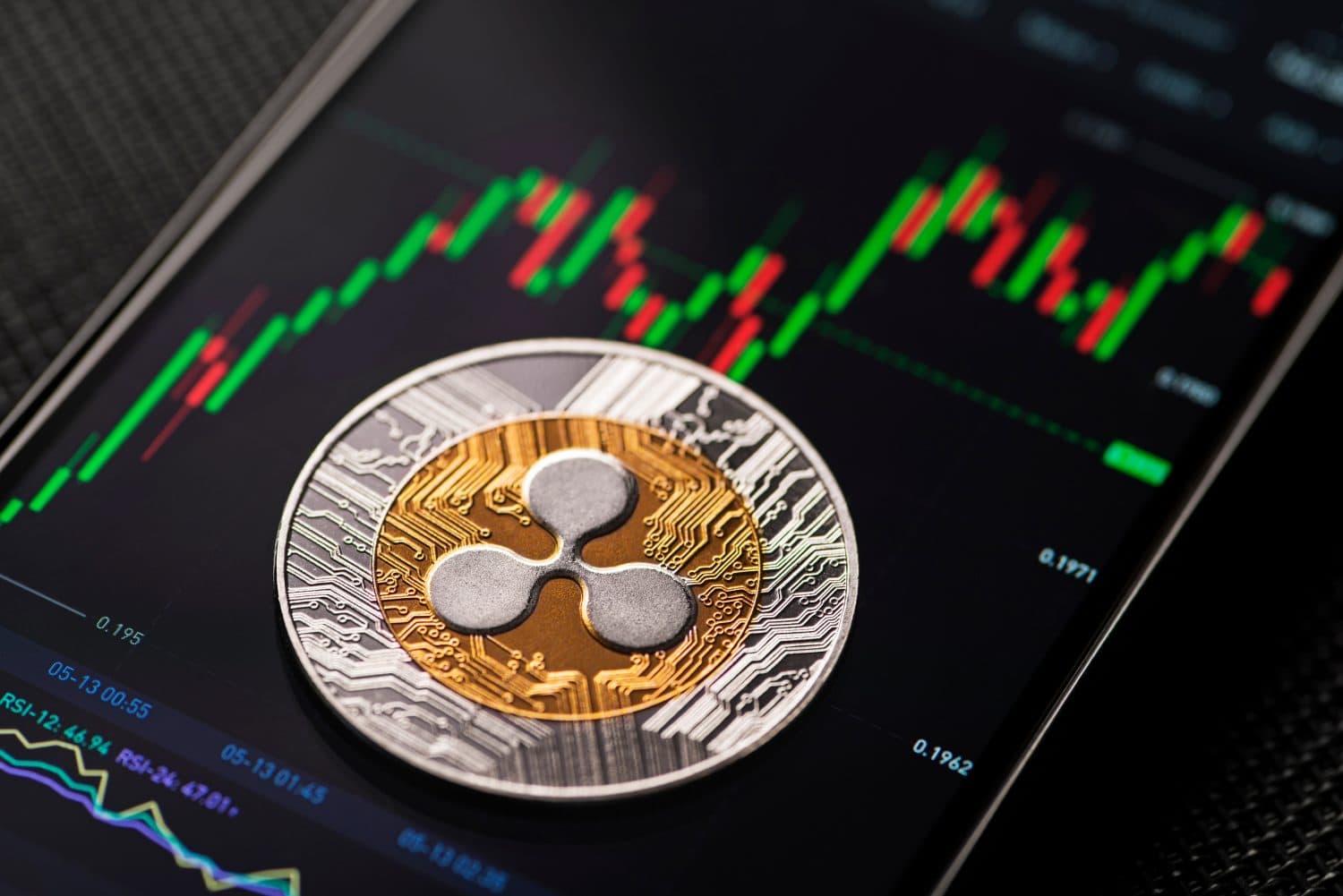
XRP (CRYPTO: XRP) is testing a critical threshold—the $2 support—and this time, the structure underneath looks completely different. During past selloffs, extreme fear drove retail panic-selling and XRP collapsed below key support levels. Now, extreme fear readings have hit October 2025 lows—when the market saw heavy liquidations—but the XRP $2 support refuses to break. The reason the $2 support holds is that institutional demand replaced retail sellers.
Exchange balances dropped 45% in 60 days as institutions moved 1.35 billion XRP into custody. XRP ETF inflows also hit $1 billion in four weeks—the fastest milestone since Ethereum ETFs launched. Understanding the structure behind this support—who’s buying, how supply is moving, what institutions are doing—matters more than the fear levels themselves.
So, what’s happening at the critical $2 support? Is this a buy opportunity before a breakout, or a bull trap before the real crash?
Why XRP $2 Support Differs This Time: Institutions Replace Panic Sellers
XRP’s defense of the $2 support reflects more than trader psychology. It marks a shift in who is buying and how supply gets absorbed. During recent selloffs, institutional buyers intervened, preventing the price from slipping lower while XRP exchange balances continued to decline. Institutions are buying and holding, not panicking and dumping. The critical $2 support now functions as a low entry point for institutional investors and XRP whales.
Technically, XRP shows growing pressure beneath the surface. Intraday charts tightened into a bullish wedge, suggesting demand is building even as price remains contained. A move above $2.10 opens the path toward higher resistance zones. If XRP manages to hold and close above $2.25, it would confirm stronger upside intent.
In past cycles, the XRP $2 support crumbled when sentiment turned. This time, the floor looks different. XRP ETF inflows created a natural entry point near $2 for regulated buyers, while CME futures let institutions hedge positions without dumping tokens. Breaking $2 now would require an actual shock—regulatory reversal or macro crisis—not just traders getting nervous.
Is XRP $2 Support a Bull Trap? Why the Bear Case Fails

Calls of a bull trap sound convincing during fear-heavy markets, but they rely on conditions that aren’t showing up in XRP’s current structure or institutional behavior.
XRP ETF Inflows Stay Steady: Institutional Aren’t Acting Like Retail Money
The bull trap case assumes XRP ETF inflows will reverse quickly. That pattern fits retail speculation, but not institutional allocation. Current XRP ETF flows remain steady rather than reactive as large allocators build positions over weeks and hold through volatility. There’s no sign of panic selling, forced redemptions, or sudden withdrawals. Without aggressive outflows, the core condition needed for a bull trap simply isn’t present.
Regulatory Risk Has Been Structurally Reduced
Another pillar of the bearish case is a sudden regulatory shock, but that risk has faded. The Ripple case was resolved in August 2025 with a $125 million settlement, and leadership changes at the SEC removed the overhang that defined earlier cycles. Institutional approval processes already reflect this shift. A surprise reversal would require a major policy break, and not a routine enforcement action.
Long-Term Holders Aren’t Distributing
An actual bull trap needs supply to hit the market, and that doesn’t seem to be happening. Coin Days Destroyed—a metric that spikes when old wallets move tokens—remains muted. That means long-term holders are staying put rather than distributing into weakness.
Unlike past cycles where the XRP $2 support crumbled under distribution, long-term holders are adding to positions. XRP exchange balances also continue to trend lower. Without distribution, downside follow-through lacks fuel and that weakens the trap narrative.
Why the XRP $2 Support Marks A Buy Opportunity
Price action around the XRP $2 support looks tense on the surface, but the structure underneath tells a calmer story. What appears fragile is showing signs of steady XRP accumulation rather than panic-driven selling.
Buyers Are Actively Defending the $2.00 Area
Repeated tests of the $1.95-$2.05 support levels have been met with immediate buying. Long lower wicks on weekly candles show sellers pushing the price down and failing to keep it there. That behavior points to resting demand rather than hesitation. Large buyers aren’t chasing prices higher—they’re waiting and absorbing liquidity when it comes to them, making the $2 support a strong demand zone.
Volatility Compression Signals Accumulation, Not Exhaustion
Actual critical support level breakdowns tend to occur with expanding volatility and urgency, which isn’t what’s happening. The XRP price is tightening into a narrow range, suggesting controlled positioning. Selling pressure fades quickly, while rebounds remain measured.
This kind of compression often appears when stronger hands accumulate quietly. The lack of volatility argues against capitulation and supports the idea that the XRP $2 support is acting as an accumulation base and not a trapdoor.
Will the XRP $2 Support Hold? Path Ahead for 2026
The XRP extreme fear is real, but the foundation is solid. XRP exchange balances collapsed 45% as institutions moved 1.35 billion tokens into custody while XRP ETF inflows pulled in $1 billion in four weeks—this shows that the XRP $2 support has structural backing.
For the XRP $2 support to fail, several severe macro conditions need to align—forced selling, ETF redemptions, whale capitulation, and long-term holder distribution. But none of that is happening. Instead, volatility is compressing and patient buyers are absorbing supply at key support levels, showing that the structure underneath remains intact.
Whether a breakout happens in January or takes until Q2 2026, the evidence points one direction: XRP holders are accumulating rather than selling off their bags. The critical $2 support level isn’t just determining XRP’s next move—it’s resetting how the asset gets valued going forward.














 Top Gaining Stocks
 Top Losing Stocks