



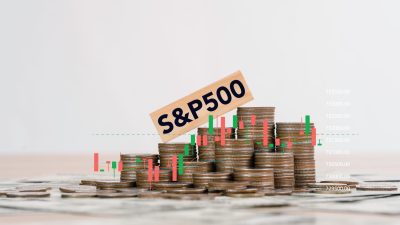
It should go without saying that the S&P 500 has been riding high over the last few years and has delivered one of the most impressive runs in market history. Over the past three years, the index has surged a whopping 80%, driven in part by artificial intelligence, falling interest rates, and ongoing corporate earnings growth. For investors who have stayed the course, portfolio balances have reached levels that might have seemed all but impossible to achieve a few years ago.
Unfortunately, any exceptional performance like this in the market comes with something of a warning label. A three-year gain of this kind of magnitude with the S&P 500 has only occurred twice in the last 153 years of stock market performance. The first, the 1920s bull market, and the late 1990s tech boom both ended in devastating fashion with the Great Depression and the dot-com bust.
Thankfully, history doesn’t always guarantee repetition, but it does signal that a pattern could be forming in the sense that markets performing this well for this long could be a giant warning sign for investors. As 2026 gets closer, understanding what happened in the last two instances now just feels like understanding basic risk management.
The S&P 500’s Ultra-Rare 3-Year Surge: What History Predicts
If you look closely, the 80% gain over the last three years roughly translates to anywhere between a 21% and 27% annualized return, which is more than double the S&P 500’s long-term average of approximately 10% in gains. The rarity of this occurrence cannot be overstated, considering it has only happened twice in the 153 years, with the 1927-1929 bull market rising 95% and the tech boom between 1995 and 1998 increased 85%.
If you’re seeing giant warning signs today, it’s because you know that what is taking place in the market today, performance-wise, is eerily familiar to what has happened before. In the 1920s, you had a market that boomed because of cars becoming more readily available, on top of electrification taking place across cities and non-cities alike. It was the promise of a new era, and the 1990s boom was driven by something similar, as the internet was being heralded as something that was going to transform everything we knew about technology, communication, and just about everything in between.
The 80% surge between 2023 and 2025 is following the same pattern, and this is what is causing warning bells to go off. Unsurprisingly, AI is being heralded as the transforming technology, and valuations have expanded significantly as a result. This all feels very much like 1999, and AI is being labeled as the kind of technology that will change everything, just as the internet was heralded as something transforming, and electricity absolutely did transform everything. This all comes together with a clear message in that when the stock market delivers this kind of three-year performance, it precedes major reversals.
Analyzing the Historical Precedents for 2026
During the 1927 to 1929 surge, the market continued to climb well into September before it all came crashing down in October. The initial 48% decline happened between October and November, but the real impact was felt from the end of 1929 all the way toward the end of 1932, when the total market collapse took place, dropping the market by around 89% in total. Crazily enough, it would take 25 years before the market would return to its 1929 highs.
Fast forward to the 1995-1998 surge, the market continued to climb higher and higher through 1999 before it peaked in March 2020. The rest, as they say, is well-known history, as the dot com crash erased 49% of the S&P 500’s value in just 2.5 years. The Nasdaq fell 78% and its overall recovery would take another seven years before returning to its starting levels.
The takeaway here is that there is a consistent pattern that was followed in both of these cases, in that the market didn’t crash immediately after a three-year surge. The market rally actually, and surprisingly, as you look back, continued for an extra year, delivering even more gains before a severe decline. In 2026, the cautionary tale is that history suggests either the market delivers this year as one full of gains or one that shows indicators of a reversal. Suffice it to say, neither scenario paints a pretty picture, as even if investors get one more year of gains, the crash starts and wipes all the gains out.
Is an AI Bubble Forming? The Biggest Risk Heading into 2026
If you have been watching the current level of AI enthusiasm, and who hasn’t been, the parallels between today and previous tech bubbles are almost impossible to ignore. We are already seeing just how transformative AI can be, something that echoes what the country saw during the electrification of the 1920s and the internet in the 1990s. Sadly, real technology, no matter how transformative, doesn’t always prevent bubbles. If anything, it actually enables a bubble to take place by trying to justify massive corporate valuations.
The biggest takeaway right now is that the signs of a bubble transformation are present, and they are present across multiple indicators. Valuations for AI-centric stocks are assuming nearly flawless execution and sustained growth continuing for years into the future. NVIDIA (NASDAQ:NVDA | NVDA Price Prediction), Microsoft (NASDAQ:MSFT), Apple (NASDAQ:AAPL), and Google (NASDAQ:GOOGL) are all investing billions, tens of billions into AI infrastructure without a clear signal of what the return could be. As a result, the S&P 500’s forward P/E is sitting around 21 to 22, approximately 40% above historical averages.
If you are a retail investor, and many of us are, this is something to be very aware of, as is options trading, which has seen its volume surge in AI stocks. Reddit, in particular, has come alive with discussion, especially on places like r/WallStreetBets, in a way that feels almost too familiar if you were on message boards during the dot-com era in 1999. On top of social media conversation, you also have companies adding “AI” anywhere they can in their core descriptions or even their company names to try and boost valuations. This closely mirrors when companies added “.com” to their company names in the late 1990s to try to jump on a similar trend.
The bottom line is that any catalyst for a stock reversal could come from slower-than-anticipated AI adoption or even disappointing returns from AI investments. Add to all of these concerns over an economic slowdown resulting from tariffs, or even inflationary concerns, depending on how the Fed handles interest rates. This all comes together in what could be a perfect storm for either a massive buying shift or a major selling rally, and any instance of the latter is going to feed on itself as panic selling grabs hold until the bottom falls out.











 Top Gaining Stocks
 Top Losing Stocks