


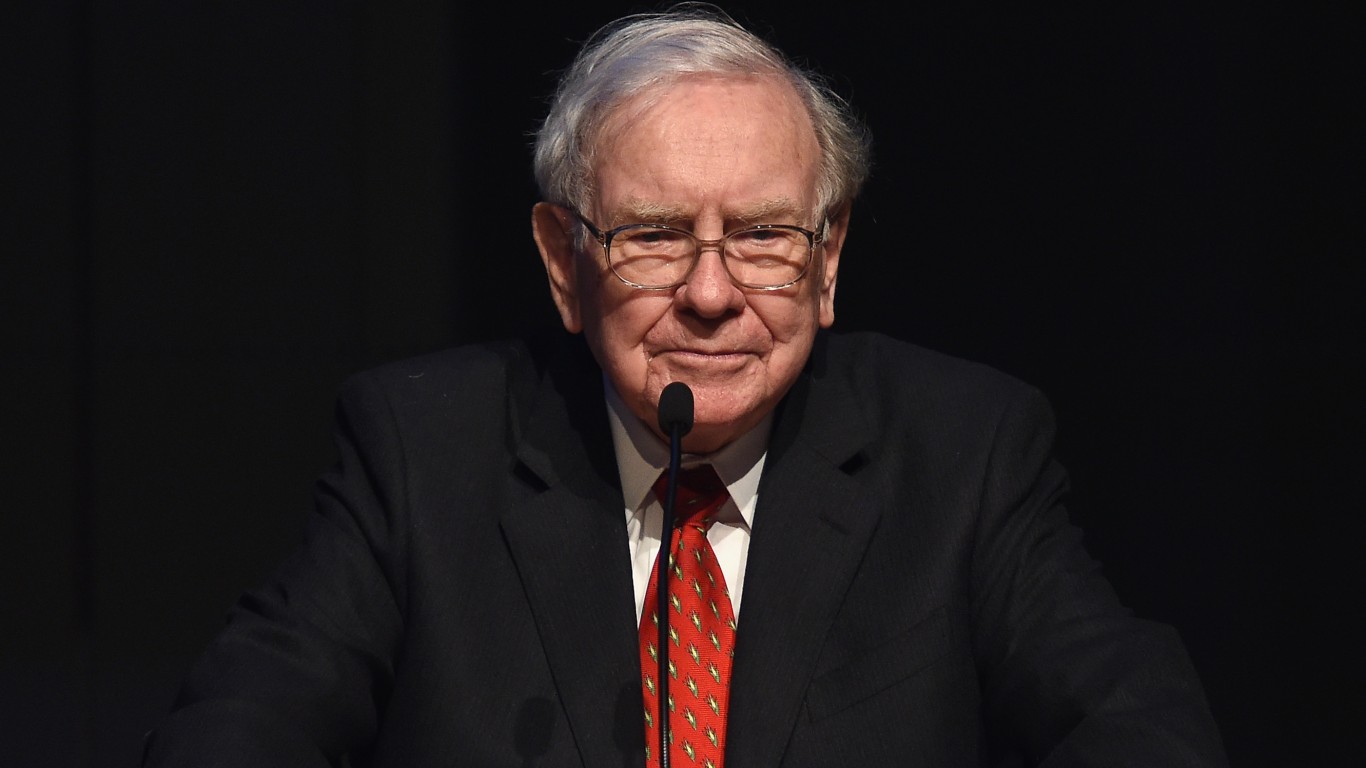
I recently took part in a pole on The Wall Street Journal, which asked the public which investor is the greatest of all time. For me, the answer was blatantly obvious – Warren Buffett will go down as my top investor of any period, and the greatest of all time.
That’s not to say there will be another investor that will come that will provide even greater returns over a similarly-long time horizon as Buffett has. But the Berkshire Hathaway (NYSE:BRK-B | BRK-B Price Prediction) CEO is certainly special, and will be remembered as an institutional investor that beat the market in more years than not over his more than 50 year career as the CEO of one of the greatest conglomerates in history.
With that preamble out of the way, let’s dive into a few reasons why Buffett will go down in history as one of the greats, and where I think Berkshire could be headed from here.
Historical Outperformance Is Unmatched
Stock chart heading up and to the right
Warren Buffett’s statistically improbable returns provided from 1965 through 2024 are truly remarkable to consider. Over this time frame, Berkshire Hathaway compounded returns for investors at an incredible 19.9% clip. When compared to the S&P 500, a world-class index of the largest companies in the U.S. (which produced compounded annual returns of 10.4% over this time frame), that’s a near-doubling of one’s annual return each and every year.
Thus, investors who held Berkshire as a bet on the U.S. economy (before their were ETFs) and held to today would have compounded their wealth at an astronomical rate. Investors who didn’t sell a share from 1965 to today would have total returns of more than 5,000,000% (good for a 50,000x) over this time frame. Granted, those shares are now likely in the hands of these initial investors’ children or grandchildren, but you get the point. Compounding works wonders over the very long-term.
The craziest statistic is that investors who held the S&P 500 would have increased their wealth by around 40,000% over the same period. Still great (who wouldn’t want a 400x?), but these two numbers are very different.
Sticking to His Principles
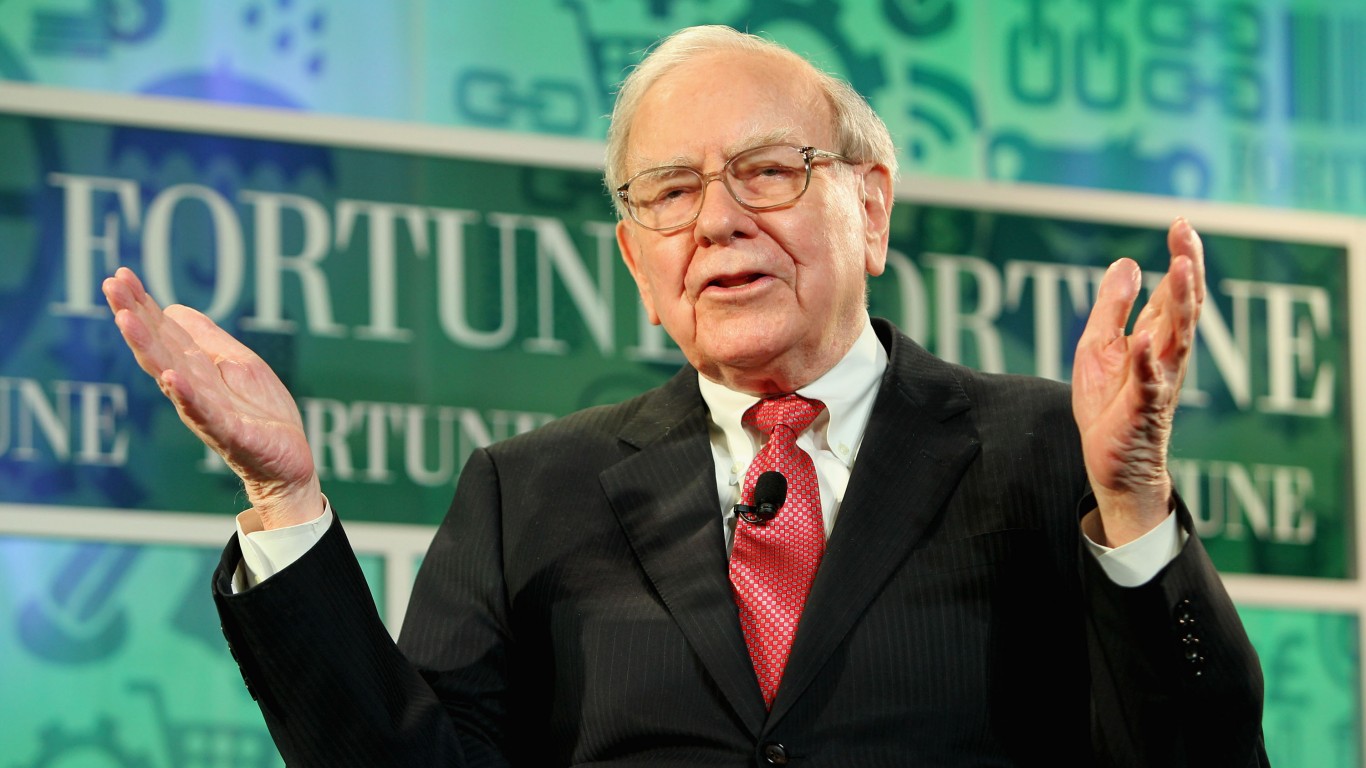
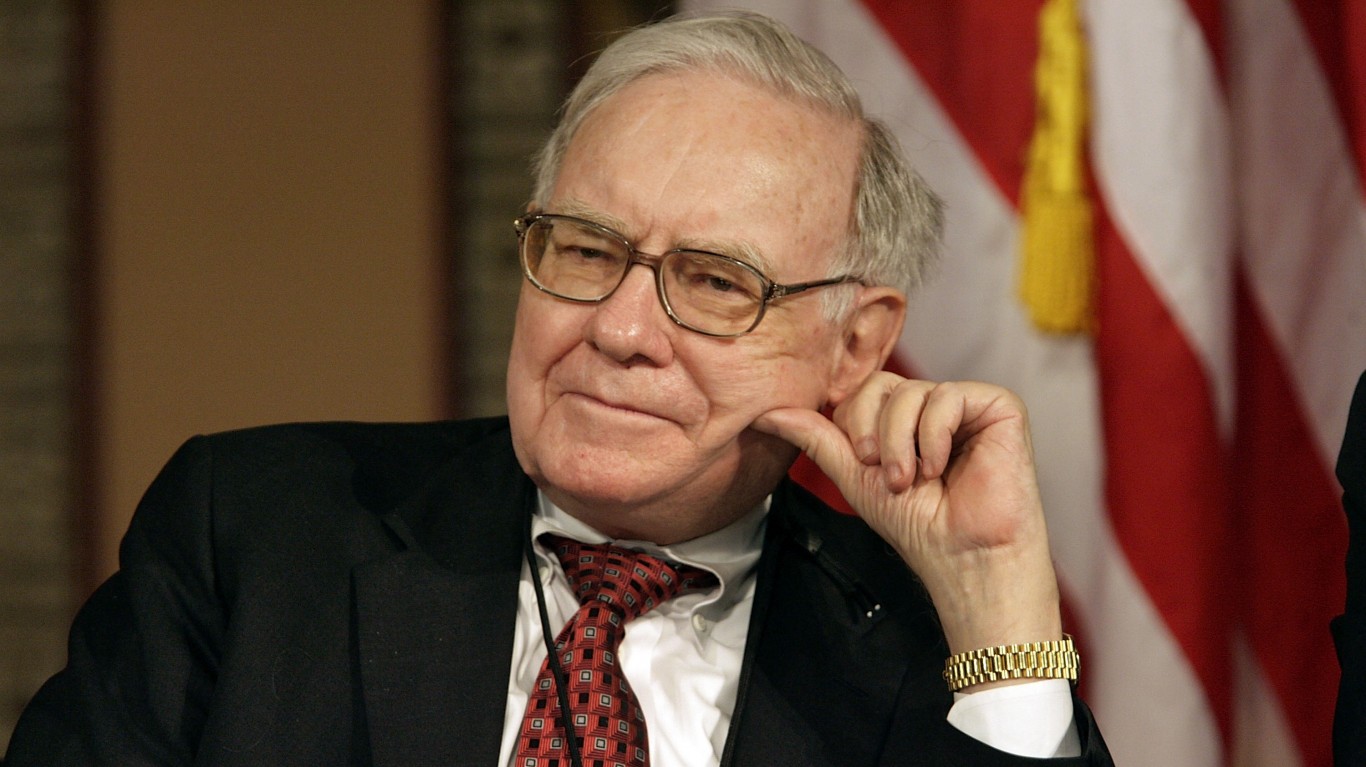
Warren Buffett speaking at an event
Another key factor driving Warren Buffett’s success, and is contrary to the principles many traders hold in the market today, is his adherence to some pretty well-defined and well-articulated principles over time.
Perhaps his most important principle I’d like to emulate in my own investing journey is to stick to stocks that fall within one’s “circle of competence.” It’s possible for one’s circle of competence to grow over time, but in general, we’re all best at being specialists in what we know. Sticking to companies with easy-to-understand business models, and picking the best of a particular group, can be a very profitable way to invest.
Buffett’s ability to trade options and engage in complex hedges has always been there. But his ability to take on positions in an unhedged way has led to incredible returns, as he’s not giving up any of the upside in any particular name. While he could make more in terms of yield from adding covered calls, he chooses not to and let the winners ride. He’s not about timing the market, he’s about time in the market, though he is a master of market timing too (more on that below).
A Master of Cycles and Trends
Stock chart heading up and to the right
Despite really not investing in anything tech related until the mid-2010s, and Buffett would be the first to tell you he missed out on plenty of growth in the tech sector, the reality is that he’s been a master at picking market tops and bottoms throughout his career.
In being able to buy stocks dirt-cheap at key market bottoms tied to recessions, and hold those positions for decades, Buffett has exemplified what long-term investing means.
And given some of Mr. Buffett’s recent moves around trimming core portfolio positions he’s held for more than a decade to take profits and put those profits into short-duration bonds (effectively cash), that should signal something to the average retail investor today. Personally, I’m listening, and I hope readers are as well.







 Top Gaining Stocks
 Top Losing Stocks