


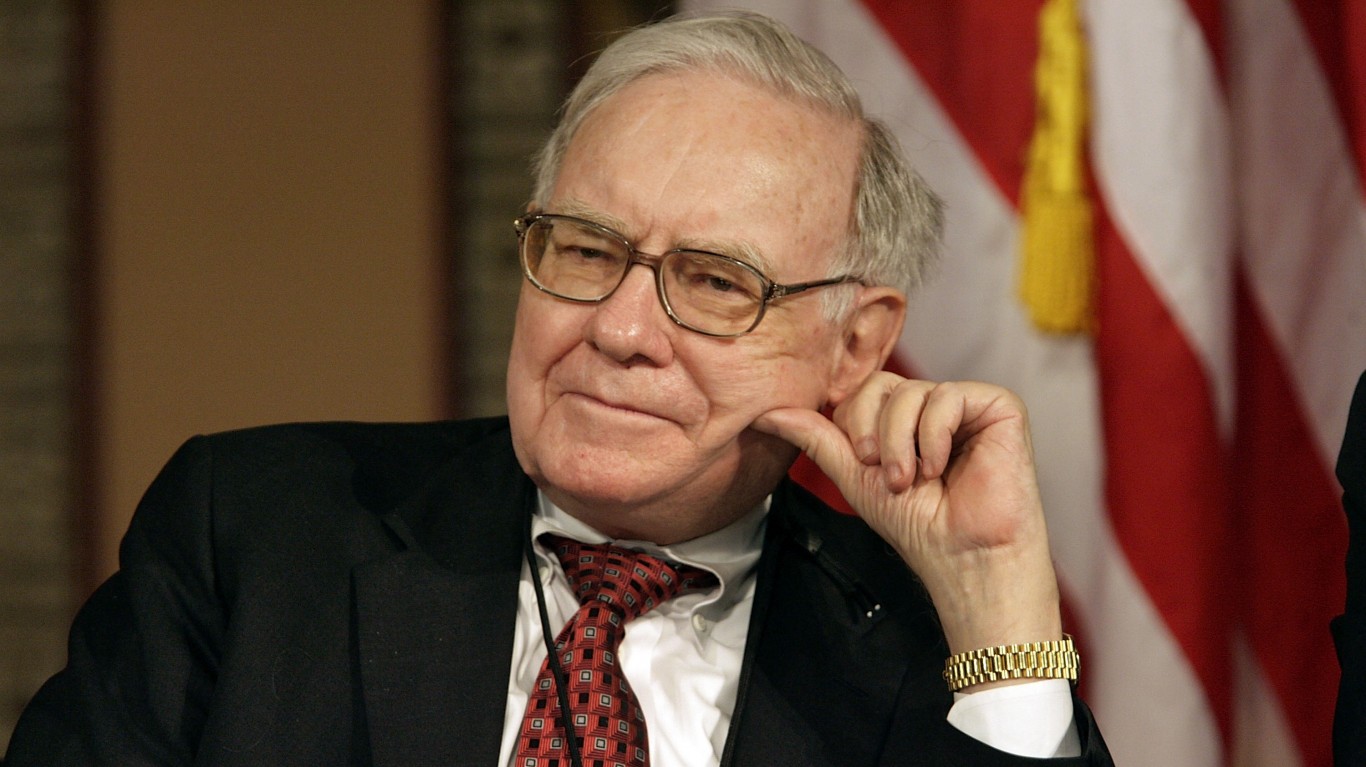
There are few moments in history when investors can sit back and reflect on the passing of the torch from one incredible world-class investor to others. With Berkshire Hathaway’s (NYSE:BRK-B | BRK-B Price Prediction) CEO Warren Buffett set to step down from his tenure as the leader of one of the most incredible compounding vehicles in modern history, investors looking to glean as much as they can from the wisdom Buffett has tried to pass down over the years have plenty to digest.
Indeed, Berkshire’s annual meetings and Buffett’s annual letter to shareholders, are event-worthy each and every year. And each year, I make the time to read his letter and watch his annual meeting, even if his long-time partner Charlie Munger is no longer here.
I was fortunate enough to attend one of these events, and have been able to follow Buffett through my own personal investing journey. Here are three of his most prescient pieces of advice for young investors that’s stood out to me as things worth thinking about as we head into a New Year (without Buffett providing the kind of commentary he usually does).
Treat Stocks As Ownership Stakes in Businesses

Business owner in her workshop
Many investors today who subscribe to trading methodologies, short-term trends, or technical analysis may view stocks as chips on a blackjack table. Using options, it’s possible to bet on short-term directional moves. And the rise of zero-day options and other vehicles have made such speculative activities more worthwhile and potentially profitable for a select few who get lucky.
The thing is, this activity is more akin to gambling, than investing, in my view. I think Buffett would certainly share that perspective, and he’s made comments that indicate that’s his view as well.
The reality is that buying a stock is really buying a small slice of a company. When viewed this way, one wouldn’t invest in a bricks-and-mortar business like a gas station or barber shop without a plan to be in that investment for years or decades. His view that owning a piece of a company can really only produce meaningful value if held for such time frames isn’t a common perception these days, with zero-cost trading and high liquidity allowing investors to enter and exit positions in seconds.
Always Buy with a Margin of Safety

Crossing guard allowing children to pass near a school
Going hand-in-hand with Buffett’s advice to invest only within one’s “circle of competence,” or the grouping of stocks with business models an investor can understand, his advice to buy stocks that have a margin of safety is advice I think is very worthwhile.
When Buffett speaks about a margin of safety, he’s referring to a valuation buffer between where an investor thinks a stock should be valued, and the price one is willing to pay on the open market. If a stock is trading at a discount of one’s own modeled out value of, say 25% or 50%, that’s a buying opportunity worth jumping on.
And as Buffett has said in the past, if investors only had a punch card with five or 10 punches on it – and those were the only investing decisions one could make in one’s lifetime – it’s tenable to think that investors would really put the time and effort into assessing thousands of companies and modeling out hundreds to come to an assessment of which opportunities may be the best to jump on at a given point in time.
Having that margin of safety allows investors to sleep well at night knowing the overall market could decline by that same 25% or 50% (whatever one’s margin of safety is), and it’s okay. That’s because at that point, assuming one’s holding drops by that amount, it would be even more inexpensive and worth adding to. Buffett’s ability to continue adding to positions on the way down (but mostly as his holdings have been heading higher, due to this margin of safety) is one of the key reasons why he’s been so successful in my view.
Don’t Do Anything, Other Than Be Patient

Patience visual
The final piece of Warren Buffett wisdom that’s always stood out to me is the idea that compounding interest is the eighth wonder of the world. I think that’s generally true (with credit card debt and other high-interest debts the other side of the coin that most of us can understand).
Allowing one’s capital to work harder than they can over very long stretches of time is very simple advice. However, in practice, sitting on one’s hands as one watches the market creep higher over long periods of time can be hard to do. Many of us have been conditioned to take gains when they come. But, of course, it’s also true that letting one’s winners run is a long-term investing strategy that often produces the best results.
As Buffett’s long-time partner Charlie Munger has pointed out, the money isn’t in the buying or the selling, but in the waiting. Being patient, and simply sitting one one’s investments (so long as the underlying narrative as to why an individual bought a specific stock still holds) is the way to go.
I try to implement this wisdom in my own journey, but I’m not perfect and I’ll never be like these guys. I’m okay with that – but it’s good to have something to shoot for, in my view.












 Top Gaining Stocks
 Top Losing Stocks