


Investors have long anticipated how Greg Abel, Warren Buffett’s successor as CEO of Berkshire Hathaway (NYSE:BRK-A | BRK-A Price Prediction)(NYSE:BRK-B), would influence the company following Buffett’s departure. With Abel now at the helm, we may be getting the first glimpse.
Yesterday, Kraft Heinz (NASDAQ:KHC) revealed in an SEC filing a prospectus supplement registering the potential resale of up to 325.4 million shares held by Berkshire Hathaway, representing its entire 27.5% stake in the company. The filing does not confirm an immediate sale but enables Berkshire to divest if it chooses. Despite Buffett once labeling the Kraft Heinz investment a “mistake,” he retained the shares until now. Is this the first sign Abel is set to reshape Berkshire Hathaway according to his vision?
Tracing Buffett’s Path to Kraft Heinz Ownership
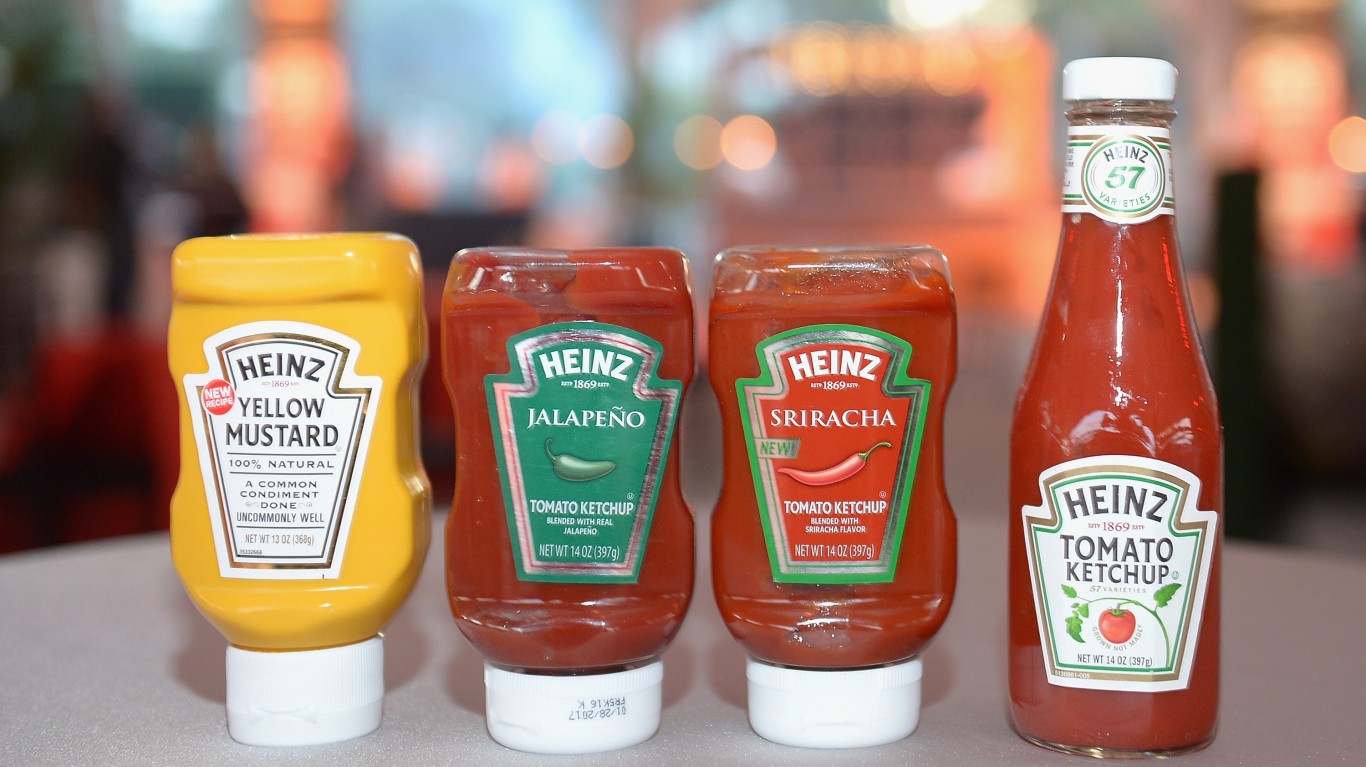
Berkshire Hathaway’s involvement with Kraft Heinz dates back over a decade. In 2013, Buffett partnered with private equity firm 3G Capital to acquire H.J. Heinz for $23 billion. This set the stage for a larger deal in 2015, when Berkshire and 3G orchestrated the $46 billion merger of Heinz with Kraft Foods Group, creating Kraft Heinz as a combined entity with iconic brands like Heinz ketchup, Kraft Mac & Cheese, and Oscar Mayer.
The merger aimed to leverage scale for cost synergies and capitalize on brand loyalty in the consumer staples sector. At the time, Berkshire contributed significantly to the financing, securing a substantial equity position that grew to 27.5%. However, challenges soon emerged, including shifting consumer preferences toward healthier options and aggressive cost-cutting that hampered innovation.
Buffett Admits a Costly Overpayment
By 2019, the merger’s flaws became evident. In a CNBC interview, Buffett acknowledged that Berkshire Hathaway had overpaid for Kraft Heinz. He stated, “I was wrong in a couple of ways about Kraft Heinz… We overpaid for Kraft.”
Buffett explained that the business required about $7 billion in tangible assets to generate $6 billion in pretax earnings, but the acquisition price effectively valued those assets at $100 billion, demanding unrealistically high returns to justify it. This came after Kraft Heinz announced a $15.4 billion write-down on brands like Oscar Mayer and Kraft, triggering a 27% stock drop.
Berkshire itself recorded a $3 billion write-down on its stake that year, followed by another $3.76 billion write-down this past August. Despite these setbacks, Buffett emphasized no plans to sell, aligning with his long-term holding strategy.
Does a Potential Sale Signal Abel’s Break from Tradition?
The recent SEC filing raises questions on whether Abel’s leadership marks a shift from Buffett’s approach. Kraft Heinz shares are falling 7.5% in premarket trading today following the announcement, valuing Berkshire’s stake at around $7.7 billion. Yet, is divesting truly a departure?
Buffett has famously said the best holding period for a stock is “forever,” emphasizing permanent ownership of quality businesses. However, he has also noted that sales are warranted if the original investment thesis fundamentally changes, as seen in past divestitures like IBM (NYSE: IBM) or airlines.
Kraft Heinz fits that description. In September, the company announced plans to split into two independent publicly traded entities by the second half of 2026. One — tentatively named Global Taste Elevation — will focus on sauces, spreads, seasonings, and shelf-stable meals like Heinz ketchup, Philadelphia cream cheese, and Kraft Mac & Cheese, generating $15.4 billion in 2024 net sales. The other — North American Grocery — will handle staples such as Oscar Mayer, Kraft Singles, and Lunchables, with $10.4 billion in sales. The split aims to allow each business to pursue tailored strategies, though it may create up to $300 million in “dis-synergies.”
This restructuring alters the company Buffett invested in — a unified giant built on synergies. As separate entities, they no longer match the original thesis of a scaled, integrated food powerhouse. Buffett himself expressed reservations about the breakup. When the announcement was made, he said he was “disappointed” in the split, adding that the merger “wasn’t a brilliant idea” but that “taking the company apart won’t fix its problems.”
Greg Abel, then Buffett’s designated successor, also conveyed disappointment to Kraft Heinz management. Given the changed structure, a potential sale under Abel could align with Buffett’s principle of adapting to new realities rather than clinging to outdated assumptions.
Key Takeaway
Abel will undoubtedly put his imprint on Berkshire Hathaway through future decisions, but the potential Kraft Heinz divestiture may not represent that defining move. With the company’s split fundamentally transforming its operations into two distinct businesses, shedding the shares could be a pragmatic step that fits Buffett’s own framework: hold forever unless the thesis evolves.
This action prioritizes Berkshire’s capital allocation, potentially freeing even more resources for higher-return opportunities while avoiding exposure to a restructured entity facing ongoing challenges like shifting consumer tastes and lagging innovation.






 Top Gaining Stocks
 Top Losing Stocks