



When discussions about Social Security’s future arise, many assume the only options involve cutting benefits or raising taxes. But Congress has multiple ways to adjust how benefits are calculated that can strengthen the program’s finances without reducing monthly checks current or future retirees receive. Understanding these mechanisms helps clarify what legislative changes might mean for your retirement income.
The Benefit Formula That Determines Your Monthly Check
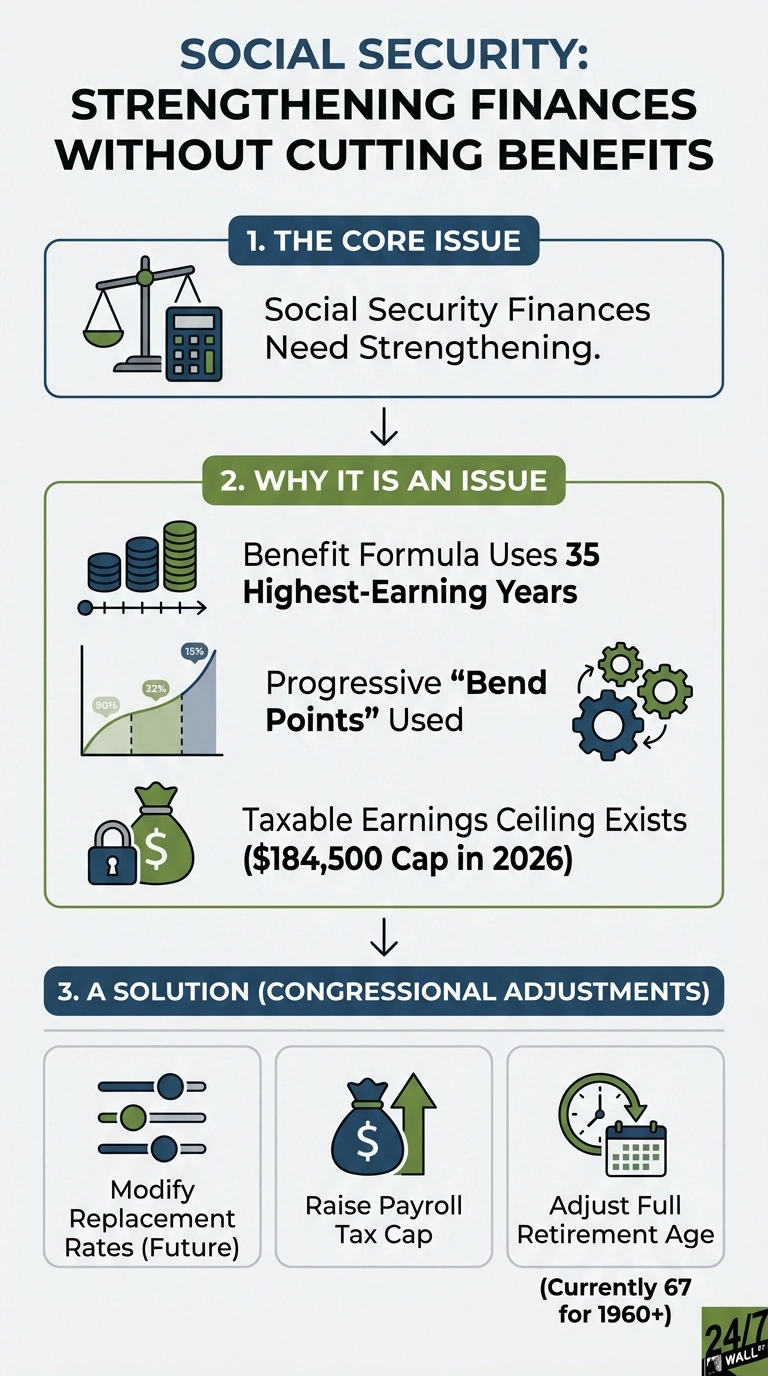
Social Security doesn’t simply pay everyone the same amount in retirement. Instead, the program uses your 35 highest-earning years to calculate an average, then applies a progressive formula through “bend points”—income thresholds where the replacement rate changes. This progressive structure means lower earners receive proportionally more generous benefits relative to their contributions, creating a safety net that provides stronger support where it’s needed most while still rewarding higher lifetime earnings.
Congress can adjust these percentages without cutting anyone’s existing benefit. Lawmakers could modify the replacement rates for future beneficiaries while leaving current retirees untouched. The adjustment affects how future benefits grow, not what you’re already receiving, representing a change in the formula rather than a direct cut to promised benefits.
Raising the Payroll Tax Cap
Social Security has always had an earnings ceiling for taxation. In 2026, that cap sits at $184,500, creating a situation where ultra-high earners contribute the same total amount as upper-middle-class professionals. This ceiling limits the program’s revenue base and represents one of the most straightforward levers Congress could pull to strengthen Social Security’s finances.
This change would strengthen the program’s finances by expanding the tax base to include more high-income earnings. Workers earning substantially above the current cap would contribute additional payroll taxes, but their future benefit calculation would remain subject to the same bend point formula that limits how much high earners receive relative to their contributions. This progressive approach generates new revenue while maintaining the program’s structure of providing proportionally stronger support to lower and middle-income workers.
Adjusting Full Retirement Age
Full retirement age currently sits at 67 for anyone born in 1960 or later. Congress previously raised this age from 65 through legislation passed in 1983, and lawmakers could extend it further to 68 or 69 for younger workers. This doesn’t reduce the monthly benefit amount someone receives at full retirement age, but it does mean waiting longer to claim that full amount.
For someone currently 40 years old, an increase to age 68 would mean planning an extra year before reaching full benefits. Claiming earlier would still be possible at 62, but with larger permanent reductions for early filing.
What This Means for Your Planning
Legislative changes to Social Security typically include long phase-in periods and protect those at or near retirement. If you’re within 10 years of claiming, major formula changes are unlikely to affect you. For younger workers, understanding that adjustments can happen through technical changes rather than outright cuts helps frame realistic expectations about future benefits while recognizing that promised amounts can be preserved even as underlying calculations evolve.















 Top Gaining Stocks
 Top Losing Stocks