



Shorting an asset of a G7 sovereign nation is a risky bet in the eyes of most traders. Perhaps one must go back to George Soros’ successful short play against the British Pound Sterling, which devastated the UK and netted Soros a $1 billion profit. The resources that a nation can gather to defend its assets can be formidable, and if another nation decides to lend a hand, such as the US did a few months ago with Argentina on a currency swap, the end result is usually favorable for that sovereign nation. (According to Treasury Secretary Scott Bessent, the US deal with Argentina has already earned a profit for Washington.)
Historically, short squeeze market scenarios most often occur in the equities market. The stocks of Game Stop, Volkswagen, Hertz, AMC and Tesla are just a few from recent years that come to mind. A short squeeze scenario in bonds is rare, and one in US Treasuries is almost unheard of. And yet, that is exactly what the market is seeing as a very possible occurrence in Q1 2026.
Betting Against US Treasuries?

The US Treasury bond has been the benchmark for the entire fixed income market and its interest rates since the post-WW II era. Its stability has long been synonymous with stability and a AAA Moody’s and S&P rating. However, it is the US Treasury bond’s historic lack of volatility that is often attractive for ETFs and traders. Some circumstances below might be considered short justification, from a trade perspective:
- The escalated inflationary environment, which peaked at 9.0% in June 2022, caused many traders to short the treasury bonds in anticipation of lower prices and higher yields.
- In past years, Treasuries were considered a safe haven. However, profligate overprinting of money by a profligate Congress has debased the currency, making Treasuries, denominated in US dollars, less valuable vs. face.
- The huge surge in gold and silver prices has led to selling of US Treasuries.
- China, which was once the largest holder of US Treasuries, has reduced its holdings to $682.6 billion as of November 2025, down from a peak of $1.32 trillion in 2013. This gradual reduction has continued across multiple administrations and represents a long-term portfolio diversification strategy.
- The Federal Reserve’s cautious approach to rate cuts, with three quarter-point reductions in the final months of 2025 bringing rates to 3.5%-3.75%, kept bond yields elevated as inflation remained above the 2% target.
- Leveraged ETFs often maintain sizable short positions on 10-year and 30-year Treasury futures for added liquidity.
The above scenarios can profit on only a move of 5 or more basis points, due to volume size. On the other hand, a move in the opposite direction can mitigate a small loss and easily facilitate a quick exit, due to the huge liquidity of the Treasury market.
How a Potential US Treasury Short Squeeze Developed
The above scenarios, especially the currency debasement and fueled inflation, have pushed the long bond yield to approximately 4.85%, approaching levels not seen since September 2025. At that level of AAA-rated fixed income return, many institutions and “safe money” investors will happily jump aboard and sell riskier assets. A few other reasons why a Treasury bull market may be looming:
- The current US Treasury futures short position of 1.97 million contracts (as per CBOT) is extremely crowded, and may be one the most crowded in history for the long bond.
- Total EFT short interest is roughly $12.4 billion.
- Treasury Bill short interest was 89,585 shares as of November 2025.
- The Trump administration has apparently tamed and even begun to reverse the inflation.
- Undeniably lower inflation and huge income derived from tariffs that have reduced the US trade deficit substantially, giving strength to the US dollar.
- US control over Venezuelan oil assets further helps to mitigate currency devaluation with tangible assets.
- The recent 20-year Treasury auction performed above expectations.
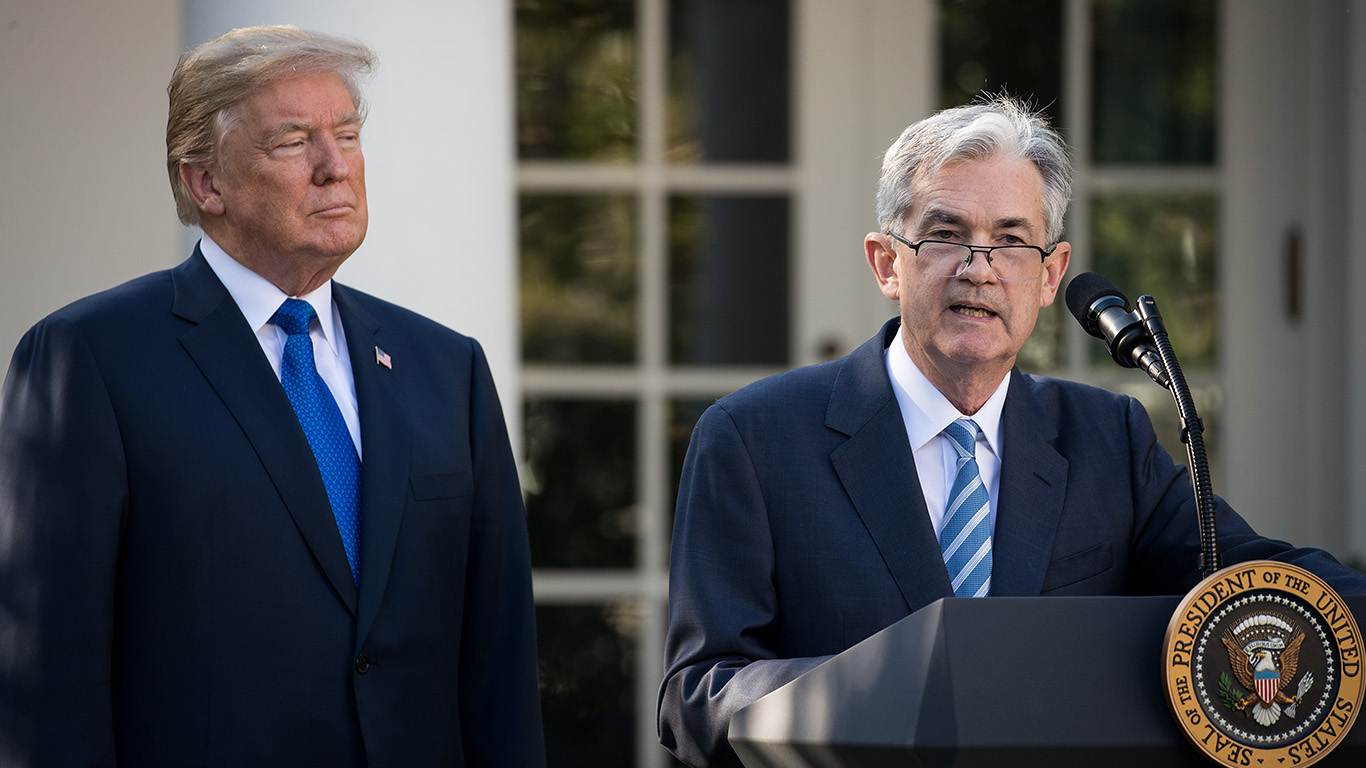
- The recent DOJ investigation into Jerome Powell related to his congressional testimony about Federal Reserve building renovation costs, which Powell has characterized as politically motivated, could trigger an earlier retirement than the one announced in May.
- The $12.6 trillion Repo market can trigger a huge move, due to shorts needing to cover before a price surge.
- Any hedge funds or ETFs that have open short positions on margin may quickly get margin calls, resulting in forced liquidations and large market order buying that would further escalate prices.
Economists and market watchers think that a 25-50 basis point move could result very shortly, although if short coverage becomes panicky, 20+ basis points per day would not be a surprise. Whether it be an ancient Chinese curse or, more likely, a British quote from a speech: “May you live in interesting times” apparently is a valid description for what we have now.












 Top Gaining Stocks
 Top Losing Stocks