



For more than a decade, holding cash in a retirement portfolio felt like a losing strategy, and the same goes for money market funds, which had been paying next to nothing. Treasury bills yielded fractions of a percent, leading financial advisors to urge clients to stay fully invested because the opportunity cost of sitting in cash was simply too high. “Cash is trash” became conventional wisdom, for better or worse.
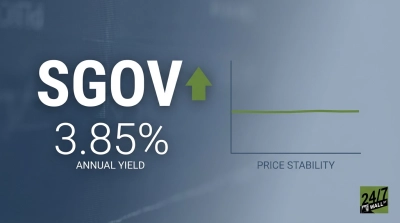
This era is over as Treasury bills now yield just under 4%. And while money market funds offer returns, their rates are declining. For retirees who spent years reaching for yield in riskier asset classes, the ability to earn meaningful income from the safety investments available represents a fundamental shift. Cash and T-bills aren’t just acceptable again, they are playing a central role in retirement portfolio construction in a meaningful way for the first time in a generation.
This reflects some hard lessons learned during market declines in the past few years, when both stocks and bonds fell simulataneously and retirees discovered their “safe” assets weren’t actually all that safe. Cash and T-bills held value while everything else dropped, and this experience, combined with more attractive yields today, has permanently changed how many retirees think about portfolio construction.
The Case for Safety Has Gotten Stronger
The 2022 bear market exposed something of a flaw in traditional retirement portfolios when the default 60/40 stock-bond allocation assumed that bonds would cushion against equity declines. The hope was that this would provide stability when retirees needed it most, but bonds also suffered in 2022 as it was one of their worst years in history (alongside stocks). Retirees who needed to withdraw funds faced an impossible choice of either selling stocks at depressed prices or selling bonds at depressed prices.
Cash and T-bills don’t have this problem as they can maintain value regardless of what stocks or bonds are doing. A retiree with two years of expenses in T-bills can ride out a market decline without touching depreciated assets, giving portfolios time to recover. This isn’t even a theoretical benefit, but one that happened to retirees in 2022 with adequate cash reserves versus those who were fully invested in the traditional stock-bond mix.
Yield Without Duration Risk
Bonds lost money in 2022 primarily because of the duration risk, the sensitivity of bond prices to interest rate changes. When rates rose rapidly, existing bonds with lower rates became less valuable, and the longer the bond’s maturity, the bigger the loss. Many retirees discovered their “safe” bond fund carried far more interest risk than they realized.
T-bills sidestep this problem entirely for maturities of one year or less; they have minimal duration risk. When rates rise, you simply roll maturing T-bills into new ones at higher rates. There’s no price decline to absorb, no paper losses to stomach, and for retirees who are looking for stability above all else, T-bills deliver what bonds promised but couldn’t provide during a rate-hiking cycle.
The tradeoff is giving up the potential for capital appreciation if rates fall, but for money you can’t afford to lose, that’s often an acceptable exchange.
Building the Cash Buffer
The practical application of this shift is the cash buffer strategy, which is maintaining one to three years of anticipated withdrawals in cash and T-bills, separate from the invested portfolio. This buffer serves as the source for ongoing retirement income, replenished periodically from the broader portfolio when market conditions are favorable.
The math has become compelling as a retiree needing $60,000 annually from their portfolio might keep $120,000 to $180,000 in a Treasury bill ladder or money market yielding over 3.7%. This is equivalent to $4,800 or more in annual interest income while the principal remains completely safe.
During the zero-rate years, this same strategy generated almost nothing, maybe $500 annually, and this difference should fundamentally change the cost-benefit analysis of holding cash.
How Much Is Too Much
The risk with any good idea is taking it too far. Cash and T-bills are back for good reasons, but a 50% cash portfolio may sacrifice long-term growth that retirees with 20- or 30-year time horizons still need. Inflation, even at moderate levels, erodes purchasing power over time. A 3.5% T-bill versus a 2.7% inflation rate in December 2025 is less than 1% real return, enough to preserve capital but not enough to grow it meaningfully.
The sweet spot for most retirees falls somewhere between one to three years of expenses in cash and T-bills, with the rest allocated to assets with higher growth potential. The exact amount depends on risk tolerance, other income sources, and how much volatility you can stomach. However, the days of minimizing cash to near zero are over, and for the first time in years, holding a meaningful cash position doesn’t mean sacrificing returns. This means building a portfolio that can weather whatever comes next while still generating income today.













 Top Gaining Stocks
 Top Losing Stocks