


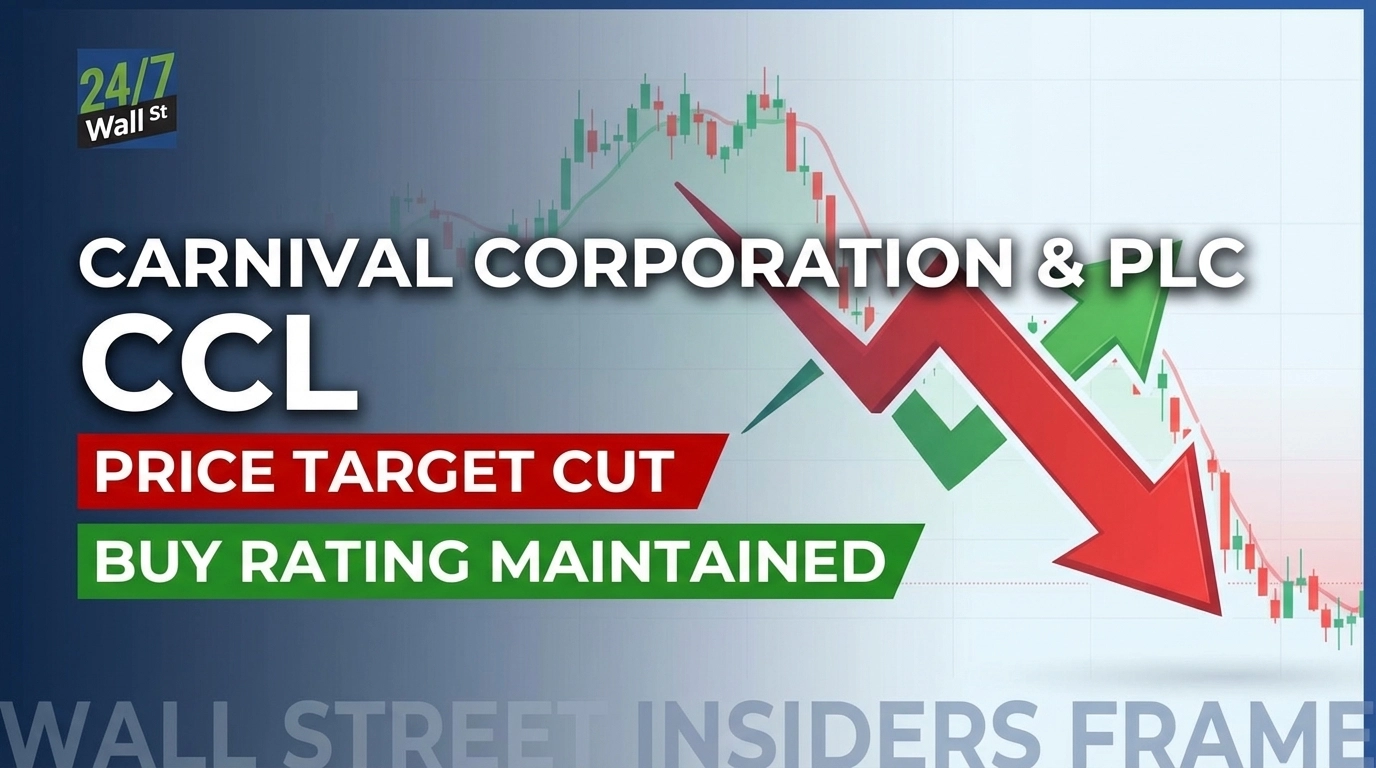
Stifel analyst Steven Wieczynski cut his price target on Carnival Corporation & plc (NYSE:CCL | CCL Price Prediction) to $35 from $40 on Wednesday, while maintaining a Buy rating on the stock. The revision reflects a deteriorating sentiment backdrop across the cruise sector and a meaningful headwind from rising fuel costs – but Wieczynski’s bullish conviction on the underlying business remains intact.
| Ticker | Company Name | Firm | Old → New Rating | New Price Target | Implied Upside | One-Line Takeaway |
|---|---|---|---|---|---|---|
| CCL | Carnival Corporation & plc | Stifel | Buy → Buy | $35 | ~35% | Bar lowered ahead of earnings; Buy maintained despite near-term headwinds |
The Analyst’s Case
Wieczynski’s estimate cuts are driven primarily by the recent spike in global fuel prices, which have added a tangible cost headwind to the cruise industry’s near-term outlook. WTI crude climbed from $57.97 per barrel in December 2025 to $64.51 per barrel in February 2026 – a meaningful move for a company that operates over 100 vessels and counts fuel as one of its largest variable costs.
Beyond the fuel line, Wieczynski notes that investor sentiment across the cruise industry has “gone from solid to unstable/concerning in the blink of an eye.” He believes the bar for Carnival’s upcoming earnings release and guidance has been “massively lowered,” which in his view creates a more favorable setup for the stock to surprise to the upside. Stifel’s view is that cruise fundamentals remain “solid,” but acknowledges that “investors will not pay attention or care” until the broader geopolitical backdrop – including fuel price stability – improves.
Company Snapshot & Recent Performance
Carnival is the world’s largest cruise operator, with a combined fleet of over 100 vessels across 10 brands. The company delivered a strong fiscal 2025, posting full-year adjusted net income of $3.08 billion, up more than 60% year-over-year, and beating EPS estimates in all four quarters. It also reinstated its quarterly dividend at $0.15 per share and achieved investment-grade leverage metrics for the first time since the pandemic.
The stock has not been rewarded for that execution lately. CCL shares are down 13.77% year-to-date through March 10 and have fallen 22.53% over the past month, with the stock trading around $25.98 as of Wednesday morning. That puts the shares well below their 52-week high of $33.87 and also beneath both the 50-day moving average of $30.57 and the 200-day moving average of $28.75.
On a one-year basis, however, the stock is still up 38% from March 2025, reflecting the genuine earnings progress the company has made over the past year.
Why the Move Matters Now
Carnival’s Q1 2026 earnings are expected on March 25, 2026 – just two weeks away. Management guided for Q1 2026 adjusted EPS of approximately $0.17, up from $0.13 in Q1 2025, with net yields in constant currency rising about 1.6%. The Arabian Gulf redeployment and new loyalty program are expected to weigh modestly on reported yields, though management has normalized those impacts in its guidance framework.
The broader Wall Street consensus remains constructive. Of the 29 analysts covering CCL, 20 carry Buy or Strong Buy ratings, 9 hold a neutral view, and none rate the stock a Sell. The consensus price target sits at $37.92, implying meaningful upside from current levels. Stifel’s revised $35 target still implies meaningful upside from Wednesday’s price – a meaningful premium even after the cut.
Carnival’s forward P/E stands at roughly 10x, and the company enters 2026 with approximately two-thirds of the year already booked at historical high prices in constant currency. Full-year adjusted net income guidance of approximately $3.45 billion would represent growth on less than 1% capacity expansion – a capital-efficient growth profile that supports the bull case even as near-term estimates come down.
Insider activity adds another data point: 14 recent insider transactions have been net buying.
Key Considerations
The Stifel price target reduction is a function of near-term fuel cost pressures and a difficult macro backdrop – not a change in view on the cruise industry’s demand outlook or Carnival’s competitive position.
That said, the risks are real. Carnival carries $26.6 billion in total debt, and fuel cost volatility, geopolitical uncertainty, and foreign currency fluctuations all remain live variables heading into the March 25 earnings report. The compressed valuation and broad analyst support exist alongside those ongoing headwinds ahead of the upcoming quarterly results.











 Top Gaining Stocks
 Top Losing Stocks