


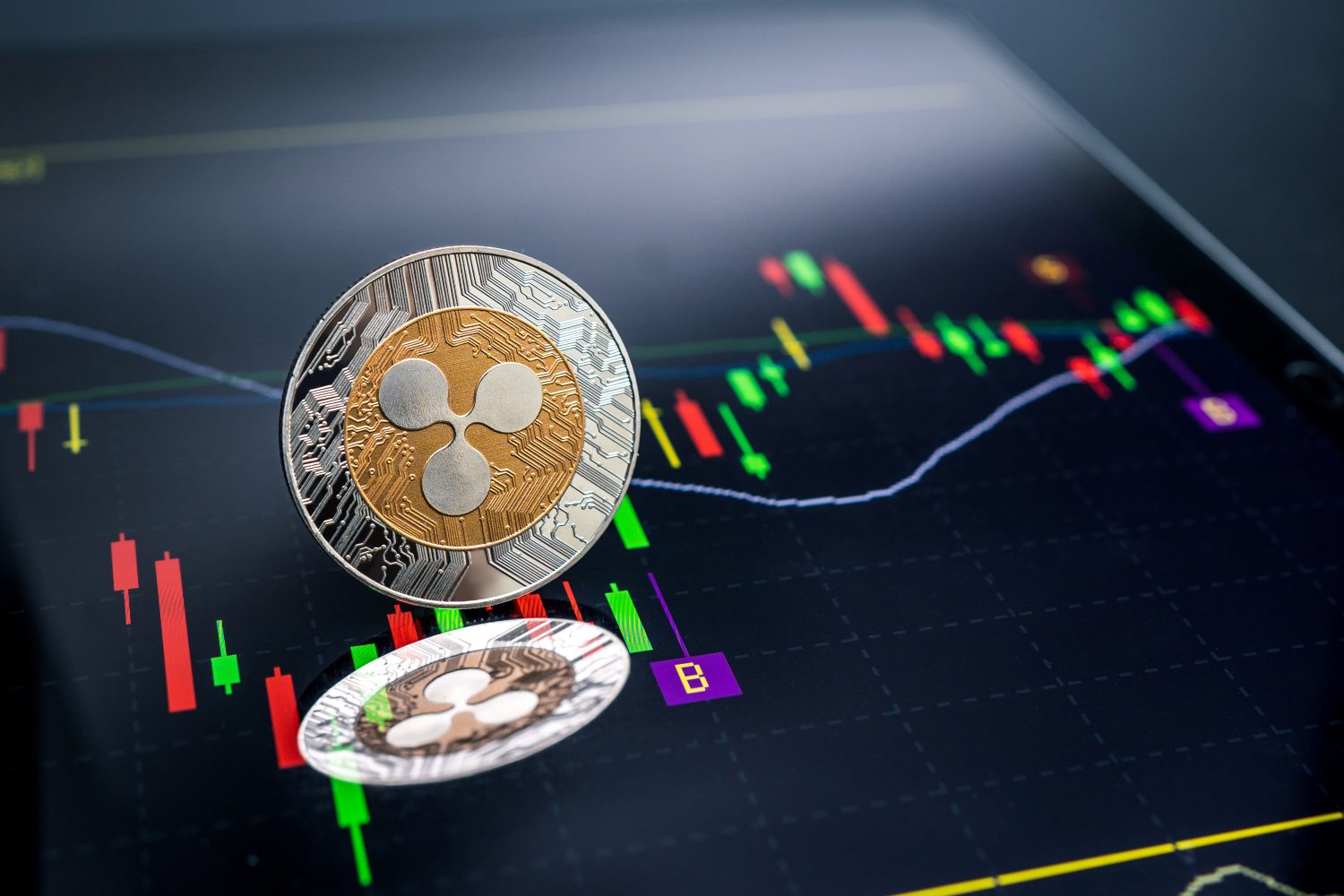
XRP (CRYPTO: XRP) hit $3.65 in July 2025—its highest price since the 2018 bubble—riding a broader crypto rally and growing confidence that Ripple’s SEC lawsuit was heading toward resolution. The lawsuit was settled a month later, and spot ETFs were launched by November—and over a billion dollars in institutional money followed.
However, nine months after that peak, the XRP price is down by 62%, and hovers around $1.35 to $1.40. XRP’s steady decline has put many holders and investors in a dilemma about its short-term outlook. One side says this drawdown looks like every other XRP bottom before a major reversal. The other believes the conditions that could spark an XRP recovery are getting worse.
We’ve analyzed all possible conditions and scenarios that would answer whether XRP is still a good buy despite its 62% drawdown, and the answer is not what most people think.
How the XRP Price Got Here and Why 62% Isn’t as Bad as It Looks
A 62% drop might sound brutal until you compare it to what XRP has done before. In 2018, XRP fell 95% from $3.84 all the way down to $0.17, and in 2021-2022, it dropped about 84% from its $1.96 cycle peak to $0.31–but both times, it eventually recovered. At 62% from $3.65 to $1.37, this is actually the mildest major correction XRP has gone through in any cycle.
Bitcoin is going through something similar right now. BTC is down roughly 47% from its October 2025 peak of $124,700, and when Bitcoin swings in either direction, XRP and most altcoins tend to follow. Every 40-50% Bitcoin correction since 2014 has eventually recovered to a new all-time high, with recovery times averaging 9 to 14 months. That doesn’t mean XRP follows the same timeline exactly, but BTC’s pattern sets the pace for the broader market, and XRP has ridden every major Bitcoin recovery.
What makes this drawdown genuinely different from the previous ones is what XRP had going into it. The 2018 crash happened when Ripple had no regulatory clarity, no institutional products, and no real adoption beyond speculation. The 2022 drop happened in the middle of a live SEC lawsuit that froze XRP’s access to major U.S. exchanges for years.
This time, the lawsuit is settled, seven spot ETFs live with $1.44 billion in cumulative inflows, and XRP was named to the U.S. strategic crypto reserve. XRP has never entered a drawdown from a stronger fundamental position, and that changes what kind of recovery is on the table once the broader market turns around.
What’s Still Working for the XRP Price at $1.40
About 36.8 billion XRP—roughly 60% of the circulating supply—is sitting at an unrealized loss right now totaling around $50.8 billion. XRP’s Net Unrealized Profit and Loss indicator (NUPL) has dropped into capitulation territory, even lower than where it was during the July 2024 bottom when XRP traded near $0.50. That means most holders are underwater, and many who wanted to exit have already done so at a loss, leaving less selling pressure on the table. In previous cycles, XRP reaching this kind of NUPL reading meant the price was already near the bottom.
On the ETF side, institutional money kept coming in even as the price dropped 45% from its highs. Spot XRP ETFs have accumulated roughly $1.44 billion in cumulative inflows since launching in November 2025, locking about 785 million XRP into institutional custody and steadily removing supply from the open market, creating a floor of demand underneath the XRP price that didn’t exist in any previous drawdown.
Moreover, a falling wedge has formed on XRP’s chart, which is the same pattern that showed up before major breakouts in 2017 and late 2024. The 2017 wedge broke upward before XRP rallied from under $0.01 to $3.84, marking a gain of over 38,000%. The late 2024 version formed around $0.50 before XRP rallied to $3.65, delivering over 600% in gains.
The pattern forming now sits at a higher base than either of those, with weaker hands already flushed out and institutional buyers still adding, and if the wedge resolves to the upside like it did in previous cycles, XRP could push toward the $2.80-$3.00 range from $1.40.
What Could Push the XRP Price Lower From Here
The biggest risk to the XRP price right now isn’t anything happening on Ripple’s network—it’s what’s happening at the Federal Reserve. Kevin Warsh, Trump’s nominee to replace Jerome Powell as Fed Chair, had his nomination officially sent to the Senate on March 4. Warsh wants to aggressively shrink the Fed’s $6.5 trillion balance sheet by actively selling mortgage-backed securities, a move that would pull liquidity out of financial markets at a time when crypto needs more of it, not less.
When his nomination was first announced on January 30, the XRP price was already sliding from its early-January highs, and the Warsh news accelerated the selloff as the broader crypto market dumped on fears of tighter monetary policy ahead. What Warsh says in his Senate confirmation hearings about rate trajectory and balance sheet plans will set the tone for risk appetite across every asset class for the rest of 2026, and the XRP price won’t be immune to that.
The Iran conflict has added another layer of pressure on top of the Warsh effect. XRP dropped sharply after U.S.-Israel strikes on Iran began in late February, and the geopolitical situation hasn’t improved since. Peace talks have stalled, and until there’s a real resolution, the XRP price has limited room to move higher while the uncertainty hangs over the entire crypto market.
XRP ETF inflows have slowed down too after the strong start to the year. January and February saw about $153 million in net inflows across all XRP investment products, but March brought XRP’s largest single-day ETF outflow of $16.62 million on March 6, and the pace of new capital entering the funds has dropped compared to the launch period. If outflows become a pattern rather than a one-off, the demand floor that’s been holding the XRP price above $1.30 starts to weaken.
Is $1.40 a Good Time to Buy XRP
On the fundamentals alone, $1.40 is one of the better entry points XRP has offered in this cycle. As we covered above, 60% of the circulating supply is sitting at a loss, ETFs are still buying despite the price drop, and the falling wedge pattern forming now has preceded major rallies twice before. XRP also has more institutional infrastructure behind it than at any point in its history, including a settled lawsuit, seven live ETFs, and a spot in the U.S. strategic crypto reserve. None of that existed during the 2018 or 2022 drawdowns.
The problem is that fundamentals alone aren’t driving the XRP price right now—macro conditions are. Until Warsh’s confirmation hearings make clear where rates and the balance sheet are heading, and until the Iran conflict reaches some form of resolution, XRP could stay stuck in a range or even dip lower before a recovery begins. A real turnaround would need Bitcoin reclaiming $80,000, XRP ETF inflows picking back up past $2 billion cumulative, and a daily close above $1.55 on the XRP chart.
For investors with a 12-month or longer time horizon who can handle more short-term volatility, $1.40 looks like a reasonable entry based on where the data points. For those looking for a quick bounce, the macro risks make that a harder bet. Whether XRP is still a good buy at these levels comes down to how long you’re willing to hold and how much uncertainty you can sit through before conditions improve.












 Top Gaining Stocks
 Top Losing Stocks