



YieldMax XOM Option Income Strategy ETF (NYSEARCA:XOMO) has been paying out weekly distributions in 2026, and its share price is up 21% year-to-date. For income-focused investors, that combination looks appealing. But understanding what generates that income is essential before treating it as a reliable cash flow source.
How XOMO Actually Makes Money
XOMO does not collect dividends from ExxonMobil (NYSE:XOM | XOM Price Prediction) and pass them along to shareholders. Instead, it runs a synthetic covered call strategy on ExxonMobil stock. The fund sells call options on XOM, collecting premiums from buyers who want the right to purchase shares at a set price. Those premiums fund XOMO’s distributions.
Think of it like renting out a parking spot near a stadium on game days. You collect steady rent, but if the game gets cancelled (volatility drops), the spot is worth less to renters and your income shrinks. The income is real, but entirely dependent on conditions you do not control.
Why Distributions Have Been So Variable
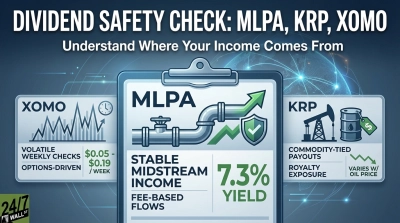
The distribution history tells the story clearly. In 2024, XOMO paid monthly, with amounts ranging from $0.19 to $0.51 per share. By late 2025, the fund shifted to weekly payments, and by early 2026 those weekly amounts ranged from $0.05 to $0.19 per share. The frequency changed, but so did the per-payment size, reflecting the underlying volatility environment at any given time.
The volatility connection is direct. Options premiums are priced on implied volatility, meaning the more uncertain the market, the more buyers pay for options protection, and the more XOMO collects. The VIX has climbed from around 18 in early February to 27.3 as of March 12. That elevated reading is currently supporting stronger premium income. The February 12 distribution of $0.1934 coincided with a period of rising market anxiety, which is no coincidence.
The Oil Price Surge and What It Means
XOM has gained 49% over the past year, driven in part by surging crude oil prices. WTI crude recently passed $100 a barrel. A rising underlying stock is a mixed signal for covered call strategies. Strong price appreciation means options buyers pay more for upside exposure, boosting premiums. But XOMO’s capped structure limits shareholders’ participation in that upside.
XOM’s fundamentals remain solid. The company beat earnings estimates in all four quarters of 2025, though earnings stepped down from 2024 levels. Full-year 2025 quarterly EPS ranged from $1.64 to $1.88, compared to $1.67 to $2.14 in 2024. A healthy underlying business supports a stable stock price, which in turn supports a functioning options strategy.
The Core Risk: What Happens When Volatility Fades
The VIX spent much of December 2025 at subdued levels. During that stretch, XOMO’s distributions shrank noticeably, with December payments consistently below $0.05 per share. That compression is the clearest illustration of the sustainability question: XOMO’s income is not fixed. It rises and falls with market fear.
The current environment, with VIX near 27 and oil prices surging, is about as favorable as it gets for this strategy. Distributions look strong right now, but the conditions driving them are unlikely to persist indefinitely. When volatility normalizes, income will follow it lower.
The Verdict
XOMO’s distributions are functional but not stable the way a traditional dividend stock’s payouts are. The income is real and currently well-supported by elevated volatility and a rising XOM. The 21% price gain year-to-date means total return has been genuinely strong, not just the yield in isolation.
The fund’s structure involves trading upside price participation for current income, with distributions that vary week to week based on market conditions. Investors researching income-focused ETFs may want to compare XOMO’s distribution variability against more traditional dividend-paying vehicles before drawing conclusions about fit for any particular income strategy.













 Top Gaining Stocks
 Top Losing Stocks