


Dividend kings are some of the rare companies that have paid dividends for more than 50 consecutive years. Not only have they made those cash distributions to investors, but they have also increased their payouts. A company that gave out $2 to investors last year and only gives $2 to its investors this year no longer qualifies as a dividend king.
The only way a company can retain this status is by gaining market share each year. Dividend growth is only possible if a company increases its net income. While it’s feasible to grow profits by improving margins, a company must deliver long-term revenue growth so its profits can grow as well.
That’s why most of the dividend kings are solid businesses that have been around for generations. Some of these companies are household names that offer vast product lineups. These three dividend kings have been powering portfolios for a long time and look poised to continue boosting their payouts.
Walmart
Walmart (NASDAQ:WMT | WMT Price Prediction) is the world’s largest physical retailer and recently achieved a $1 trillion market cap. The company has more than 10,000 locations, which makes it easier for the company to offer one-day shipping and receive competitive pricing for its bulk orders. That latter point explains why Walmart can offer some of the lowest prices in the industry, effectively pricing out most of its competition.
The Walmart Effect highlights how quickly Walmart can dominate locations. Small businesses have a difficult time keeping up with Walmart’s prices, and consumers in the area often flock to Walmart to save money. It’s hard for any company to compete with Walmart’s pricing power, which quickly turns it into an area’s most reliable hub for buying products and services.
Walmart’s business is still growing. The company generated $713.2 billion in fiscal 2026, which was up by 4.7% year-over-year. Its high-margin online advertising business surged by 46% year-over-year, and while it’s still a small part of Walmart’s total revenue, it can have an outsized impact on profits in future years. Earnings per share reached $2.64 and was up by 5.2% year-over-year. Walmart’s annual dividend per share stands at $0.99, offering plenty of breathing room as the retailer gains market share.
Procter & Gamble
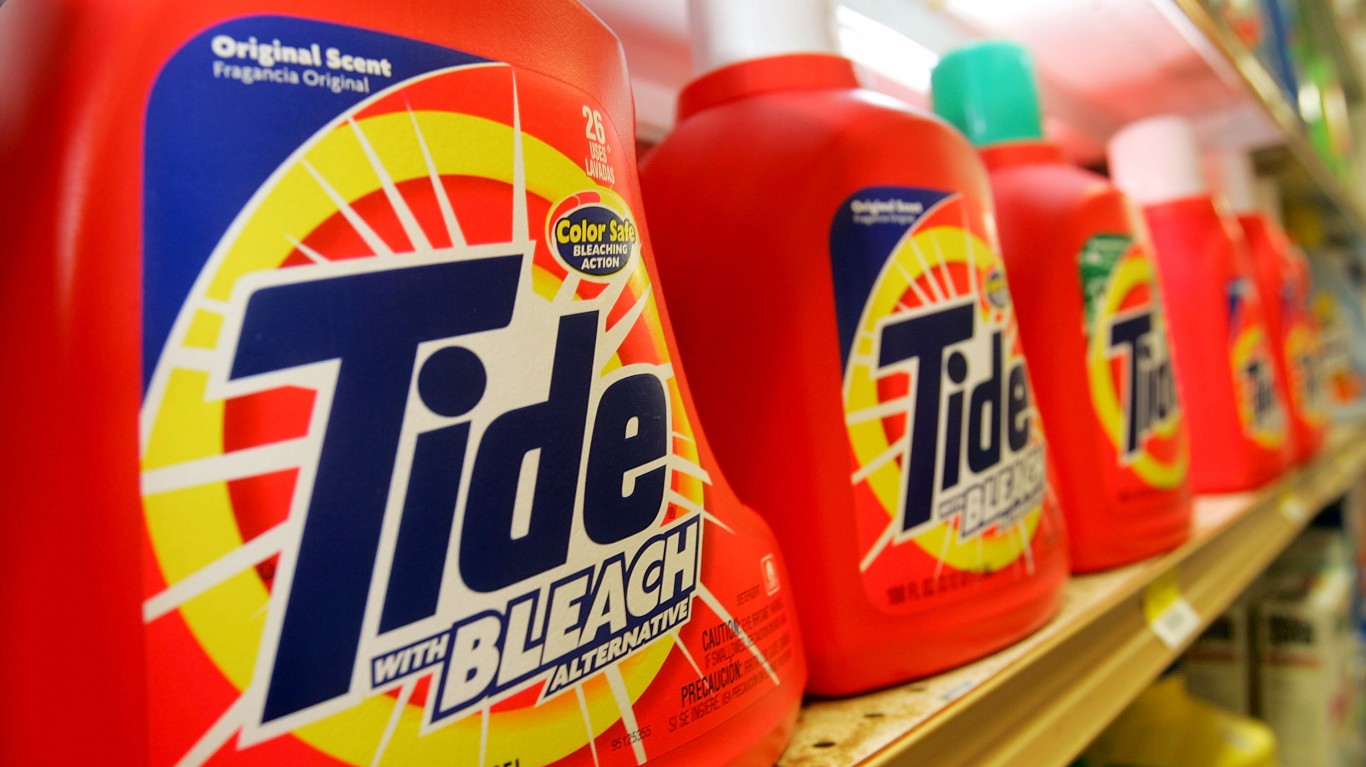
Procter & Gamble (NYSE:PG) has been in business for almost 200 years, and during that stretch, it has paid out dividends for 135 consecutive years. That includes 69 consecutive years of dividend hikes, including a 5% dividend hike last year.
The company sells essential goods, making it a staple in good times and bad times. Its 0.34 beta indicates that Procter & Gamble is less volatile than the S&P 500 and most equities that are available in financial markets. Retirees often value low volatility over high returns, and PG stock delivers on that front, especially with a yield hovering near 3%.
Growth numbers aren’t spectacular for the firm, but a 1% boost in net sales for essential products in Q2 FY26 is better than losing market share. Its diluted earnings per share of $1.78 was more than enough to cover the quarterly dividend of $1.06 per share. Procter & Gamble anticipates distributing $10 billion worth of dividends to investors and allocating $5 billion to stock buybacks.
Consolidated Edison
Consolidated Edison (NYSE:ED) is one of the oldest utility companies in the United States and recently reached its 200th anniversary. Its 0.34 beta — identical to Procter & Gamble’s — highlights low volatility, and a 3.18% yield is the icing on the cake.
People will always need power in their homes, which makes Con Ed one of the last expenses people will cut. It explains why the company generated $2.02 billion in net income last year, which came to $5.66 per share. Con Ed also raised its dividend for the 52nd consecutive year, bringing it to an annualized $3.55 per share.
The utility giant also told investors that it anticipates a 6% to 7% CAGR for its adjusted EPS over the next five years. That growth will give Consolidated Edison the perfect opportunity to raise its dividend for many years to come.








 Top Gaining Stocks
 Top Losing Stocks