



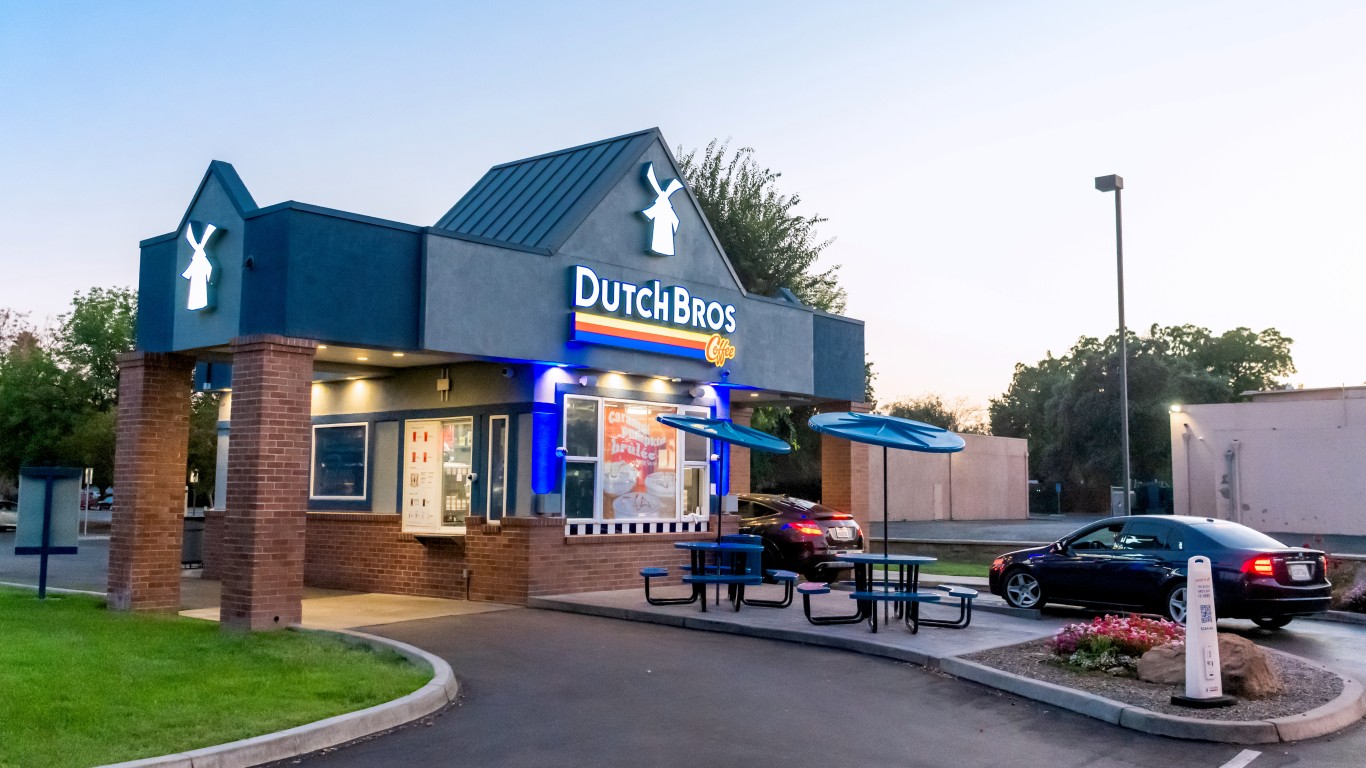
Dutch Bros (NYSE:BROS | BROS Price Prediction) shares hit a 52-week low of $44.58 this week, marking the cheapest valuation for the drive-thru coffee powerhouse since late 2024. Despite posting record revenue of $1.64 billion in 2025 — a 28% jump — and beating Wall Street earnings estimates for the last 11 quarters, the stock has fallen hard since its early-2025 peak near $78.
Rapid store expansion, macro pressures, and short-term sales transfers from new openings have weighed on sentiment. Yet these headwinds look temporary for a company still delivering strong same-store sales growth and scaling aggressively. This dip won’t last long. Investors should consider buying the fast-growing coffee shop for their portfolios before the market wakes up and, well, smells the coffee for its rebound potential.
What’s Behind the Steep Decline?
The numbers tell a tale of a growth stock caught in a classic “sell the news” moment after an explosive run. Dutch Bros opened 154 new shops in 2025 alone, pushing its total to 1,136 locations across 25 states. That breakneck pace — part of its signature fortressing approach — has delivered system-wide same-store sales growth of 5.6% for the full year, including a robust 7.7% in Q4. Yet the stock has shed more than 45% from its February 2025 high.
Several factors explain the drop. First, investors have fretted over near-term margin pressure from higher build-out costs and elevated commodity prices, including oil that has pinched restaurant stocks broadly. Second, the fortressing strategy itself has created temporary sales transfers: when multiple new shops open in a single market, existing locations see some traffic shift, muting average unit volumes in the short run. Third, broader market jitters around consumer spending and a perceived deceleration in same-store sales guidance (3% to 5% for 2026) have amplified the sell-off, even as the company continues to outperform peers.
The result is a stock that has been beaten back despite consistent beats and 20%+ annual revenue growth.
Why the Pullback Is Likely Temporary
These issues are classic growing pains, not structural problems. Dutch Bros has beaten estimates for 11 consecutive quarters, with Q4 2025 delivering adjusted earnings of $0.17 per share versus the $0.10 consensus and revenue of $444 million that topped forecasts by more than $20 million. New-store productivity remains at record highs, and the company’s unit economics — high average unit volumes (AUV) near $2.1 million — continue to improve as markets mature.
Fortressing, while causing short-term cannibalization, is already proving its long-term value by building instant brand density, slashing drive-thru times, and accelerating customer acquisition. Management has signaled confidence by raising its total addressable market to more than 7,000 potential shops nationwide and setting a clear 2029 target of 2,029 locations. With 181 new openings planned for 2026 alone, the pipeline for 20% annual revenue growth and 20%+ adjusted EBITDA expansion remains firmly intact.
Macro noise around oil prices or consumer caution fades quickly when a brand like Dutch Bros keeps winning transactions and expanding its footprint eastward.
Analysts See Big Upside Ahead
Wall Street is already voting with upgrades. Goldman Sachs recently moved to Buy from Neutral, citing “the best-in-class growth story in the U.S. restaurant space” and setting a $75 price target. TD Cowen, RBC Capital, and KeyBanc have all reiterated Buy or Outperform ratings, with targets ranging from $73 to $77.
The consensus among 24 analysts stands at Moderate Buy to Strong Buy, with an average 12-month price target near $77 — implying more than 60% upside from current levels. Even after trimming a few targets for sector-wide caution, firms like Morgan Stanley maintain Overweight ratings at $82. The message is clear: the fundamentals are stronger than the stock price suggests.
Key Takeaways
Dutch Bros is doubling down on its fortressing strategy — rapidly clustering shops in new and existing markets to blanket trade areas, shorten wait times, and lock in customer loyalty before competitors can react. This disciplined approach delivers unmatched market coverage and sets the stage for sustained low-single-digit same-store sales growth on top of mid-teens new-unit expansion.
With 2026 revenue guidance of $2 billion to $2.03 billion and a clear path to 2,029 shops by 2029, the growth engine is just getting started. At today’s valuation, Dutch Bros offers investors a rare chance to own a high-quality compounder at a discount it hasn’t seen in over a year. Don’t wait for it to go lower.










 Top Gaining Stocks
 Top Losing Stocks