


Since 2019, U.S. equities have broadly trended higher, interrupted only by the COVID crash, the 2022 bear market, and now a pullback driven by the Iran conflict. The Iran war has sent crude oil prices surging and is triggering inflationary fears. Something more troubling may be lurking beneath the headlines: stagflation.
Stagflation combines three variables: rising inflation, increasing unemployment, and slowing or stagnant economic growth. It is the Federal Reserve’s nightmare because there is no clean policy lever. Lowering rates to spur growth can worsen inflation. Raising rates to fight inflation can worsen growth and unemployment. The Fed gets squeezed from both sides simultaneously.
Variable 1: Inflation Is Confirmed and Worsening
The evidence is stacking up fast. The New York Fed’s Survey of Consumer Expectations, released April 7, 2026, showed one-year inflation expectations rose to 3% in March, up 0.4%. Year-ahead gas price expectations jumped 5 points to 9%, the highest since March 2022.
The energy shock driving those expectations is real. WTI crude oil hit $104.69 per barrel on March 30, 2026, up $37.73 from a month ago, a 56% monthly rise. Oil is up 70% in 26 trading days since the Iran conflict began, and gasoline is averaging $4.12 per gallon, up 80 cents from a month earlier. IMF Managing Director Kristalina Georgieva warned the Middle East war will bring higher inflation and slower global growth due to supply disruptions, especially through energy. As noted in our Daily Profit newsletter this morning, geopolitical tensions between Iran and the U.S. are rippling across asset classes well beyond energy stocks.
Variable 2: Unemployment Is Softening
The labor market has not broken, but the direction is negative. The official U.S. unemployment rate stands at 4.3%, from the BLS March 2026 jobs report released April 3, 2026, with 178,000 nonfarm payrolls added and labor force participation at 62%. ADP March private-sector employment came in at +62,000, after a revised +66,000 in February. The NY Fed’s January 2026 survey showed labor market expectations deteriorated, with job-finding expectations reaching a series low.
Variable 3: Growth Is Slowing Fast
The Atlanta Fed GDPNow model estimates Q1 2026 real GDP at 1% SAAR, updated April 7, 2026. That follows a collapse from 4% in Q3 2025 to 1% in Q4 2025. Put the numbers together: 1% growth, 3% inflation expectations, and 4% unemployment. The puzzle pieces of stagflation are assembling.
The Fed Is Being Pushed Inflation-First
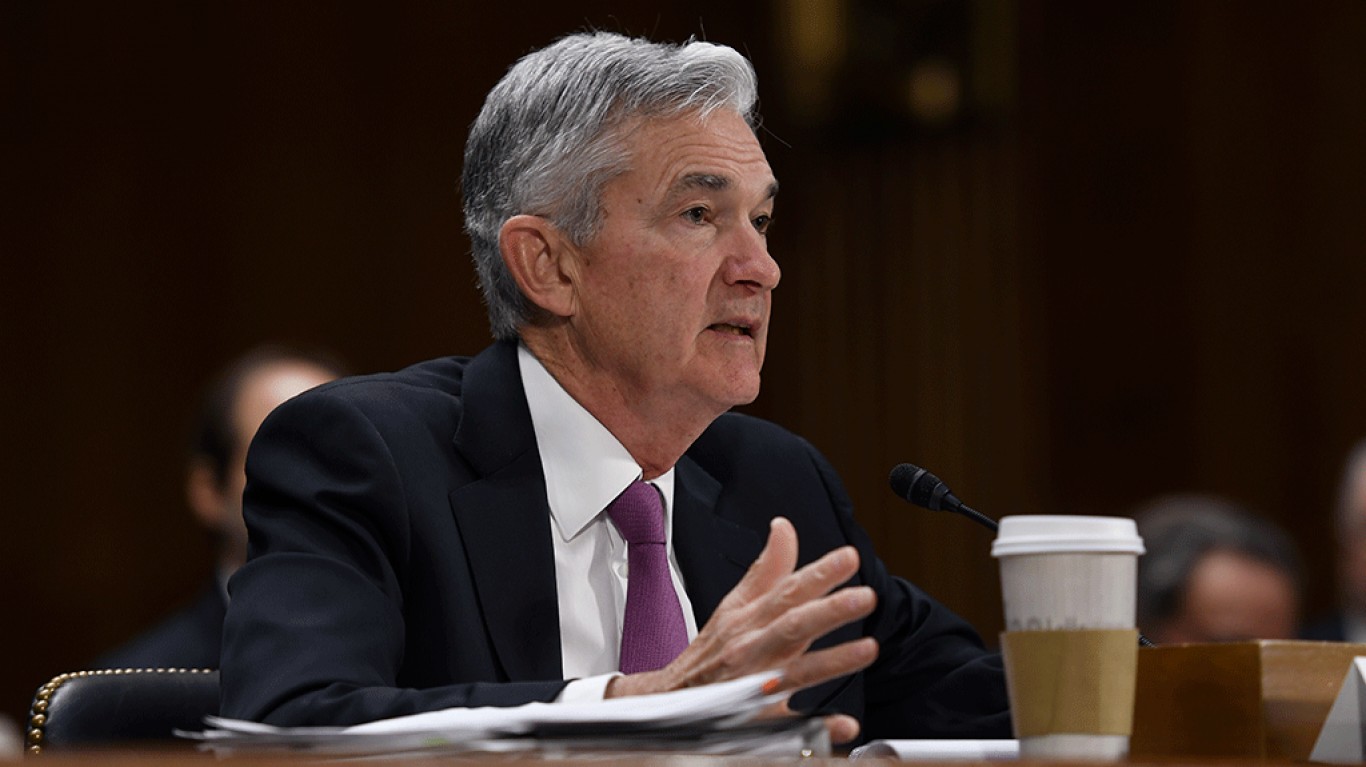
Fed Chair Jerome Powell offered a measured read at the March 18, 2026 FOMC press conference: “The implications of developments in the Middle East for the U.S. economy are uncertain. We will remain attentive to risks to both sides of our dual mandate.” Cleveland Fed President Beth Hammack said she could see a case for raising rates if inflation stays persistently above target. Chicago Fed President Austan Goolsbee argued inflation is the greater risk right now and should be slightly ahead of employment in the Fed’s priority stack. The Fed funds rate sits at 4%, unchanged for over four months.
An inflation-first posture creates a direct problem if growth keeps decelerating. The S&P 500 trades at a forward P/E of 20x, a historically expensive valuation that does not tolerate higher-for-longer rates well. Powell has pushed back directly on 1970s comparisons, but investors should be watching these three variables closely in the months ahead. Investors should be watching these three variables closely in the months ahead.










 Top Gaining Stocks
 Top Losing Stocks