


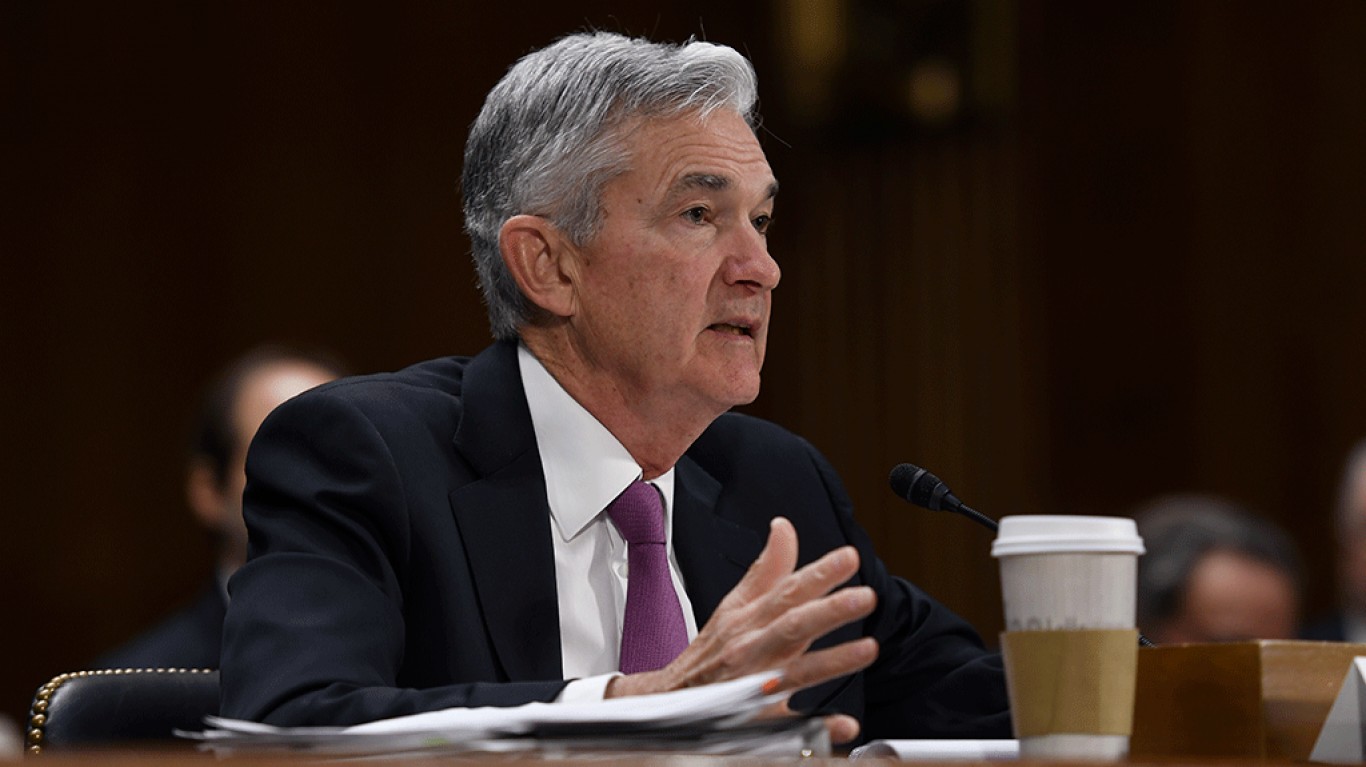
The Federal Reserve just delivered a leadership story that hasn’t appeared in central banking since the Truman administration. According to Morning Brew Daily’s episode “Jerome Powell Ain’t Leavin’ Yet & Movie Tickets Cost $50!?,” Jerome Powell announced he will remain on the Federal Reserve Board of Governors after his term as Fed chair concludes, becoming the first Fed chair to do so since Marriner Eccles in 1948. For investors building portfolios around interest rate expectations, this continuity signal arrives at a remarkably fragile moment.
A Historic Move During an Unusually Divided Fed
The decision to stay was paired with a meeting that highlighted just how fractured the central bank has become. The Fed held rates steady, but four members dissented, with one voting to cut and three objecting to the statement’s wording on future cuts. One Morning Brew Daily host described it as “the most divided it’s been in a long time”, noting that “the Fed votes in lockstep with each other” in normal conditions.
Powell tried to reassure incoming Fed chair nominee Kevin Warsh that he would not act as a “shadow Fed chair” and intends to keep a low profile. Still, the optics of a former chair seated at the same table as his successor will shape every policy debate ahead.
The Macro Backdrop Powell Is Choosing to Stay In
The federal funds rate sits at an upper bound of 4%, unchanged since December 11, 2025. Inflation pressure has been building underneath that pause. The Fed’s preferred inflation measure, Core PCE, reached an index value of 129.28 in March 2026, up 1% from the prior month and sitting in the 91st percentile of its 12-month range. You can verify the series at the St. Louis Fed.
Energy is amplifying the problem. WTI crude closed at $105.20 per barrel on April 27, up 77.62% over the past year. Morning Brew Daily reported the spike past $125 per barrel, with inflation surging at its biggest pace in nearly four years.
Growth and consumer confidence are flashing caution. Real GDP grew 2% annualized in Q1 2026, recovering from just 1% in Q3 2025. University of Michigan Consumer Sentiment fell to 53.3 in March 2026, deep in pessimistic territory. Unemployment remains contained at 4%.
What Continuity Means for Long-Term Investors
For retirement-focused investors, the takeaway is institutional. The 10-year Treasury yield trades at 4%, and the 10Y-2Y spread has narrowed to 1%, down from a February peak of 1%. Markets are clearly recalibrating around supply shocks and a divided board.
Powell staying on adds an experienced vote during a transition that historically would have invited new-chair volatility. Watch the dissent count at the next two meetings. If divisions widen, Powell’s seat may matter more than his title ever did.














 Top Gaining Stocks
 Top Losing Stocks