


An exchange-traded fund, Global X MLP ETF (NYSEARCA:MLPA) has delivered a 10.9% year-to-date gain through April 2026, with a quarterly distribution structure that attracts income investors seeking midstream exposure. The ETF’s February 2026 quarterly payment of $1.00 per share is also the highest in its history. Whether that level is sustainable depends on how three core holdings perform amid rising crude prices, AI-driven energy demand, and a competitive yield landscape.
How MLPA Generates Income
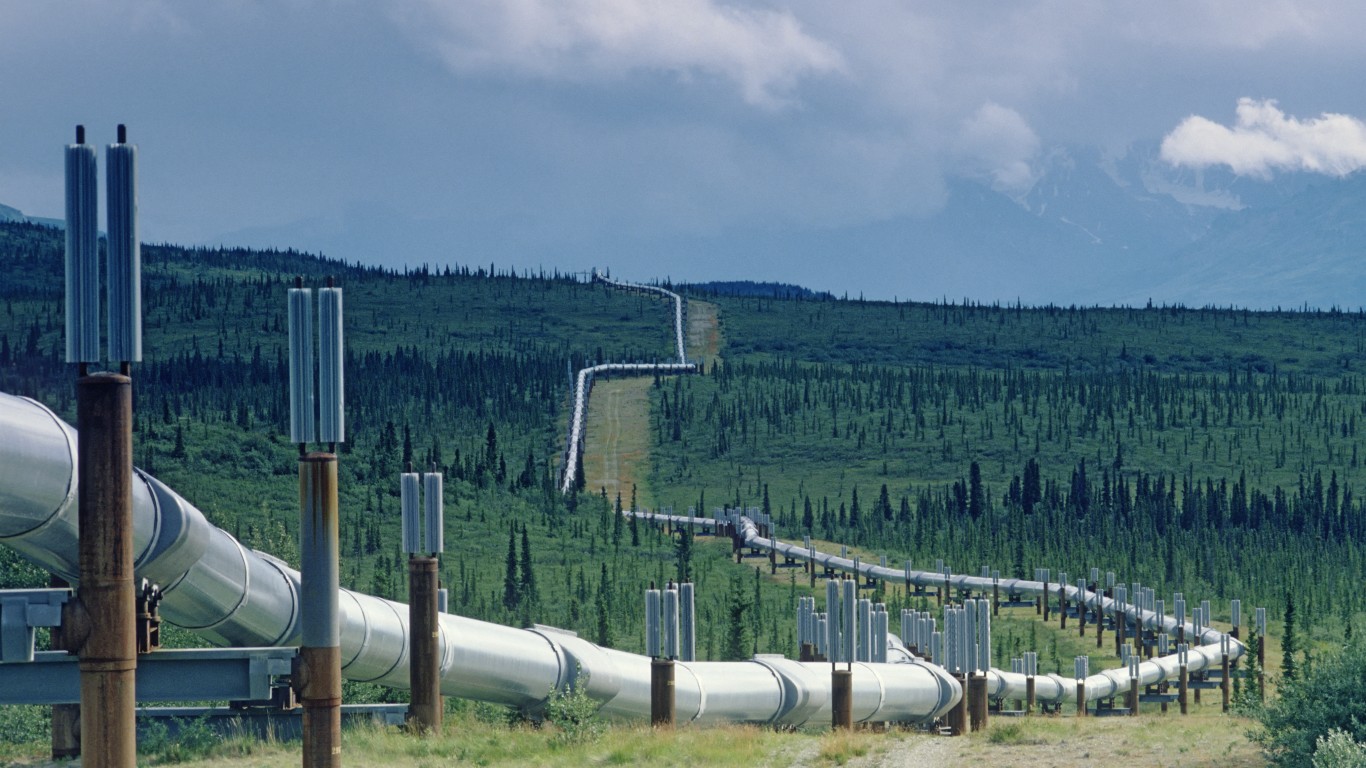
MLPA holds stakes in large-cap midstream Master Limited Partnerships that operate pipelines, storage facilities, and processing plants for crude oil and natural gas. These businesses collect volume-based tariffs and fees under multi-year contracts rather than selling commodities at spot prices. MLPA’s holdings “generate revenue from volume-based tariffs, making them less susceptible to geopolitical price swings.” The ETF is structured as a C-Corp, issuing a 1099 tax form rather than a K-1, which simplifies tax reporting for investors in standard brokerage or retirement accounts.
The fund carries a 0.77% expense ratio and holds 21 positions with $2.10 billion in net assets as of April 20, 2026. Its 30-day SEC yield sits at 7.08%, while the trailing 12-month distribution rate is 7.52%. Energy accounts for 96% of the portfolio, making the fund’s income almost entirely dependent on the health of the midstream energy sector.
The Three Holdings Driving Yield
Enterprise Products Partners offers the most conservative profile. Operational distributable cash flow covered 2025 distributions by 1.7×, and the partnership retained $3.2 billion in DCF for reinvestment. Distributions increased for the 27th consecutive year, and the annualized payout of $2.175 per unit remains well supported by cash generation.
MPLX reported first‑quarter 2025 distribution coverage of 1.5× on a quarterly distribution of $0.9565 per unit. Coverage remains above the 1.0× threshold, though thinner than that of Enterprise Products Partners. MPLX generated $1.486 billion in distributable cash flow during the quarter and continues to invest in growth projects across its natural gas and NGL systems.
Energy Transfer’s most recent reported results showed Q3 2025 adjusted EBITDA of $3.84 billion and distributable cash flow of $1.90 billion. While volumes continued to grow across multiple segments, the retrieved data did not provide payout ratios or distribution coverage figures. As with other midstream partnerships, distribution sustainability depends on maintaining stable cash flows and disciplined capital allocation.
Commodity Backdrop and AI Energy Demand
WTI crude oil has strengthened from late‑2025 levels into early 2026, a move that historically aligns with higher drilling activity and, over time, increased pipeline utilization for midstream operators. Natural gas prices, after brief winter volatility, have settled back into a typical spring range in the low‑$3 area. For midstream companies whose revenue is primarily volume‑driven, stable throughput matters far more than commodity price swings.
LNG export buildout and rising power demand from data centers are expected to increase natural gas volumes across MLPA’s holdings. Domestic gas demand tied to AI‑related infrastructure continues to grow, and midstream operators benefit directly as higher volumes translate into higher fee income.
Distribution Growth and Total Return
MLPA’s distributions fluctuate with the cash flows of its underlying midstream partnerships, and payouts have generally trended higher over the past several years, though not in a straight line. The fund’s current price sits below its 52‑week high, and its trailing yield remains elevated relative to the broader equity market.
MLPA’s long‑term returns have been positive, supported by rising midstream cash flows, but the fund’s performance reflects both energy‑sector cyclicality and its concentrated portfolio. With a trailing distribution rate near the mid‑single digits, investors must weigh the income stream against the volatility inherent in a sector‑focused ETF.
Verdict
Enterprise Products Partners offers the strongest distribution coverage and the longest record of annual increases, while Energy Transfer continues to report solid EBITDA and distributable cash flow. MPLX’s coverage ratio remains above 1.0×, though thinner than that of Enterprise Products.
The primary risk is sector concentration: with the portfolio almost entirely allocated to the energy midstream, a broad downturn would simultaneously pressure all major holdings. Income‑focused investors should weigh MLPA’s high yield against its concentrated exposure and the energy sector’s cyclicality.










 Top Gaining Stocks
 Top Losing Stocks