


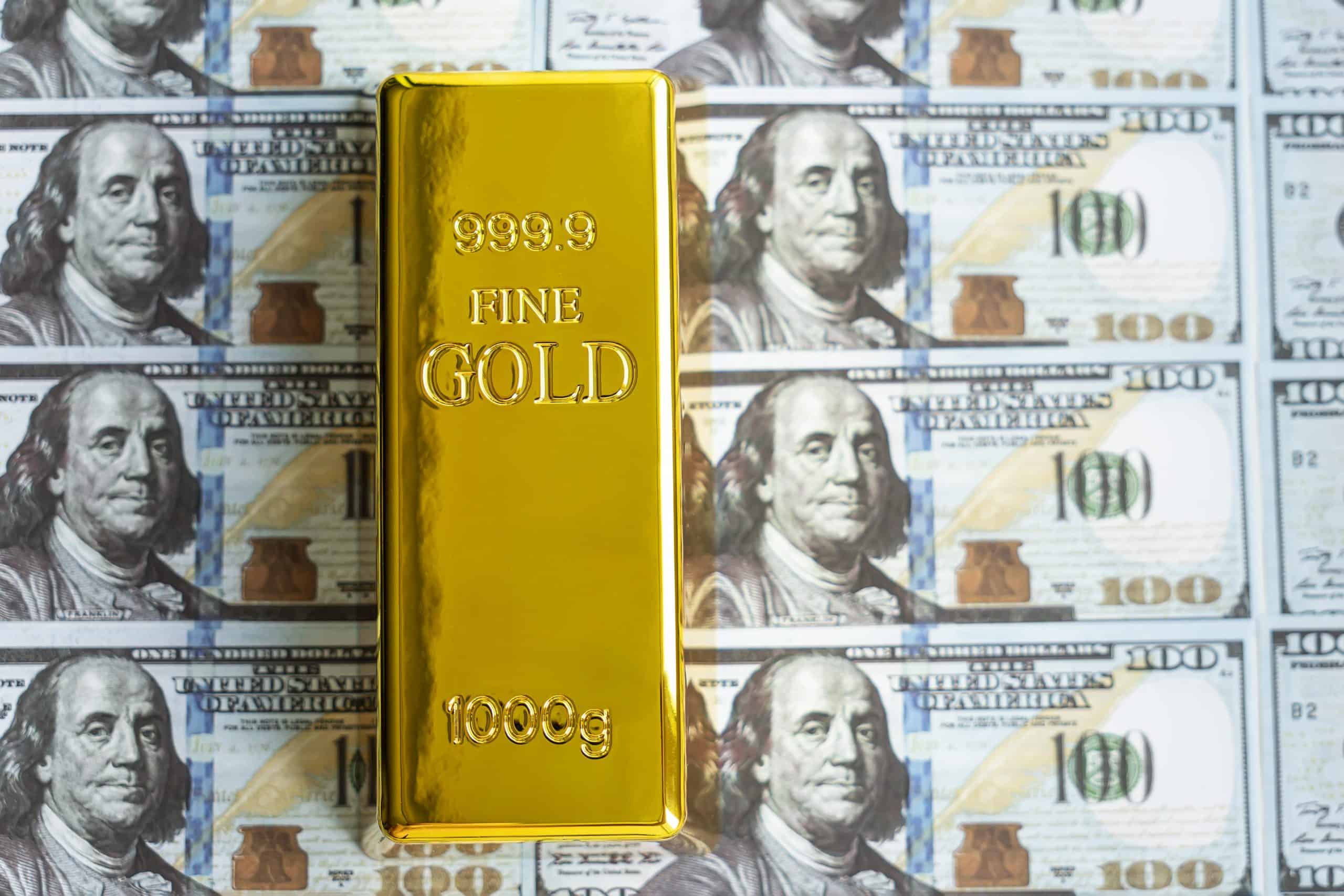
Gold’s performance over the last few years is a good reminder that stocks and bonds alone are not enough for diversification, especially after 2022.
Owning equities across all 11 sectors and across different geographic helps, but it still leaves you exposed to the same underlying risk factors. At some point, you want to add assets that behave differently. For retirees, that often means bonds. For others, especially younger investors, commodities can fill that role.
Gold has been one of the clearest examples. Year to date, as of April 22, 2026, gold prices are up 9.18%, while the S&P 500 has lagged at just 3.9% on a price return basis. Over a longer period, the gap is even wider. Over the past five years, gold is up 161.33%, compared to 70.47% for the S&P 500’s price return.
There’s more going on here than short-term momentum. Even with some recent slowing, gold continues to hold its lead, and I think several structural factors suggest that support could persist.
What’s Driving Gold?
One of the biggest drivers has been central bank buying. According to the World Gold Council, central banks purchased a net 27 tons of gold in February 2026. What stands out is who’s buying. Poland led with 20 tons, followed by Uzbekistan and Kazakhstan at 8 tons each.
This ties into a broader trend of de-dollarization. Many countries, particularly emerging markets, are gradually reducing their reliance on the U.S. dollar for reserves and trade. Gold serves as a neutral reserve asset that isn’t tied to any single government or monetary system, which makes it attractive in a more fragmented global landscape.
The second factor is dollar weakness. The ICE U.S. Dollar Index, which measures the dollar against a basket of major currencies, has been relatively soft. Year to date, it’s up just 0.25%, and over the past year, it’s down about 1%.
Gold and the dollar tend to move in opposite directions. When the dollar weakens, gold becomes cheaper for foreign buyers, which increases demand. It also signals reduced confidence in fiat currencies, which can push investors toward hard assets.
The third factor is inflation. The Consumer Price Index (CPI) remains above the Federal Reserve’s 2% target. In March 2026, CPI rose 0.9% month over month on a seasonally adjusted basis, and 3.3% over the prior 12 months. A large part of that has been driven by higher energy prices, which have surged alongside ongoing geopolitical tensions.
With the U.S. and Israel conflict with Iran now in its eighth week, energy markets remain tight, feeding into broader inflation concerns. Gold has historically been viewed as a hedge against inflation, particularly when real interest rates remain low or uncertain.
How to Get Exposure to Gold
For most investors, the default option is the SPDR Gold Shares ETF (NYSEMKT: GLD). It’s the largest and one of the oldest gold ETFs, with around $162 billion in assets and a track record going back to 2004. But for long-term investors, it’s not always the most efficient option.
The main issue is cost. At a 0.40% expense ratio, it’s relatively expensive for a fund that simply holds physical gold. Unless you’re actively trading options, there’s not much justification for paying that premium.
A more cost-effective alternative is the SPDR Gold MiniShares Trust (NYSEMKT: GLDM). It offers the same exposure to physical gold but at a much lower 0.10% expense ratio. It’s also well established, with about $31 billion in assets, so liquidity is not a concern for most investors.
The lower share price, around $94, also makes it more accessible compared to GLD, which trades above $400 unless you’re using fractional shares. For most investors looking to hold gold as a long-term diversifier, GLDM tends to be the more practical choice.










 Top Gaining Stocks
 Top Losing Stocks