Don’t Fly To Buffalo Or LA

Photo of Douglas A. McIntyre
By Douglas A. McIntyre Published

Quick Read

  • Europe Only Has A Few Weeks Of Fuel Left

  • US Carriers Have Cut Routes

  • Ticket Prices Have Started To Rise

This post may contain links from our sponsors and affiliates, and Flywheel Publishing may receive compensation for actions taken through them.
Don’t Fly To Buffalo Or LA

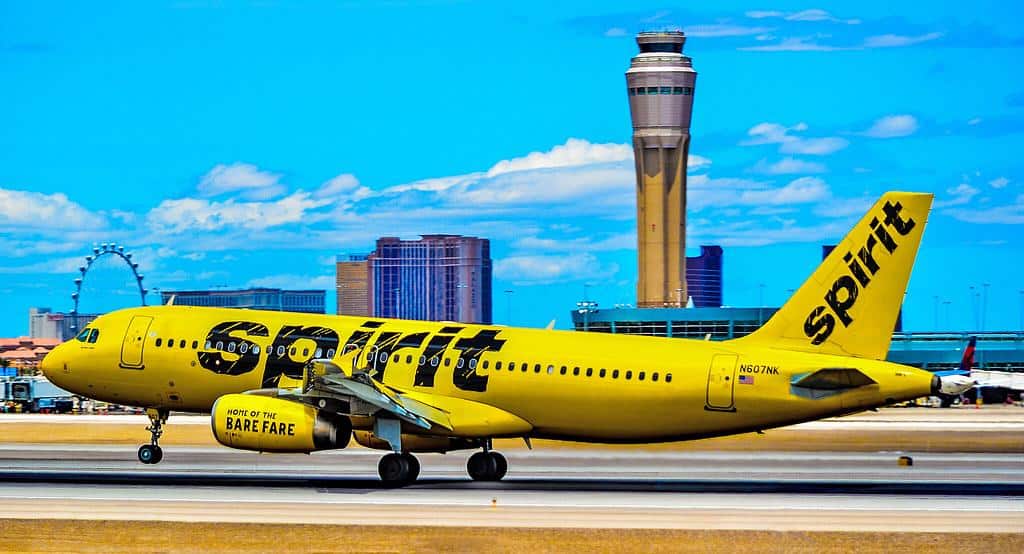
© N607NK Spirit Airlines Airbus A320-232 s/n 4595 (BY-SA 2.0) by TDelCoro

JetBlue (NASDAQ: JBLU) has a section of its website that reads, “If you are traveling to or from one of these areas, you may choose to rebook your flight into a nearby airport.” The list is daily long. It includes 35 airports in cities that range from Buffalo to Tampa to New York to LA,

It is not that the list is terribly interesting. It is that it exists at all. Carriers say they are cutting back routes (or eliminating them) to cities that don’t generate much traffic. But some of America’s largest cities are on the list. The US has a jet fuel supply catastrophe; it can raise fares on the routes it maintains to keep margins reasonable, but the problem is broader than jet fuel P&L.

Therefore, the  P&L problem can’t be avoided. Jet fuel prices have risen. They are up as much as 82% since the start of the war in Iran. There is a rumor that creditors and the US government did not bail out Spirit Airlines because the cost of fuel made it financially impossible to revive the carrier.

It is almost certain that carriers cannot raise rates enough to offset an 82% increase in fuel. Sharply higher ticket prices will kill demand. Carriers can’t lose money on most of their flights and make it up in volume.

The US has not hit the panic button the way they have in Asia and Europe. According to the AP, ‘Europe has “maybe six weeks or so” of remaining jet fuel supplies, the head of the International Energy Agency said Thursday in a wide-ranging interview, warning of possible flight cancellations “soon” if oil supplies remain blocked by the Iran war.’ It is unimaginable, and what do the carriers there do then? People will be traveling long distances on bicycles.


Photo of Douglas A. McIntyre
About the Author Douglas A. McIntyre →

Douglas A. McIntyre is the co-founder, chief executive officer and editor in chief of 24/7 Wall St. and 24/7 Tempo. He has held these jobs since 2006.

McIntyre has written thousands of articles for 24/7 Wall St. He is an expert on corporate finance, the automotive industry, media companies and international finance. He has edited articles on national demographics, sports, personal income and travel.

His work has been quoted or mentioned in The New York Times, The Wall Street Journal, Los Angeles Times, The Washington Post, NBC News, Time, The New Yorker, HuffPost USA Today, Business Insider, Yahoo, AOL, MarketWatch, The Atlantic, Bloomberg, New York Post, Chicago Tribune, Forbes, The Guardian and many other major publications. McIntyre has been a guest on CNBC, the BBC and television and radio stations across the country.

A magna cum laude graduate of Harvard College, McIntyre also was president of The Harvard Advocate. Founded in 1866, the Advocate is the oldest college publication in the United States.

TheStreet.com, Comps.com and Edgar Online are some of the public companies for which McIntyre served on the board of directors. He was a Vicinity Corporation board member when the company was sold to Microsoft in 2002. He served on the audit committees of some of these companies.

McIntyre has been the CEO of FutureSource, a provider of trading terminals and news to commodities and futures traders. He was president of Switchboard, the online phone directory company. He served as chairman and CEO of On2 Technologies, the video compression company that provided video compression software for Adobe’s Flash. Google bought On2 in 2009.

Continue Reading

Top Gaining Stocks

MU Vol: 26,371,095
COIN Vol: 5,446,913
EBAY Vol: 11,299,499
ORCL Vol: 19,460,093
MRNA Vol: 2,254,189

Top Losing Stocks

UPS Vol: 8,531,359
FDX Vol: 2,278,612
CHRW Vol: 1,615,740
NCLH Vol: 29,032,643