


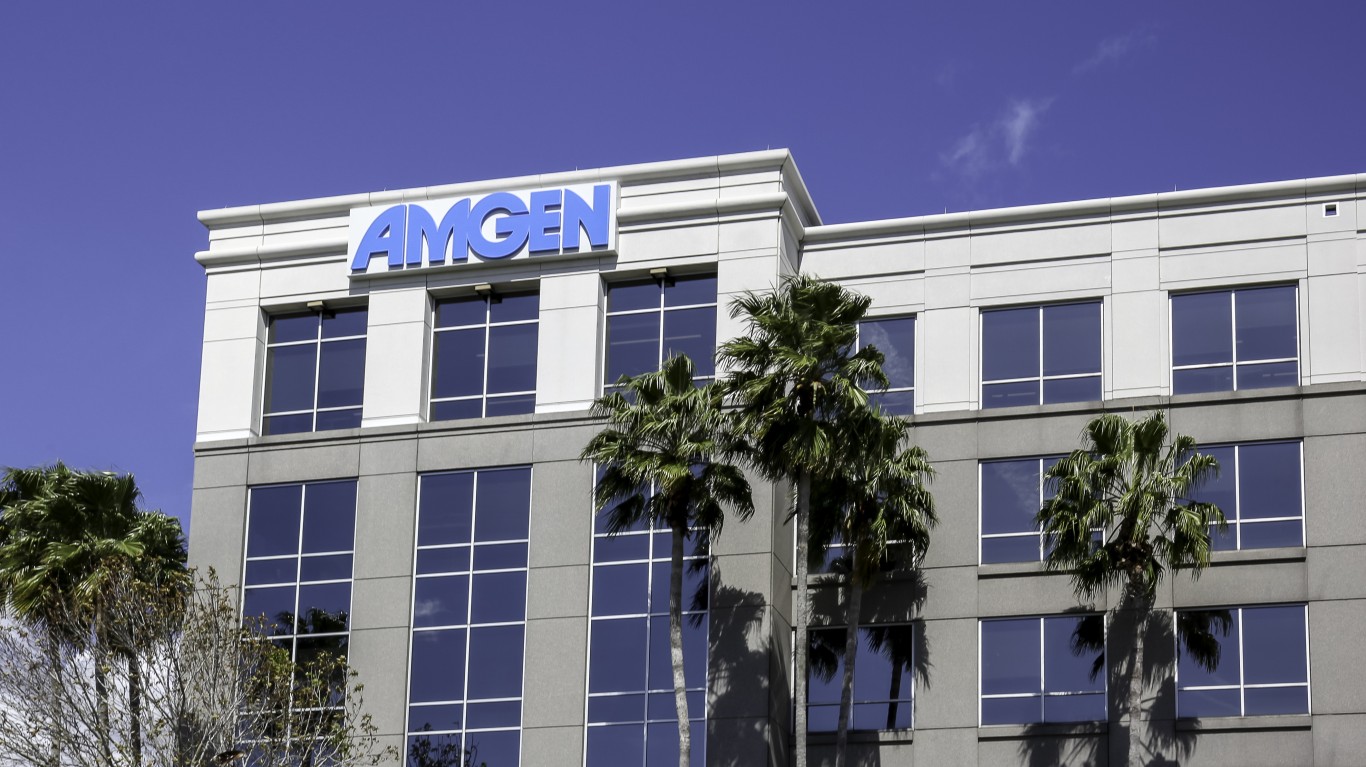
Guggenheim trimmed its price target (PT) on Amgen (NASDAQ:AMGN | AMGN Price Prediction) to $340 from $351 on Monday, May 4, while maintaining a Neutral rating. The revision follows the biotech’s Q1 2026 earnings release and reflects a model update rather than a wholesale thesis change.
Amgen stock recently slipped, trading at $324 as of Monday after closing at $329.82 on May 1. AMGN stock is down 7% over the past month, even though the company beat first-quarter expectations on both revenue and earnings.
The takeaway: Wall Street is increasingly cautious on Amgen’s growth profile as biosimilar competition accelerates and the obesity race favors larger incumbents. For long-term holders, the analyst downgrade in target is a recalibration, not a red flag.
| Ticker | Company | Firm | Action | Old Rating | New Rating | Old Target | New Target |
|---|---|---|---|---|---|---|---|
| AMGN | Amgen | Guggenheim | Price target cut | Neutral | Neutral | $351 | $340 |
The Analyst’s Case
Guggenheim’s price target cut is a modest model update following Q1 2026, not a thesis shift. Amgen delivered non-GAAP EPS of $5.15, beating the $4.77 consensus, with revenue of $8.62 billion (up 6% year over year). The firm kept its Neutral stance, signaling that Amgen’s valuation already reflects most of the upside.
Other firms responded differently to the same earnings report. Morgan Stanley raised its target on Amgen to $326, while RBC stands at $350 and JPMorgan at $340. That split suggests genuine debate about whether MariTide can offset franchise erosion.
Company Snapshot
Amgen is one of the largest U.S. biotechs by market capitalization, sitting near $178 billion. Key franchises include Repatha (cardiovascular), Prolia (osteoporosis), Otezla, Tepezza, and Enbrel, alongside obesity candidate MariTide in late-stage development.
Q1 highlighted the bifurcation in Amgen’s portfolio. IMDELLTRA grew 219%, UPLIZNA 188%, and Repatha 34%, while Prolia fell 34% and Enbrel 37% under biosimilar and Medicare Part D pressure. Management maintained full-year guidance of $37.1 billion to $38.5 billion in revenue.
Why the Move Matters Now
Amgen stock trades at a P/E ratio of 23x and 15x forward earnings, with consensus analyst target at $353.43. The Guggenheim cut sits below consensus, signaling that the firm sees limited upside at current levels. MariTide, a monthly glucagon-like peptide-1 (GLP-1) candidate, trails Eli Lilly and Novo Nordisk by years in the obesity category.
The bull case rests on diversified cash flows, defensive characteristics, and a steady payout, with the Q1 dividend raised 6% to $2.52 per share. Amgen’s history of dividend increases remains a meaningful anchor for income-focused holders.
What It Means for Your Portfolio
For prudent investors, Amgen stock offers steady income and defensive exposure, yet the growth narrative depends on MariTide late-stage readouts and Repatha’s continued momentum. Tepezza demand has disappointed post-Horizon, and the FDA’s proposal to withdraw TAVNEOS adds regulatory overhang.
Watch for whether MariTide MARITIME Phase 3 data can carve real share against the incumbents. Watch for Prolia biosimilar pacing, Repatha generic timing, and any broader biotech sector rotation that could lift defensive names like Amgen.
The Guggenheim trim doesn’t read as a sell signal, but Amgen stock may need a clear catalyst to break meaningfully higher. Moderate position sizing remains the prudent stance for long-term income investors.












 Top Gaining Stocks
 Top Losing Stocks