


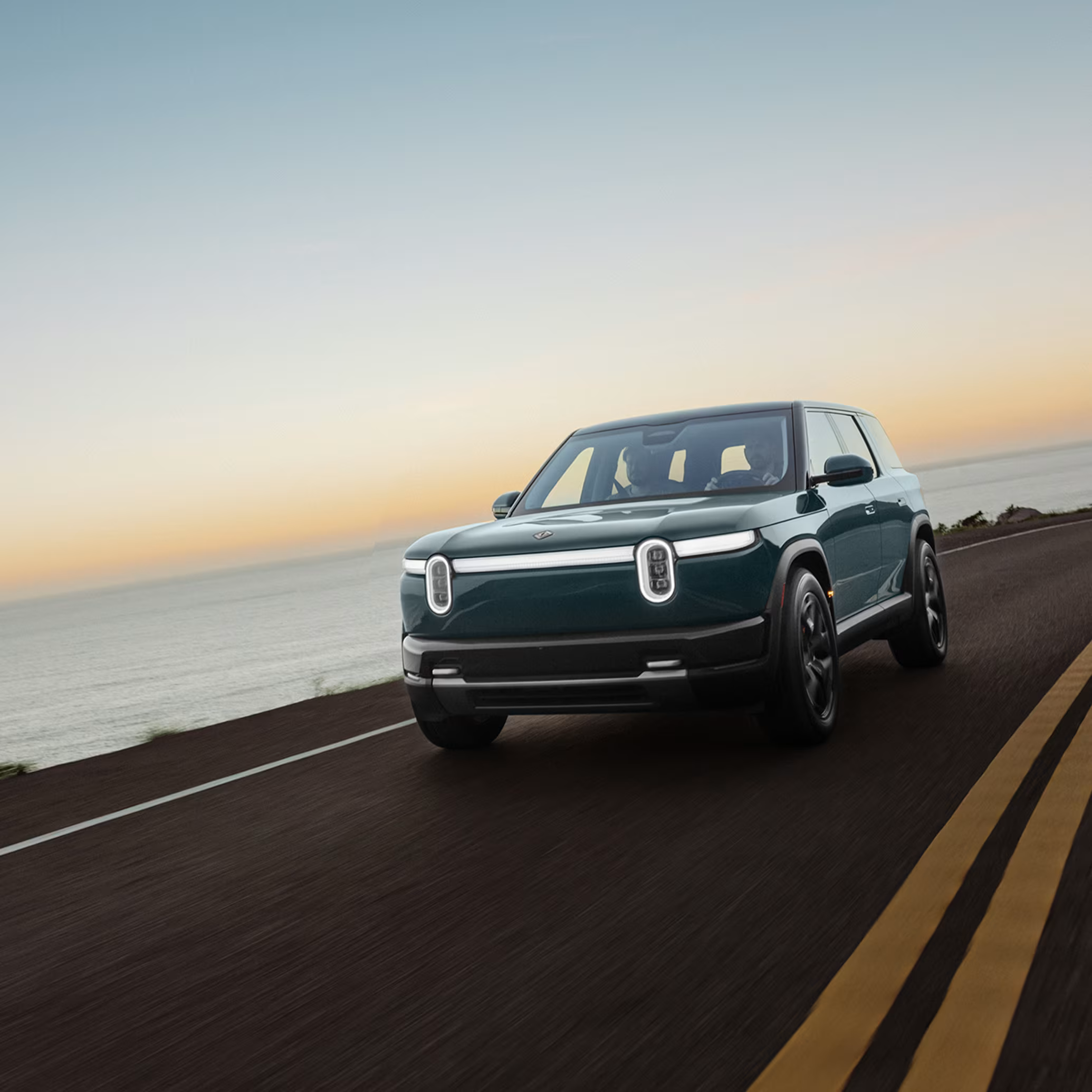
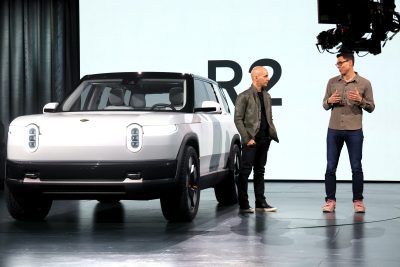
Rivian (NASDAQ:RIVN | RIVN Price Prediction) currently trades around $15, while Wall Street’s average price target sits at $18.16. That means analysts see roughly 21% upside for the stock today. Rivian designs and builds premium electric trucks, SUVs, and commercial vans, and is now betting its future on the R2 platform, a next-generation, lower-cost SUV designed for the mass market. Unlike Rivian’s current R1 vehicles, which are positioned as premium offerings, the R2 is meant to expand the company’s reach to a much broader customer base when deliveries begin in 2026. Wall Street has been watching closely because the company just posted its first full year of positive gross profit, signed a $1.25 billion robotaxi deal with Uber, and triggered a $1 billion Volkswagen investment after winter testing of their joint zonal architecture.
The R2 Pricing Surprise That Sent The Stock Lower
The selloff was driven by changes to the R2 rollout. Rivian originally targeted a $45,000 entry-level model, but that version is now delayed until 2027. The initial launch trim will instead start around $57,990, raising concerns about affordability and demand. The stock fell 6.4% on the news and dropped roughly 16% over the following month. CEO RJ Scaringe has called R2 the company’s “make-or-break product,” so any pricing slippage directly hits the thesis.
Operating data added pressure. Q1 deliveries fell 26.5% year over year to 8,141 vehicles, and the expiration of federal EV tax credits also reduced regulatory credit revenue from $299 million to $29 million in Q4, contributing to a sharp drop in automotive revenue. Insider activity hasn’t helped. Scaringe has sold stock in three separate transactions since March under a 10b5-1 plan, and CFO Claire McDonough sold 10,245 shares at $18.00 in late April.
Why The Bull Case Still Holds
Despite near-term pressure, analysts continue to focus on Rivian’s longer-term potential. Software and services revenue grew 109% year over year to $447 million, highlighting a higher-margin opportunity beyond vehicle sales. The company also has nearly $2 billion in remaining value tied to its joint venture with Volkswagen.
Partnerships remain central to the thesis. The Uber agreement could put up to 50,000 R2-based robotaxis on the road starting in 2028, while the VW collaboration provides both capital and validation of Rivian’s underlying technology.
The 26 analysts covering the stock are generally either bullish or neutral about the business:
- Strong Buy: 4
- Buy: 8
- Hold: 8
- Sell: 3
- Strong Sell: 3
DA Davidson upgraded from Underperform to Neutral while keeping a $14 target, and Baird reaffirmed Outperform after the R2’s 335-mile EPA range certification. The thesis hinges on the next 18 months: R2 production ramp through 2026, RAP1 autonomy hardware launching in R2 by late 2026, and the Georgia facility funded partly by a DOE loan of up to $6.6 billion.
My Take: A High-Upside Story With Major Execution Risk
The bull case rests on Rivian delivering on the R2 platform. If production ramps successfully, partnerships continue to fund growth, and software revenue scales, the stock has a path back toward analyst targets and potentially higher. However, the bear case could easily play out with delays of the lower-cost R2 variant raising questions about cost structure, while continued sales declines and ongoing cash burn could force additional capital raises.
My view is that the upside is meaningful if Rivian executes, but the gap to analyst price targets is not large enough to ignore the risks. This is a stock that likely needs to prove the R2 story in real time before the next leg higher.








 Top Gaining Stocks
 Top Losing Stocks