


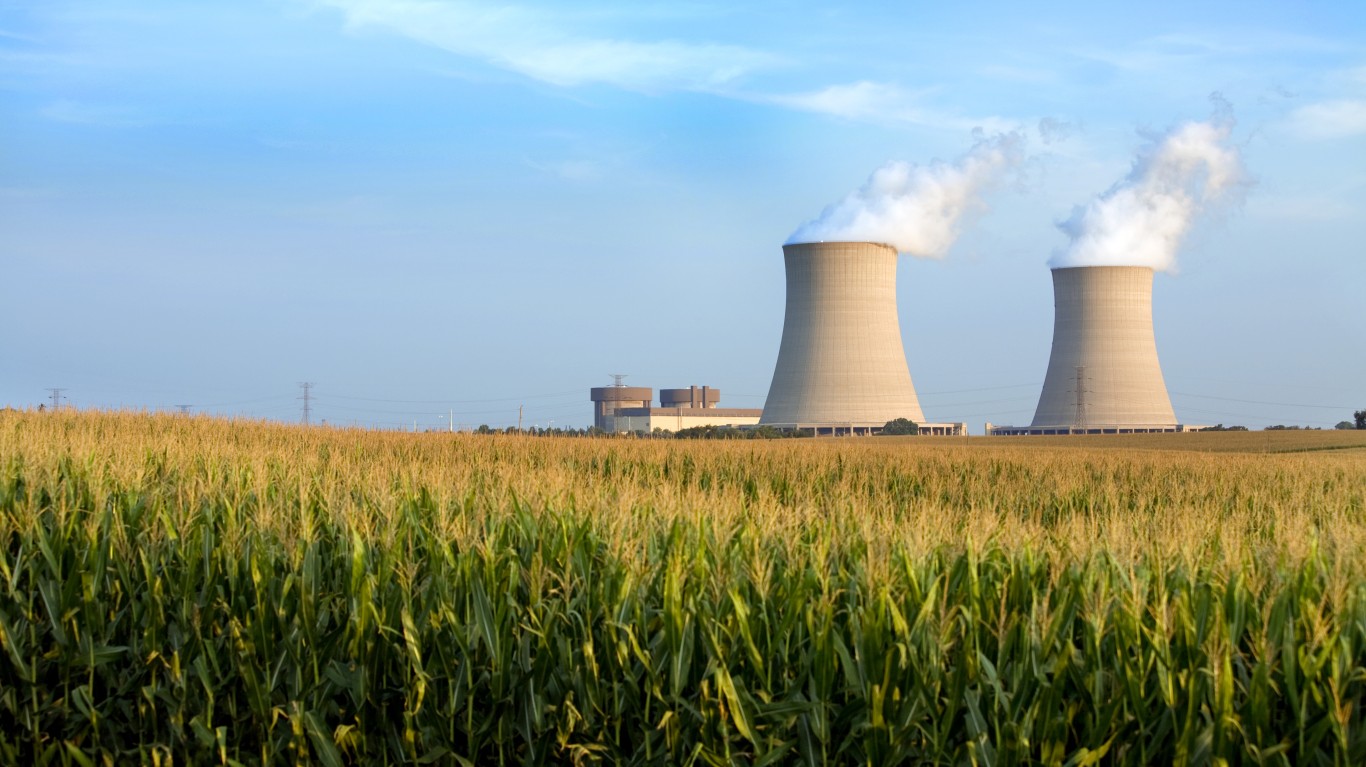
Shares of Oklo (NYSE:OKLO | OKLO Price Prediction) are up roughly 13% in midday trading Wednesday after the U.S. Nuclear Regulatory Commission (NRC) approved the Principal Design Criteria for the company’s Aurora powerhouse. The stock trades near $77, and it’s up 59% over the past month.
The move adds to a striking 12-month run for Oklo stock, now up 170% over the past year, even with shares only up 8% year to date (YTD). Investors are framing today’s regulatory action as one of the most important regulatory milestones for Oklo to date.
The bigger question driving today’s action is whether Oklo is becoming the foundational nuclear play for AI data center power. The bull case is compelling, but the bear case (no operating reactors, multi-year deployment timelines, valuation) deserves equal weight.
NRC Aurora Approval Fuels the Surge
The NRC approved the Principal Design Criteria for Oklo’s Aurora powerhouse, a foundational step in the licensing process. Once these criteria are accepted, subsequent reactor applications can proceed with a clearer regulatory framework, which directly de-risks the company’s path to commercial deployment.
That matters because regulatory uncertainty has historically been the largest overhang on advanced reactor names. Oklo’s Aurora design, recently scaled to a 75 MW configuration, targets modular baseload generation aimed at industrial sites and AI data center campuses.
The pipeline already looks built for the AI era. Oklo has roughly 14 GW of customer interest, anchored by a 12 GW non-binding Master Power Agreement with Switch by 2044 and a 500 MW letter of intent with Equinix backed by a $25 million pre-payment.
Financially, Oklo finished 2024 with $275.3 million in cash and marketable securities and a full-year operating cash burn of $38.39 million, the low end of guidance. CEO Jacob DeWitte stated, “The world is catching up to what we’ve known all along: nuclear power is essential to a clean, dependable, and scalable energy future.”
Peers Ride the Nuclear-AI Wave
The rally is rippling across the nuclear complex. NuScale Power (NYSE:SMR) shares jumped 10% intraday, and Cameco (NYSE:CCJ) climbed 6%, with the uranium supplier now up 25% YTD.
Larger utility peers are participating too. Constellation Energy (NASDAQ:CEG) added modest gains, while Vistra (NYSE:VST) traded slightly lower. Vistra’s 2026 adjusted EBITDA guidance of $6.8 billion to $7.6 billion reflects the same hyperscaler-driven demand thesis fueling Oklo’s surge.
Hyperscaler appetite remains the structural tailwind. Microsoft (NASDAQ:MSFT) is anchoring the Crane Clean Energy Center restart through a 20-year power purchase agreement with Constellation, and Goldman Sachs projects AI-driven data center power demand to rise 165% by 2030.
The bear case for Oklo hasn’t vanished. Insider selling has been cited by skeptics, valuation has run on milestones rather than revenue, and Oklo carries a trailing EPS of -$0.72. For broader sector context, see this analysis of an underrated 2026 nuclear and AI power winner.
What to Watch
Wall Street’s average OKLO stock price target sits at $91.36, with 13 buy, 5 hold, and 1 sell ratings. Composite sentiment scores Oklo at 49.75, a neutral reading that suggests the crowd remains split despite today’s surge.
Watch for whether today’s gains hold into the close. The next milestones that OKLO stock traders can track are progress on the combined license application, conversion of the Switch and Equinix LOIs into binding contracts, and any update on the late-2027 commercial deployment target at Idaho National Laboratory.
Prudent investors should treat the Aurora design criteria approval as a meaningful de-risking event, not a commercial green light. Approval of design criteria is a step on a long licensing journey, and Oklo remains pre-revenue with a multi-year path to first power.
Position sizing matters more than conviction here with OKLO stock, given the gap between regulatory progress and operating cash flow. Tomorrow’s price action and any commentary from management on the combined license application (COLA) timeline could shape whether this surge holds or fades.










 Top Gaining Stocks
 Top Losing Stocks