


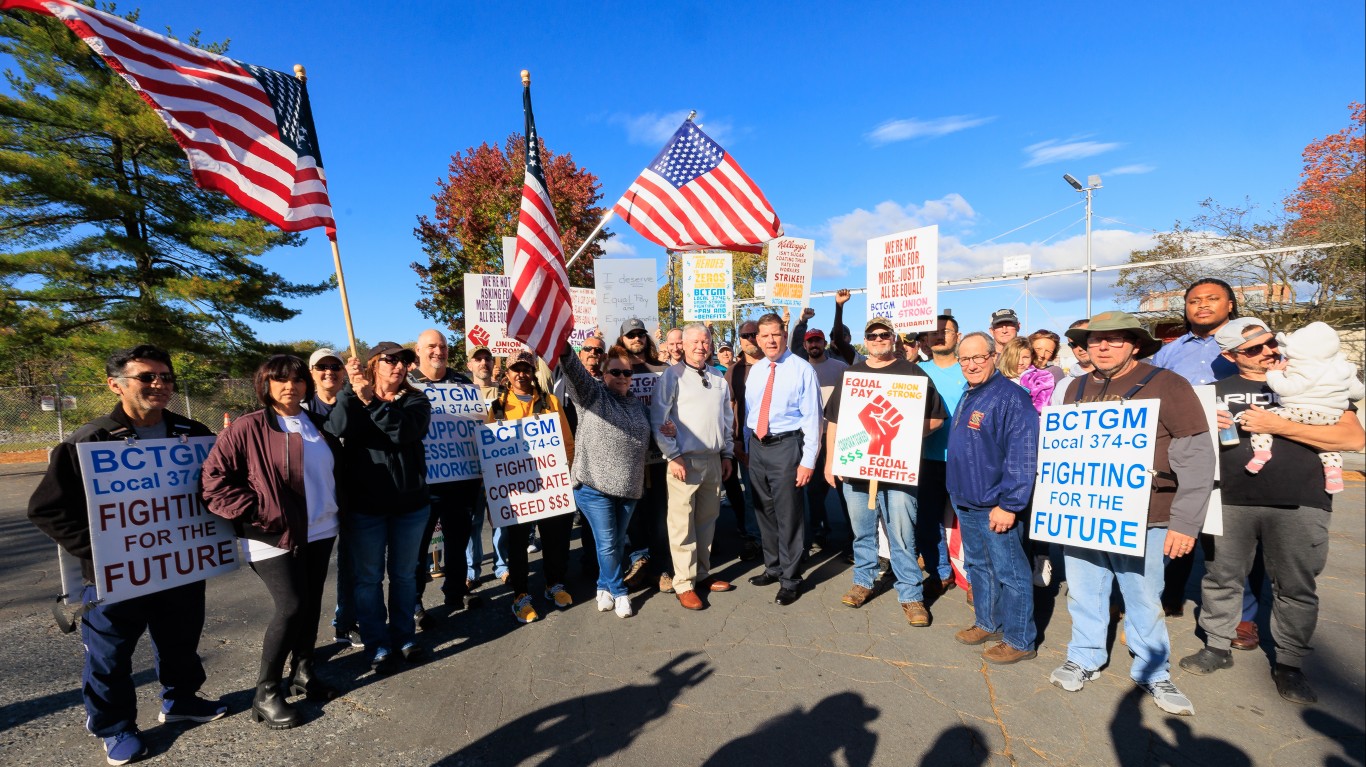
 Hyundai has just settled a long and bitter strike with its auto workers. Lufthansa cabin crews have just disrupted its flight schedule. Talks between AMR’s American Airlines and pilots might scuttle “merger” talks with US Airways Group Inc. (NYSE: LCC). The power of unions may have eroded over the past several years, or even decades, but the organizations have gotten some of their bite back, perhaps because the economy is just barely strong enough to give them leverage.
The deepest part of the recession robbed almost all workers, those in unions and those who were not, of negotiating power over wages and benefits. Employers, those who survived, usually could hire from a broad group of applicants. And even people they hired often worked on a temporary basis.
The greatest sign of how labor was neutered over time came just before and during the federal bailout of General Motors Co. (NYSE: GM) and Chrysler. Not only did tens of thousands of workers lose jobs ahead of the bankruptcies, the UAW got equity in the companies in some cases, instead of the standard benefits they had built over decades of bargaining. It turns out that the equity has some real value. But that has been a matter of luck because of the recovery of the economy. The deal definitely was shoved down their throats.
The retreat of unions is such that among some of the largest industries in the United States, they have lost almost all of their members. Those include the largest newspaper unions, which could strike at will 40 years ago and close their employers and their ability to print and distribute. Over time, both technology and the change of paper ownership to huge well-funded companies changed that.
Unions have lost what they once had — the power to completely hamper the activity of a large number of industries and companies. But they have, it seems from recent strikes and the threats of them, gotten a bit of bargaining power back.
Douglas A. McIntyre







 Top Gaining Stocks
 Top Losing Stocks