



The four states that were worst off in March are are led off Nevada, which had the highest unemployment rate among the states in March at 9.7%. The next highest rate was in Illinois at 9.5%, and California and Mississippi each were at 9.4%. The last time the national unemployment rate was above 9.7% was in November 2010.
The diversity of the economies of the four states, as well as the fact that they are not all geographically close together, says a great deal about how the permanent damage the recession made to the economy is complex, and therefore complicated to solve. In Nevada, gambling and construction represent most of the damage. And the two industries run in a bad cycle. Much of the gambling traffic that came to Las Vegas has moved elsewhere, both in the United States and overseas, or has gone online. These trends will continue to hurt home sales for an indefinite period, and perhaps for good. Construction jobs were a large part of the state’s success. Those jobs will not be back either.
Illinois, for the most part, is a proxy for the decades-old erosion of the Rust Belt. In Decatur, Rockford and Kankakee-Bradley, the jobless rate is above 13%. So far, nothing the state or federal government has done to bring jobs back to these cities has worked. Although it is mentioned often, it is worth repeating that whatever work skills the people in these cities had are eroding.
Mississippi is a special case, because of its long history of poverty, poor education and health problems. A number of factors, like a skilled workforce, that might help the state lift the jobs rate are not present. If anything, government assistance is necessary to reverse the long slide into a set of demographic circumstances that makes recovery impossible for now. Mississippi will go through another generational cycle of poverty with nothing to interrupt it.
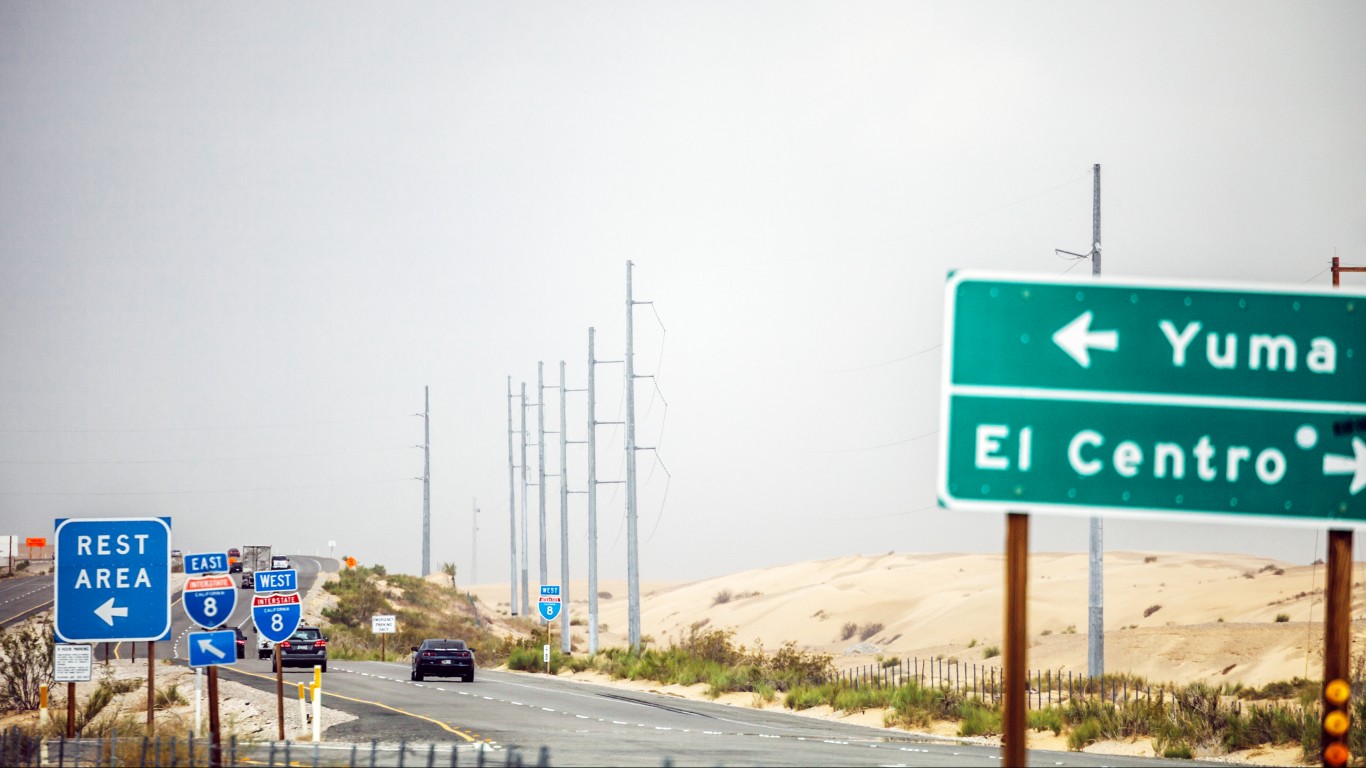
Finally, California cannot be considered a single state for the purposes of an analysis of unemployment. The state has 38 million people. Some live in areas where the jobless rates have dipped well below national average — including areas where tech companies are located. In others placds, rates will be above 10% for years. These are in the interior parts of the state, where many of the jobs are in agriculture and construction. None of these industries show any significant recovery.
As unemployment goes, battered parts of the country are similar to what the entire nation looked like at the bottom of the recession. So far, no one has offered a solution to bring these areas back in line with the countrywide average, because each one shares very little in common with much of the rest of the United States.








 Top Gaining Stocks
 Top Losing Stocks