


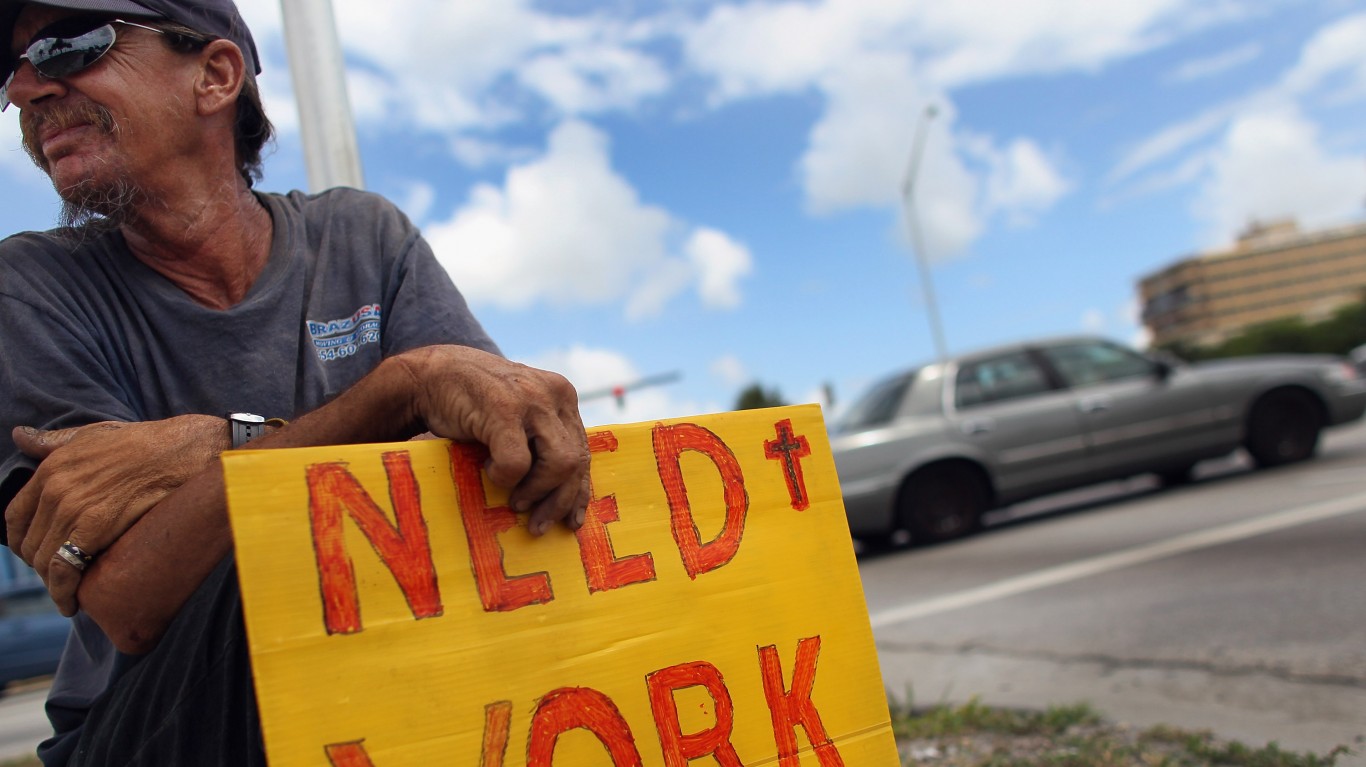
The most recent unemployment report has just surfaced and things appear to be looking up, if only slightly. The U.S. Department of Labor released its Employment Situation report for January on Friday. It showed that 49,000 nonfarm payrolls were added last month, and the official unemployment rate fell 0.4 percentage points to 6.3%.
While the unemployment rate was lower, this still equates to roughly 10.1 million unemployed persons. These numbers are much lower than in April 2020, but they remain well above their pre-pandemic levels in February 2020 (3.5% and 5.7 million, respectively).
In January, the notable job gains in professional and business services and in both public and private education were offset by losses in leisure and hospitality, retail trade, health care and transportation and warehousing.
In terms of the specifics, employment in professional and business services rose by 97,000, with temporary help services accounting for most of the gain (81,000). There were increases in local government education (49,000), state government education (36,000) and private education (34,000).
[nativounit]
Leisure and hospitality declined by 61,000, following a steep decline in December (−536,000). Retail trade lost 38,000 jobs in January, after adding 135,000 jobs in December. Also, employment in health care declined by 30,000 last month.
The Labor Department broke down the unemployment rates for major worker groups:
Unemployment rates declined over the month for adult men (6.0 percent), adult women (6.0 percent), Whites (5.7 percent), and Hispanics (8.6 percent). The jobless rates changed little for teenagers (14.8 percent), Blacks (9.2 percent), and Asians (6.6 percent).
The average hourly earnings for all employees on private nonfarm payrolls increased by six cents to $29.96. The average workweek for all employees on private nonfarm payrolls increased by 0.3 hour to 35.0 hours in January.
[recirclink id=836409][wallst_email_signup]













 Top Gaining Stocks
 Top Losing Stocks