



The Bureau of Labor Statistics (BLS) employment report for January showed that the number of jobs surged by 517,000. That was unexpected. Also, the jobless rate dropped to 3.4%, which is a 50-year low.
When viewed through the lens of race and gender, the figures looked very different. The jobless rate for adult men was 3.2%. For adult women, it was 3.1%. For white Americans, it was 3.1%, while it was 2.8% for Asian Americans and 4.5% for Hispanics.
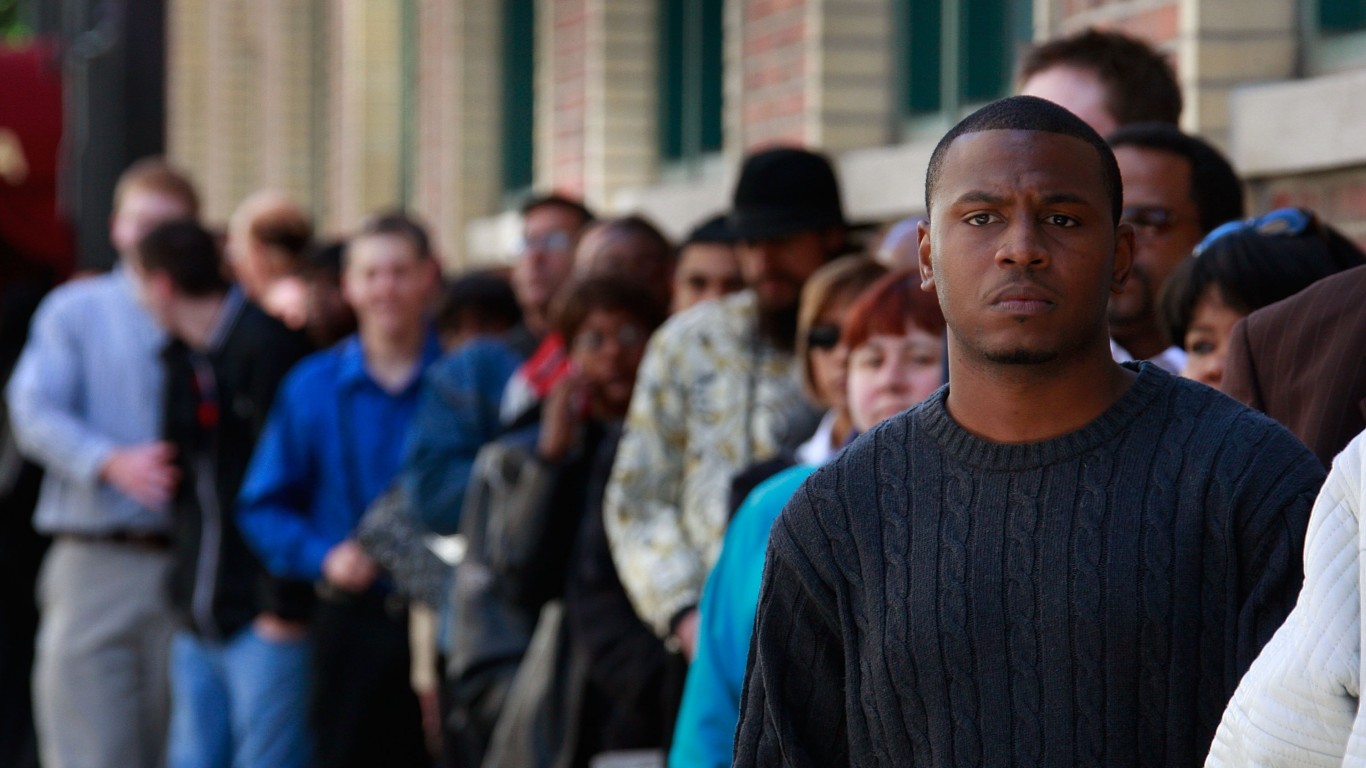
There is certainly an argument to be made that Black unemployment is near an all-time low, but it is still much higher than the figure for white Americans and may stay there.
Black Americans have higher jobless rates than whites for several reasons. The Economic Policy Institute reports that among the primary reasons are racism and single-adult households in which one person tries to care for children while holding a full-time job.
[nativounit]
The American Progressive reports that the spread between Black and white jobless rates goes back to 1972, when the BLS started to gather monthly employment data. It gives incarceration, the rate of which is higher among Blacks than whites, as another reason. “Mass incarceration plays a significant role in the lower labor force participation rate for African American men.” Educational attainment is another reason. Whites tend to graduate from high school and college at a higher rate than Black people do.
[wallst_email_signup]
None of these reasons can be taken alone, according to many experts. They represent a web of problems Black Americans face as they try to enter the workforce. One thing almost all experts agree on is that these problems will not go away.
[recirclink id=1188304]
A study by 24/7 Wall St. last year shows the deep problems can be further explained at the city level. Among the worst cities for Black Americans: “While no area is free from discrimination or racial disparities, there are a number of U.S. metro areas where the differences are much more stark. In these areas, there are significant gaps in income, poverty, educational attainment, unemployment, and other measures between Black and white residents.”
Based on all these factors, the gulf between Black unemployment and white is unlikely to change.











 Top Gaining Stocks
 Top Losing Stocks