


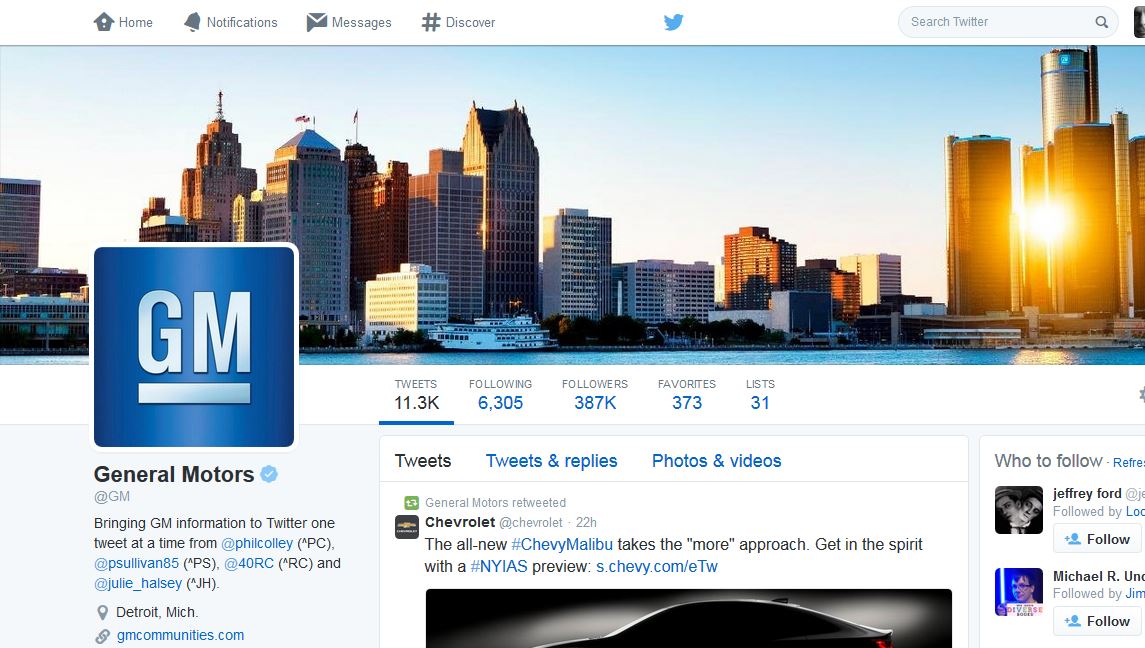
Twitter is supposed to be one of the major gateways via social media to tens of millions of potential customers. For the time being, the only gateway for the great majority of companies is via paid, sponsored messages. Some of what companies pay for the messages is based on performance, which should make them attractive. Twitter’s very modest revenue of $479 million in the fourth quarter of last year would say that most corporations think the approach is ineffective. And Twitter’s revenue next year is only expected to be $2.5 billion, a drop in the sea of global advertising spending.
The harsh reality companies have to accept is that what celebrities have to say eclipses any corporate communications. Why does Katy Perry lead the list of those followed on Twitter at 66.2 million, or child star and renegade Justin Bieber at 61.1 million? Neither tweets much more than garbage, at least as fair as corporations with large marketing budgets can tell.
Why aren’t people on Twitter fascinated with what General Motors Co. (NYSE: GM) or McDonald’s Corp. (NASDAQ: MCD) has to say when they sell products in such huge numbers that consumer demand for those products is so obvious? Maybe their traditional marketing messages reach so many people that social media users don’t need any additional information about fast-food menus or cars. In reality, these companies are desperate to be relevant enough to have a presence on the next big wave of media, where people spend most of their time instead of watching TV or reading magazines.
Almost no one cares whether large companies have a significant following on Twitter, except the companies themselves. Based on their efforts and lack of success so far, they might as well give up.






 Top Gaining Stocks
 Top Losing Stocks