



Special to 24/7 Wall St. From PrivCo
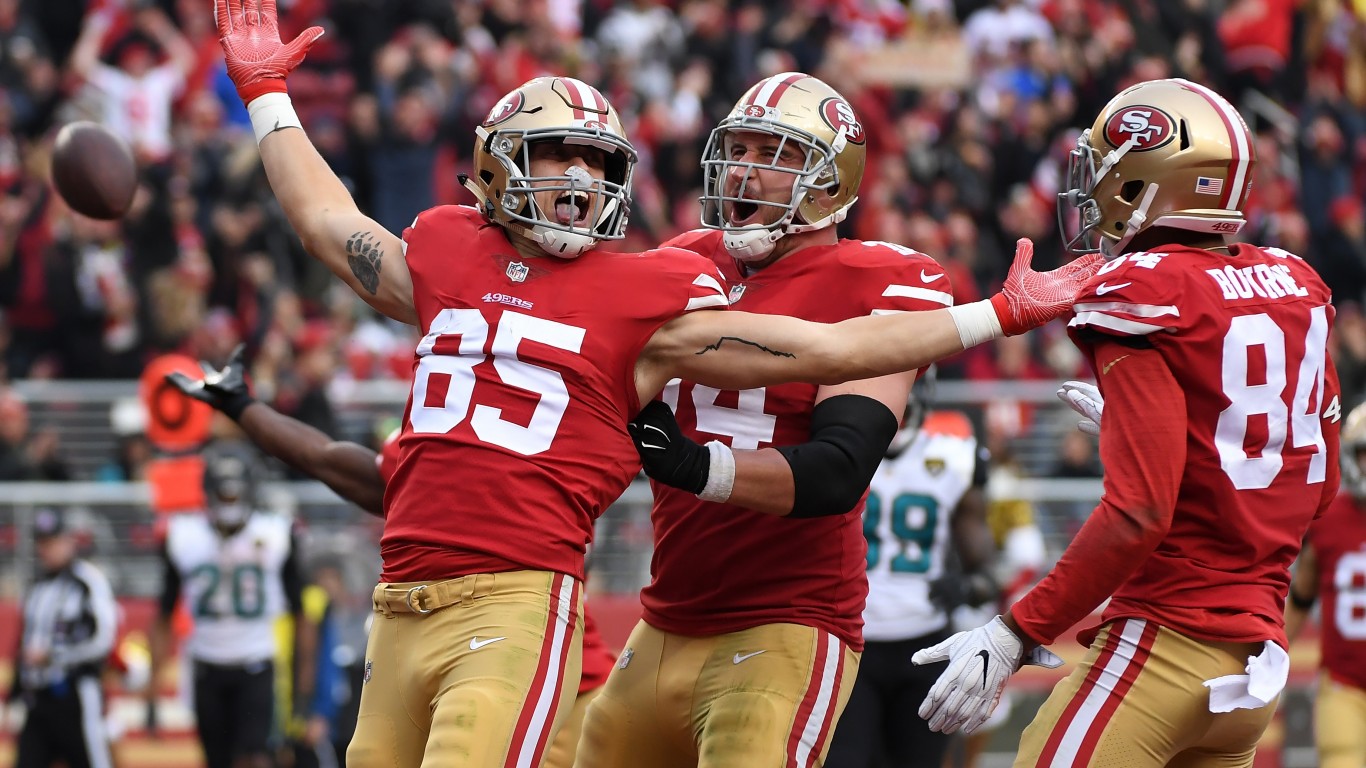
When HBO’s “Hard Knocks” returned this August, it marked the beginning of a marketing and media firestorm that will lead up to the start of the NFL season, which this year begins with a Superbowl 50 rematch of the Panthers and Broncos on September 8th.
While we are certainly excited for the NFL season to return, there are two companies that have been waiting even more patiently than we have: FanDuel and DraftKings.
FanDuel and DraftKings just went through a blistering off-season similar to the roller-coaster ride the Ravens saw after winning the Superbowl and then losing two of their pillars (Rice and Lewis) in the following two years. The Ravens went 8-8 the following season and failed to make the playoffs, but that isn’t where the story ends for them, and it’s not where the story ends for DraftKings or FanDuel.
DraftKings and FanDuel’s Superbowl moment was achieving unicorn status. Their Ray Lewis departure moment was then they saw those valuations drop considerably as 21st Century Fox cut the value of its 11% stake in DraftKings by about 40%. Finally, their Ray Rice moment came when New York Attorney General, Eric Schneiderman, hit the two companies with an injunction that halted the sites’ operations in New York. In a joint interview he gave with the New York Times andFrontline, Schneiderman called Daily Fantasy Sports (DFS) a “convoluted scheme” and, “a particularly pernicious form of gambling.”
That is about as bad as an off-season as one can have; things, however, are looking up for the two companies, despite allegations of imploding by the squeaky clean, Disney-owned, ESPN. (If 11,000 words is too long to comprehend, Dan Primack of Fortune did a much better summary of the findings here)
Legal setbacks are the death of some companies and for some, it’s an example of their resilience. Uber and Airbnb are perfect examples of where legal uncertainty can hinder a company (some feel it is the reason neither have gone public, along with a number of other reasons).
Last Monday, DraftKings and FanDuel passed one legal hurdle that was pivotal for both. They will be allowed to resume operations in New York for one year. It’s not a touchdown, more of a field goal, but in a statement made to PrivCo from a company spokesperson within FanDuel, the company’s “long-term future is bright.”
We decided to look into PrivCo’s Private Company Financial Database to look into the performance of these companies during their short histories. PrivCo also reached out to FanDuel and DraftKings spokespeople to get their take on the new ruling, hear their plans for the future, and learn what the daily fantasy legal implications could mean for the industry. (DraftKings was unavailable for comment at the time of PrivCo’s release).
Both companies have a wealth of information to analyze, and we took a look at the information we had on both as well as a number of data points that FanDuel supplied exclusively to PrivCo. Below are our findings.
Profits & Losses:
Each company’s revenues have followed a growth trajectory that would make any tech company investor eager to be a part of. Some are saying it is the beginning of the end for gaming prohibition in America and that these two companies are at the forefront of that disruption. As you can see below (numbers unconfirmed for FYE by both companies), the two have dramatically increased revenues each year, both showing a 1-year growth rate in the triple digits (FanDuel grew by 203%, DraftKings by 162%).

What is important to note is that both companies had losses in 2015. It has been reported that DraftKings lost about $280MM in 2015, while FanDuel lost an estimated $137MM in the same year. So at face value, FanDuel is doing better with higher revenues and lesser losses. Each company is in a tight battle to oust the other in market share. While FanDuel had a three-year head start, Draft Kings spent an enormous amount of money on advertising last year, even inking an exclusive deal with ESPN to advertising on its network. This is where we can attribute the losses to. When PrivCo asked how FanDuel was going to combat DraftKings’ marketing spend, a spokesperson from the company stated that “there will be new marketing content coming out the week of football [season] across existing platforms including TV, radio and digital.” When we asked about their profitability, the company stated:
“We are on track to be profitable. Our current focus is on customer acquisition, retention, and optimizing our core product for the user.” —FanDuel to PrivCo
How either firm will implement its strategy is unknown as the exclusivity contract ended early for DraftKings and now ESPN is unsure about letting any Daily Fantasy Sports (DFS) company advertise on its network. These two companies currently dominate about 90% of the DFS leagues in America and will not look to give up that market share to competitors like Yahoo anytime soon. Both companies are looking to grow outside the realm of daily fantasy and could even begin to take users away from traditional fantasy football platforms.
Opportunities for Growth:
These companies are both in their infancy, and regardless of their market domination, the two are looking to take their influence far beyond their current platform. Speaking to Yahoo Finance, FanDuel CEO Nigel Eccles stated, “Our business is growing…we’re going to be competing directly against ESPN, Yahoo, and other fantasy providers.” FanDuel in particular is now offering an invite-only, season-long fantasy option similar to those found on the platforms of ESPN, Yahoo, and CBS. (Yahoo is currently the largest fantasy football platform in America). PrivCo asked FanDuel if it had any other non-traditional paths for growth, such as including fantasy sports across soccer, golf, or NASCAR.
“We are focused on offering our users the best core product (NFL, NBA, NHL, and MLB) as well as continuing to make improvements to our UK Product (our first international product launched this summer).” –FanDuel to PrivCo
The UK product offering presents a unique opportunity for growth, as sports betting and the rise of fantasy leagues across Europe has skyrocketed.
As for traditional growth, FanDuel has made enormous gains with its registered users. The company went from just under 20,000 in its first year and has stated to PrivCo that it currently has over 6 million registered users.
How to Get There:
The road from A to Exit with high-growth technology companies always takes a number of different routes. It is a safe bet to assume that a wealth of venture capital funding will typically be along for the ride.
PrivCo asked FanDuel if it was planning to raise another round, but the firm declined to comment on the issue. Its main rival, DraftKings, raised a $70MM dollar series E round earlier this year from a number of existing investors including KKR, as well as from new investors like NBC Sports Ventures. As of September 1st, 2015 DraftKings closed an additional round raising $153MM.
The valuation was undisclosed for both rounds, though it is speculated that it is down from the $2 billion post-financing figure achieved at the previous 2015 round, but that it did not dip below $1 billion.
As we can see below, both companies have gladly dipped their hands into the VC funding cookie jar, and it looks to only be a matter of time before both companies need to re-tap that capital source.

Regardless of how one feels about the moral implications of DFS, the remarkable rise of DraftKings and FanDuel to unicorn status, and what looks like their permanent place within America’s top sport should not be ignored. What was set in motion last Monday by the latest ruling was a small victory that both companies were happy to achieve. After devastating off-seasons, this small victory is a baby step toward recovery. From the perspectives of investors and fans alike, it could be the beginning of a daily fantasy dynasty.
[wallst_email_signup]
Special to 24/7 Wall St. From PrivCo










 Top Gaining Stocks
 Top Losing Stocks