


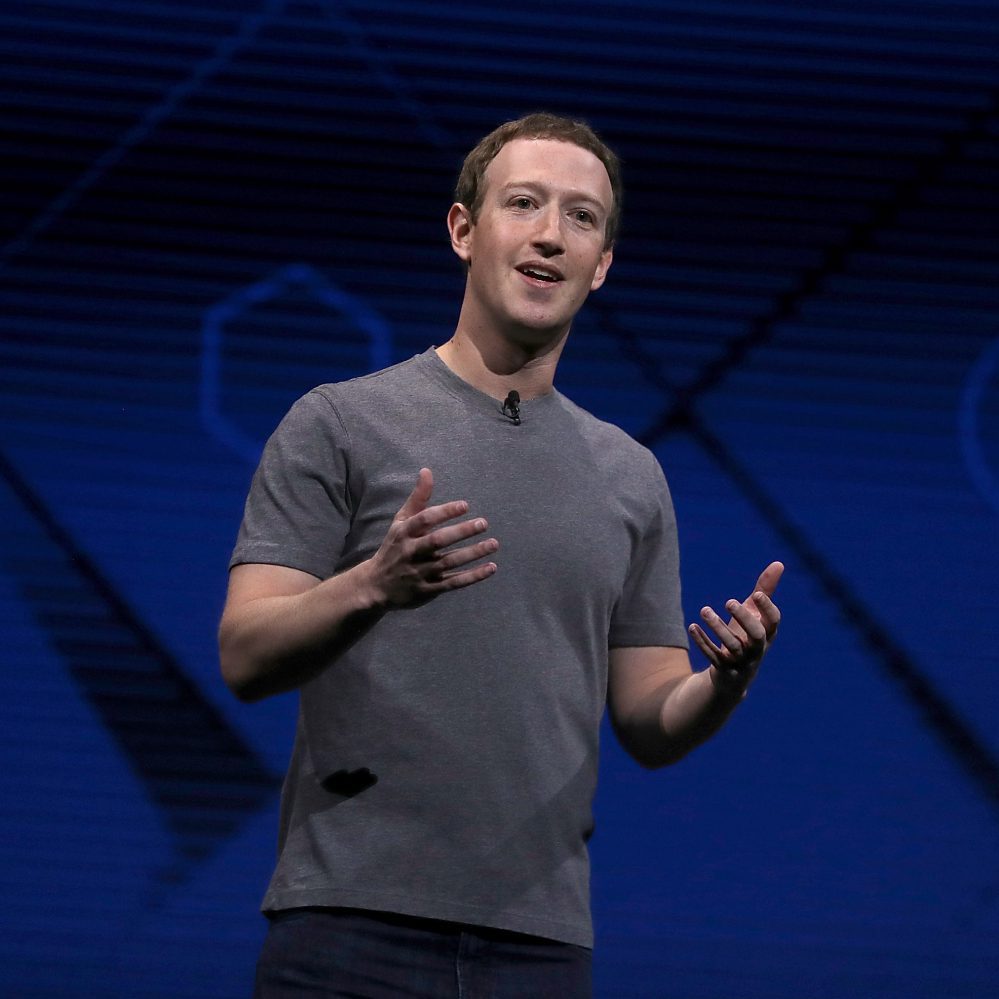
Facebook Inc. (NASDAQ: FB) announced Thursday that it is updating its news feed to “prioritize posts that spark conversations and meaningful interactions between people.” According to the company, that means that it will prioritize posts from friends and family over public content, “including videos and other posts from publishers and businesses.”
This is not particularly good news for content publishers but may not be good news for advertisers or for Facebook itself. CEO Mark Zuckerberg said in a blog post that he expects “some measures of engagement will go down.”
Facebook is the second-largest recipient of digital advertising revenues in the United States. In 2017 the company accounted for 23% of all U.S. digital ad spending with an estimated take of $21.57 billion.
Advertising is not expected to be affected, although the company has been encouraging publishers to post more videos because videos draw higher ad rates than other types of advertising.
[nativounit]
Prior to the announcement, researchers at eMarketer had forecast that Facebook would account for more than 11% of all U.S. ad spending — digital, print and TV — by 2019.
In his comments on the change, Zuckerberg noted:
We feel a responsibility to make sure our services aren’t just fun to use, but also good for people’s well-being. … The research shows that when we use social media to connect with people we care about, it can be good for our well-being. We can feel more connected and less lonely, and that correlates with long term measures of happiness and health. On the other hand, passively reading articles or watching videos — even if they’re entertaining or informative — may not be as good.
Based on this, we’re making a major change to how we build Facebook. I’m changing the goal I give our product teams from focusing on helping you find relevant content to helping you have more meaningful social interactions.
Fewer videos means fewer (high-return) ads, which means lower revenues. What Facebook is banking on is that ad rates will rise as people get more engaged with content generated by friends and family. It’s a gamble, no doubt about that.
The company has also faced sharp criticism for its role in distributing fake news and raising the level of political polarization. Bloomberg cites Brian Wieser, an analyst at Pivotal Research Group, who noted:
This [announced change] is recognition of the issues they’ve faced with toxic content. People are frustrated with the Russia revelations and fake news and have taken it into their own hands and stopped engaging.
Investors have balked at the announcement, sending shares down about 5% in Friday’s early trading to $178.26, in a 52-week range of $126.78 to $188.90. The 12-month consensus price target on the stock is $210.95.
[recirclink id=435528]
[wallst_email_signup]










 Top Gaining Stocks
 Top Losing Stocks