


A co-founder of Microsoft Corp. (NASDAQ: MSFT) has died. According to Reuters:
Microsoft Corp co-founder Paul Allen, the man who persuaded school-friend Bill Gates to drop out of Harvard to start what became the world’s biggest software company, died on Monday at the age of 65, his family said.
The CEO of Google made his argument about why it should move back into the Chinese market. According to The Wall Street Journal:
Google’s chief executive defended his company’s plan to explore a search engine tailored for users in China despite concerns that would mean complying with the country’s strict internet censors.
In his most extensive public remarks on the topic, Sundar Pichai said entering China in some ways aligns with the company’s mission to provide information to the world’s population, since one-fifth of those people reside in China. Even complying with China’s censors, he said, Google would be able to deliver search results to more than 99% of queries and in some cases deliver more helpful results than users currently get from local search engines.
[nativounit]
The U.S. deficit soared in the most recent fiscal year. According to the WSJ:
The U.S. government ran its largest budget deficit in six years during the fiscal year that ended last month, an unusual development in a fast-growing economy and a sign that—so far at least—tax cuts have restrained government revenue gains.
The deficit totaled $779 billion in the fiscal year that ended Sept. 30, up 17% from $666 billion in fiscal 2017, the Treasury Department said Monday. The deficit is headed toward $1 trillion in the current fiscal year, the White House and Congressional Budget Office said.
Sears has a plan to exit bankruptcy. According to The New York Times:
In its bankruptcy filing on Monday, Sears argued that, given enough time and less debt, it would be able to reverse the decades-long decline of its retail business.
But the company’s latest turnaround plan looks a lot like its previous turnaround plans: close unprofitable stores, sell properties and borrow more money from the company’s chairman and largest investor, Edward S. Lampert.
Saudi Arabia could lift oil prices but hurt itself in the process. According to CNBC:
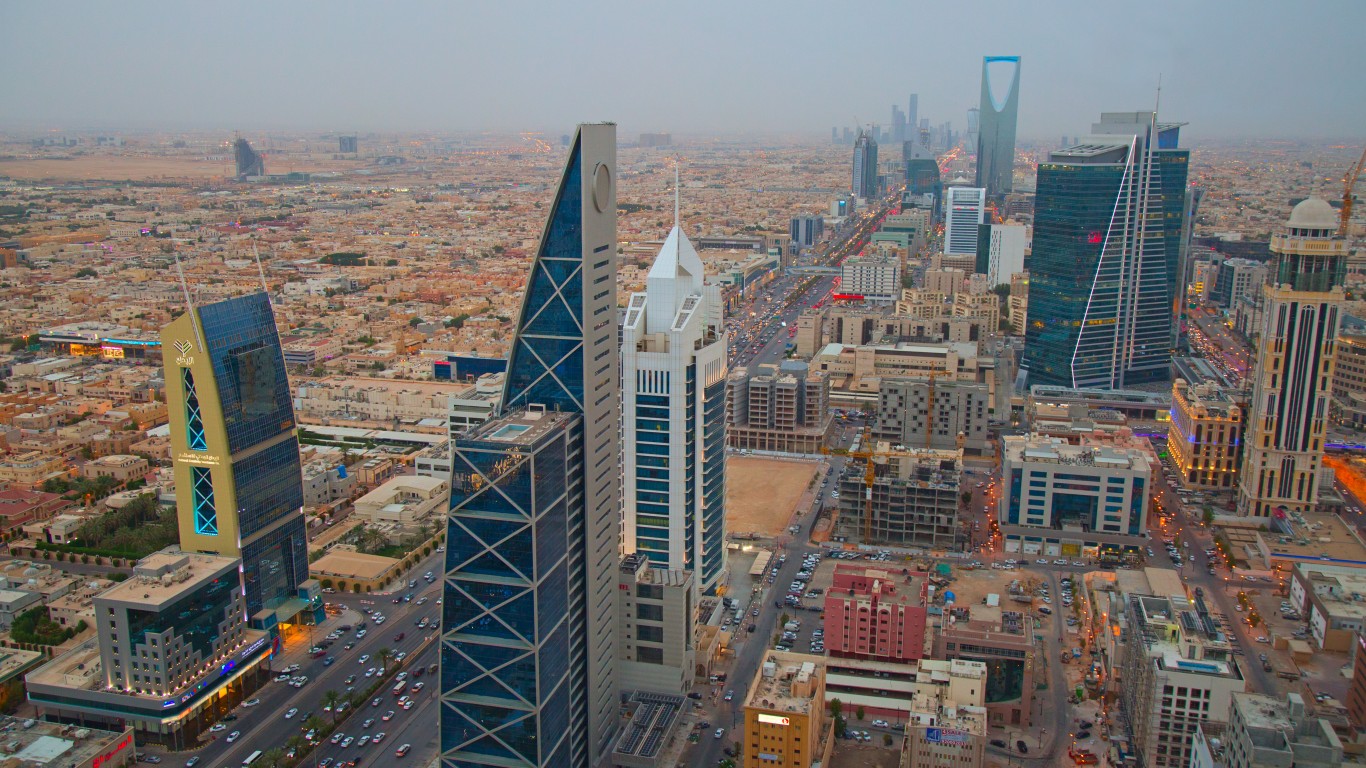
Fears are spreading that Saudi Arabia, in retaliation against the growing global outrage caused by the disappearance of Saudi journalist Jamal Khashoggi, may hit back at potential economic sanctions by weaponizing its oil dominance.
Saudi Arabia’s not-so-veiled threat issued in a government statement Sunday emphasized its “vital role in the global economy” and that any action taken upon it will be met with “greater action”. But as oil ticks upward, a look at history and geopolitics suggests that while a Saudi-driven oil price spike would bring pain for much of the world, it would ultimately backfire on itself.
Ford Motor Co. (NYSE: F) has released a new car in China as it hopes to turn around falling sales. According to CNBC:
Ford released an all-new mid-sized sport utility vehicle in China on Monday, as the automaker contends with an aging product line and flagging sales in the world’s biggest car market.
The Ford Territory is aimed at mid-sized SUV customers in small but fast growing cities across China, which Ford said is the country’s fastest growing market. The vehicle was developed with Ford’s local partner, Jiangling Motors.
[wallst_email_signup]






 Top Gaining Stocks
 Top Losing Stocks