


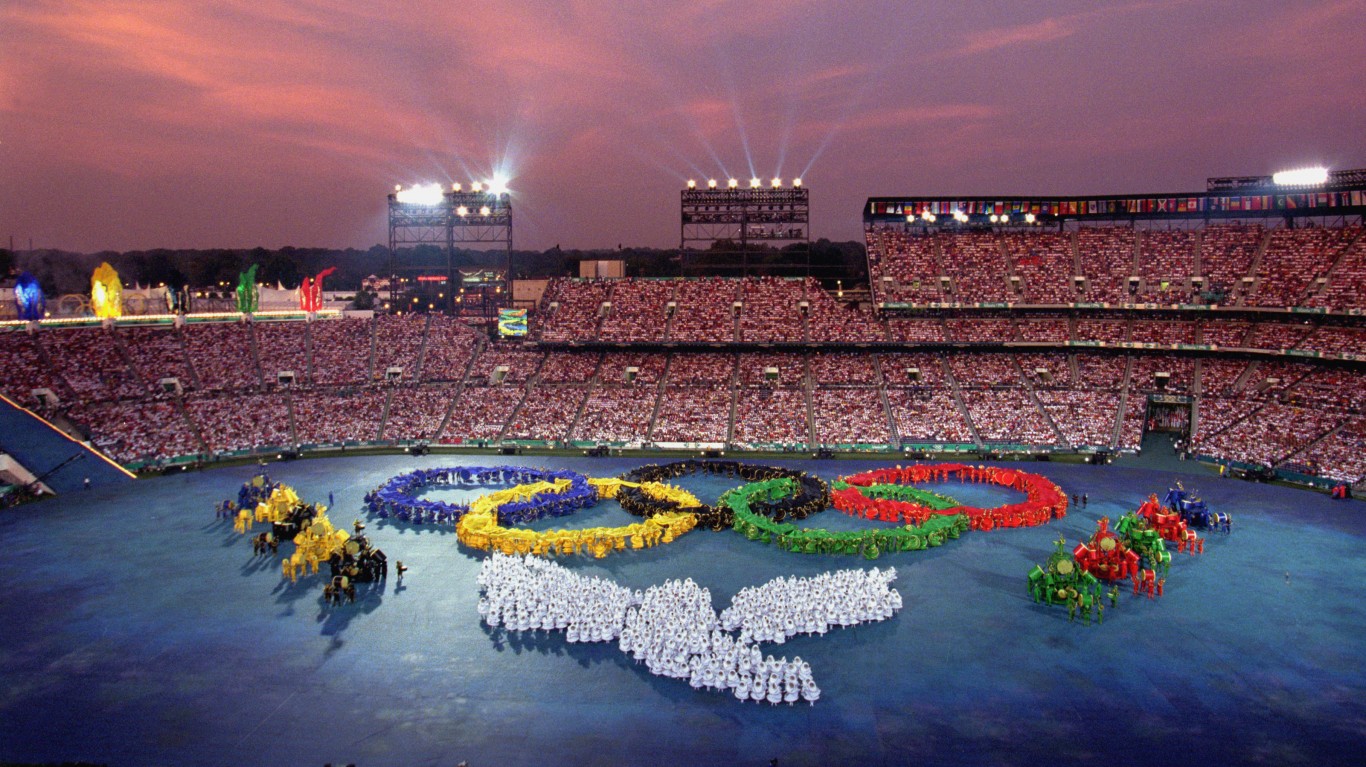
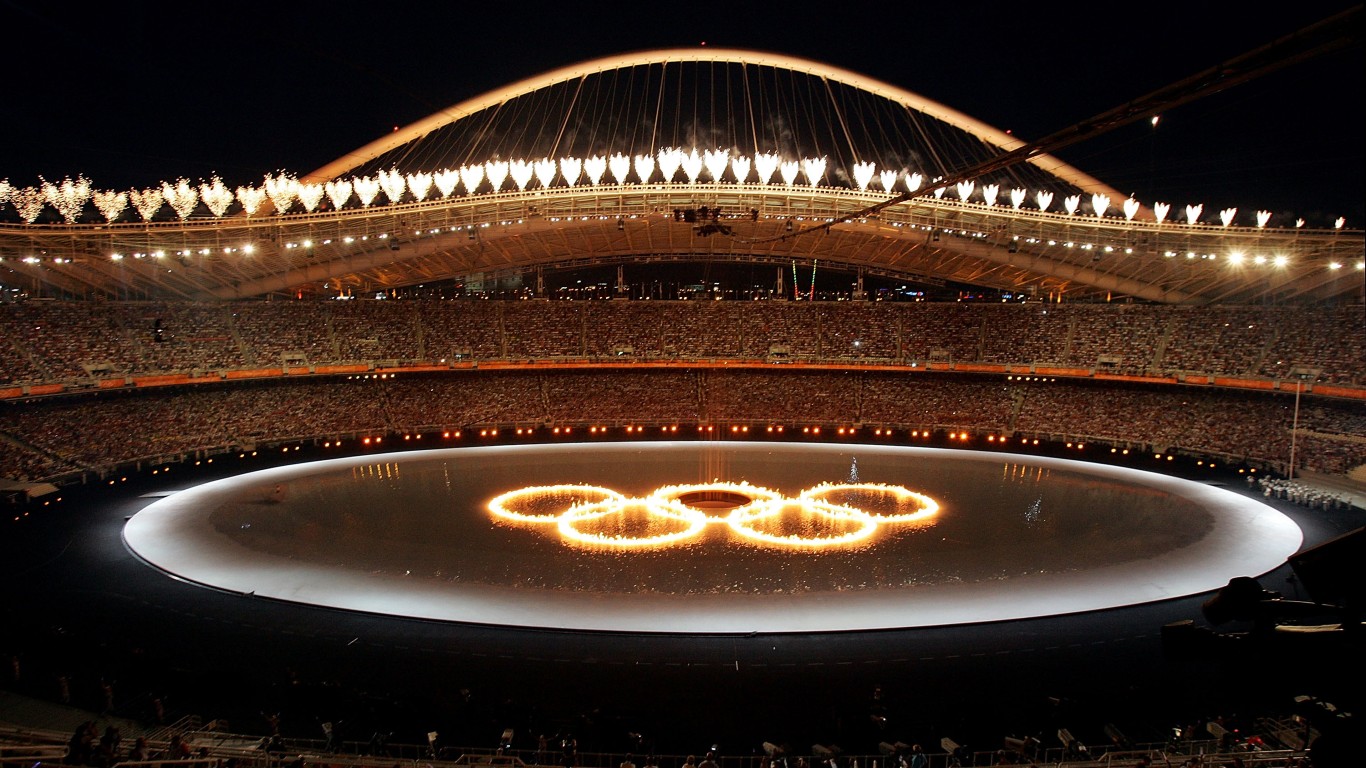
[cnxvideo id=”674421″ placement=”ros”]The Olympic Games are one year away. Japan will be the host, and events will run from July 24 to August 9. Sportswriters are already picking favorites across dozens of events. The one image seen most frequently in the coverage is the Olympic emblem. The host country can design its own version of the emblem. However, one thing cannot be changed — the emblem must have five interlocking circles. The emblem was first designed in 1913, by Pierre de Coubertin, founder of the Olympic movement, and is known as the Olympic rings.
De Coubertin’s rules for any design that used the emblem were simple –“These five rings represent the five parts of the world now won over to the cause of olympism and ready to accept its fecund rivalries. What’s more, the six colors thus combined reproduce those of all nations without exception.” Five rings, five continents. The emblem is also used by the sponsors of the Olympic Games. The International Olympic Committee (IOC) must approve designs from each of the host nations.
The value of the rings in incalculable. NBC’s parent spent $4.4 billion to televise the Olympic Games from 2011 through 2020. It is a gamble that advertising revenue from the event will more than offset those costs. The list of sponsors, known as Worldwide Olympic Partners, is a who’s who of global consumer companies — Coca Cola, Samsung, Alibaba Group, Dow, General Electric, Panasonic, Omega, Intel, Toyota, Procter & Gamble, Visa, Bridgestone, and Atos. Four-year global sponsorships cost $200 million. The Olympic Games is one of only a few athletic events that companies put so much money into. The Super Bowl is another that commands millions of dollars — and these are the 50 biggest Super Bowl advertisers of all time.
The IOC has even set up a rule to protect its sponsor’s rights to the logo, known as Rule 40. According to Pledge Sports “…Rule 40 is written into the Olympic Charter to protect the rights of official Olympic sponsors. For the investment they put into the Games, these brands are allowed to use trademarked Olympic terms, phrases, and images in their campaigns.”
For many athletes the Olympics are the most prestigious competition they can win. This is especially true for sports that don’t get as much exposure the rest of the time — swimming, wrestling, gymnastics, track and field, to name a few. Some athletes have dominated their sports for decades. These are the most successful athletes of the 21st century.











 Top Gaining Stocks
 Top Losing Stocks