


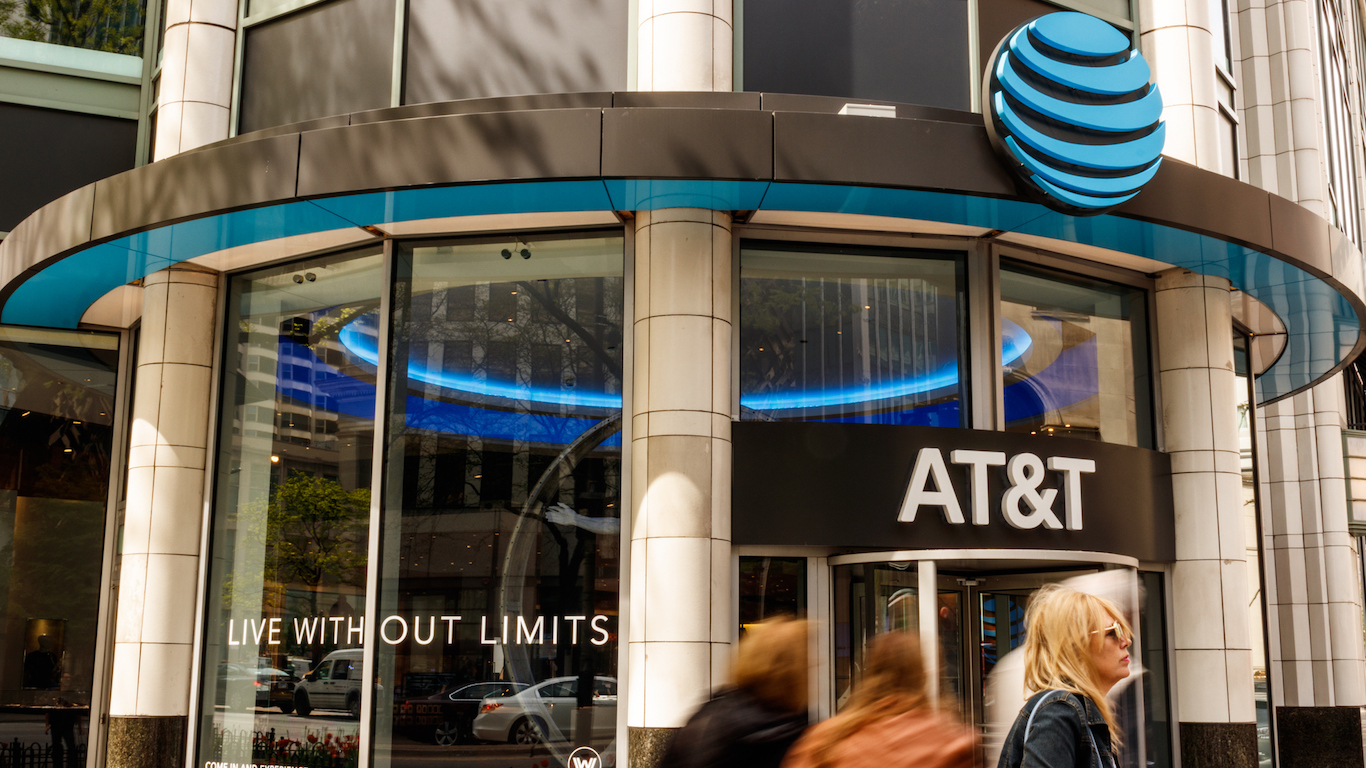
At the end of June, AT&T Inc. (NYSE: T | T Price Prediction) reported that the company had 21.58 million combined subscribers for its DirecTV satellite and U-verse broadband services. When AT&T paid $67.1 billion (enterprise value) for DirecTV in 2015, the satellite TV provider had about 26 million subscribers on its own.
Now AT&T is looking at alternatives for its DirecTV business, including selling it, spinning it off, even combining it with competitor Dish Network Corp. (NASDAQ: DISH), or just keeping it in the stable. The company’s scrutiny is being hurried along by activist investor Paul Singer and his hedge fund, Elliott Management, which owns a stake of about 1% in AT&T and has demanded some changes.
Elliott argues that AT&T acquired DirecTV at the “absolute peak” of the market for pay-TV services. Since then, as consumers have turned to streaming services in greater numbers, they’ve parted company with both cable and satellite providers.
AT&T hoped that its DirecTV Now streaming service (now called AT&T TV Now) would replace subscriber losses in the satellite business. In its letter demanding changes at the company, Elliott commented:
Despite describing DirecTV NOW as a replacement for DirecTV, the natural-substitution narrative has not played out. While unsustainably low prices and aggressive promotion did initially help the product scale, the benefits turned out to be very short term in nature. As AT&T raised prices to normalized levels, results rapidly deteriorated. After just two years of existence amidst an otherwise-booming OTT [over-the-top] market, DirecTV NOW’s subscriber count is now declining.
[nativounit]
In July, AT&T announced that it would launch a direct-to-consumer streaming service next spring called HBO Max, featuring content from HBO, Warner Bros., DC Entertainment and other WarnerMedia properties the company now owns. But that is going to have to be priced above HBO Now’s current monthly subscription rate of $14.99, already among the pricier streaming services. Walt Disney Co. (NYSE: DIS) is launching Disney+ in November for a monthly fee of $6.99 and Apple Inc. (NASDAQ: AAPL) just announced Apple TV+ for $4.99 a month, also beginning in November.
Now that every content producer is launching its own streaming package, consumers are likely to be faced with a problem they’ve been complaining about for decades regarding pay-TV: paying for programming they never watch. A la carte programming, long the Holy Grail of consumers, has never been a priority for cable and satellite providers and won’t be a priority for AT&T, Apple or Disney either.
Elliott Management is concerned (probably rightly so) that by trying to focus on too many businesses in areas where change is constant, AT&T is, at best, asking shareholders to be patient until the cash starts rolling in, or, at worst, wasting shareholders’ cash by spending on businesses it knows little about. Exhibit number one of the latter is DirecTV.
AT&T stock traded up about 1% at $37.12 at noon Thursday, in a 52-week range of $26.80 to $38.75. The stock’s 12-month consensus price target is $36.12.
[recirclink id=578589]
[wallst_email_signup]






 Top Gaining Stocks
 Top Losing Stocks