


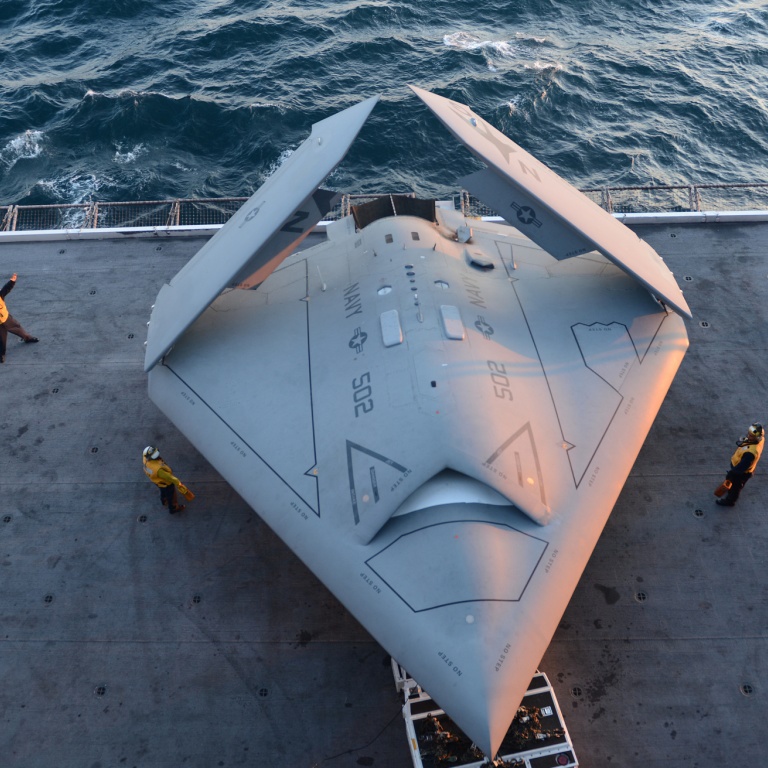
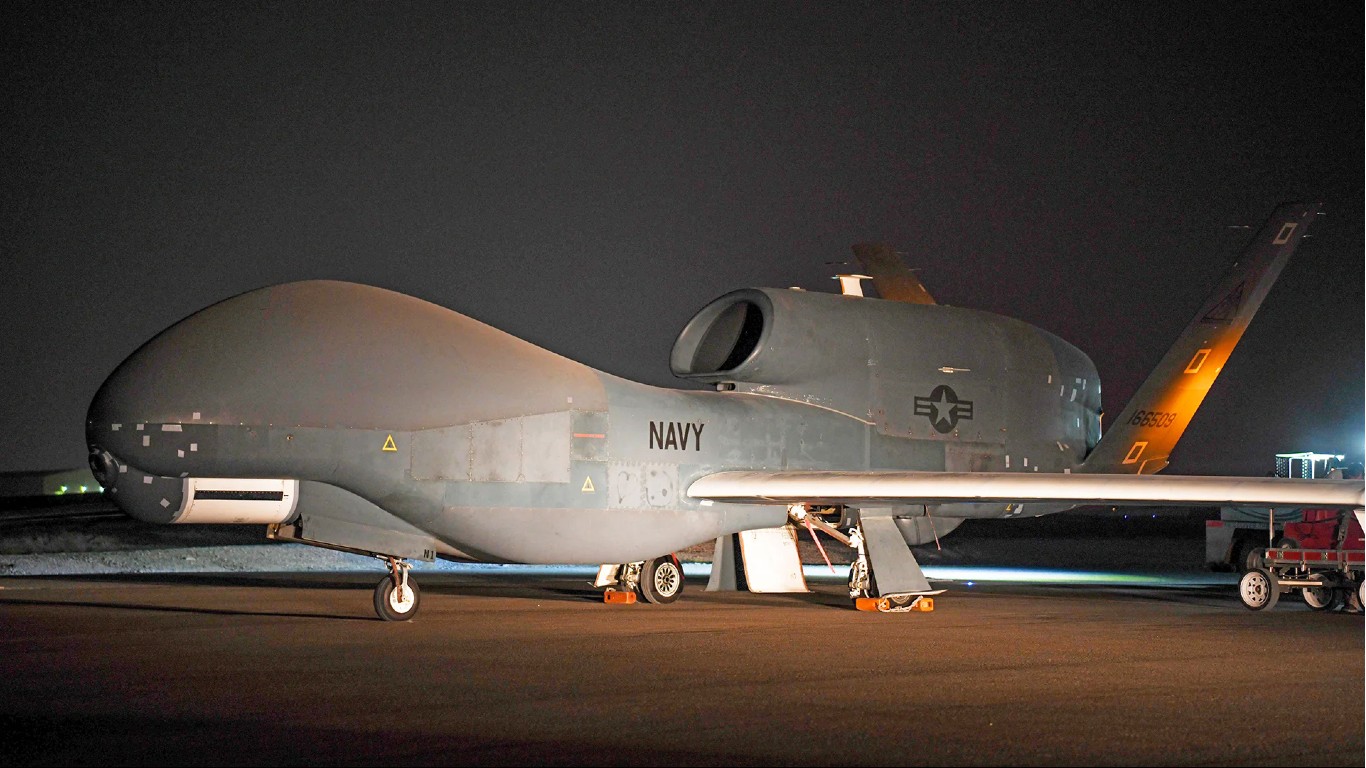
In 2015, the U.S. Navy ended its test unmanned combat air system demonstration (UCAS-D) program and two prototype X-47Bs built by Northrop Grumman Corp. (NYSE: NOC) went into storage in Maryland. Early this year, the two unmanned aerial vehicles (UAVs) were sent to California, and last week one of the planes was photographed equipped as a refueling drone, presumably Northrop’s entry into a four-way competition for a contract to build a carrier-based drone refueling tanker for the Navy.
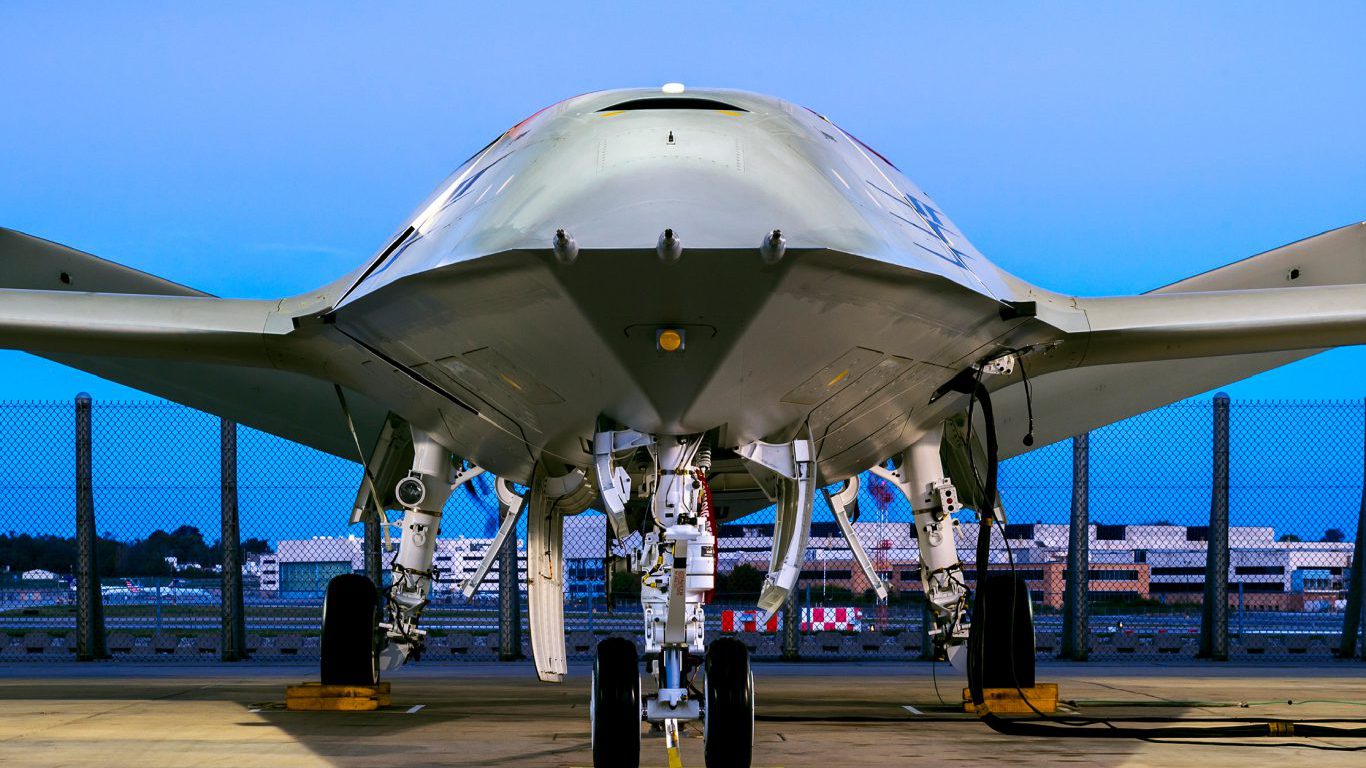
A draft request for proposal (RFP) for the refueling drone was issued in June and a final RFP is due out before the end of the year. Four defense contractors were awarded development contracts for the program, dubbed the MQ-25A Stingray: Northrop Grumman; Boeing Co. (NYSE: BA); Lockheed Martin Corp. (NYSE: LMT); and privately held General Atomics.
In an interview last month, the MQ-25A’s program executive officer said that the Navy’s intent with the program is “to extend the striking capability of the carrier air wing through organic tanking capability … to make better use of our combat strike fighters and extend the range of the carrier air wing… That’s its primary mission.”
[nativounit]
The four competitors for the contract will compete under new rules that allow the Navy to provide less specific guidelines for the MQ-25A as a rapid prototyping program. The contract has just two performance requirements: carrier suitability and mission tanking. Program manager Capt. Beau Duarte explained:
Carrier suitability. The system needs to be able to operate off of the aircraft carrier and integrate with all of the subsystems of the carrier. That’s catapults, that’s existing launch and recovery equipment.
Mission tanking. Sea-based tanker is the second [key performance parameter]. It needs to be able to deliver a robust fuel offload at range to support an extension of the air wing and add flexibility of what’s available from a mission tanking perspective. There are a number of key system attributes or other requirements lower than that that are subsequent to [those] and are of lower importance and that will allow us to focus on those two key areas on tanking and carrier suitability and let those be the primary design drivers.
One additional requirement is that the drone tanker use existing aerial refueling systems to cut down on project development time, cost and risk.
The chief of naval operations wants the first carrier flight of a UAV by 2019 and program officers are aiming at having the drones operational in the 2020s. The number of MQ-25As included in the contract has not been specified.
[recirclink id=406285]
The photo shows the Northrop Grumman X47-B with wings folded on a carrier deck.
[wallst_email_signup]






 Top Gaining Stocks
 Top Losing Stocks