


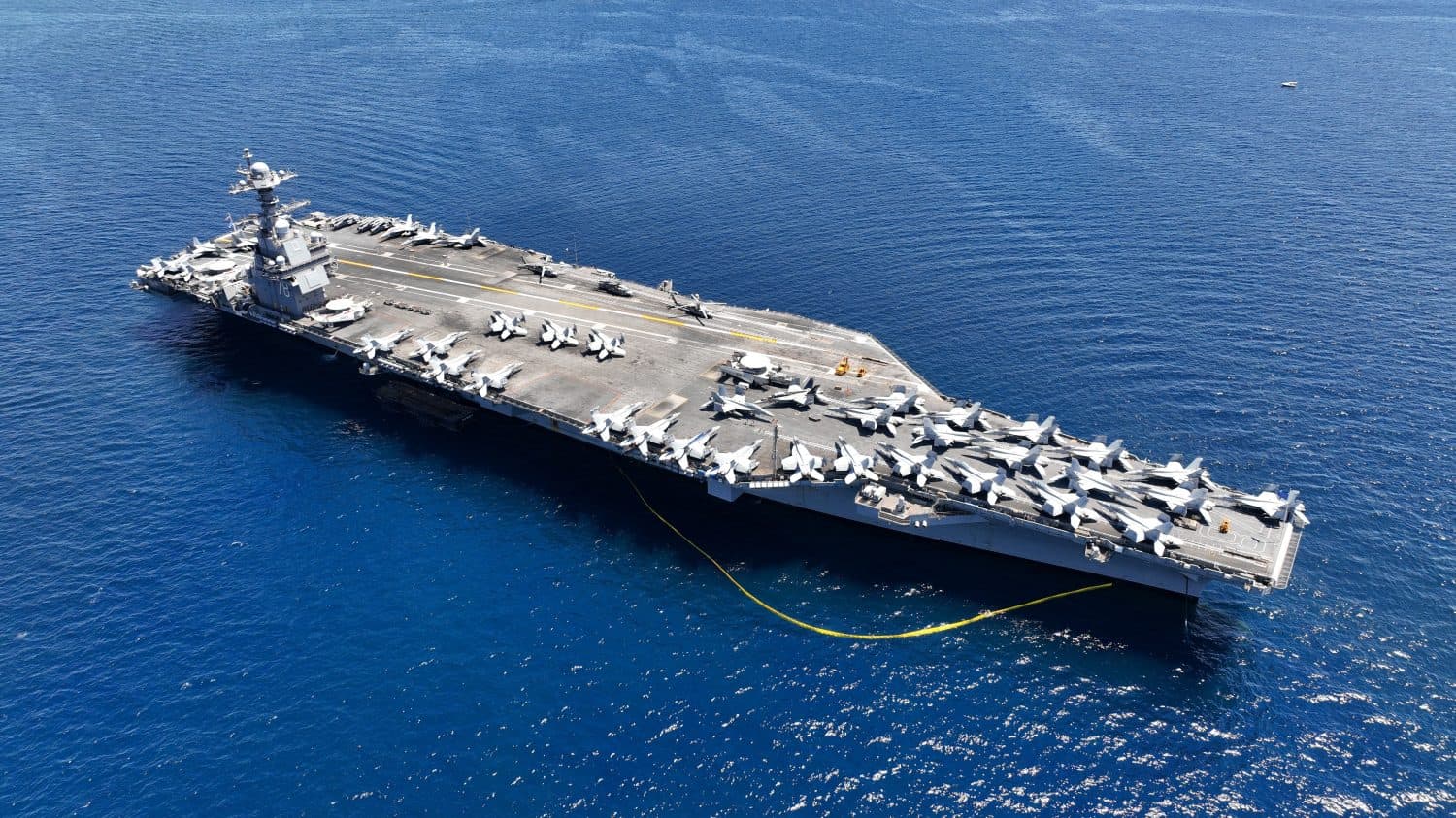

A Floating Fortress with a $13 Billion Price Tag

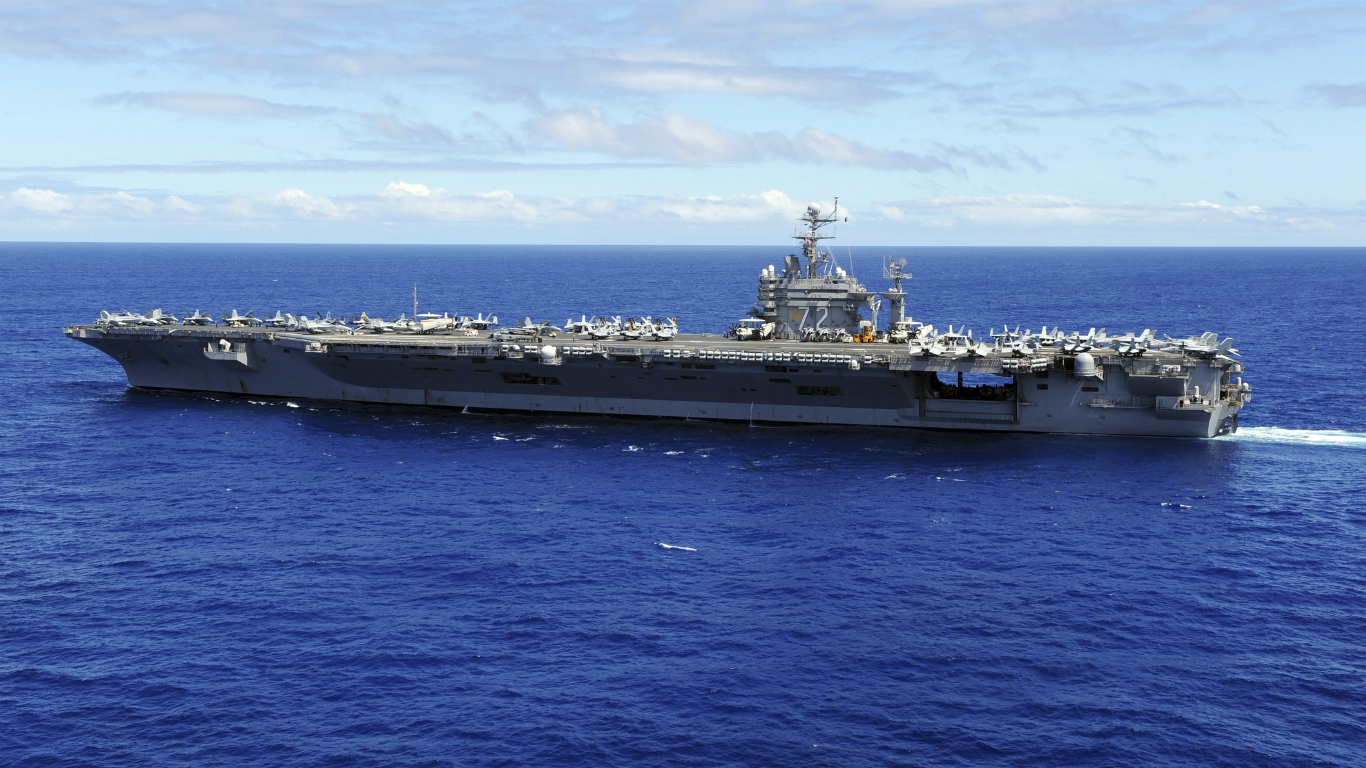
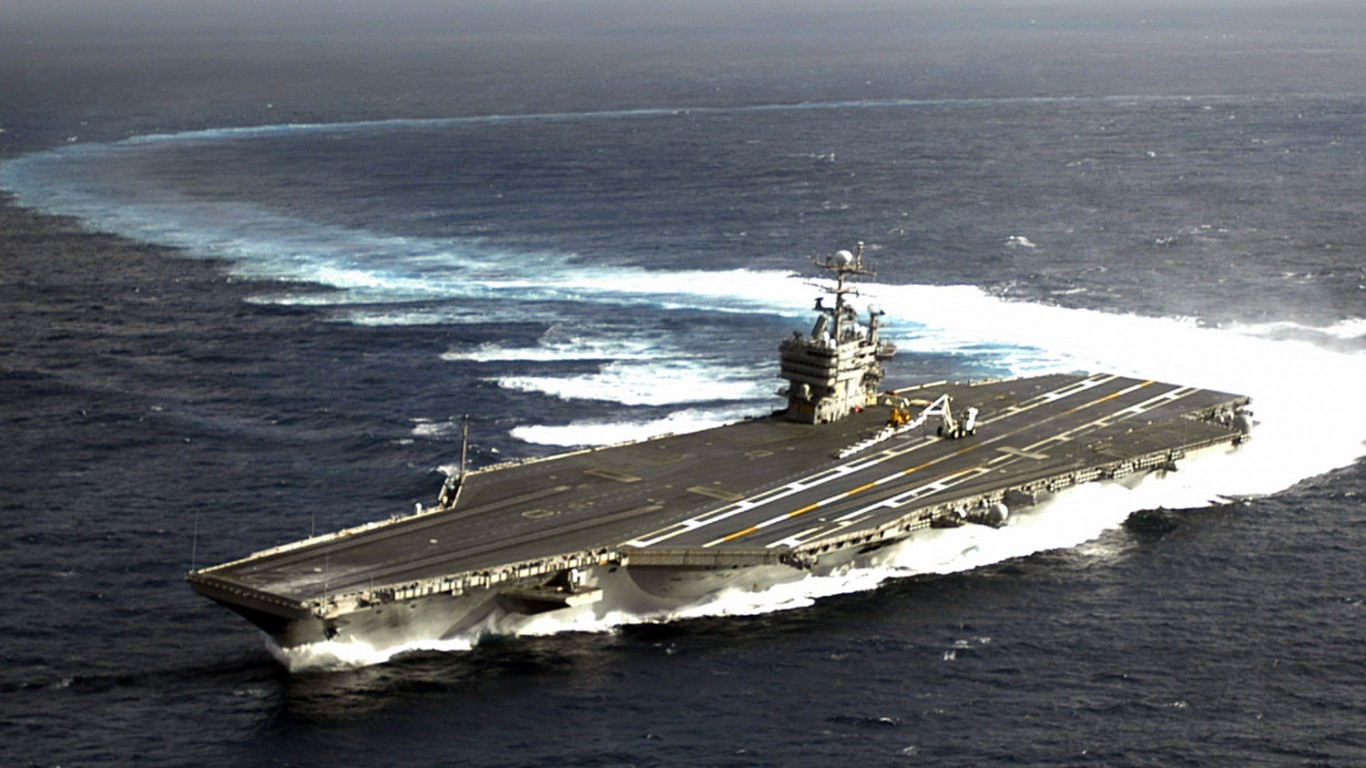
The Gerald R. Ford is not just another ship—it’s a $13 billion investment in strategic dominance. As the first in a new generation of nuclear-powered supercarriers, it’s designed to serve for half a century. Ten Ford-class carriers are planned in total. As of July 2025, only one—the USS Gerald R. Ford (CVN-78)—is operational. The second ship, USS John F. Kennedy (CVN-79), is scheduled to enter service later this year. Two more, the USS Enterprise (CVN-80) and USS Doris Miller (CVN-81), are under construction, with Enterprise expected to launch in 2025 and Doris Miller beginning construction in 2026. All three are funded under the current defense budget, highlighting the Pentagon’s long-term commitment to carrier power.
A Warship That Changes the Battlefield
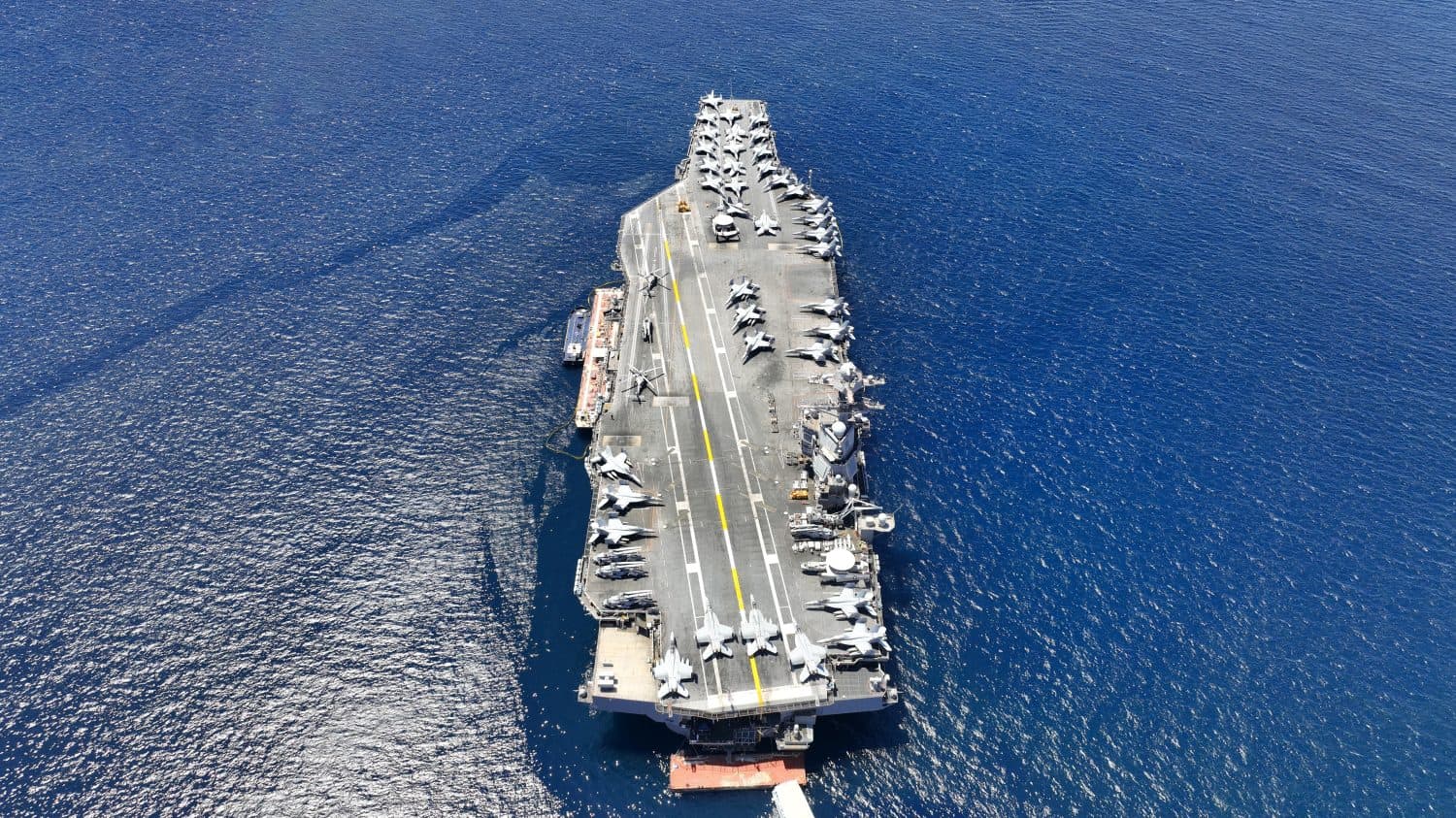
The Ford-class carrier brings unmatched capabilities to the fight:
-
Sortie Generation: Capable of launching 160 sorties per day for sustained operations, with a surge capacity of 270. That’s enough firepower to overwhelm most regional air defenses in hours.
-
Advanced Aircraft: Its air wing includes the F/A-18E/F Super Hornet, F-35C stealth fighters, EA-18G Growler electronic warfare jets, E-2D Hawkeye early warning planes, and helicopters for a wide range of missions.
-
Next-Gen Technology: The ship features the Electromagnetic Aircraft Launch System (EMALS), Advanced Arresting Gear, and Dual Band Radar—each designed for greater efficiency, faster operations, and increased survivability.
-
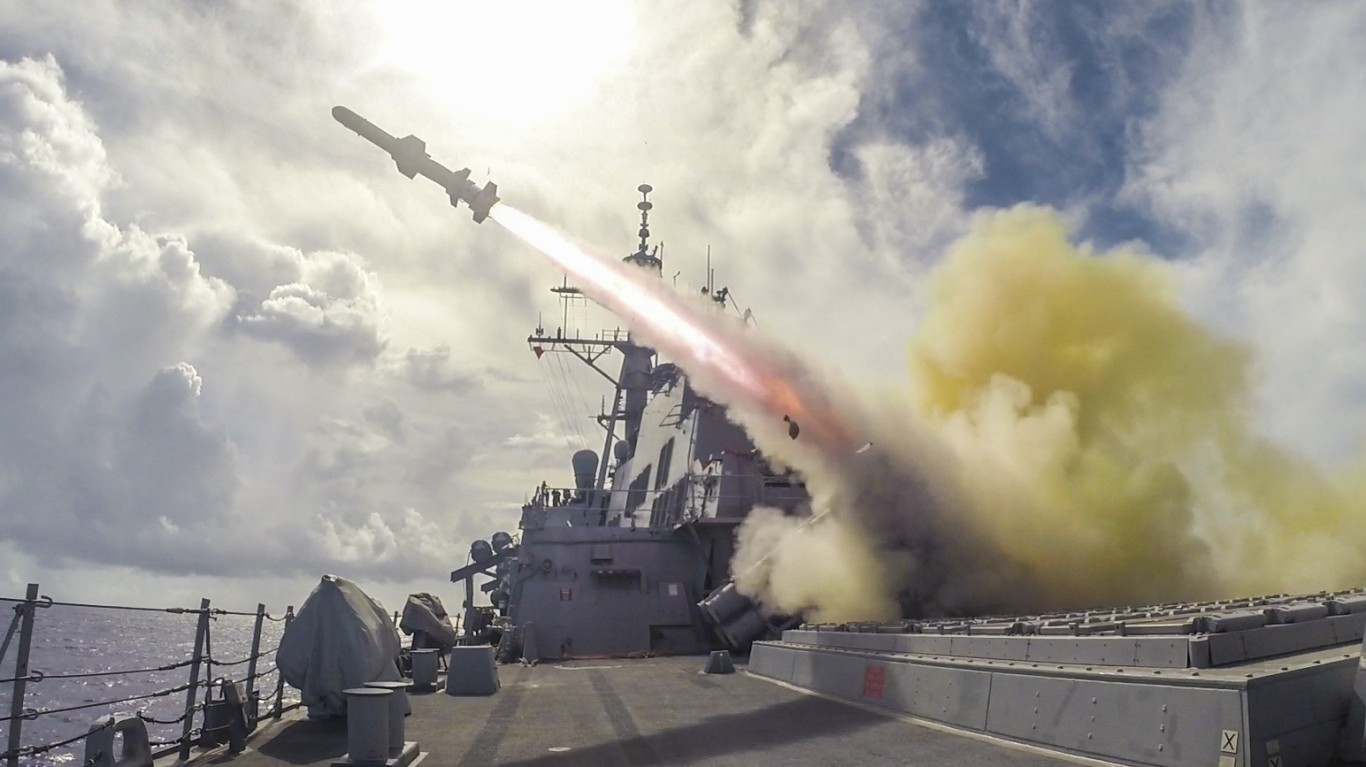
Self-Defense: Armed with Sea Sparrow missiles, Rolling Airframe Missiles, Phalanx close-in weapon systems, electronic countermeasures, and even experimental directed-energy weapons.
-
Endurance and Survivability: Nuclear propulsion allows it to operate for 20 years without refueling, and it can remain at sea for 90 days without resupply. Its internal design emphasizes compartmentalization and redundancy to survive battle damage.
A Force Multiplier, Not a Ground Invasion Plaform
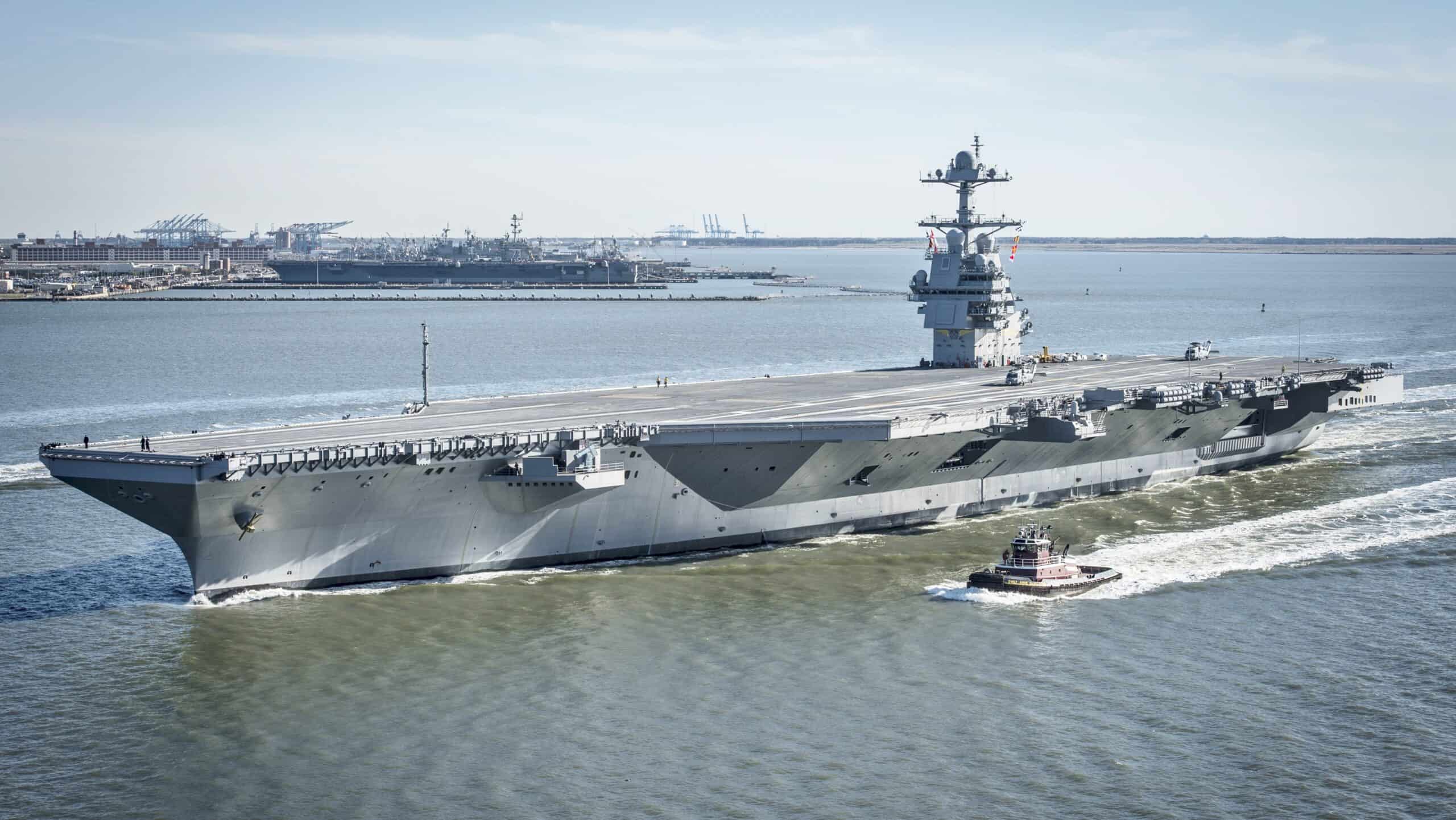
While unmatched in air power, the Ford-class isn’t built like an amphibious assault ship and lacks the facilities to house or land thousands of Marines or soldiers. At best, it can carry small detachments for specialized missions.
That means that in larger or protracted conflicts it can deliver devastating air strikes and maintain maritime superiority, but ground occupation, peace enforcement, and political control require infantry, armor, and long-term logistics.
Where It Wins—and Where It Doesn’t

Marines in Operation Urgent Fury, the 1983 invasion of Grenada.
The Gerald R. Ford would have been highly effective in smaller conflicts like Grenada (1983), Panama (1989), and Libya (1986 and 2011). In Grenada and Panama, U.S. forces faced limited resistance in compact areas—ideal conditions for the Ford‘s high sortie rate and precision strikes. In Libya, both operations were primarily air and naval missions, well within the capabilities of a Ford-led carrier strike group without needing land-based support.
In contrast, larger conflicts such as Korea, Vietnam, the Gulf War, or the extended wars in Iraq and Afghanistan required large ground forces, prolonged occupations, and coordination across multiple domains. While the Ford would have been vital in establishing air superiority and supporting operations, ultimate success in those wars depended on far more than naval air power alone.
Power in Numbers: The Gerald R. Ford Carrier Strike Group
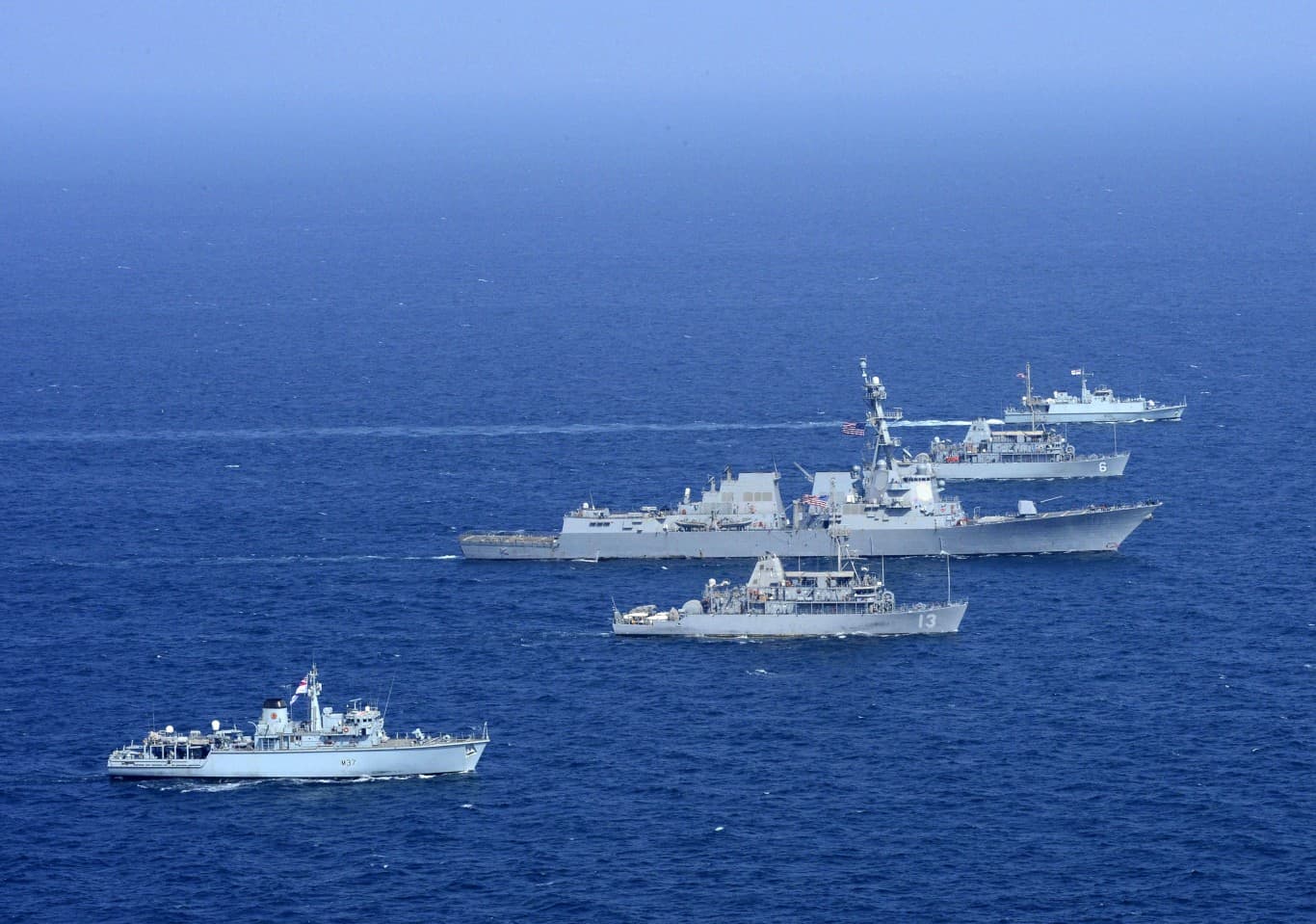
Even the mighty USS Gerald R. Ford does not sail alone. As the flagship of a Carrier Strike Group (CSG), it typically operates with five to six support ships, including guided-missile destroyers that defend against missile, submarine, and surface threats while extending strike capabilities. The carrier also embarks its primary air wing and is supported by command elements and an Information Warfare team for cyber and intelligence operations.
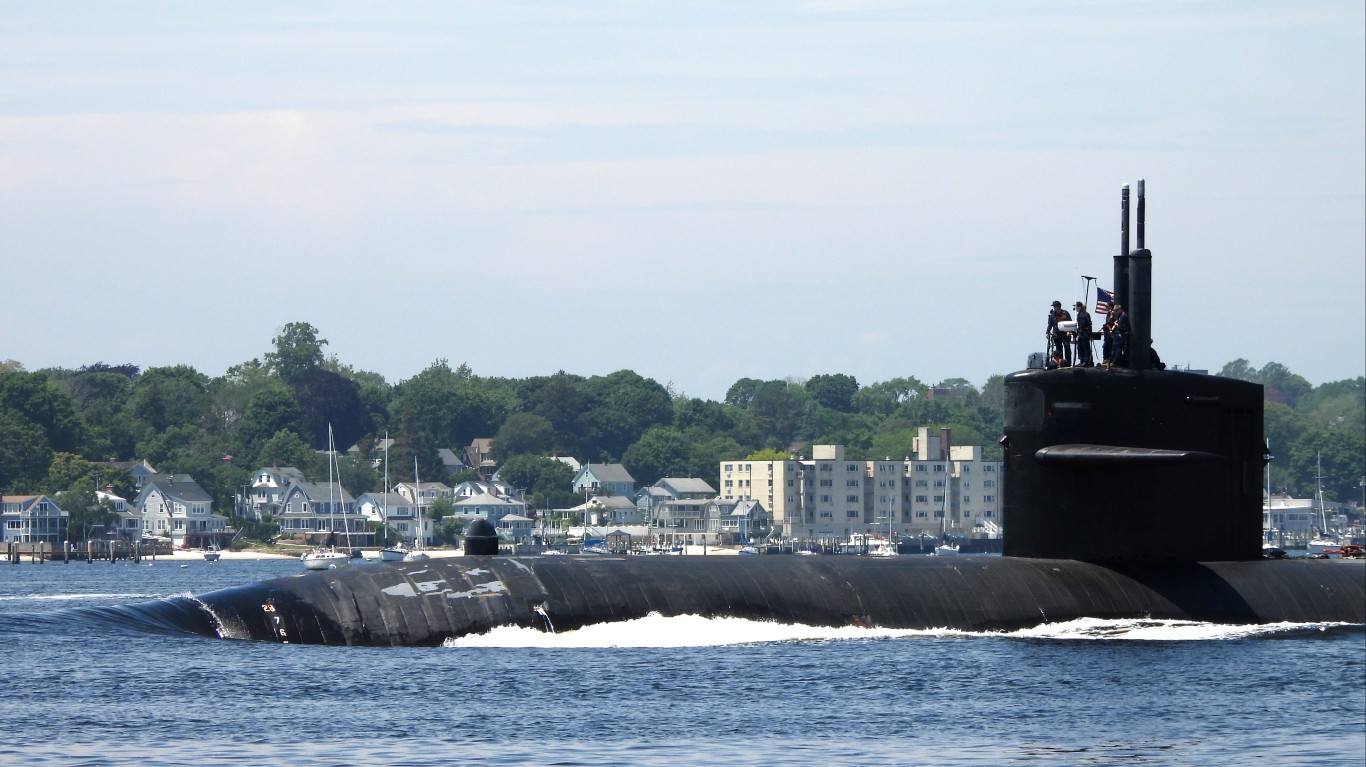
Depending on the mission, the group may include a cruiser, an attack submarine, and a logistics ship. While the Ford is powerful on its own, it’s the combined strength of the full strike group that makes it a dominant force in modern naval warfare.
The Growing Threat of Drones and Hypersonic Missiles

While the USS Gerald R. Ford is a technological powerhouse, it faces growing threats from inexpensive but effective drones and unmanned systems. Swarms of UAVs or sea-based drones can overwhelm defenses by attacking from multiple angles or using electronic jamming. Ukraine’s success in using low-cost drones and missiles to destroy high-value Russian targets—including the sinking of the Moskva cruiser—has shown how vulnerable even advanced warships can be. The Navy is deploying systems like Coyote and Roadrunner to counter drones, but radar issues and swarm tactics remain serious concerns.
Hypersonic missiles, traveling at speeds over Mach 5 and capable of evasive maneuvers, pose an even greater challenge. China’s YJ-21, designed to strike U.S. carriers, exemplifies this threat. In response, the U.S. is investing in countermeasures, including the HACM and HALO missile programs, as well as advanced sensors and space-based tracking. These systems are still in development but represent critical progress in addressing one of the most dangerous threats to carrier operations.
What It Means for the Future of War

In a time when conflicts may arise in the South China Sea, the Persian Gulf, or Eastern Europe, the ability to project overwhelming force without depending on local bases is invaluable. The Gerald R. Ford can be anywhere in the world within days. It can dominate airspace over entire coastlines, enforce blockades, or deliver punitive strikes without warning.
Its power is not just military—it’s psychological. The presence of a Ford-class carrier in a contested region sends an unmistakable message: the U.S. is watching, prepared, and capable of immediate, devastating action. And it’s just the beginning. With nine more carriers planned and three already in various stages of construction or fitting out, the Ford-class will define American naval supremacy for decades to come.









 Top Gaining Stocks
 Top Losing Stocks