


Since the last space shuttle flight in 2011, U.S. astronauts have been ferried to and from the International Space Station (ISS) by a Russian spacecraft at a cost per seat of $80 million. Two companies are vying to replace the Russians with a U.S. spacecraft: Boeing Co. (NYSE: BA) and Space Exploration Technologies, aka SpaceX, a company founded by Tesla CEO Elon Musk.
In a blog post Thursday, NASA announced target test flight dates for the two competitors. Each will demonstrate their spacecraft in an uncrewed and then a crewed test flight. SpaceX has a target date of November 2018 for its uncrewed flight and April 2019 for its crewed test. Boeing’s schedule is considerably vaguer: uncrewed test, “late 2018/early 2019”; crewed test, “mid-2019.” NASA is expected Friday to name astronauts for the tests.
Being the first to fly the tests indicates that SpaceX has an advantage, even though both are behind a schedule drawn up in 2014 when NASA awarded a combined $6.8 billion to the two firms for what the agency calls the Commercial Crew program. Boeing’s share was $4.2 billion and SpaceX’s was $2.6 billion.
[nativounit]
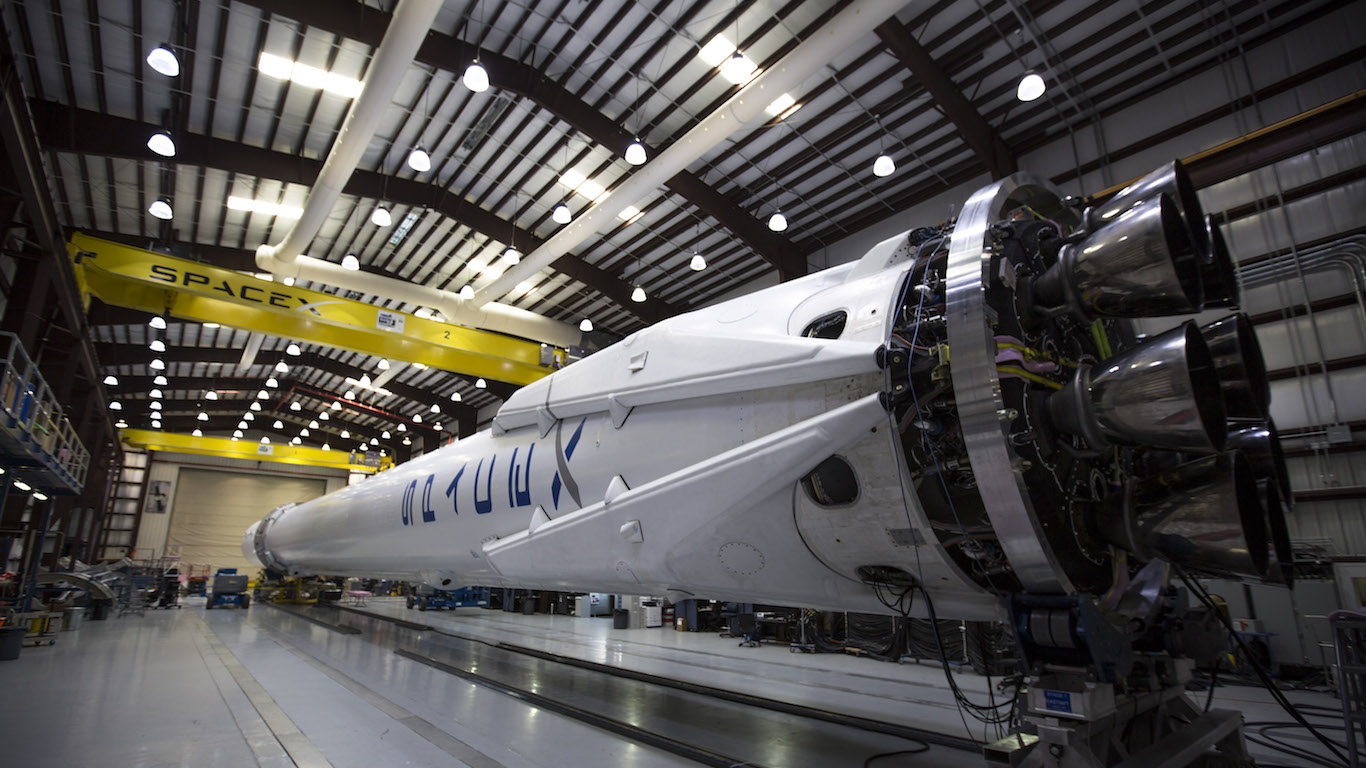
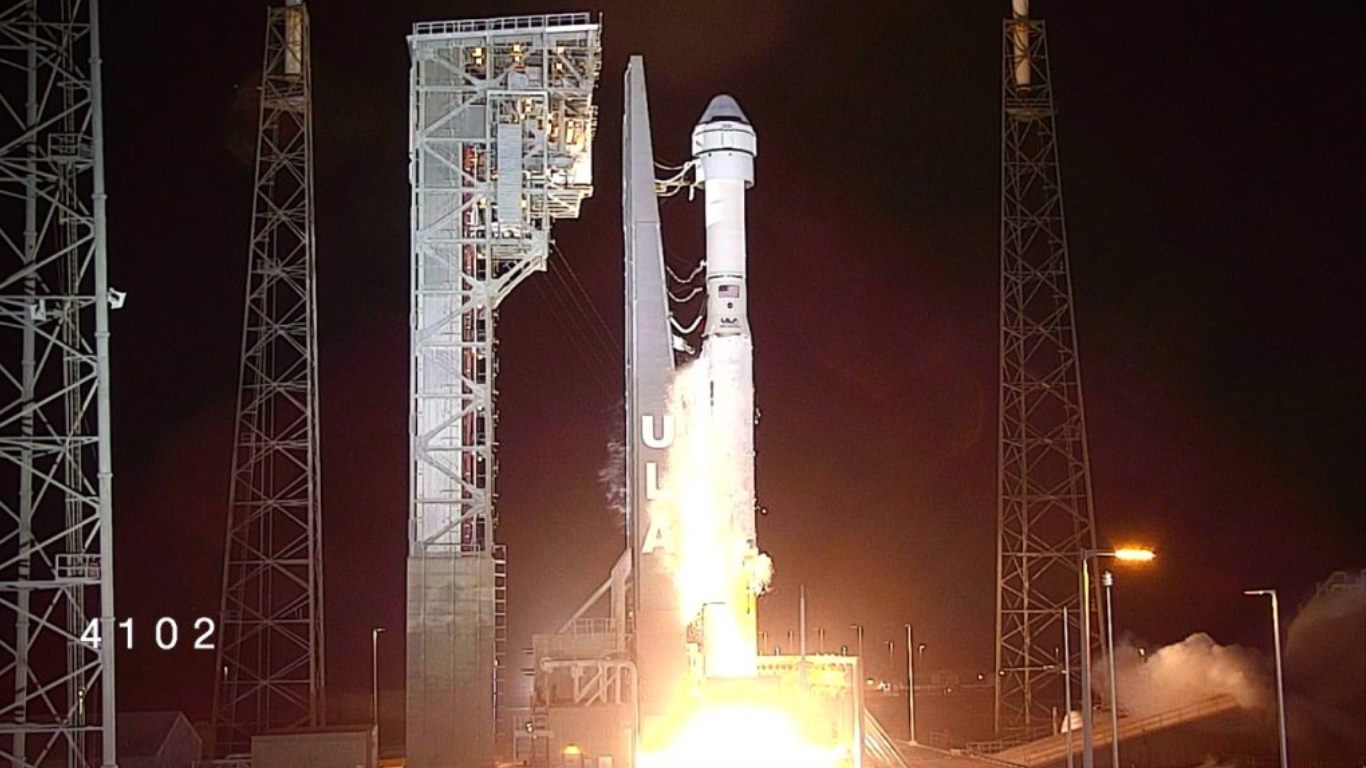
SpaceX’s craft — the Crew Dragon — will be launched into space atop the company’s Falcon 9 rocket. Boeing’s spacecraft — the Starliner — will be carried into space by an Atlas 5 rocket built by United Launch Alliance (ULA), a joint venture between Boeing and Lockheed Martin.
The last scheduled flight for a U.S. astronaut on the Russian Soyuz craft is November 2019. A report last month from the Government Accountability Office (GAO) noted that NASA “does not have a contingency plan for ensuring uninterrupted U.S. access” to the ISS because both SpaceX and Boeing have fallen about 18 months behind their original schedules.
NASA certification for both programs was originally scheduled to occur in the second and third quarters of 2017. Those dates have been pushed out to January and February of next year for Boeing and SpaceX, respectively. The GAO’s April 2018 review warns:
[I]t is possible that neither contractor would be ready [to fly a U.S. crew to the ISS] until August 2020, leaving a potential gap in access [to the ISS] of at least 9 months. We calculated the potential gap based on the contractor certification milestone dates, but there could be some additional time required between that review and the first post-certification service mission to the ISS.
Booking more seats on a Russian craft is not a reasonable option because there is a three-year lead-time for additional seats on the Soyuz. Even if they were booked now, the seats wouldn’t be available until 2021.
NASA is considering two other options: delay the final November 2019 flight until January 2020 or use the crewed test flights as operational flights to transport U.S. astronauts to and from the ISS.
See the full GAO report and NASA’s Thursday statement.
[recirclink id=483244]
[wallst_email_signup]






 Top Gaining Stocks
 Top Losing Stocks