


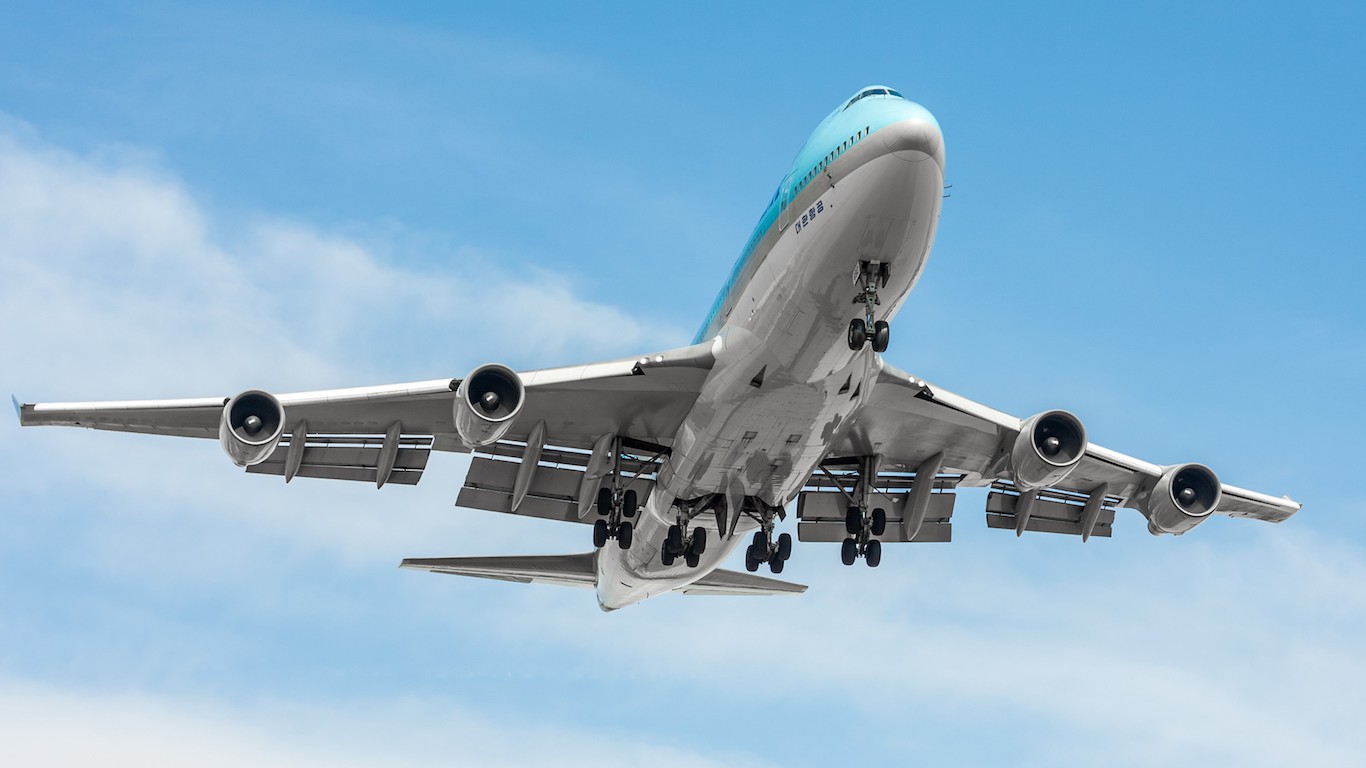
The Federal Aviation Administration (FAA) on Friday levied a fine of more than $3.9 million against Boeing Co. (NYSE: BA | BA Price Prediction) for installing defective parts on about 133 aircraft that the company later said were ready for airworthiness certification. The company was also charged with failing properly to manage its suppliers.
Boeing reported the issue to the FAA in June, and the agency said at the time that it would issue steps the company had to follow in order to correct the problem.
The parts at issue are known as slat tracks and are used to provide additional lift on take-offs and landings. According to the FAA, the slat tracks had been weakened by a condition known as hydrogen embrittlement that affected the cadmium-titanium plating on the tracks. The FAA says Boeing knowingly submitted aircraft for the final airworthiness directive that the company knew contained the defective parts.
Last June, Boeing told the FAA that it had identified a total of 65 737 aircraft in the United States and a total of 312 worldwide that may have what it then called the “suspect” parts installed. In a statement, the FAA noted: “Although a complete failure of a leading edge slat track would not result in the loss of the aircraft, a risk remains that a failed part could lead to aircraft damage in fight.”
Boeing said that it knows of no planes currently in service equipped with the faulty part. The parts were also improperly marked with serial numbers that were either obscured or unreadable.
[nativounit]
The company has 30 days to respond to the FAA’s proposal to fine Boeing $3.92 million for the way it handled the slat track issue.
The problem with the slat tracks is not the first time these parts have been an issue for Boeing. In 2007, a China Airlines 737 burst into flames in Okinawa shortly after 165 passengers were safely evacuated. The cause of the blast, according to the FAA report, was the failure by maintenance workers to replace a washer following a routine inspection. The loose part was pushed through the barrier between the slat track and the wing fuel tank, creating a major leak once the plane had landed. The FAA report describes in detail what happened.
In the recent case, the parts were supplied to Southwest United Industries to Spirit AeroSystems Holdings Inc. (NYSE: SPR), which then passed the parts along to Boeing. The aircraft maker then knowingly certified as airworthy approximately 133 of its 737 aircraft between August 2018 and May 2019.
Boeing has much bigger problems than a fine of less than $4 million, but one of them is building trust again among passengers that its planes are safe to fly. Boeing’s management would have to be certifiable to appeal this fine. Now’s not the time to take the company’s eye off getting the 737 Max back in the air.
Boeing’s stock traded down about 0.9% in the mid-afternoon Monday, at $350.95 in a 52-week range of $292.47 to $446.01. The stock’s 12-month price target is $376.45.
[recirclink id=597225]
[wallst_email_signup]



 Top Gaining Stocks
 Top Losing Stocks