


Modern sniping didn’t come from a single rifle, rather, it was born from a wave of WW2-era innovations that redefined long-range precision. Rugged telescopic scopes, match-grade barrels, standardized ammunition, and battlefield-tested doctrine transformed snipers from improvised marksmen into trained specialists. These breakthroughs laid the foundation for the famous sniper rifles that followed. Here, 24/7 Wall St. is taking a look at the technology that helped shape modern sniping as well as some of the most iconic rifles that followed.
24/7 Wall St. reviewed the technology that changed sniper rifles in World War 2 as well as a catalog of post-WW2 snipers from Military Factory, an online database of small arms, aircraft, and other military assets. We ordered these sniper rifles alphabetically. We included supplemental information regarding the country of origin, year entered service, and manufacturer, among other things.
Here is a look at the tech that led to the evolution of the sniper rifle:
Why Are We Covering This?
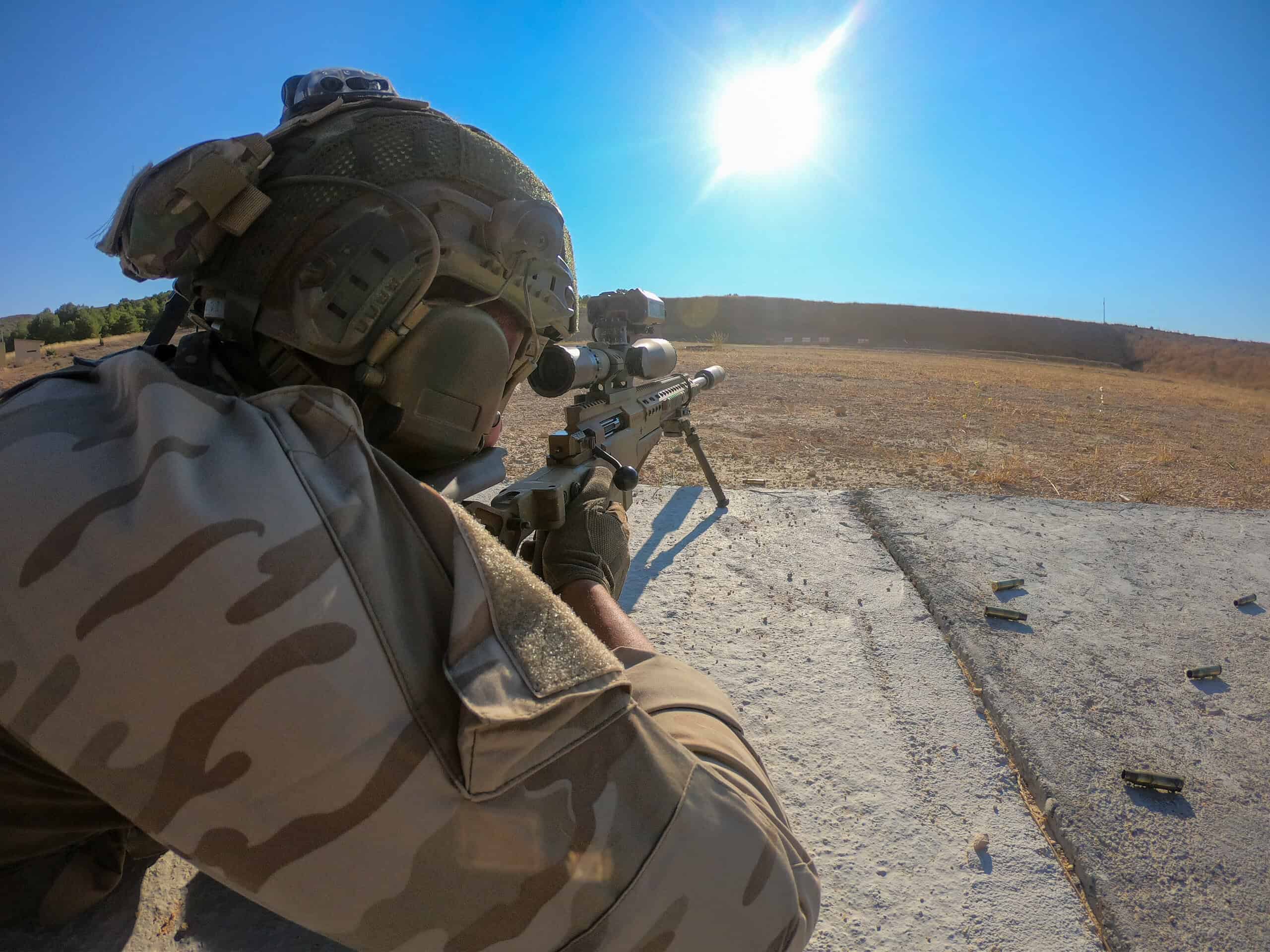
Understanding the weapons and small arms used by today’s militaries gives some insight into a nation’s combat capabilities, or even tactical doctrines. These guns are not just instruments of warfare, but they actually reflect the technological innovation and defense budgets for a given military over the time. By exploring which rifles, sidearms, machine guns, and support weapons are fielded by various armed forces, we can better understand how nations prepare for conflict, defend their interests, and ultimately shape their battlefield effectiveness.
The Birth of Modern Sniping: WWII’s Optical Revolution
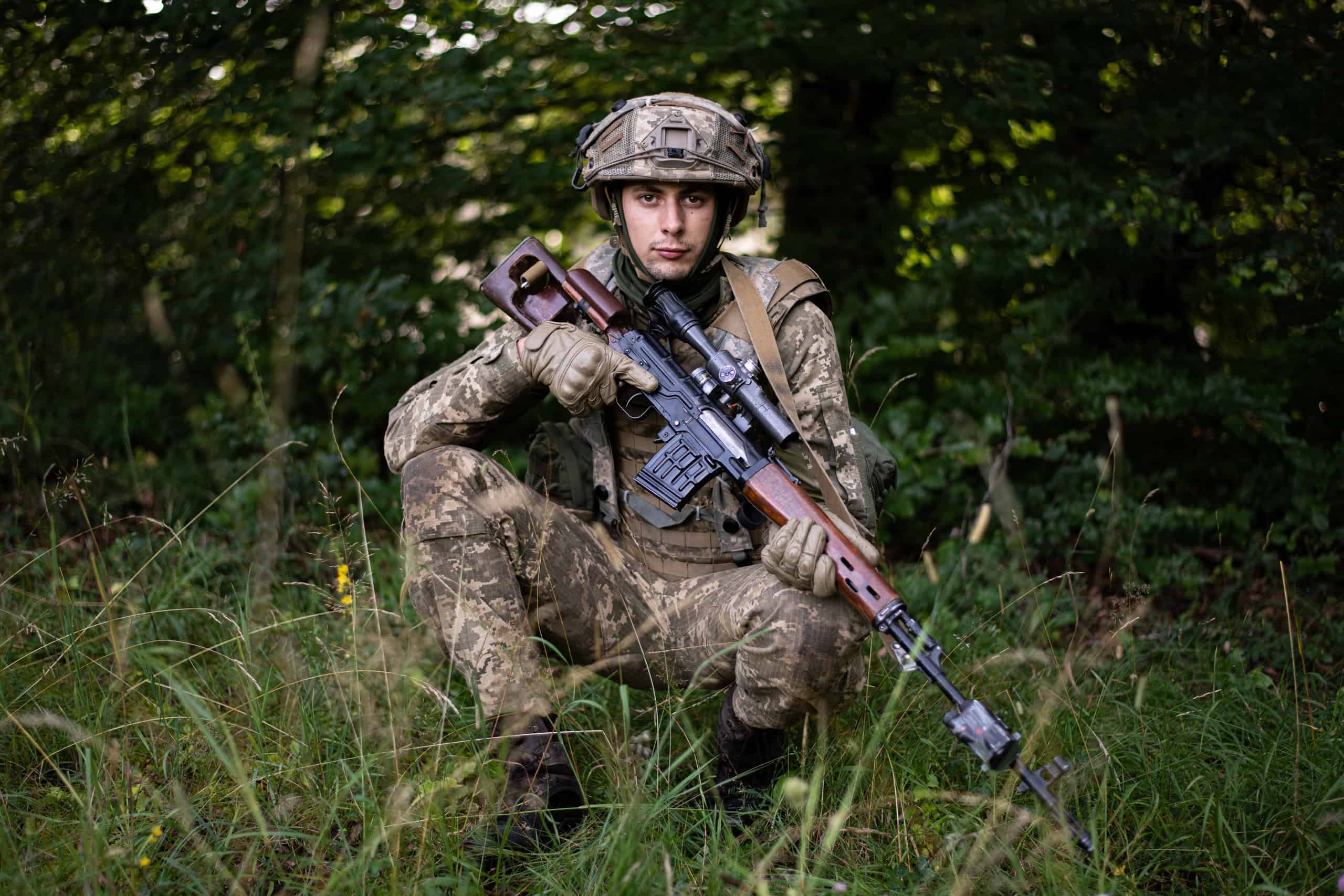
Before World War 2, scopes were fragile, inconsistent, and rarely issued. The war changed that forever. Nations began mass-producing rugged, shock-resistant telescopic sights that could survive recoil, weather, and battlefield abuse. This was the moment sniping shifted from improvised sharpshooting to a deliberate, long-range precision discipline built on reliable optics.
Rugged Scopes That Finally Stayed Zeroed
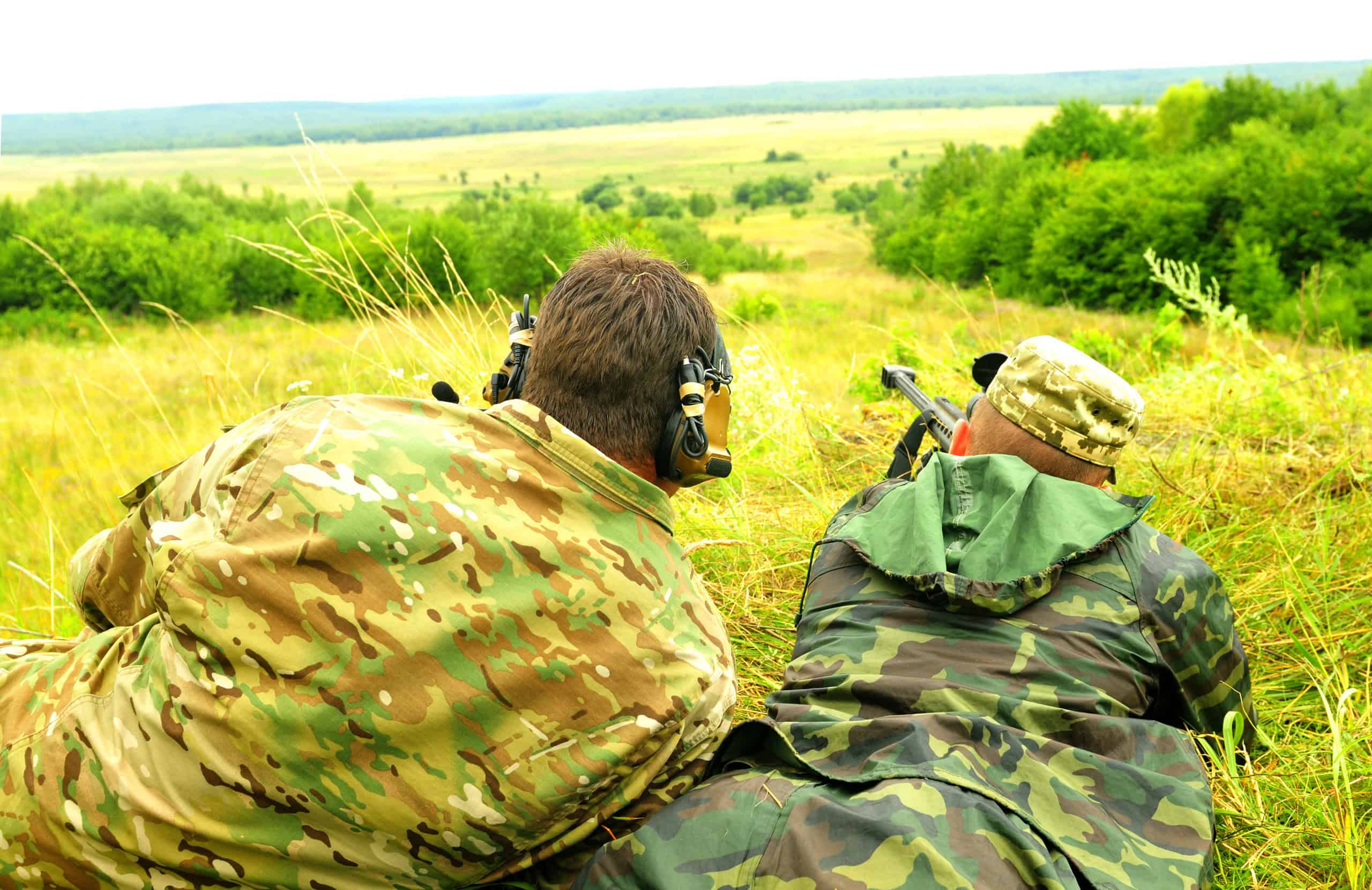
The real breakthrough wasn’t magnification, it was durability.
WWII introduced scopes that could:
- Hold zero after repeated firing
- Maintain clarity in mud, snow, and cold
- Withstand frontline shock and vibration
For the first time, a sniper could trust their rifle-optic system to deliver accurate fire day after day. This reliability is the blueprint for every modern sniper scope.
Standardized, Match-Grade Barrels and Quality Ammunition
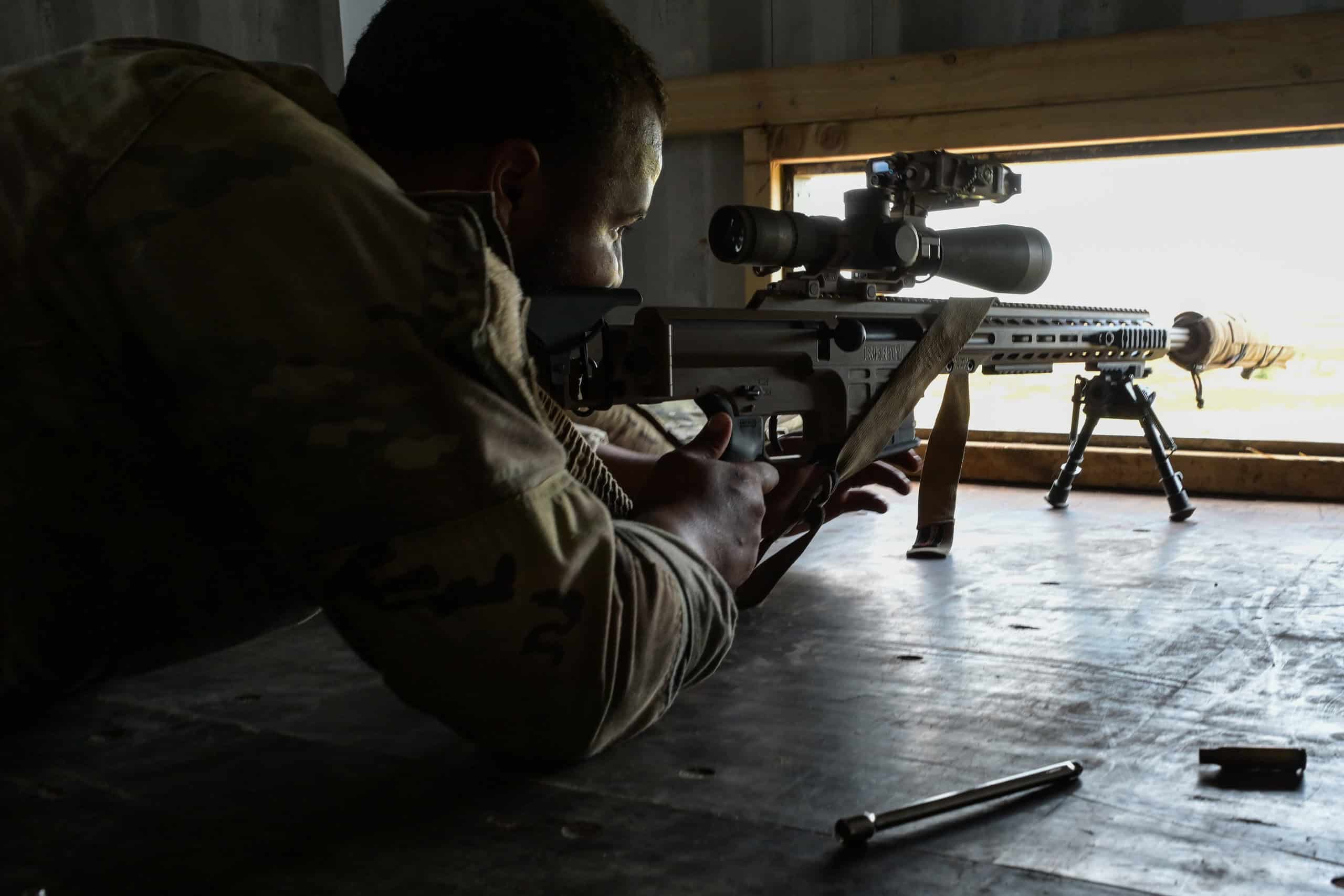
WWII also pushed militaries to refine the hardware behind the optic.
Advances included:
- Better machining of barrels for predictable accuracy
- Standardized, higher-quality ammunition lots
- Consistency across thousands of rifles
This meant snipers no longer relied on “lucky” barrels or hand-selected ammo. Precision became reproducible, the foundation of modern long-range performance.
Purpose-Built Sniper Doctrine and Trained Marksmen
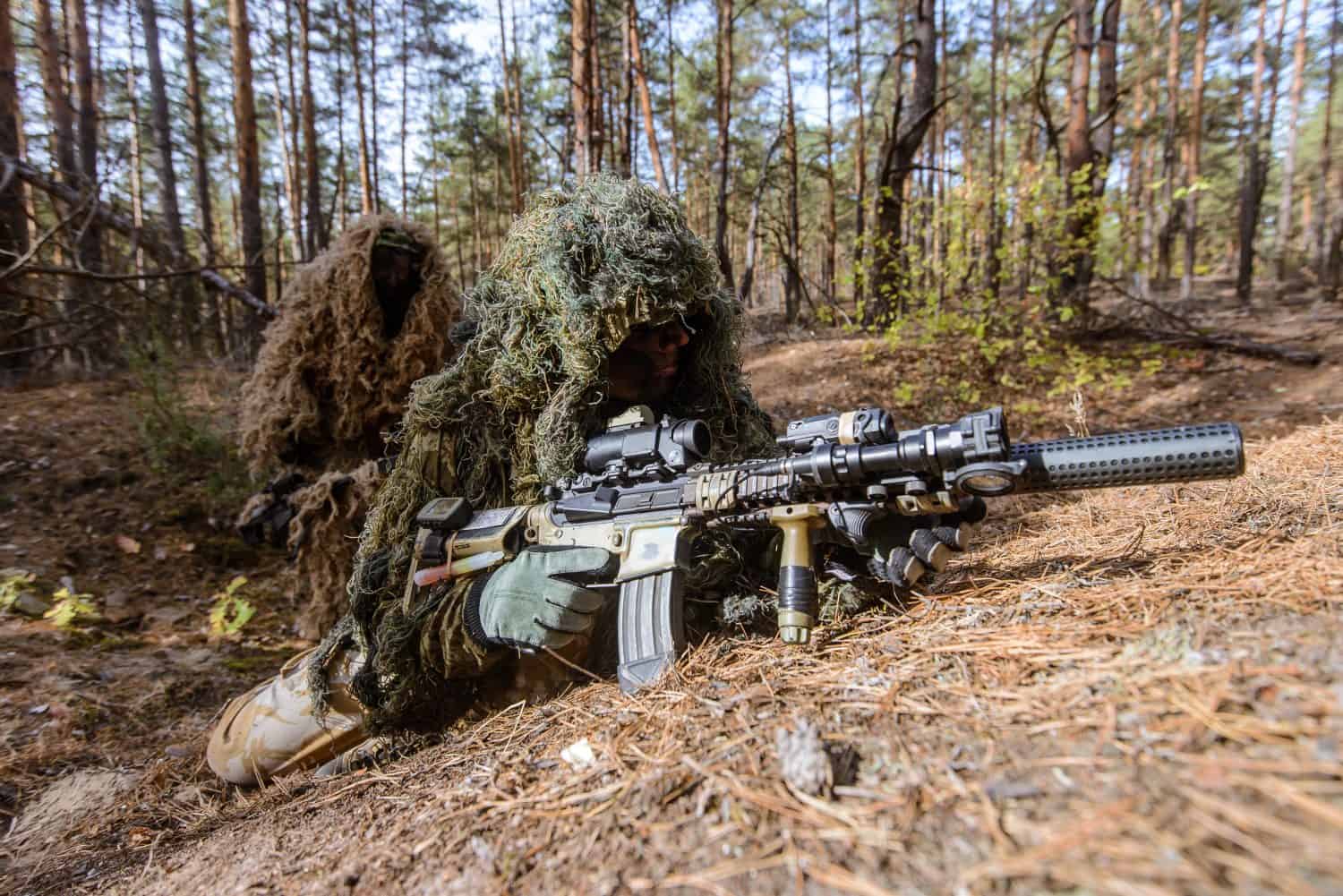
The war created specialized sniper schools, trained units, and large-scale doctrine for the first time.
Soviet and Finnish forces led the way with:
- Camouflage and concealment tactics
- Counter-sniper strategies
- Dedicated long-range training
- Battlefield integration of snipers as key assets
Doctrine turned sniping from a niche skill into a battlefield force multiplier, shaping every sniper program that followed.
The First Generation of Iconic, Purpose-Built Sniper Rifles
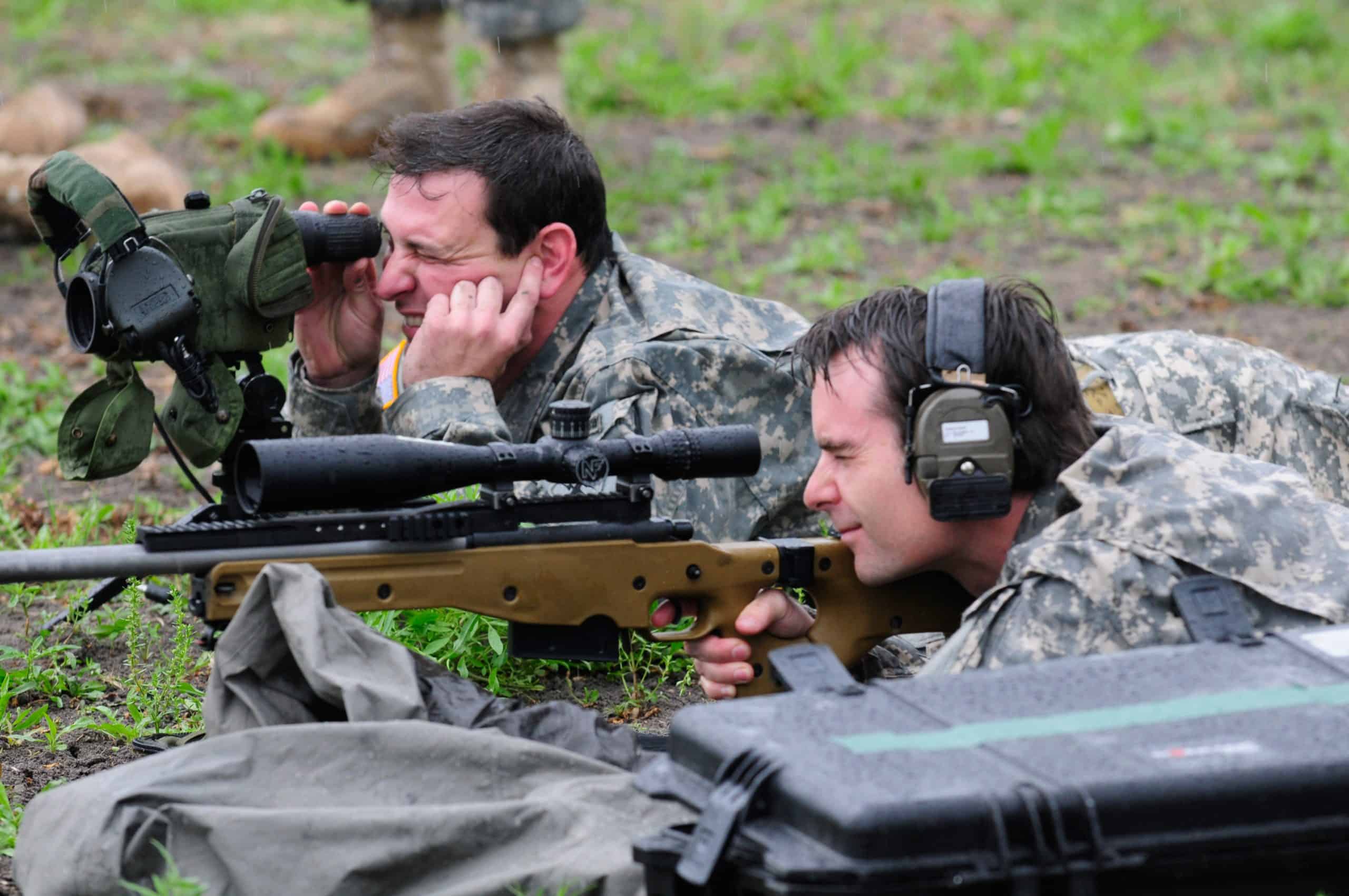
With durable scopes, better barrels, and trained snipers came the first true modern sniper systems:
- M1903A4 Springfield (USA)
- Mosin-Nagant PU (USSR)
- Karabiner 98k w/ ZF39 (Germany)
These rifles proved that optics, weapon design, and doctrine could work as an integrated system. They set the stage for the legendary sniper rifles of the Cold War and beyond.
Accuracy International AW50
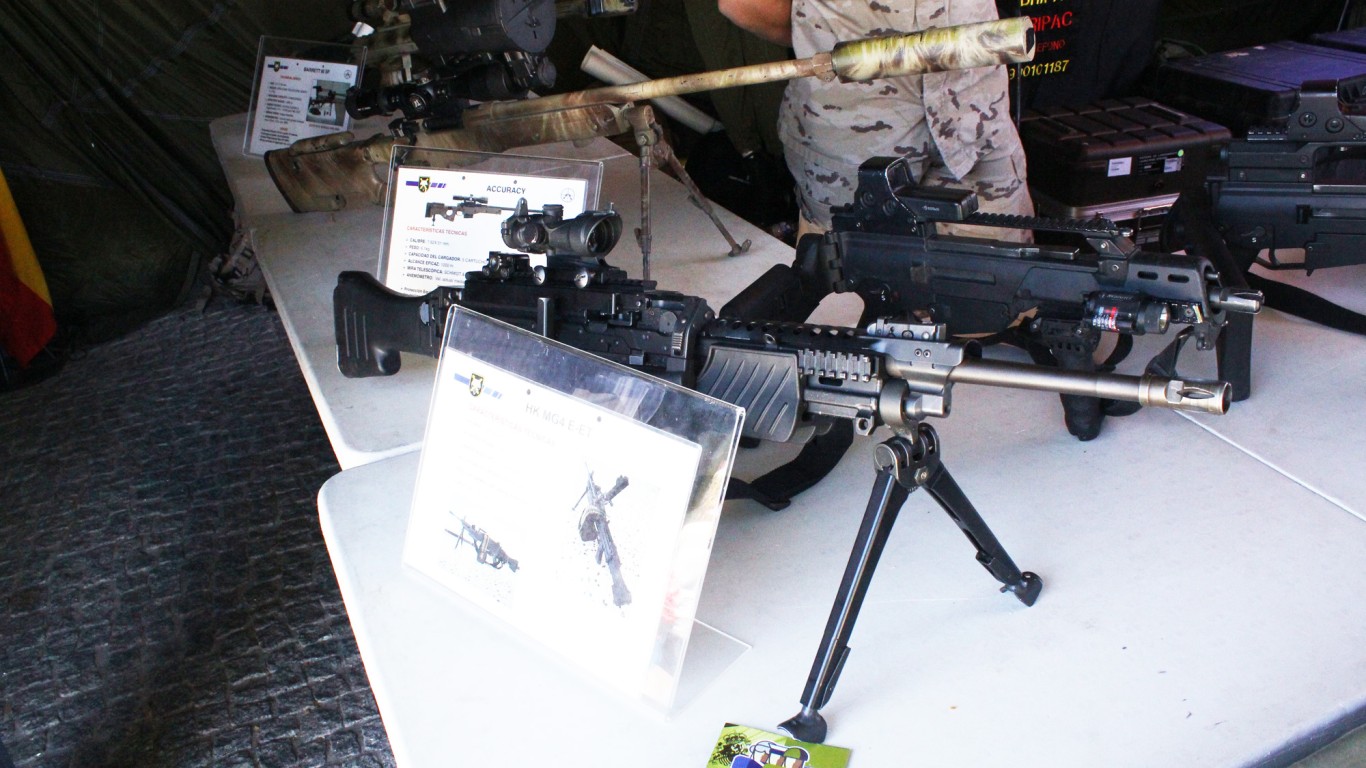
- Weapon type: Anti-materiel rifle
- Year entered service: 1999
- Country of origin: United Kingdom
- Manufacturer: Accuracy International
- Caliber of ammunition and feed: 12.7x99mm NATO, 5-round detachable box magazine
- Firing action: Manually-actuated bolt-action
- Maximum effective range: 4,921 ft.
The AWM is a British-developed Arctic Warfare Magnum sniper rifle that is known for its long-range accuracy. It is chambered in .300 Win Mag/.338 Lapua Magnum, it’s a go-to for military and police marksmen in militaries around the world.
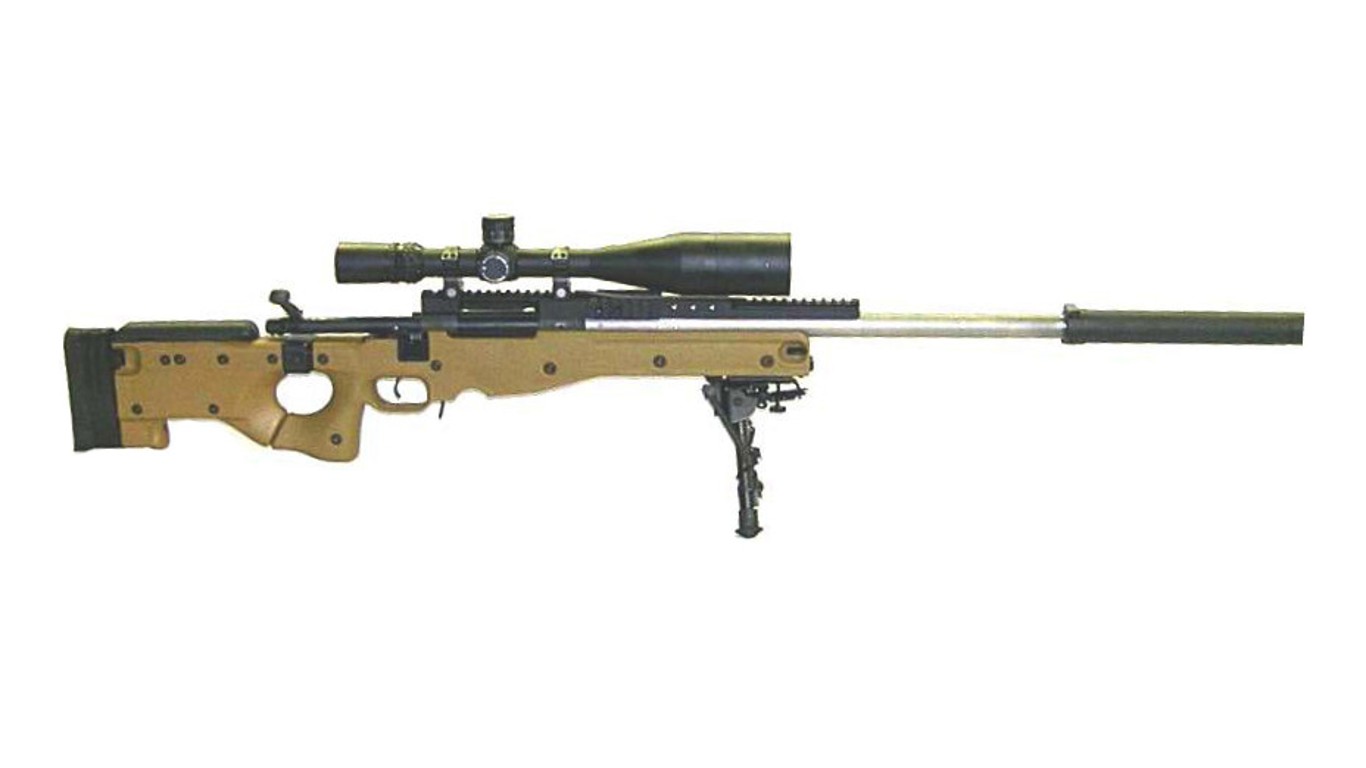
Accuracy International Mk 13
- Weapon type: Bolt-action sniper rifle
- Year entered service: 2017
- Country of origin: United States
- Manufacturer: Accuracy International
- Caliber of ammunition and feed: .300 Winchester Magnum, .338 Lapua, 5-round detachable magazine
- Firing action: Manually-actuated bolt-action
- Maximum effective range: 3,940 ft.
The Accuracy International Mk 13 is bolt-action, long-range precision rifle that comes from Accuracy International’s Arctic Warfare lineage. Introduced in the late 2010s, Mk 13 variants has served with U.S. and allied special forces in the .300 Win Mag and .338 Lapua configurations. This rifle features a modular chassis, folding stock, and interchangeable barrels which allow for more mission flexibility.
Barrett M107
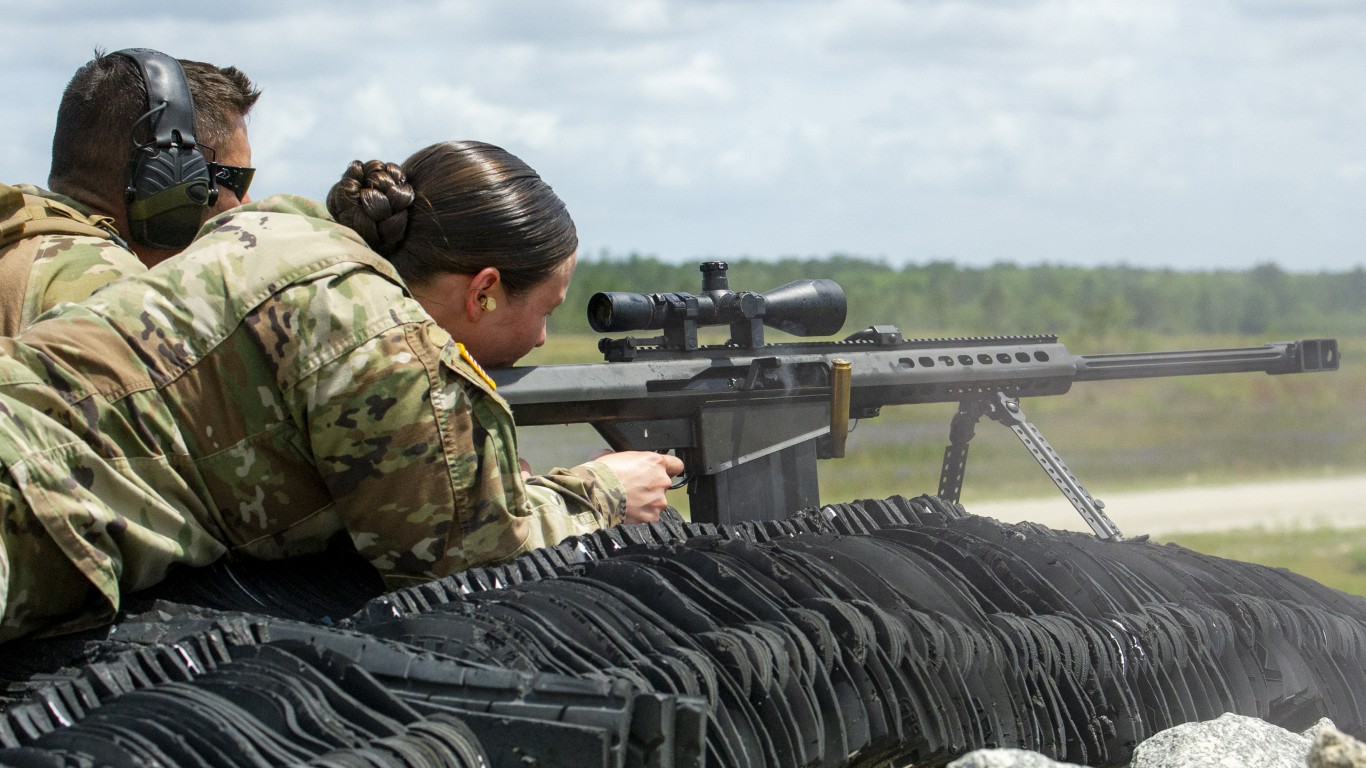
- Weapon type: Anti-materiel / anti-personnel sniper rifle
- Year entered service: 2008
- Country of origin: United States
- Manufacturer: Barrett Firearms Company
- Caliber of ammunition and feed: .50 BMG (12.7x99mm NATO), 10-round detachable box magazine
- Firing action: Recoil operated, rotating bolt, semi-automatic
- Maximum effective range: 1,850 ft.
The Barret M107 is a long-range anti-materiel/sniper rifle that has been adopted by a number of armed forces around the world. It was famously used in Iraq and Afghanistan to disable vehicles and equipment, known for its stopping power. Its size and recoil make it an incredibly distinctive rifle on the battlefield.
Barrett MRAD (Multi-role adaptive design)
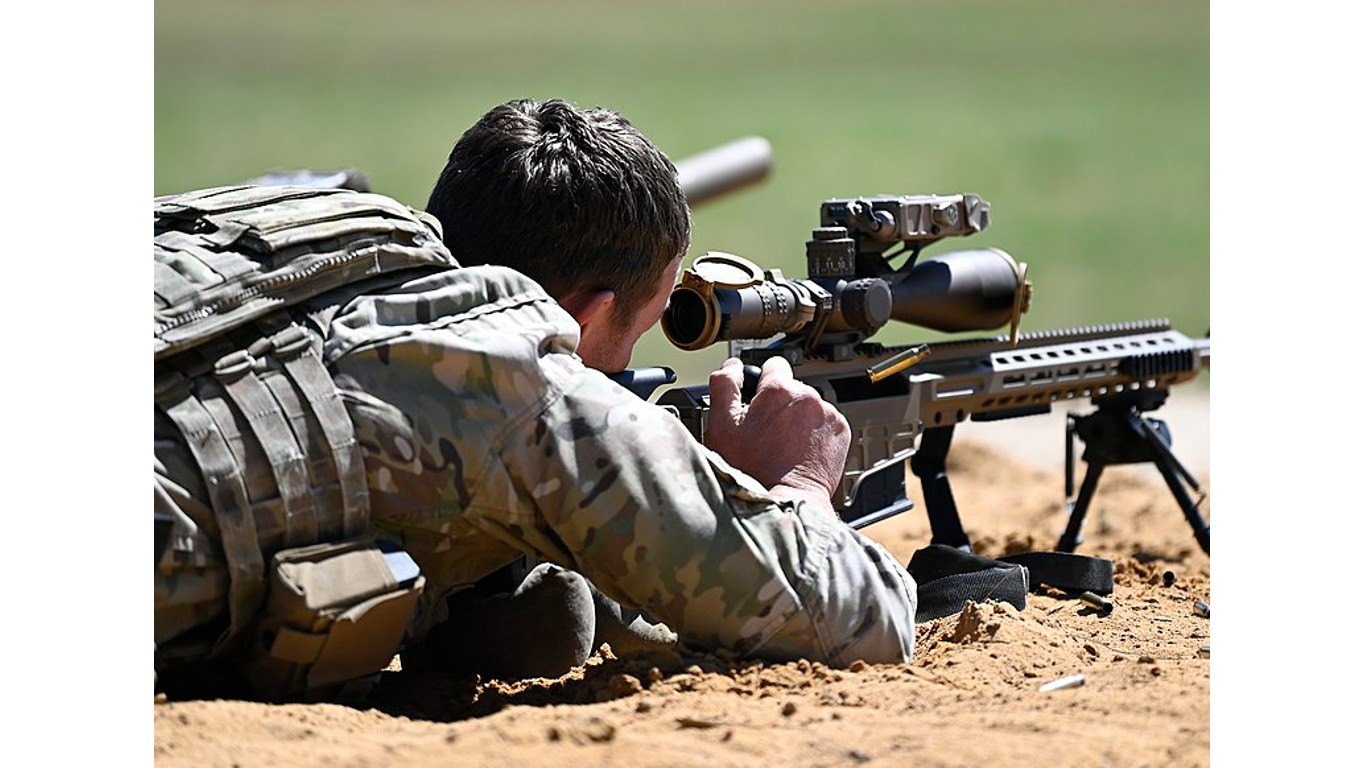
- Weapon type: Bolt-action sniper
- Year entered service: 2012
- Country of origin: United States
- Manufacturer: Barrett Firearms
- Caliber of ammunition and feed: .388 Lapua Magnum, .300 Winchester Magnum, 7mm Remington Magnum, 10-round detachable box magazine
- Firing action: Manually-actuated bolt-action system
- Maximum effective range: 4,800 ft.
The Barret MRAD is a bolt-action, multi-caliber precision rifle that is built for modularity as well as long-range versatility. This is another rifle where users can swap barrels and change calibers quickly for .338 Lapua, .300 Win Mag, or even NATO rounds. It has been adopted by special-operations and police units around the world for its accuracy and versatility.
Barrett XM109 OSW (Objective Sniper Weapon)
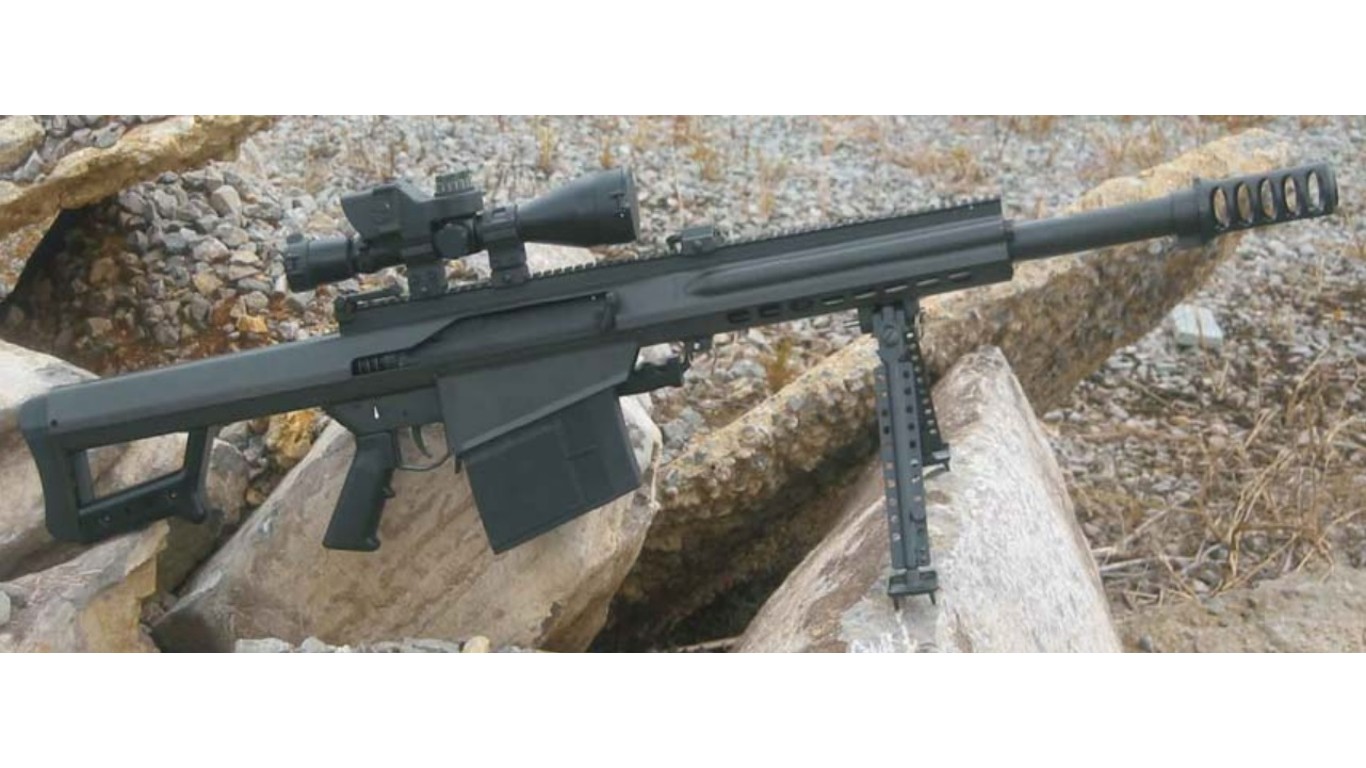
- Weapon type: Anti-material grenade launcher / rifle system
- Year entered service: 2014
- Country of origin: United States
- Manufacturer: Barrett Firearms Manufacturing
- Caliber of ammunition and feed: 25x59mm, 5-round detachable box magazine
- Firing action: Semi-automatic; short recoil; magazine-fed
- Maximum effective range: 6,335 ft.
The Barrett XM109 is an experimental anti-materiel/sniper concept from Barrett that pairs heavy-caliber firepower with semi-automatic operation instead of bolt-action. Originally, it was built to combat light armor and materiel targets using large, explosive rounds. The XM109 saw prototype testing but never wide service adoption.
Dragunov SVD
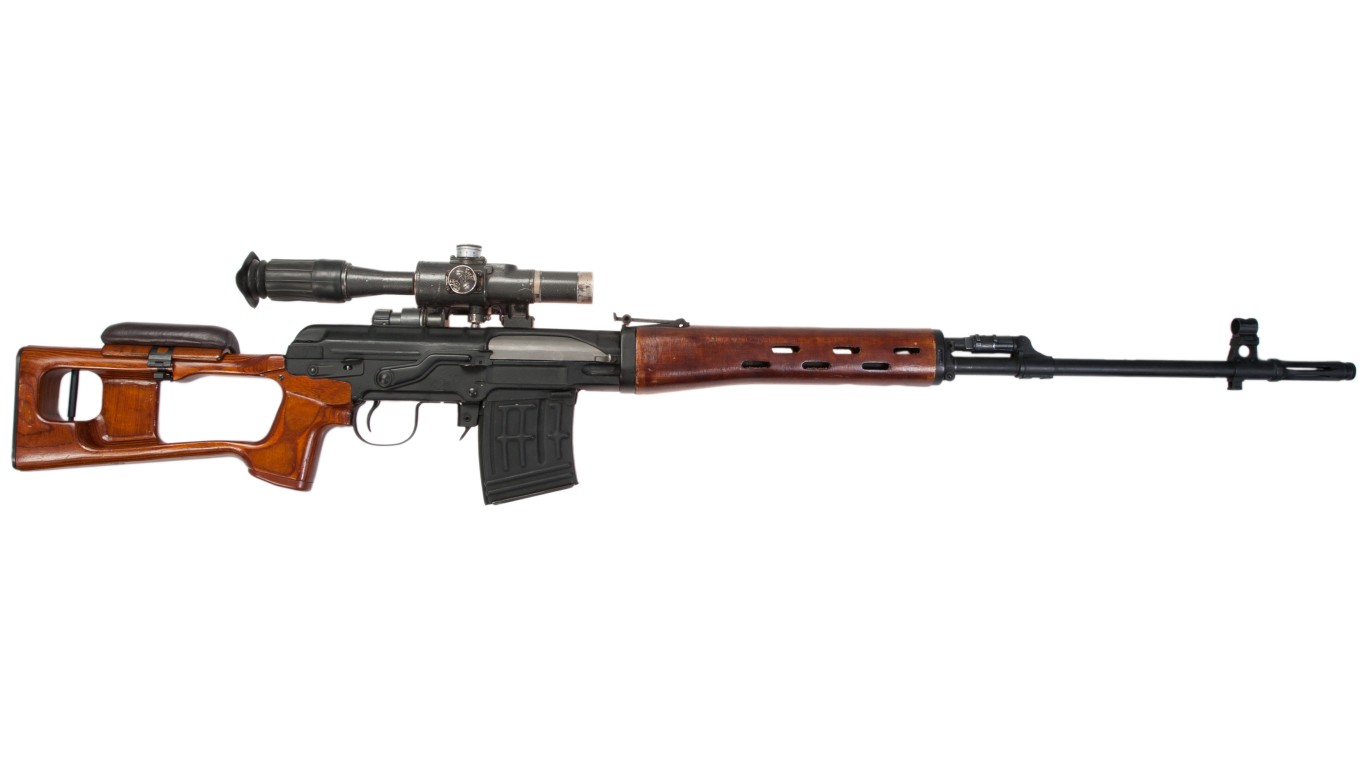
- Weapon type: Semi-automatic sniper rifle
- Year entered service: 1963
- Country of origin: Russia
- Manufacturer: Izhmash
- Caliber of ammunition and feed: 7.62x54mmR Soviet, 9x54mm, 9.3x64mm Brenneke, .308 Winchester, 10-round detachable box magazine
- Firing action: Gas-operated; rotating bolt; semi-automatic
- Maximum effective range: 4,265 ft.
The Dragunov SVD is a classic Soviet semi-automatic sniper rifle introduced in the 1960s. The 7.62×54mmR chambering, rugged reliability and widespread export made it a staple across many armed forces.
H-S Precision HTR
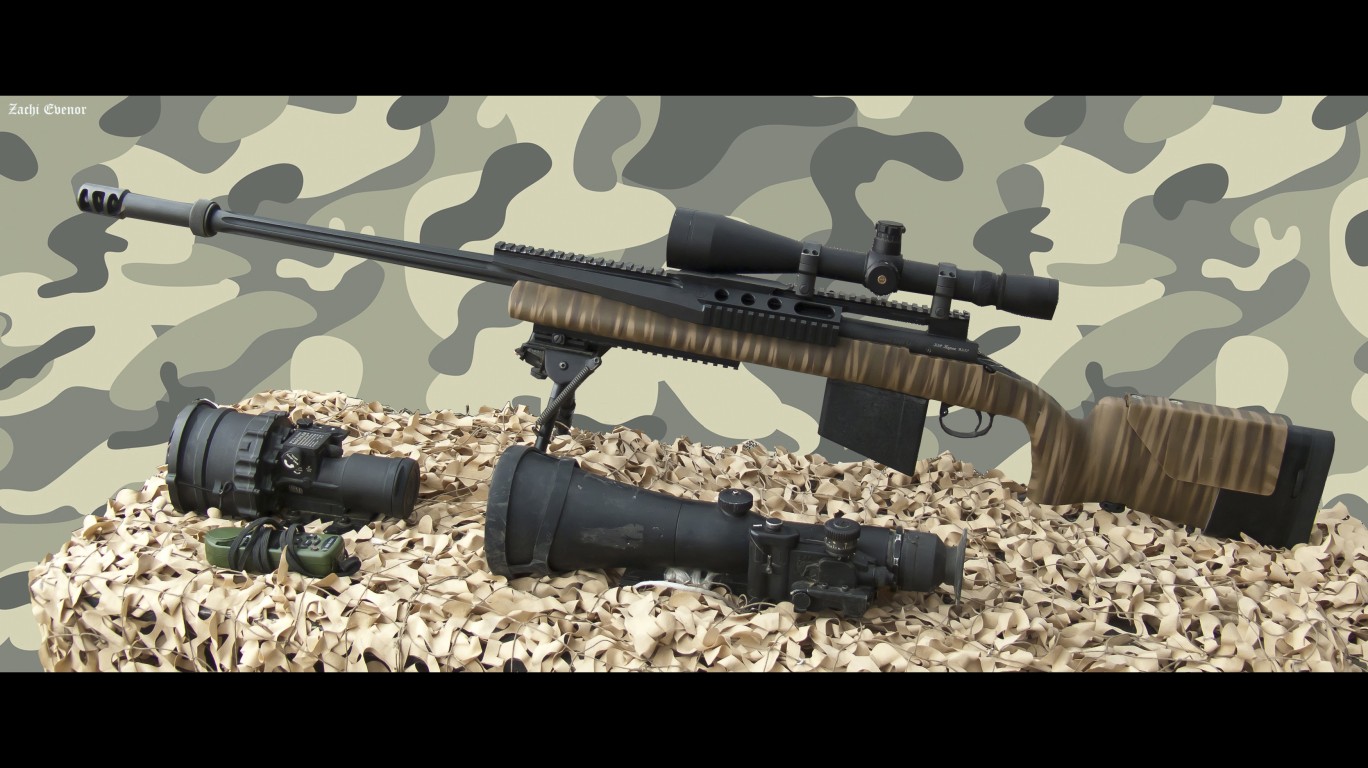
- Weapon type: Sniper rifle
- Year entered service: 2000
- Country of origin: United States
- Manufacturer: H-S Precision
- Caliber of ammunition and feed: .338 Lapua Magnum, .308 Winchester, .300 Winchester Magnum, 3-, 4- or 10-round detachable box magazine
- Firing action: Manually-operated bolt-action
- Maximum effective range: 2,625 ft.
The H-S Precision HTR is a modular, bolt-action precision rifle built for long-range military and law-enforcement roles. It is typically chambered for .300 Win Mag and .338 Lapua. This gun and other HTR platforms are fairly popular among competitive long-range shooters for their aftermarket adaptability.
Heckler & Koch HK MSG-90
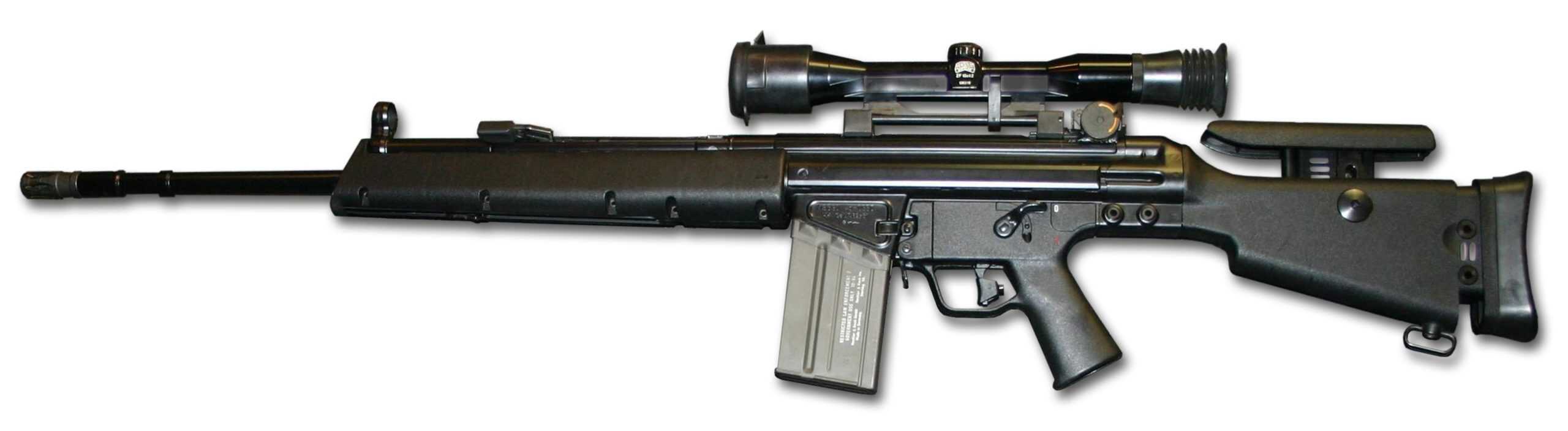
- Weapon type: Semi-automatic sniper rifle
- Year entered service: 1987
- Country of origin: Germany
- Manufacturer: Heckler & Koch
- Caliber of ammunition and feed: 7.62x51mm NATO, 5-, 10- or 20-round detachable box magazine
- Firing action: Roller-delayed blowback; semi-automatic
- Maximum effective range: 2,625 ft.
The HK MSG-90 is a lightweight, 7.62×51mm NATO sniper rifle developed from the PSG-1 family for military sharpshooter duties. In terms of the differences, the most notable is that the MSG-90 swapped the PSG-1’s heavy features for a slimmer, more combat-practical body. It has been adopted by several European forces and police units, balancing precision with portability.
IWI Galil Sniper (Galatz)

- Weapon type: Semi-automatic sniper rifle
- Year entered service: 1983
- Country of origin: Israel
- Manufacturer: Israel Military Industries
- Caliber of ammunition and feed: 7.62x51mm NATO, 20-round detachable box magazine
- Firing action: Gas-operated; rotating bolt
- Maximum effective range: 3,280 ft.
Israel’s Galil Sniper, known as the Galatz, is a designated-marksman/sniper variant of the Galil rifle. It is chambered in 7.62×51mm NATO for improved range and lethality. It is typically used by Israeli security forces and export customers. The Galatz is an upgrade on the Galil’s proven long-stroke gas reliability by adding optics and improved barrels for accuracy.
Izhmash SV-98

- Weapon type: Bolt-action sniper rifle
- Year entered service: 1998
- Country of origin: Russia
- Manufacturer: Izhmash
- Caliber of ammunition and feed: 7.6x54mm R, 7.62x51mm NATO, 10-round detachable box magazine
- Firing action: Manual bolt-action
- Maximum effective range: 1,968 ft.
The SV-98 is a bolt-action Russian sniper rifle adopted in the late 1990s. It is chambered in 7.62×54mmR, used by military marksmen for precision work with modern optics and modular stock options.
M2010 ESR
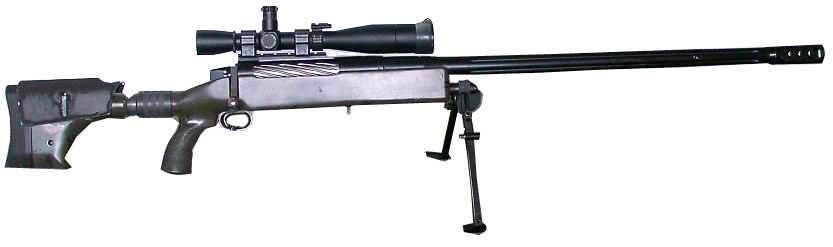
- Weapon type: Bolt-action sniper rifle
- Year entered service: 2011
- Country of origin: United States
- Manufacturer: Remington Arms Company
- Caliber of ammunition and feed: .300 Winchester Magnum, 5-round detachable box magazine
- Firing action: Manually-operated bolt-action
- Maximum effective range: 3,935 ft.
Introduced in 2011, the U.S. Army’s M2010 Enhanced Sniper Rifle is a .300 Winchester Magnum bolt-action built to replace the M24 for extended-range engagements. It has seen service in Afghanistan, where it pushed effective sniper range past 1,000 meters with modern optics and ammo.
M21 Sniper Weapon System (SWS)
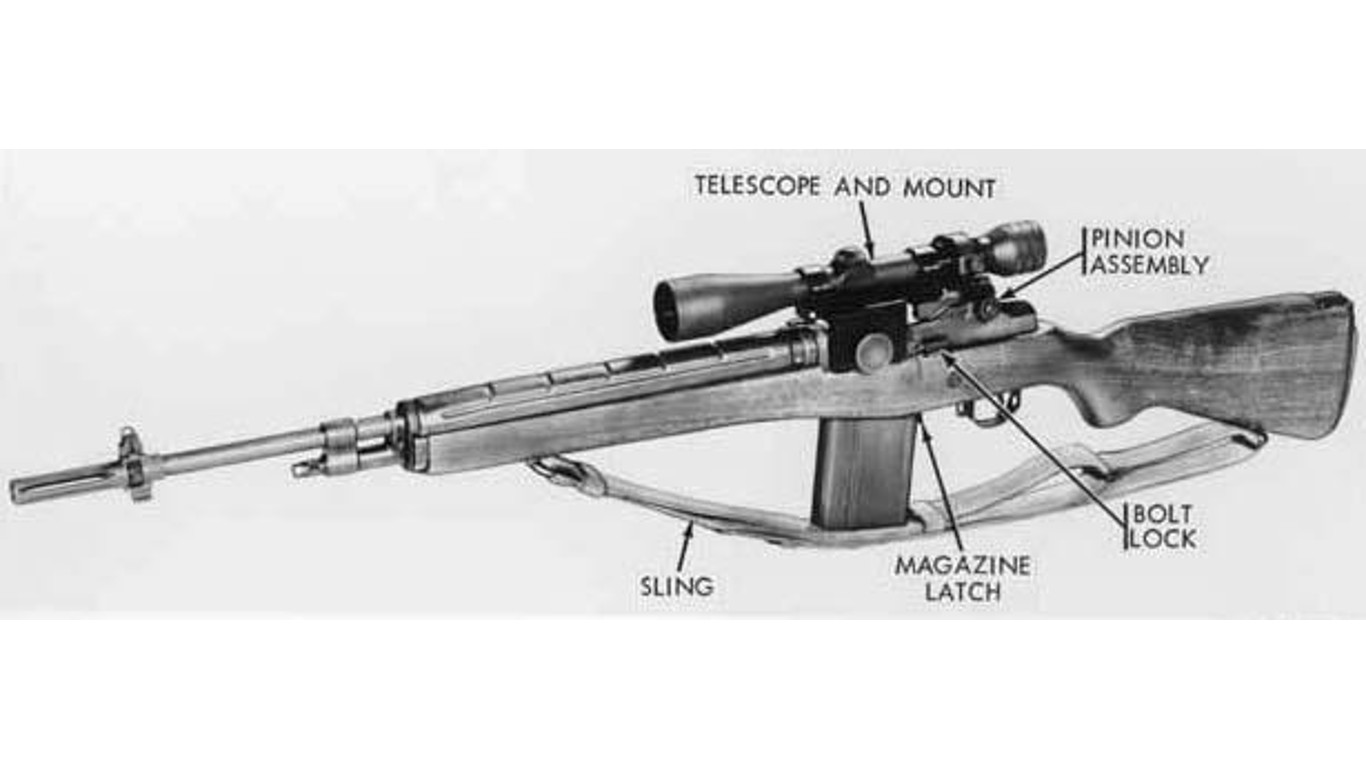
- Weapon type: Semi-automatic sniper rifle
- Year entered service: 1969
- Country of origin: United States
- Manufacturer: Rock Island Arsenal
- Caliber of ammunition and feed: 7.62x51mm NATO, 5-, 10- or 20-round detachable box magazine
- Firing action: Gas-operated, rotating bolt
- Maximum effective range: 2,263 ft.
The M21 is the military version of the M14 rifle chambered in 7.62×51mm NATO, originally fielded by the U.S. in Vietnam and then revived in later conflicts for designated marksmen.
M86
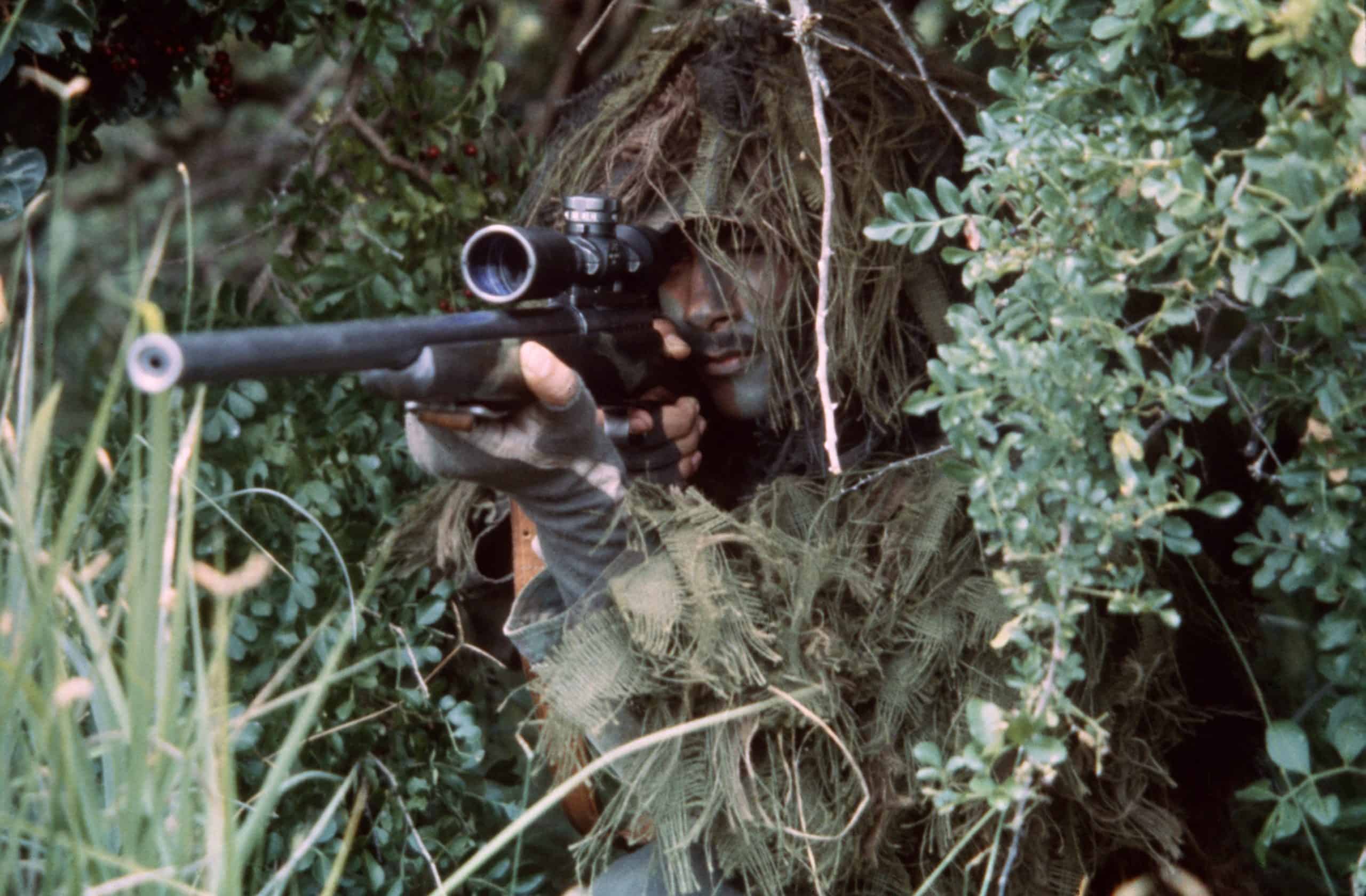
- Weapon type: Bolt-action sniper rifle
- Year entered service: 1986
- Country of origin: United States
- Manufacturer: Harris Gunworks / McMillan
- Caliber of ammunition and feed: 7.62x51mm NATO, .30-06 Springfield, .300 Winchester Magnum, .338 Lapua Magnum, 3-, 4-, 5- or 10-round magazine
- Firing action: Manually-actuated bolt action
- Maximum effective range: 2,400 ft.
The M86 is not necessarily a common designation used historically for specific military sniper conversions with some of its variants being used as specialized marksman platforms in different services. Its service history is somewhat niche and unit-specific. Again, these rifles are often custom or limited-run conversions which have been prized by collectors for their rarity.
McMillan TAC-338

- Weapon type: Sniper rifle
- Year entered service: 2005
- Country of origin: United States
- Manufacturer: McMillan Tactical Products
- Caliber of ammunition and feed: .338 Lapua Magnum, .338 Norma Magnum, 5-round magazine
- Firing action: Manually-actuated bolt action
- Maximum effective range: 5,250 ft.
The TAC-338 is a bolt-action precision rifle chambered for .338 Lapua Magnum (and similar long-range rounds). This rifle was made famous by US Navy SEAL sniper Chris Kyle. This is beloved by law-enforcement and civilian long-range competitors as it offers extreme precision at extended ranges. This series of rifles (TAC) is a common platform for custom barrel and optics packages among competitive shooters.
McMillan TAC-50
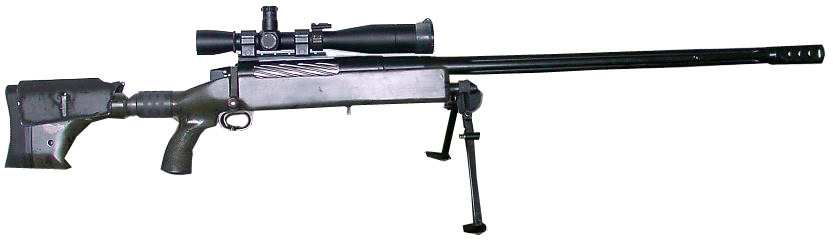
- Weapon type: Anti-material / sniper rifle
- Year entered service: 2000
- Country of origin: United States
- Manufacturer: McMillan Tactical Products
- Caliber of ammunition and feed: 12.7x99mm NATO, 5-round detachable box magazine
- Firing action: Manually-operated bolt-action
- Maximum effective range: 6,561 ft.
The TAC-50 is McMillan’s .50 BMG bolt-action anti-materiel/sniper rifle. It has been adopted by several militaries for long-range interdiction. It came to prominence in Afghanistan when a Canadian Army operator (Corporal Rob Furlong) used the TAC-50 in one of the world’s longest recorded sniper engagements (~2,430 m).
Navy Mark 12 Special Purpose Rifle (Mk 12 SPR)
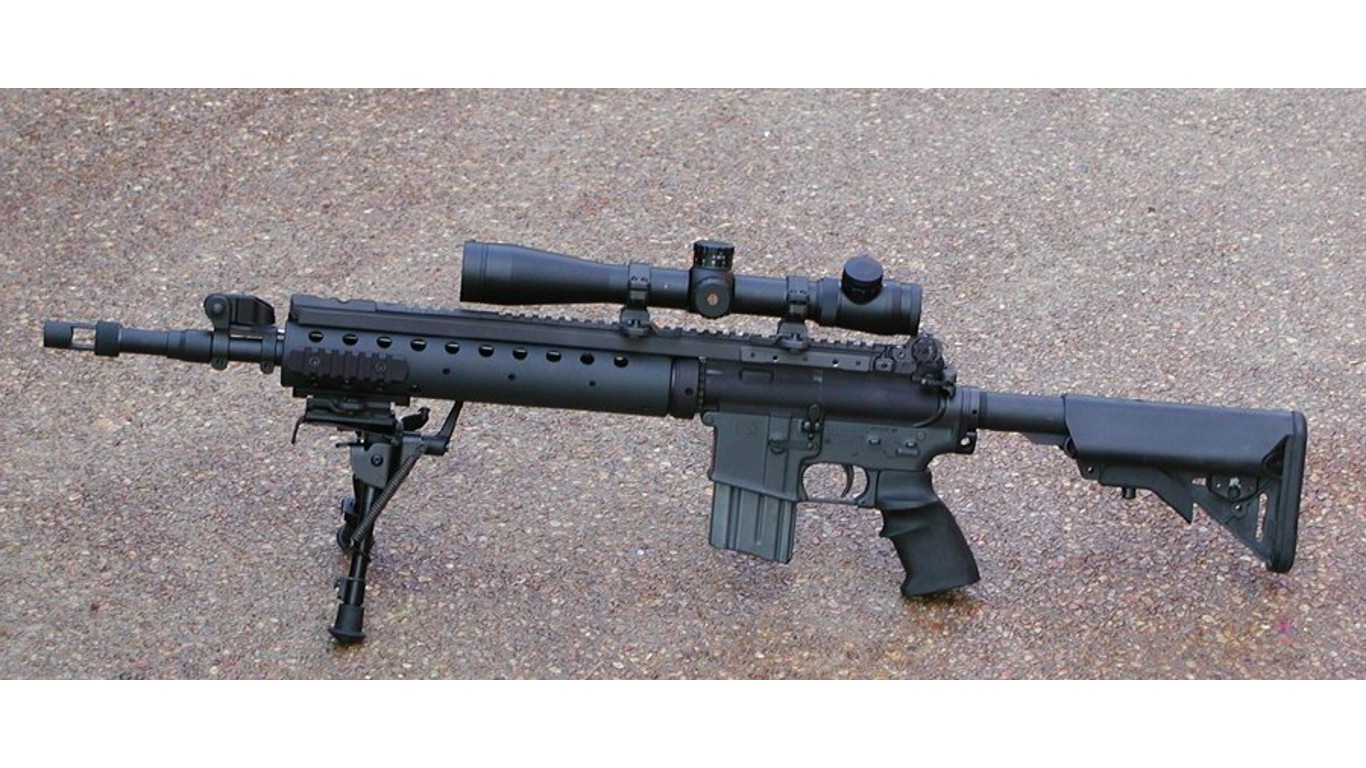
- Weapon type: Sniper rifle / designated marksman rifle
- Year entered service: 2002
- Country of origin: United States
- Manufacturer: Colt Firearms
- Caliber of ammunition and feed: 5.56x45mm NATO, 20- or 30-round detachable box magazine
- Firing action: Gas-operated, rotating bolt
- Maximum effective range: 1,800 ft.
The Navy Mark 12 (Mk 12 SPR) is a precision 5.56×45mm rifle that comes from the AR family meant to give special-operations teams a longer-range, accurate option between carbines and battle rifles. Originally it entered service in the 2000s and saw wide use in Iraq/Afghanistan with SEALs and SOCOM units. Its success actually launched a whole market for “SPR-style” accuracy upgrades.
NORINCO CS/LR4 (QBU-202/NSG-1)
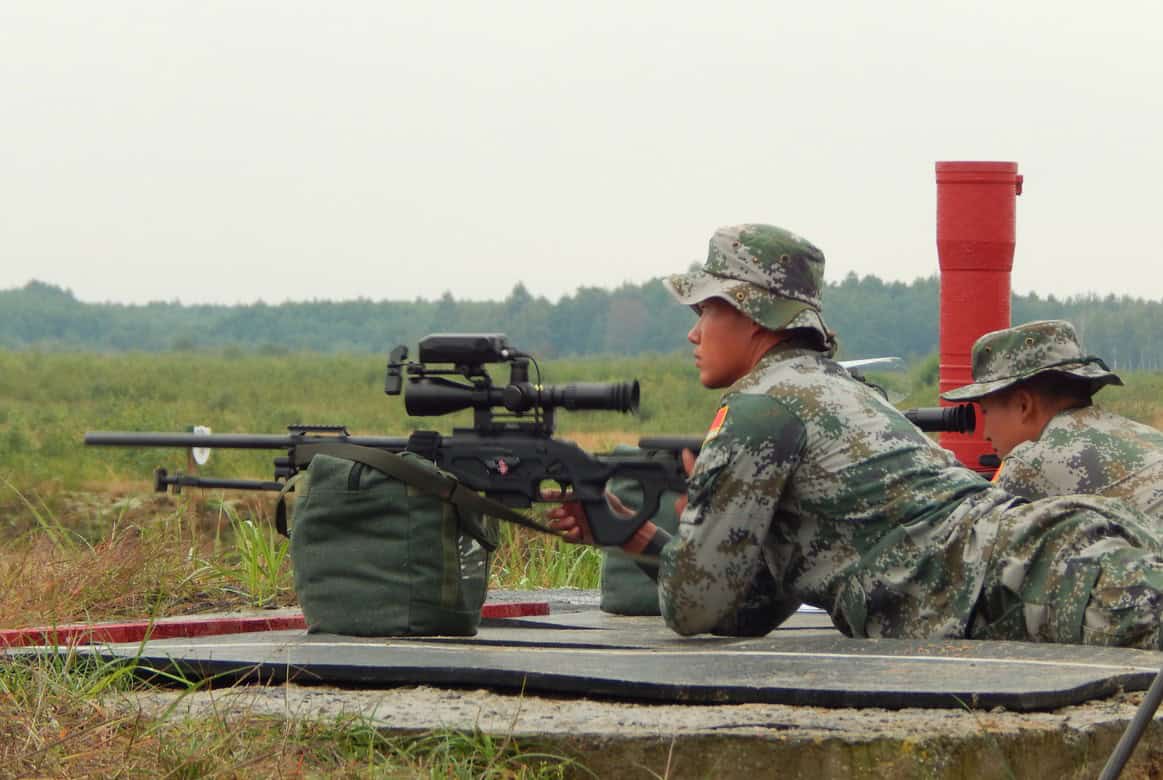
- Weapon type: Bolt-action sniper rifle
- Year entered service: 2012
- Country of origin: China
- Manufacturer: NORINCO
- Caliber of ammunition and feed: 7.62x51mm NATO, .308 Winchester, 5-round detachable box magazine
- Firing action: Manually-actuated bolt-action system
- Maximum effective range: 3,610 ft.
The CS/LR4 (QBU-202 / NSG-1) is a modern Chinese bolt-action precision rifle built by NORINCO. Unlike other Chinese rifles, this one is chambered for 7.62×51mm NATO/.308 with a 5-round box magazine. It is issued to police and special units as part of a complete sniper system. This rifle is typically sold as a “system” with matched optics, dedicated ammo and ballistic tools are part of the package, not just the rifle.
NORINCO QBU-88
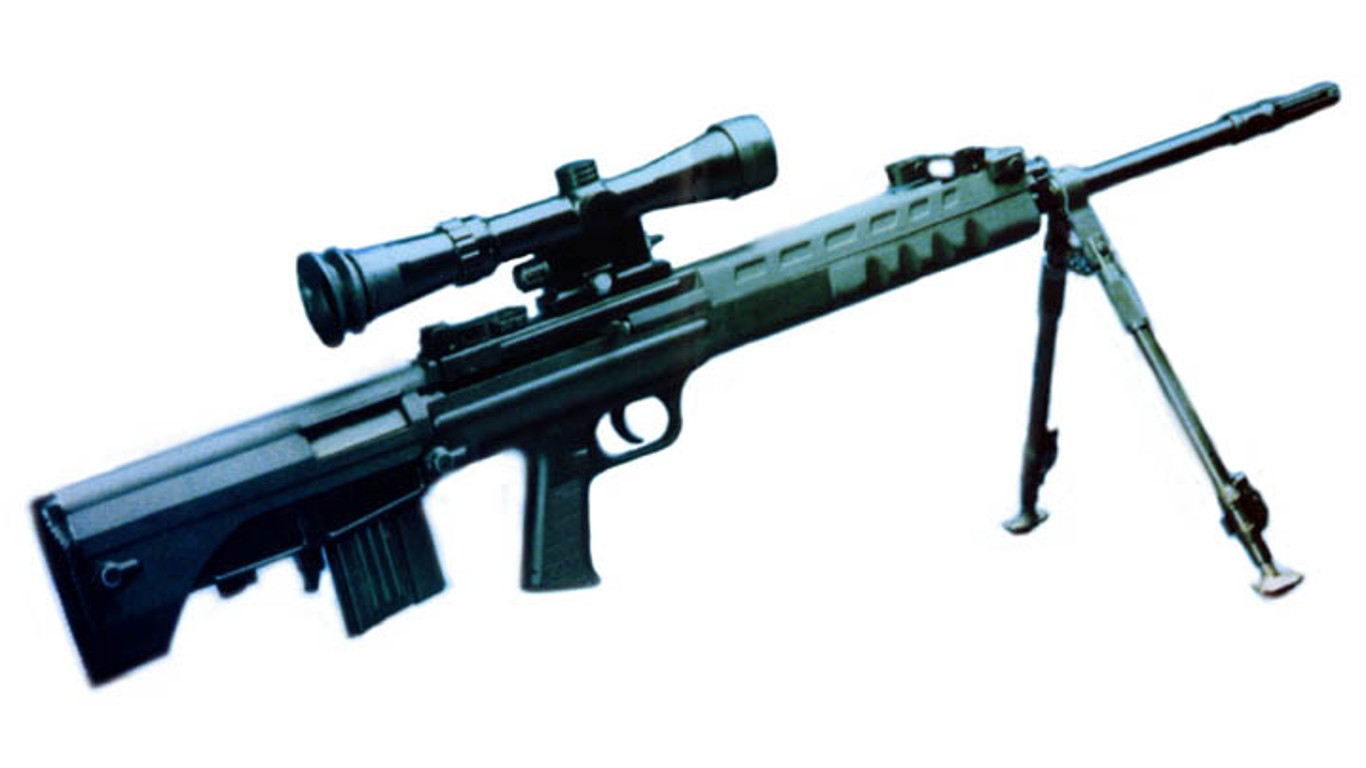
- Weapon type: Sniper rifle
- Year entered service: 1988
- Country of origin: China
- Manufacturer: NORINCO
- Caliber of ammunition and feed: 5.8x42mm; 5.56x45mm, 10-round detachable box magazine
- Firing action: Gas-operated; rotating bolt
- Maximum effective range: 2,624 ft.
China’s QBU-88 is a bullpup designated-marksman/sniper rifle that is chambered for the 5.8×42mm round. It was introduced in the late 1980s for PLA marksmen roles. Its bullpup layout keeps overall length short while retaining barrel length for accuracy. What’s interesting is that the 5.8mm round for this gun, and others, was developed as part of China’s push for indigenous small-arms calibers and systems.
ORSIS T-5000
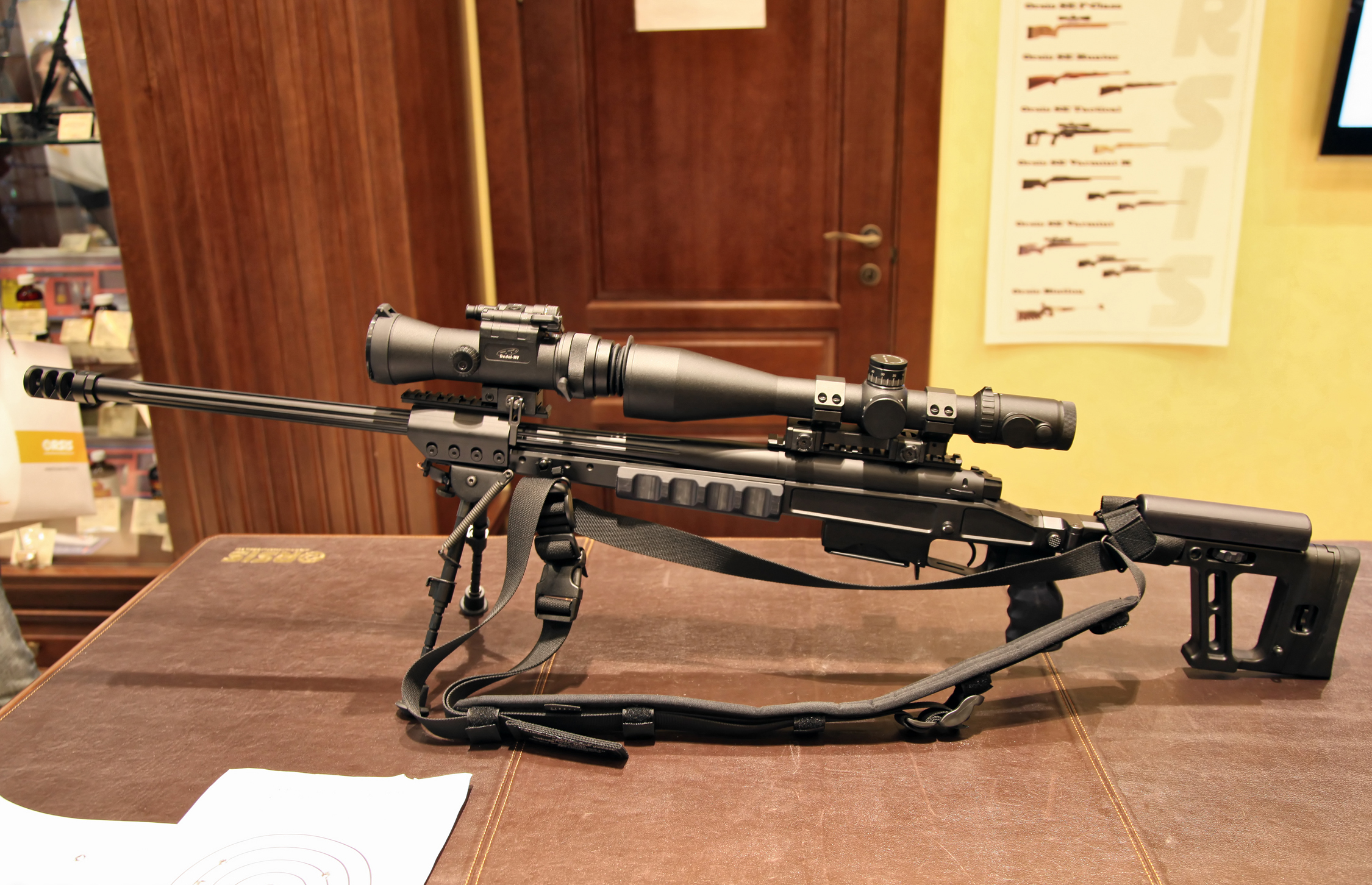
- Weapon type: Bolt-action sniper rifle
- Year entered service: 2011
- Country of origin: Russia
- Manufacturer: ORSIS
- Caliber of ammunition and feed: 7.62x51mm NATO, .308 Winchester Magnum, .338 Lapua Magnum, .408 Cheytac, 5-round detachable box magazine
- Firing action: Manually-actuated bolt-action system
- Maximum effective range: 4,920 ft.
The ORSIS T-5000 is a contemporary Russian bolt-action sniper rifle acclaimed for match-grade accuracy. It is used in competitions and elite units in militaries around the world.
RAI Model 300 / Model 500 (Haskins Rifle)
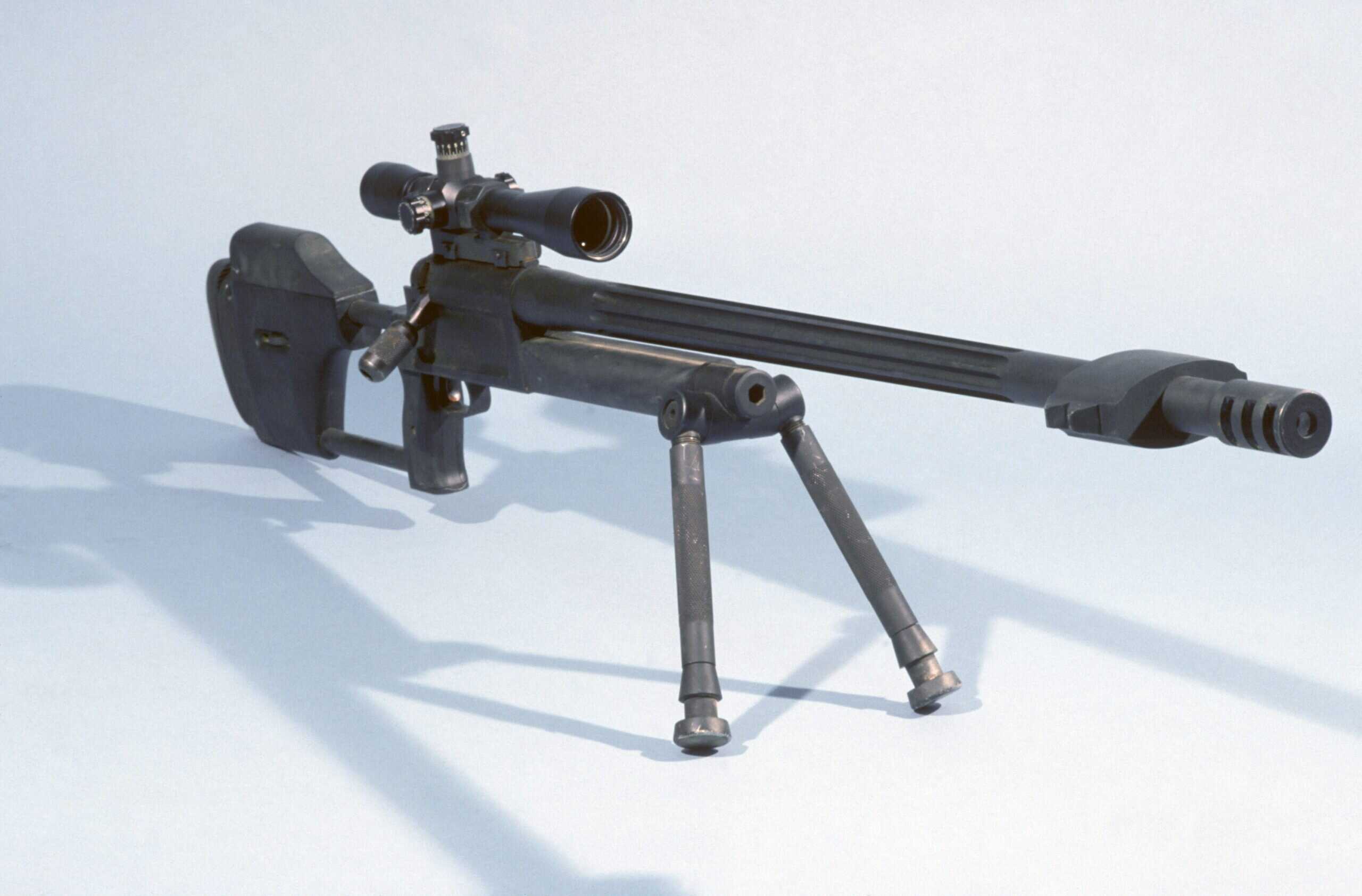
- Weapon type: Bolt-action sniper rifle
- Year entered service: 1983
- Country of origin: United States
- Manufacturer: Jerry Haskins / Research Armament
- Caliber of ammunition and feed: 12.7x99mm NATO, 7.62x51mm NATO, 8.58x71mm, 4- or 5-round detachable box magazine
- Firing action: Manually-actuated bolt-action system
- Maximum effective range: 4,265 ft.
The RAI Model 300 is a bolt-action heavy sniper/anti-materiel rifle developed by Jerry Haskins in the early 1980s. The RAI Model 300 and single-shot Model 500 were built for powerful cartridges and saw limited US service from the 1980s onward. The Haskins program actually helped lead to what became the .338/.416 family and influenced the .338 Lapua’s development.
Remington M24 SWS
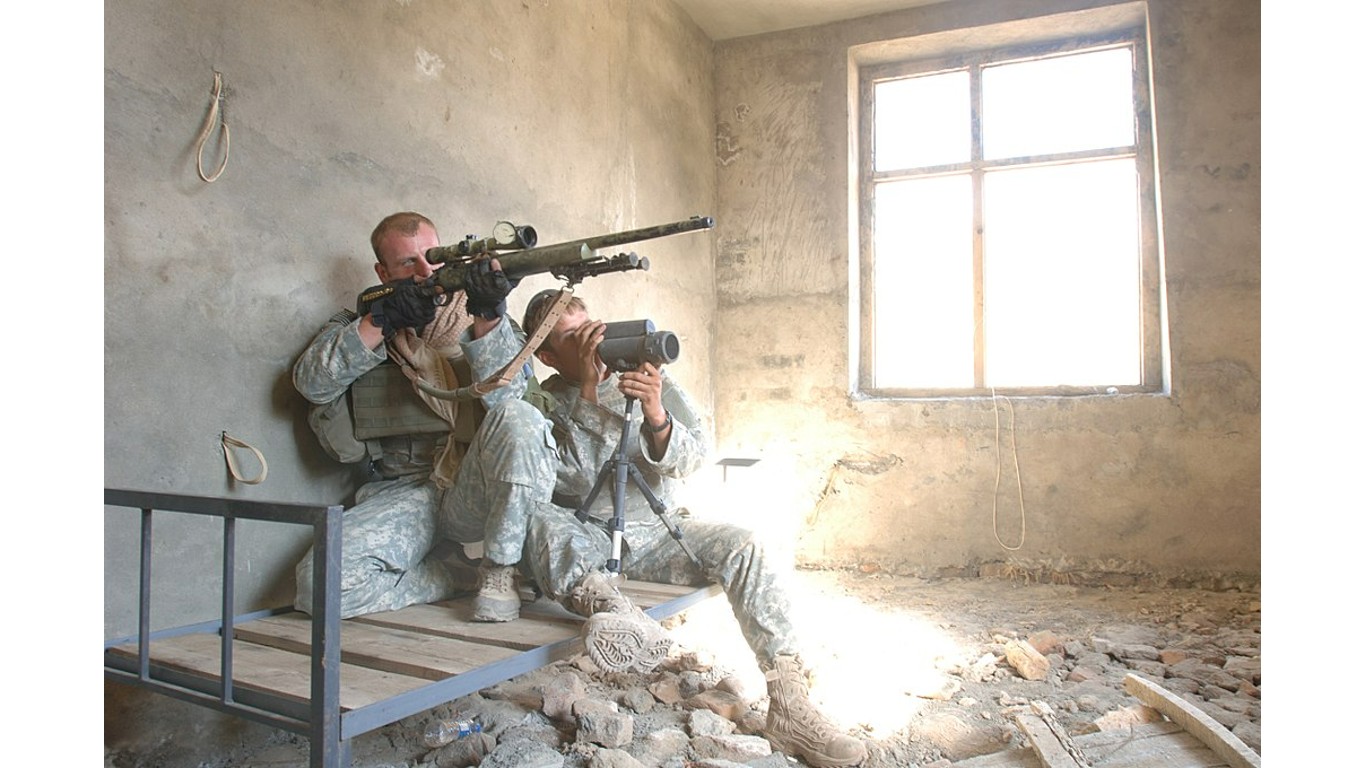
- Weapon type: Bolt-action sniper rifle
- Year entered service: 1987
- Country of origin: United States
- Manufacturer: Remington Arms
- Caliber of ammunition and feed: 7.62x51mm NATO; .338 Lapua Magnum, 5-round internal magazine / 5- or 10-round detachable box magazine
- Firing action: Manually-operated bolt-action
- Maximum effective range: 2,624 ft.
The M24 SWS is the U.S. Army’s Remington Model 700–based Sniper Weapon System. It has been fielded by armed forces around the world and it became a modern standard for 7.62×51mm precision work, later receiving upgrades for optics and ergonomics. Like some other rifles, the “SWS” label refers to the fact that it is a complete system including the rifle, scope, and kit, not just a rifle
Remington M40
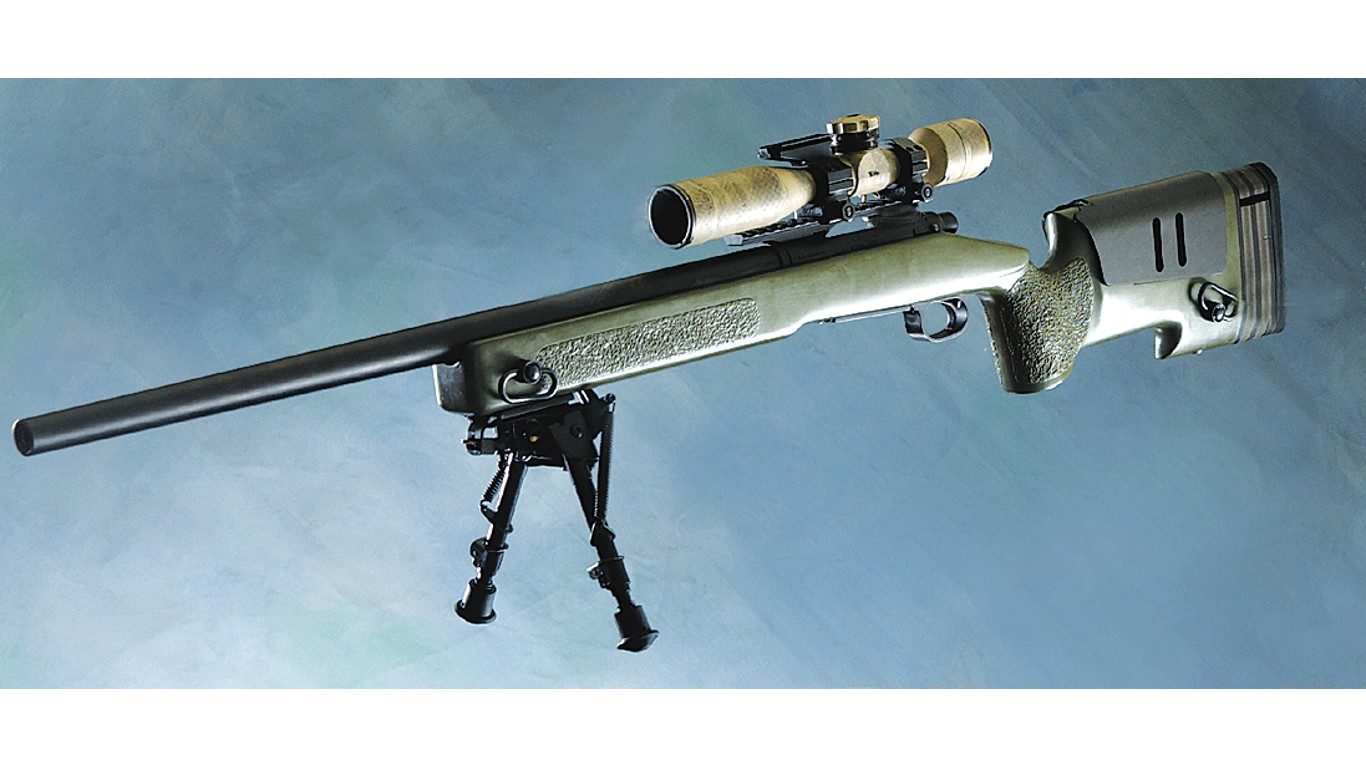
- Weapon type: Bolt-action sniper rifle
- Year entered service: 1966
- Country of origin: United States
- Manufacturer: Remington Arms
- Caliber of ammunition and feed: 7.62x51mm NATO, .308 Winchester, 5-round integral box magazine, 5-round detachable box magazine
- Firing action: Bolt-action, rotating bolt
- Maximum effective range: 3,280 ft.
The USMC’s Remington-based M40 entered service during the Vietnam era and evolved through a few variants. It was originally built for Marine snipers, and it has seen action from Vietnam to the Global War on Terror. The M40 line is basically a military version of Remington’s Model 700, but more tailored and re-worked for service use.
Remington MSR (Modular Sniper Rifle)
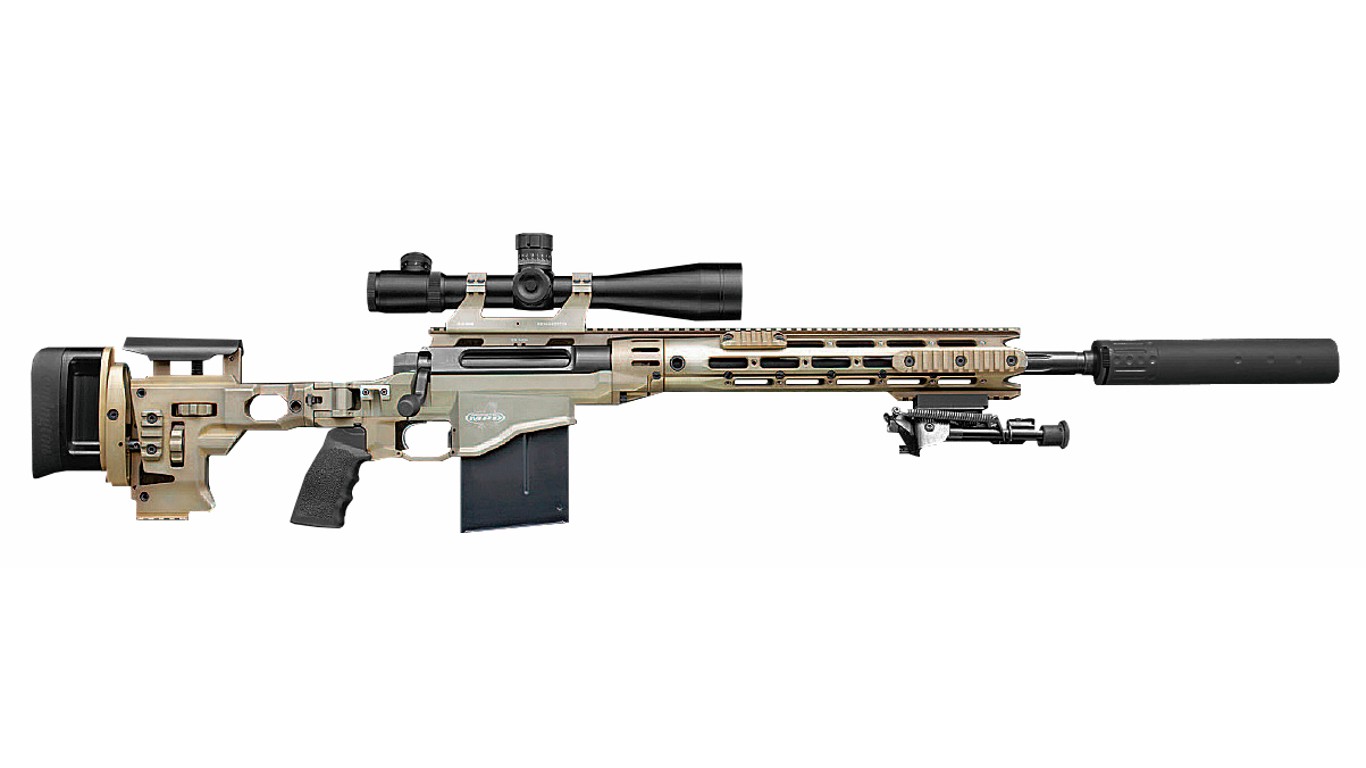
- Weapon type: Bolt-action sniper rifle
- Year entered service: 2013
- Country of origin: United States
- Manufacturer: Remington Arms
- Caliber of ammunition and feed: .338 Lapua Magnum, .338 Norma Magnum, .300 Winchester Magnum, 7.62x51mm NATO, 5-, 7- or 10-round detachable box magazine
- Firing action: Manually-actuated bolt-action system
- Maximum effective range: 4,920 ft.
Remington’s MSR is a multi-caliber, modular bolt-action rifle. It is designed for quick caliber swaps and long-range magnum work. It can be chambered for .338 Lapua Mag, .300 Win Mag, and 7.62x51mm NATO rounds.
Stoner SR-25
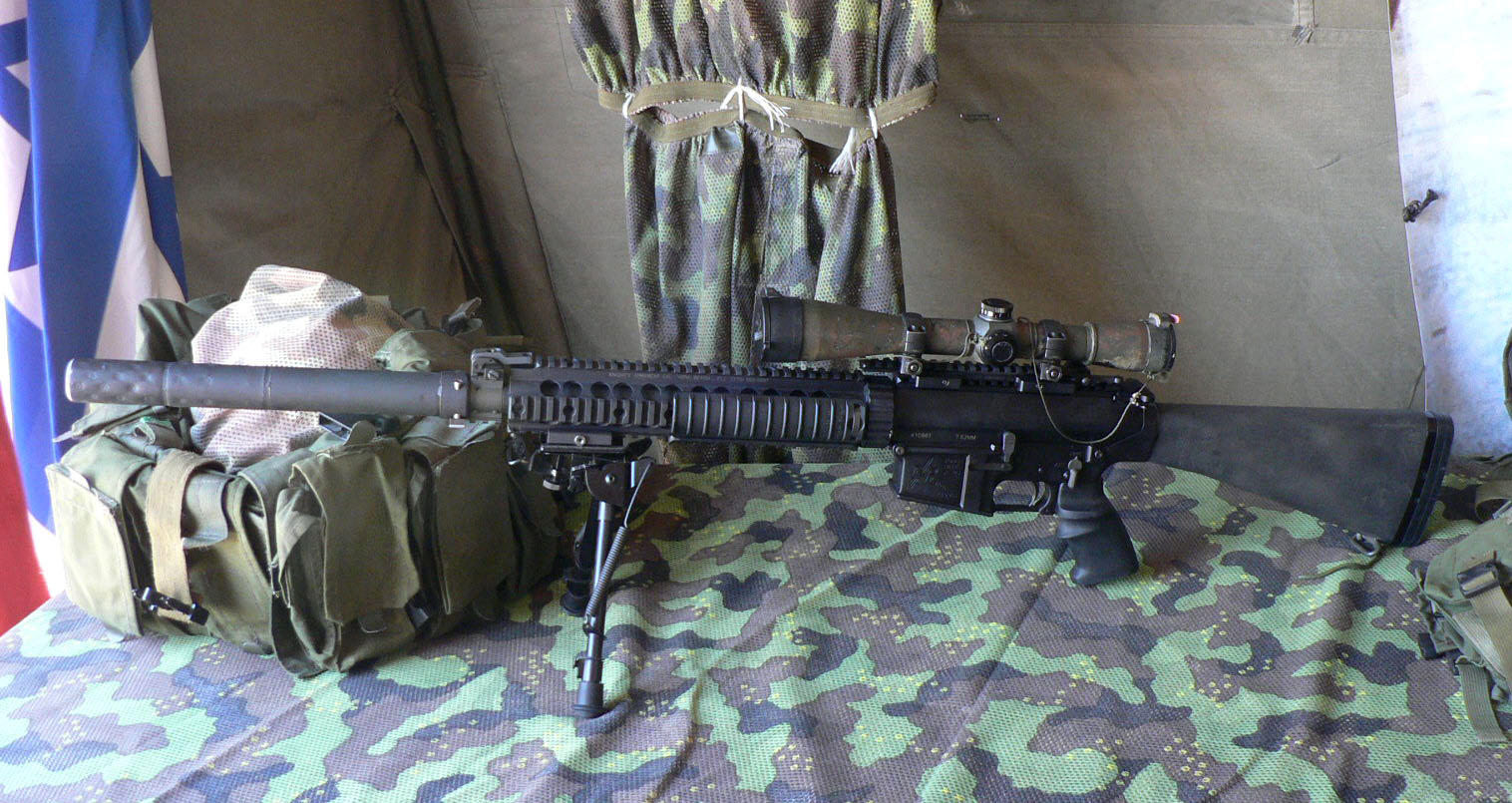
- Weapon type: Sniper rifle
- Year entered service: 1990
- Country of origin: United States
- Manufacturer: Knights Armament
- Caliber of ammunition and feed: 7.62x51mm NATO, 10- or 20-round detachable box magazine
- Firing action: Gas-operated; rotating bolt; semi-automatic
- Maximum effective range: 4,500 ft.
The SR-25 was designed by Eugene Stoner and produced by Knight’s Armament. It is a semi-automatic 7.62×51mm designated-marksman/sniper rifle introduced in the early 1990s. It formed the basis for the Mk 11/M110 family in U.S. service and features AR-pattern ergonomics.







 Top Gaining Stocks
 Top Losing Stocks