


Despite the rise of drones and long-range missiles, one piece of military hardware still dominates ground combat: the tank. NATO countries continue to invest heavily in modern main battle tanks capable of surviving some of the most dangerous battlefields on earth. These machines combine thick composite armor, powerful cannons, and advanced targeting systems that allow them to fight day or night. If a large-scale war were to erupt in Europe, these tanks would be among the most important weapons NATO commanders have at their disposal. Here, 24/7 Wall St. is taking a closer look at NATO’s tanks.
To identify the tanks NATO is counting on if war breaks out in Europe, 24/7 Wall St. reviewed various historical and military sources. Note that we have ordered these tanks chronologically. We included supplemental information for each tank regarding the primary operator(s), manufacturer, when it was introduced, its main gun, top speed, and ultimately why it is important for any NATO war effort.
Here is a look at the tanks NATO is counting on if war breaks out in Europe:
Why Are We Covering This?
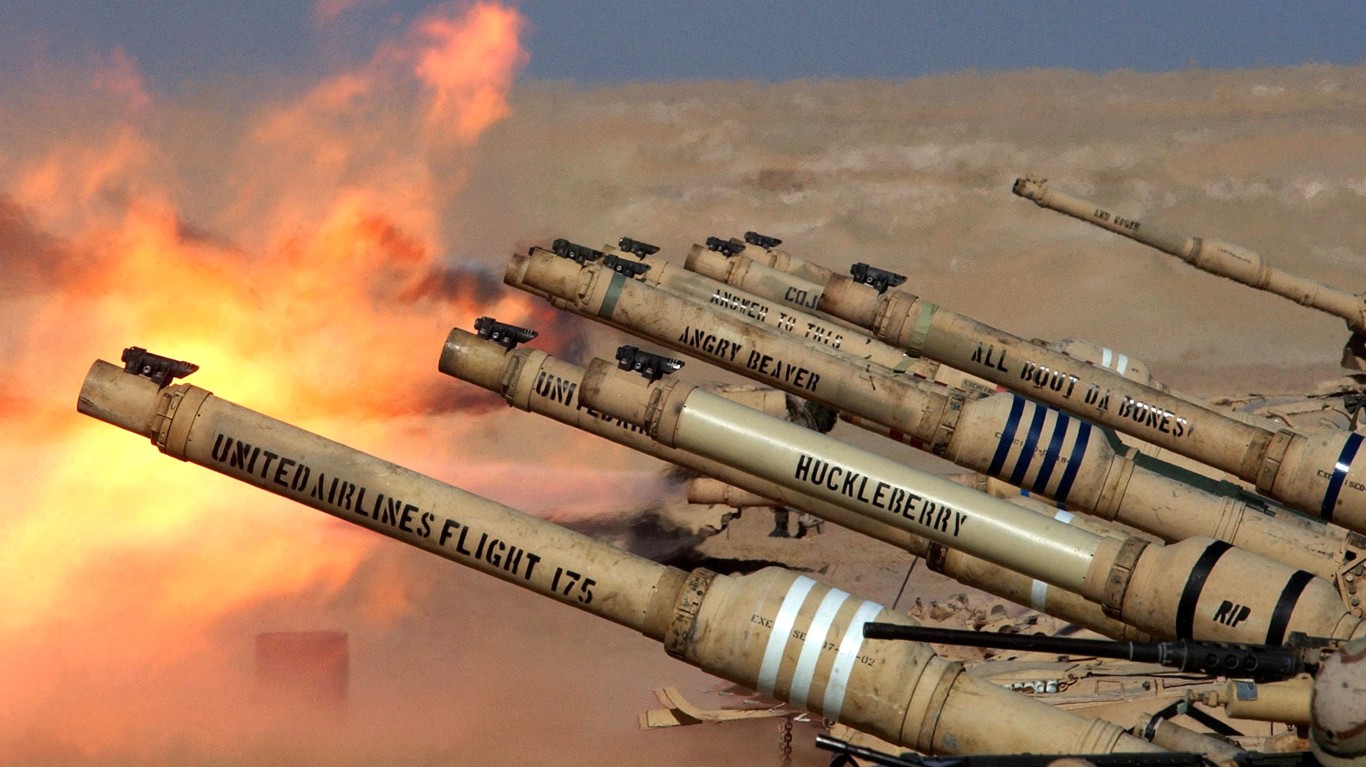
Understanding which tanks NATO would rely on in a major European war provides insight into how the alliance actually prepares for large-scale ground combat. While modern warfare increasingly involves drones, cyber operations, and precision missiles, heavy armored forces remain central to battlefield maneuver and territorial defense. NATO armies still train for high-intensity conflicts where main battle tanks are used to break enemy lines, hold critical terrain, and support mechanized infantry across contested frontlines.
Europe’s Next War Would Be an Armored War
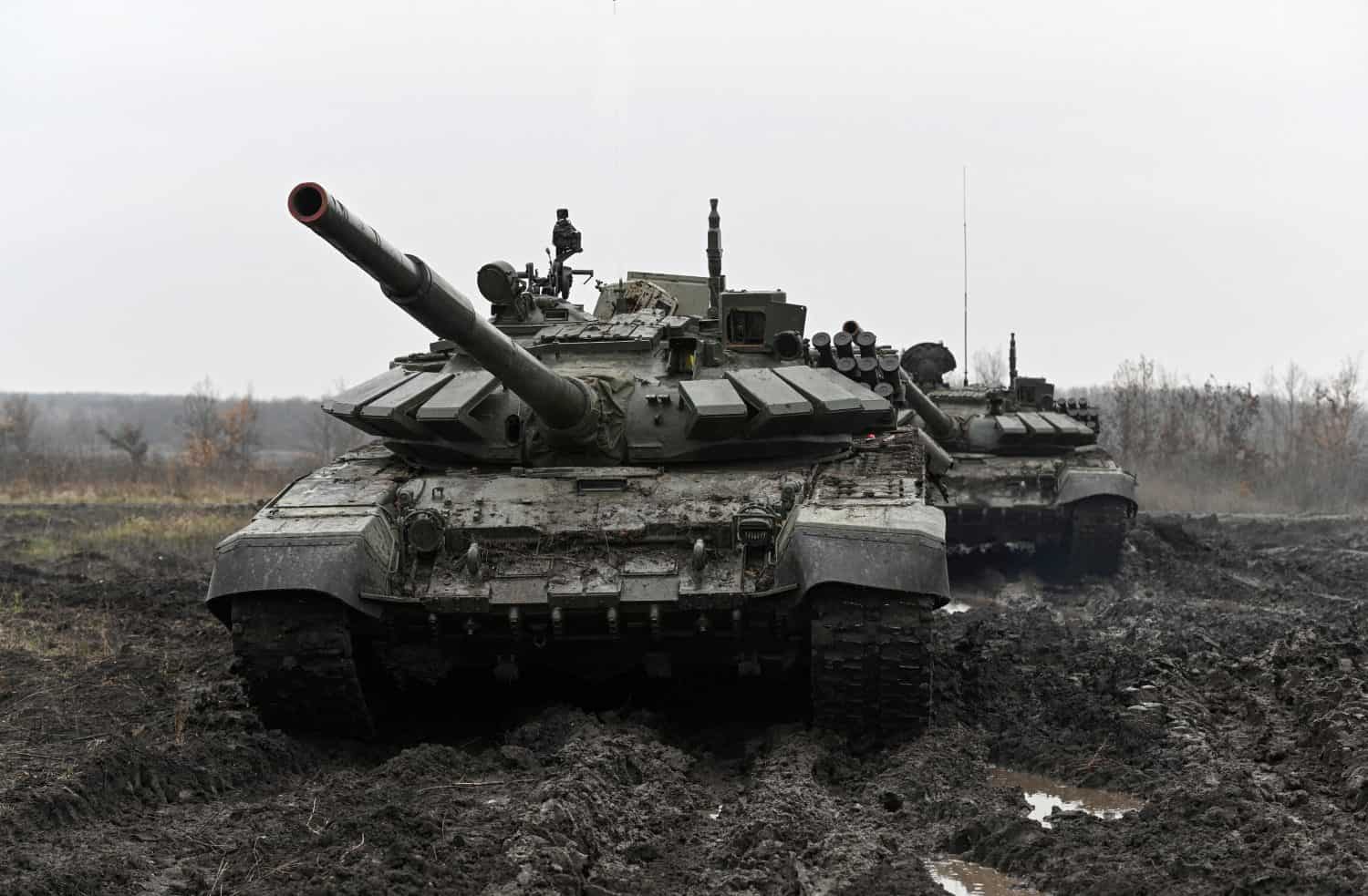
If a large-scale conflict erupts in Europe, tanks will once again play a decisive role. Despite the rise of drones and precision missiles, modern main battle tanks remain the backbone of ground warfare. NATO armies continue to rely on heavy armor to break defensive lines, defend territory, and support mechanized infantry across large and contested battlefields.
NATO’s Armored Forces Are Built Around a Few Key Platforms
Across Europe and North America, NATO members operate dozens of tank models and variants. Yet the alliance’s armored strength is concentrated in a smaller group of main battle tanks that dominate frontline service. Platforms such as the M1 Abrams, Leopard 2, and Leclerc form the backbone of NATO’s heavy combat power and are widely used across multiple allied armies.
Eastern Europe Has Become NATO’s Most Important Frontline
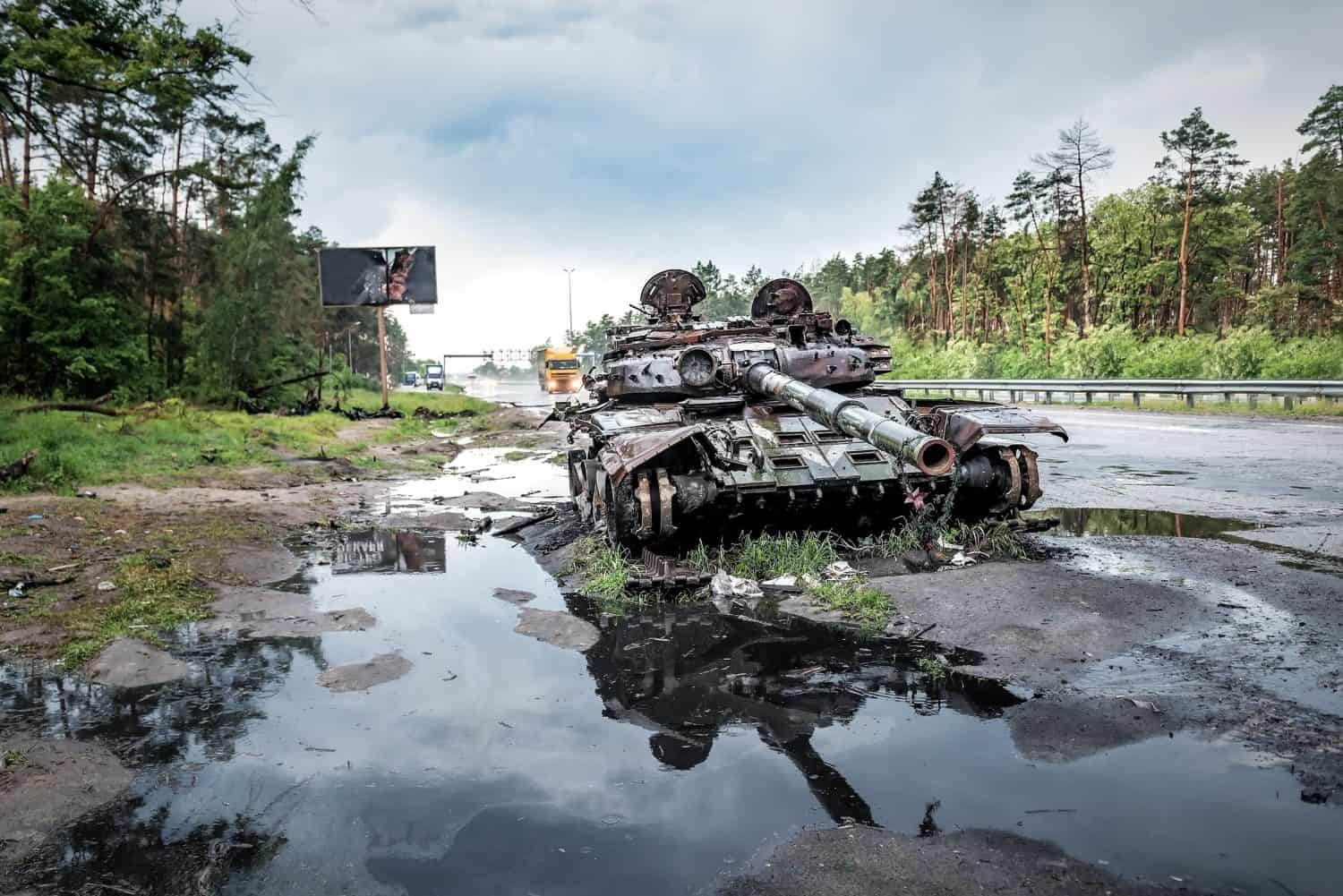
Since Russia’s invasion of Ukraine, NATO has significantly reinforced its eastern flank. Countries such as Poland, Finland, and the Baltic states now host large deployments of armored units and multinational brigades. If a large-scale war broke out in Europe, these forces and their tanks would likely be among the first NATO units sent into combat.
Modern Tanks Are Designed for High-Intensity Combat
![Iraq+military | A new generation of tanker for a new generation of Iraqi military [Image 6 of 9]](https://a673b.bigscoots-temp.com/wp-content/uploads/2025/09/imageForEntry9-GAs.jpg)
Today’s main battle tanks combine heavy composite armor, powerful 120mm or 125mm cannons, and sophisticated sensors that allow crews to fight day or night. Many also feature digital battlefield networking, advanced fire-control systems, and countermeasures designed to protect against modern anti-tank missiles and other emerging threats.
These Tanks Form the Core of NATO’s Armored Power
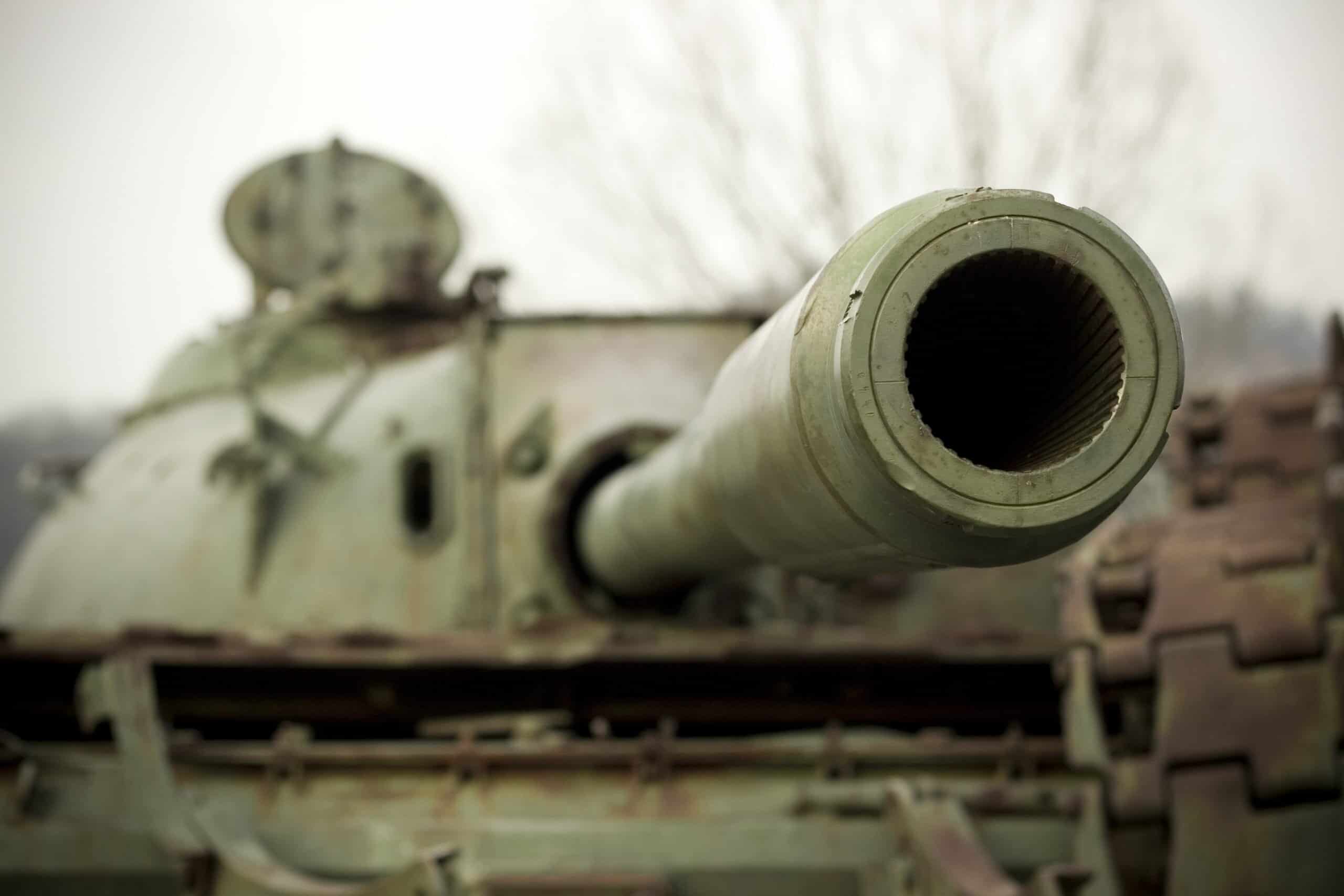
From America’s M1 Abrams to Europe’s Leopard 2 and France’s Leclerc, NATO maintains a powerful fleet of tanks designed to dominate the battlefield. The following list highlights the tanks NATO militaries would rely on most if a major war broke out in Europe.
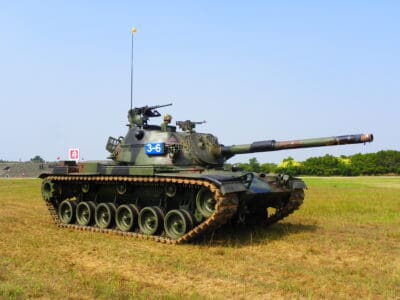
M60A3 TTS
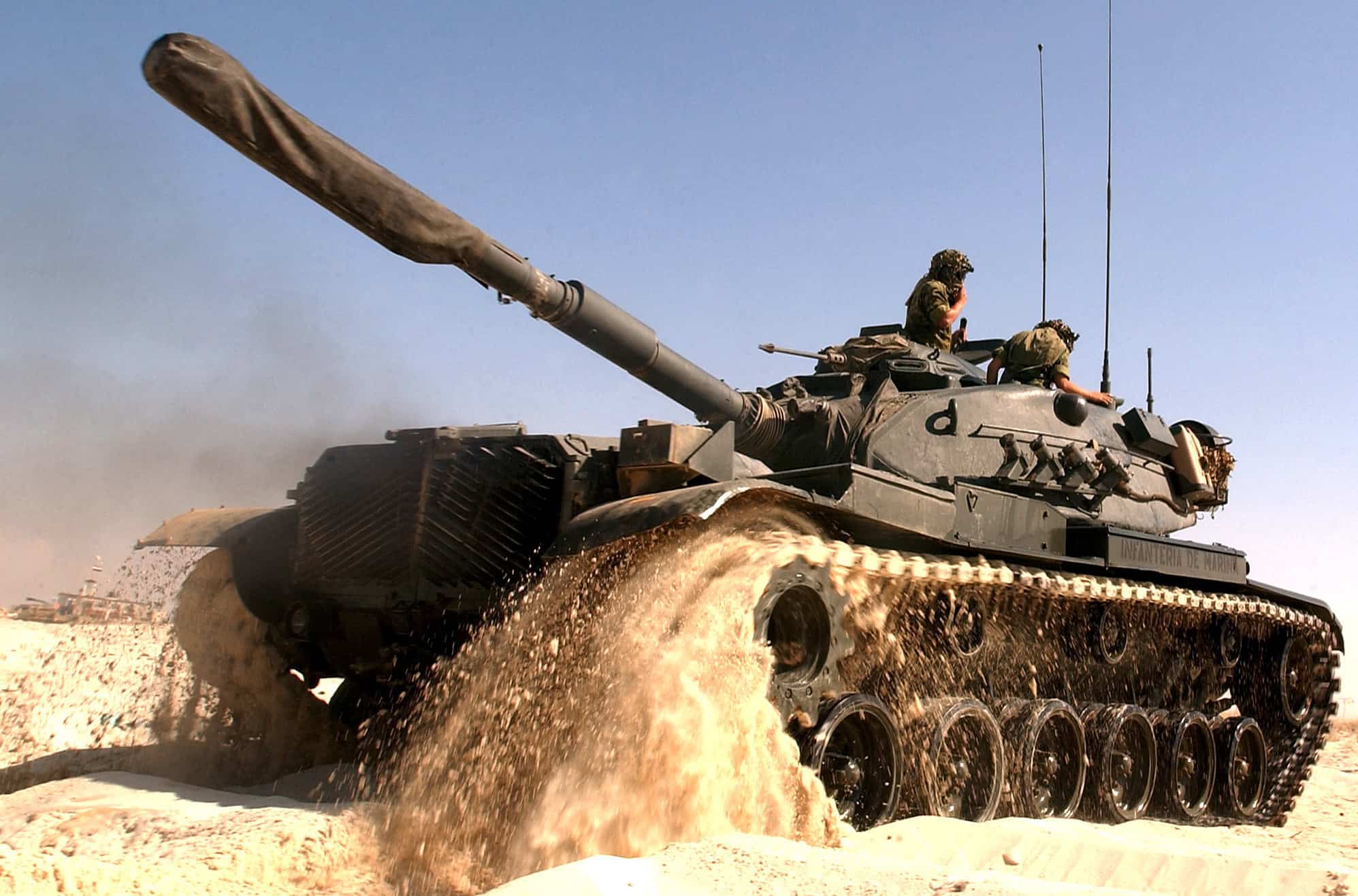
- Country: Greece
- Manufacturer: General Dynamics
- Year introduced to service: 1978
- Main gun: 105mm
- Weight: 52 tons
- Top speed: 30 mph
- Key strength: Upgraded legacy tank
- NATO role: Reserve armored force
Greece’s M60A3 TTS is a legacy MBT, but it still matters for NATO planning because it represents available armored capacity that can hold secondary sectors and support national defense missions. In a European war, higher-end MBTs concentrate where the main fight is, while older tanks cover rear-area security, coastal defense, and strategic points. NATO counts on forces like these to preserve modern units for the frontline.
M1A1 Abrams
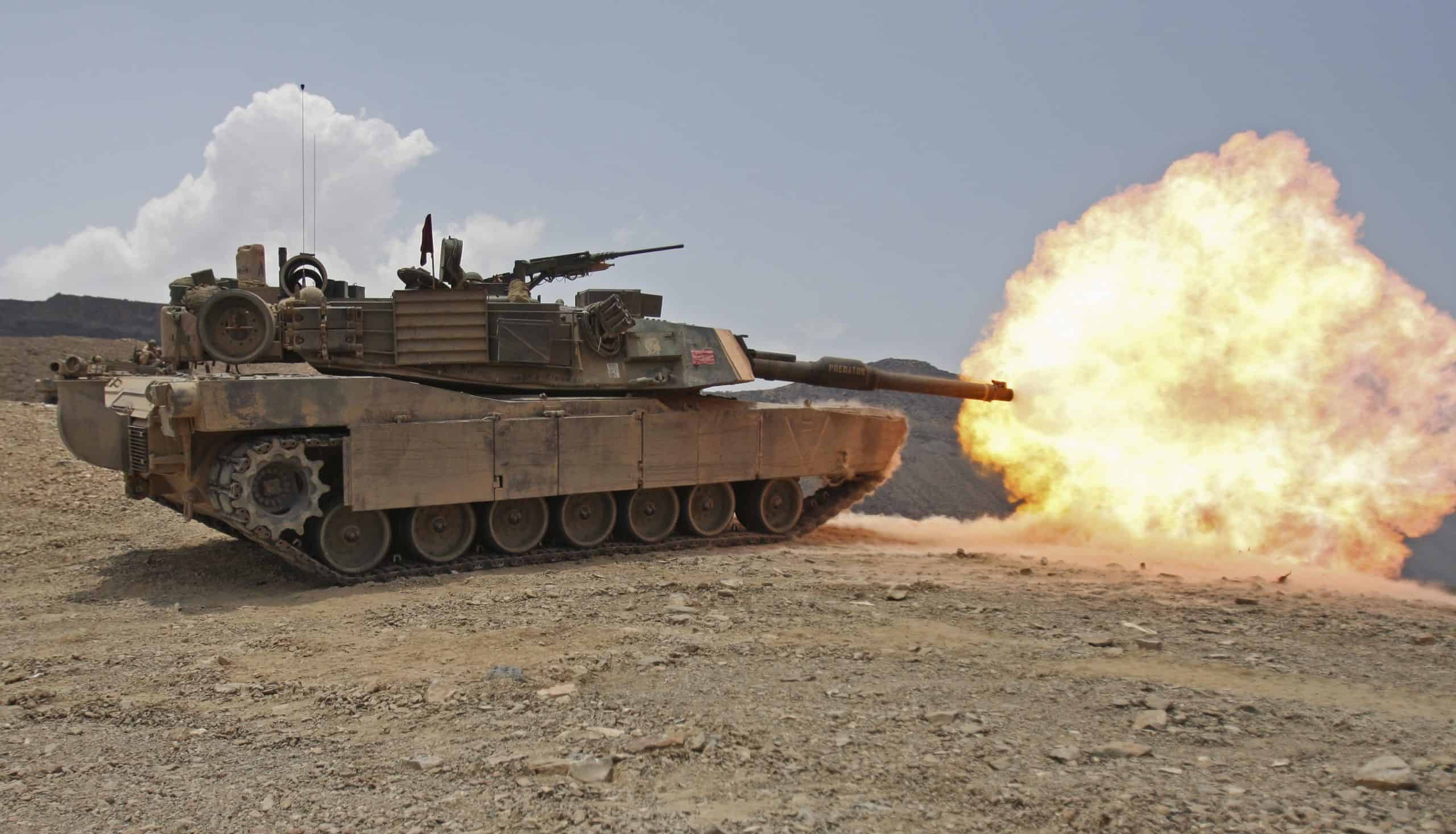
- Country: Poland / Allies
- Manufacturer: General Dynamics
- Year introduced to service: 1985
- Main gun: 120mm M256
- Weight: 67 tons
- Top speed: 42 mph
- Key strength: Reliable export MBT
- NATO role: Rapid reinforcement armor
For allied armies fielding M1A1s, the value is straightforward: a credible 120mm NATO-standard MBT with a deep support ecosystem and strong battlefield durability. In a European war scenario, these tanks help expand NATO’s armored mass, especially for holding terrain and reinforcing threatened sectors. They may not be the newest Abrams, but they bring serious lethality and proven protection to the fight.
Leopard 2A4
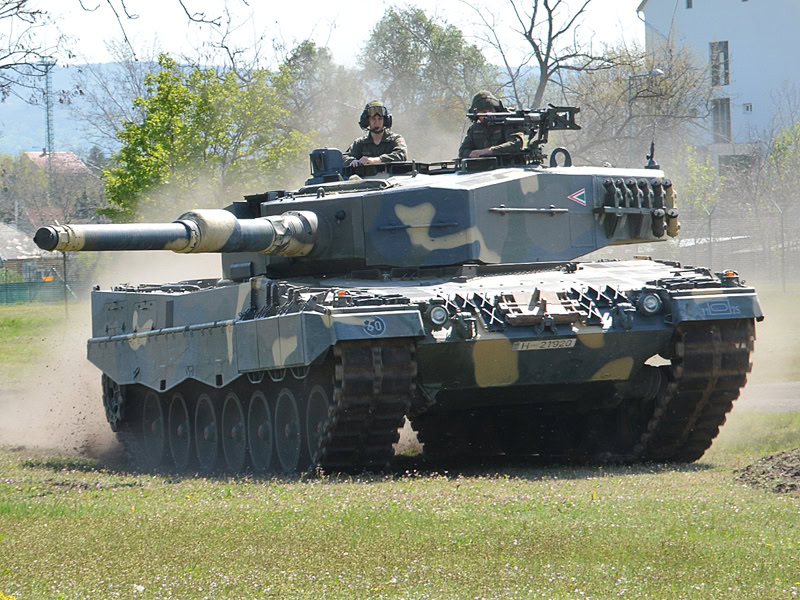
- Country: Multiple NATO
- Manufacturer: Krauss‑Maffei Wegmann
- Year introduced to service: 1985
- Main gun: 120mm L44
- Weight: 55 tons
- Top speed: 45 mph
- Key strength: Large NATO inventory
- NATO role: Reserve / secondary armor
The Leopard 2A4 is still one of NATO’s most important tanks for a simple reason: it exists in large quantities across several members, enabling rapid force generation. While older than the newest Leopard variants, it’s a credible 120mm MBT that can be upgraded, backfilled, and used to hold ground. In a European war, NATO needs depth, and the 2A4 provides it.
Leopard 1A5
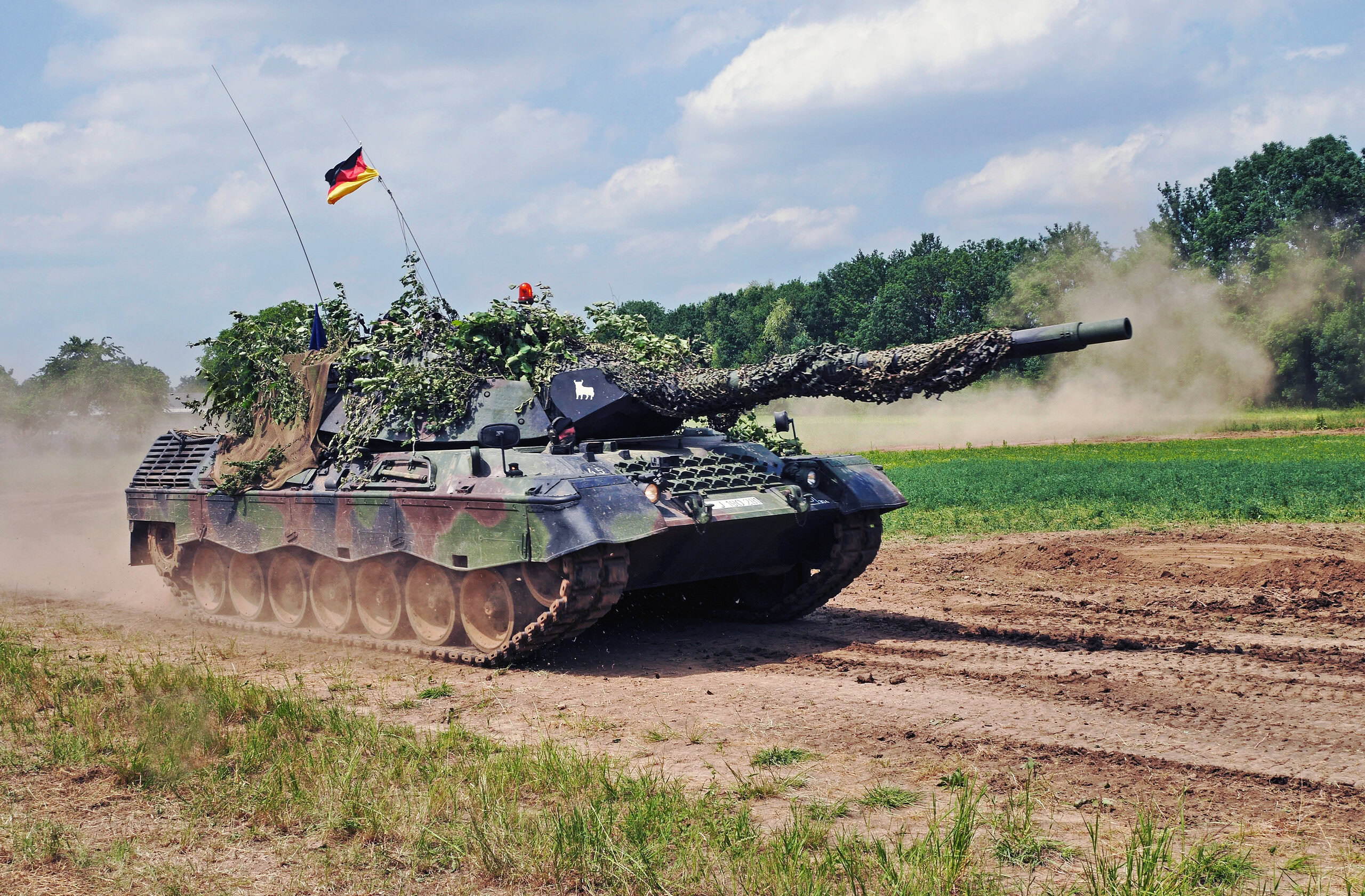
- Country: Greece
- Manufacturer: Krauss‑Maffei
- Year introduced to service: 1987
- Main gun: 105mm
- Weight: 42 tons
- Top speed: 40 mph
- Key strength: Large legacy fleet
- NATO role: Secondary armored defense
The Leopard 1A5 is not a frontline peer to modern MBTs, but it remains relevant as a secondary armored asset that can be mobilized and employed where threats are lower or missions are defensive. Upgraded fire control helps, but its main contribution is capacity. In a European war, NATO needs forces to guard lines, secure infrastructure, and cover less-contested sectors—roles where legacy Leopards can still be useful.
Leopard 1A5DK
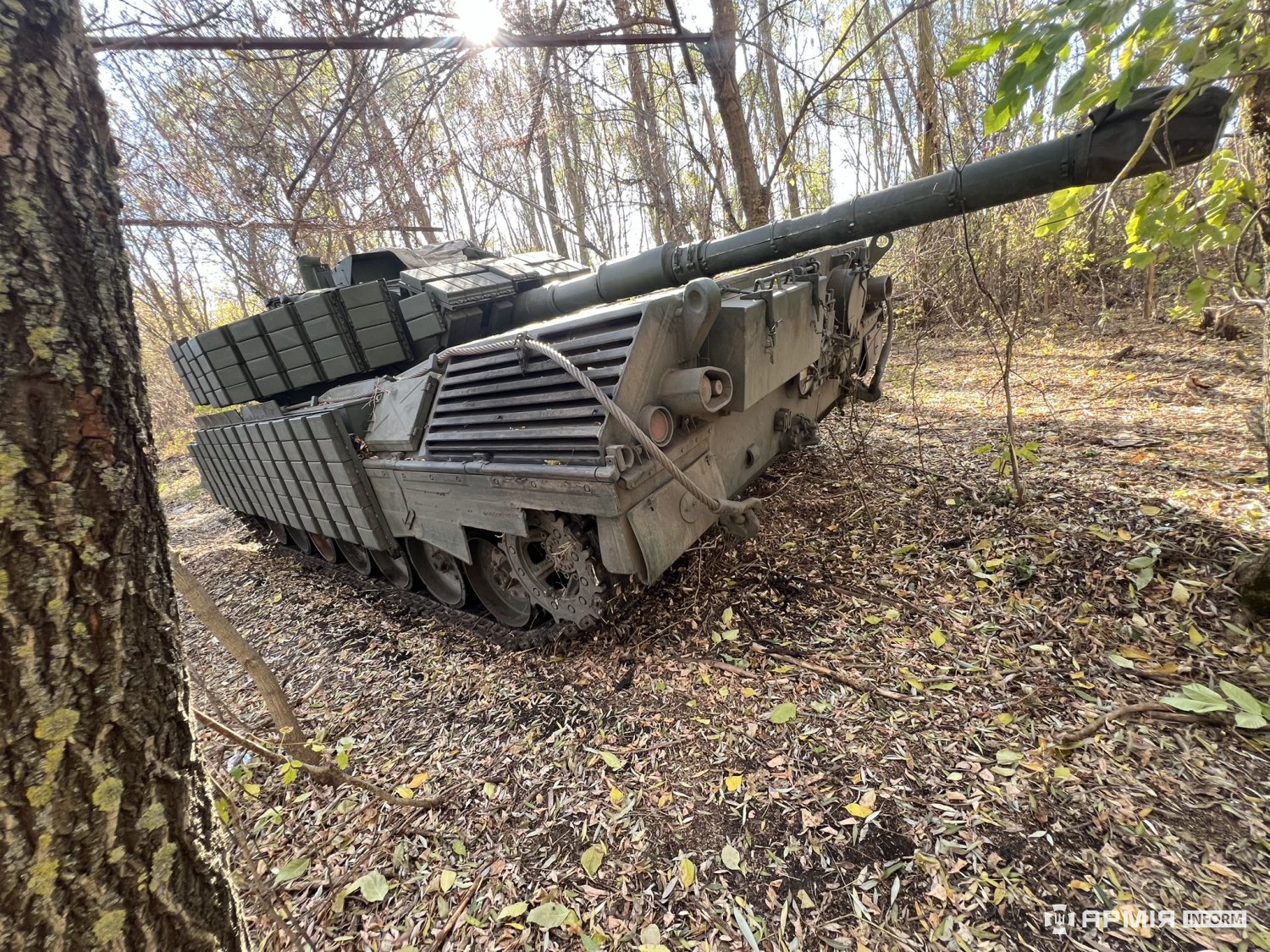
- Country: Denmark
- Manufacturer: Krauss‑Maffei
- Year introduced to service: 1992
- Main gun: 105mm
- Weight: 42 tons
- Top speed: 40 mph
- Key strength: Modernized fire control
- NATO role: Reserve armor
Denmark’s Leopard 1A5DK reflects NATO’s reality: not every nation fields the newest tanks, but upgraded legacy vehicles still have operational value. Modernized fire-control components improve engagement capability and basic battlefield effectiveness. In a European war, these tanks can support territorial defense, free advanced MBTs for the sharpest fights, and provide additional armored presence for security missions. NATO counts on them as part of the alliance’s overall depth and resilience.
Leopard 2A5
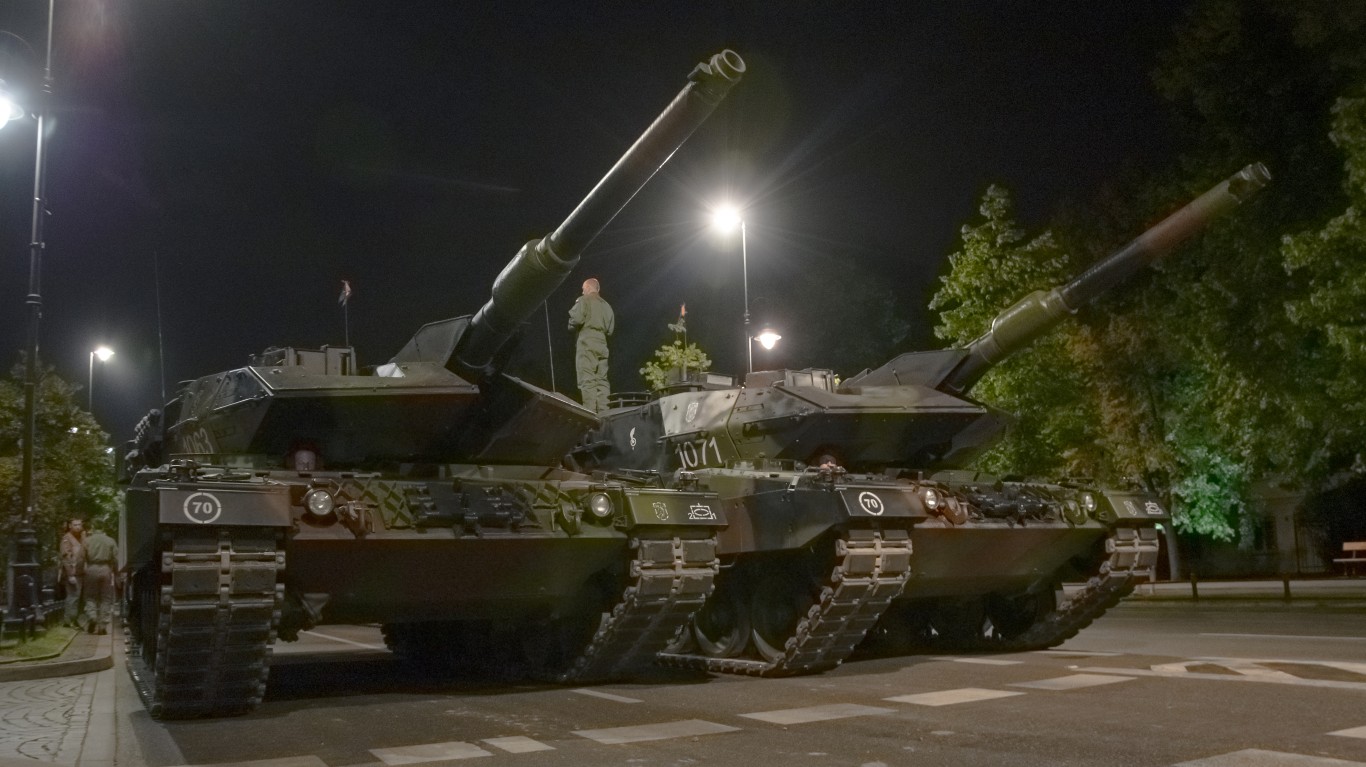
- Country: Denmark / Poland
- Manufacturer: Krauss‑Maffei Wegmann
- Year introduced to service: 1995
- Main gun: 120mm L44
- Weight: 60 tons
- Top speed: 45 mph
- Key strength: Upgraded armor wedge
- NATO role: NATO armored backbone
The Leopard 2A5 remains a key mid-generation MBT that many NATO armies can field in meaningful numbers, and numbers matter in a continental war. Its armor improvements and solid fire-control baseline make it more than a legacy holdover. NATO relies on tanks like the 2A5 to fill brigades, defend critical corridors, and provide a capable platform that can be sustained and repaired under pressure.
Ariete C1

- Country: Italy
- Manufacturer: OTO Melara / Iveco
- Year introduced to service: 1995
- Main gun: 120mm
- Weight: 54 tons
- Top speed: 40 mph
- Key strength: Italian MBT platform
- NATO role: National armored force
Italy’s Ariete C1 remains the country’s primary MBT and a key element of NATO’s broader armored depth. While not the largest fleet in the alliance, Ariete-equipped units provide trained crews, heavy armor experience, and deployable capability. In a European war, NATO needs multiple contributors to sustain rotations and protect lines of communication. The Ariete C1 is part of that collective mass—useful, interoperable, and available.
Stridsvagn 122

- Country: Sweden
- Manufacturer: BAE Systems Hägglunds
- Year introduced to service: 1997
- Main gun: 120mm L44
- Weight: 62 tons
- Top speed: 43 mph
- Key strength: Enhanced Leopard armor
- NATO role: Nordic armored defense
Sweden’s Stridsvagn 122—its heavily protected Leopard 2 variant—adds high-end armor to NATO’s northern flank, where terrain and weather demand specialized readiness. In a European war, protecting the Baltic region and the approaches to Scandinavia becomes strategically critical. NATO counts on Strv 122 units because they combine Leopard interoperability with enhanced protection and a force designed to operate effectively in harsh conditions and dispersed battle spaces.
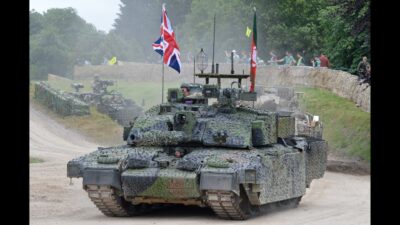
Challenger 2
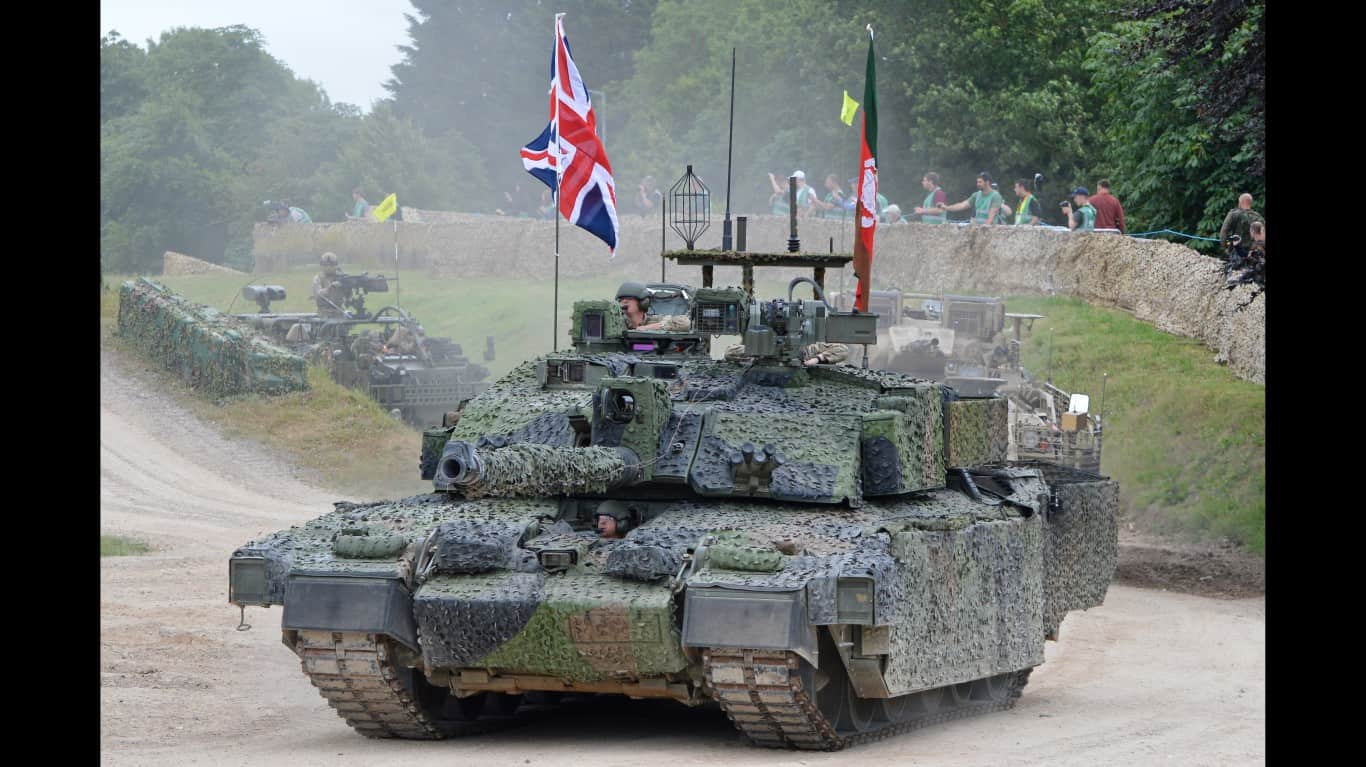
- Country: United Kingdom
- Manufacturer: BAE Systems
- Year introduced to service: 1998
- Main gun: 120mm rifled
- Weight: 75 tons
- Top speed: 37 mph
- Key strength: Heavy Chobham armor
- NATO role: British armored core
Britain’s Challenger 2 is valued for rugged protection and a professional armored force that trains to deploy alongside allies. In a European war, UK heavy brigades would be among the most politically and militarily significant reinforcements. The Challenger 2’s strengths are survivability and accurate fire, plus a doctrine built around combined arms. NATO counts on it as a dependable, hard-hitting contribution that shows up ready.
Leopard 2A6
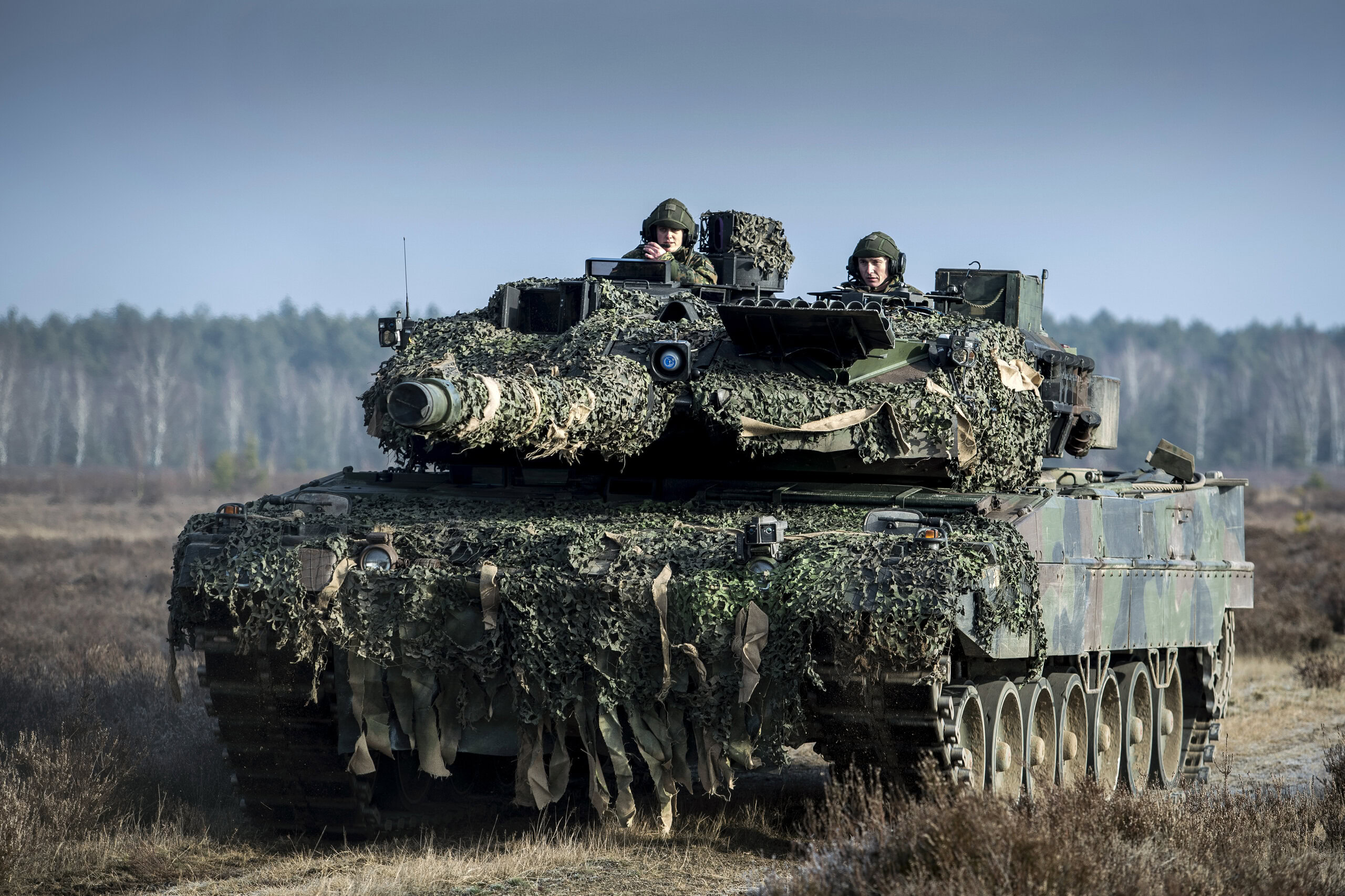
- Country: Germany / NATO
- Manufacturer: Krauss‑Maffei Wegmann
- Year introduced to service: 2001
- Main gun: 120mm L55
- Weight: 62 tons
- Top speed: 45 mph
- Key strength: Long‑barrel gun power
- NATO role: NATO armored backbone
Across NATO, the Leopard 2A6 is the workhorse ‘big gun’ tank, thanks to its 120mm L55 cannon and widespread adoption. In a European war, interoperability is a weapon—shared parts, shared training standards, and similar tactics across multiple armies. NATO counts on the 2A6 to generate mass quickly, combine units across borders, and still deliver modern, long-range anti-armor punch.
Leopard 2A6NO
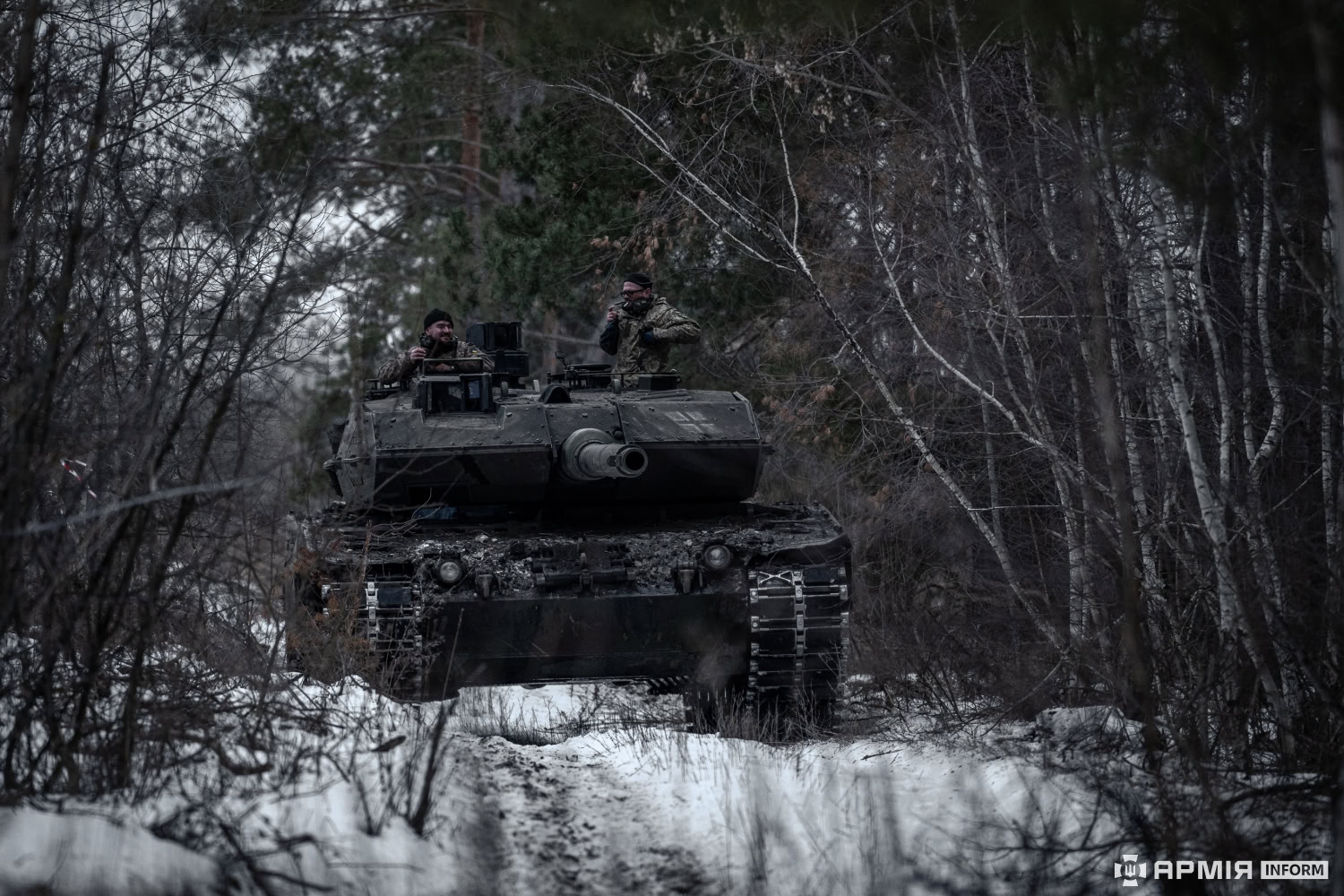
- Country: Norway
- Manufacturer: Krauss‑Maffei Wegmann
- Year introduced to service: 2001
- Main gun: 120mm L55
- Weight: 62 tons
- Top speed: 45 mph
- Key strength: Cold‑weather operations
- NATO role: Northern flank defense
Norway’s Leopard 2A6NO supports NATO’s ability to defend the High North and secure northern routes that matter for reinforcement and deterrence. In a European war, Russia’s northern capabilities and Arctic-adjacent pressures can’t be ignored. NATO counts on Norwegian heavy armor because it brings Leopard 2 interoperability, trained crews, and cold-weather readiness—exactly what’s needed to prevent the northern flank from becoming a vulnerability.
Leopard 2E
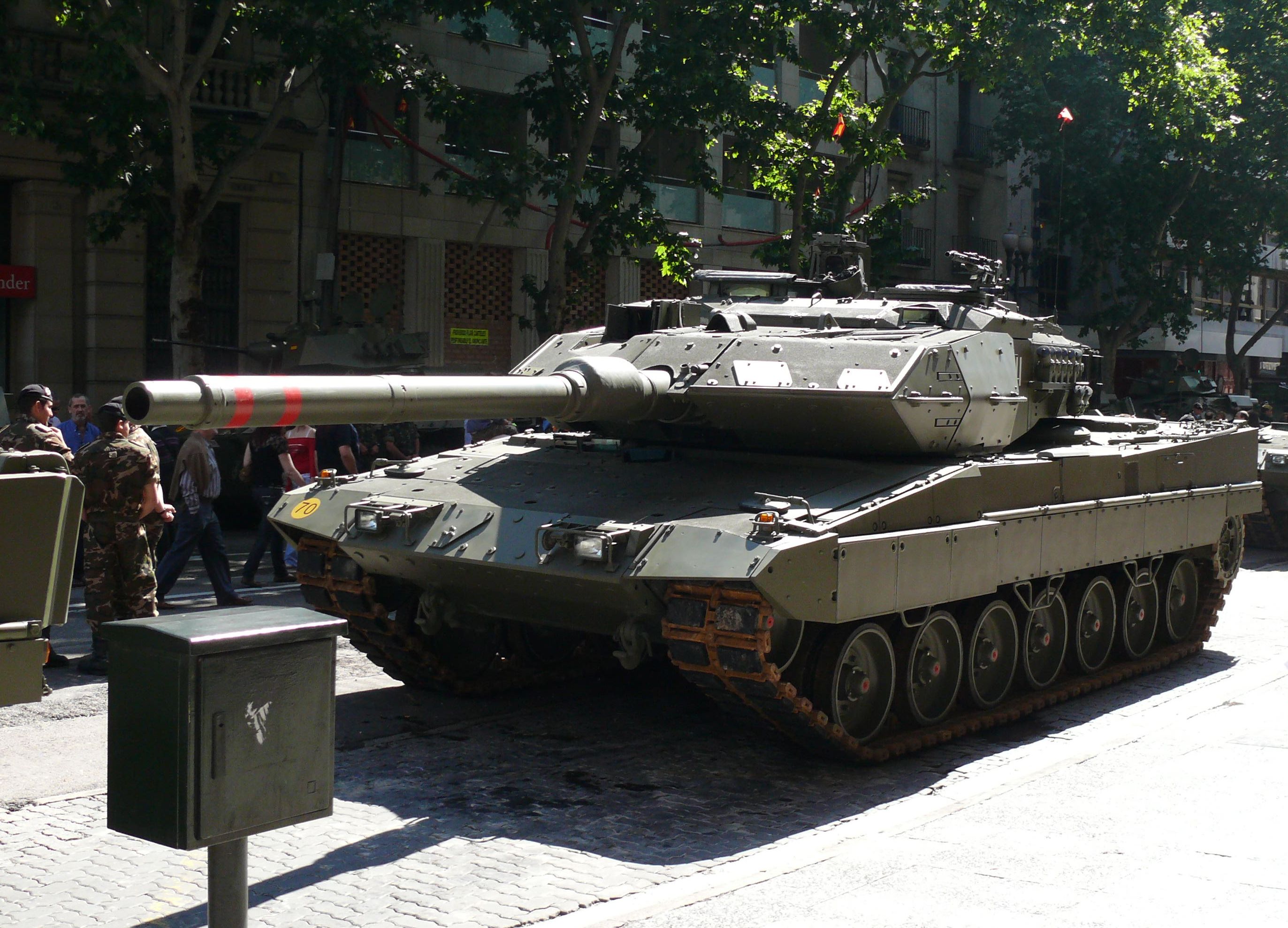
- Country: Spain
- Manufacturer: Santa Bárbara Sistemas
- Year introduced to service: 2003
- Main gun: 120mm L55
- Weight: 63 tons
- Top speed: 43 mph
- Key strength: Heavy armor package
- NATO role: National armored force
Spain’s Leopard 2E gives NATO another high-quality Leopard variant that can be deployed to reinforce the alliance’s eastern defenses if required. Built with a heavy protection package and NATO-standard 120mm firepower, it supports the idea of shared European armored capability. In a crisis, the 2E expands the pool of interoperable Leopard units and adds trained crews to the combined force NATO would assemble.
Leopard 2HEL
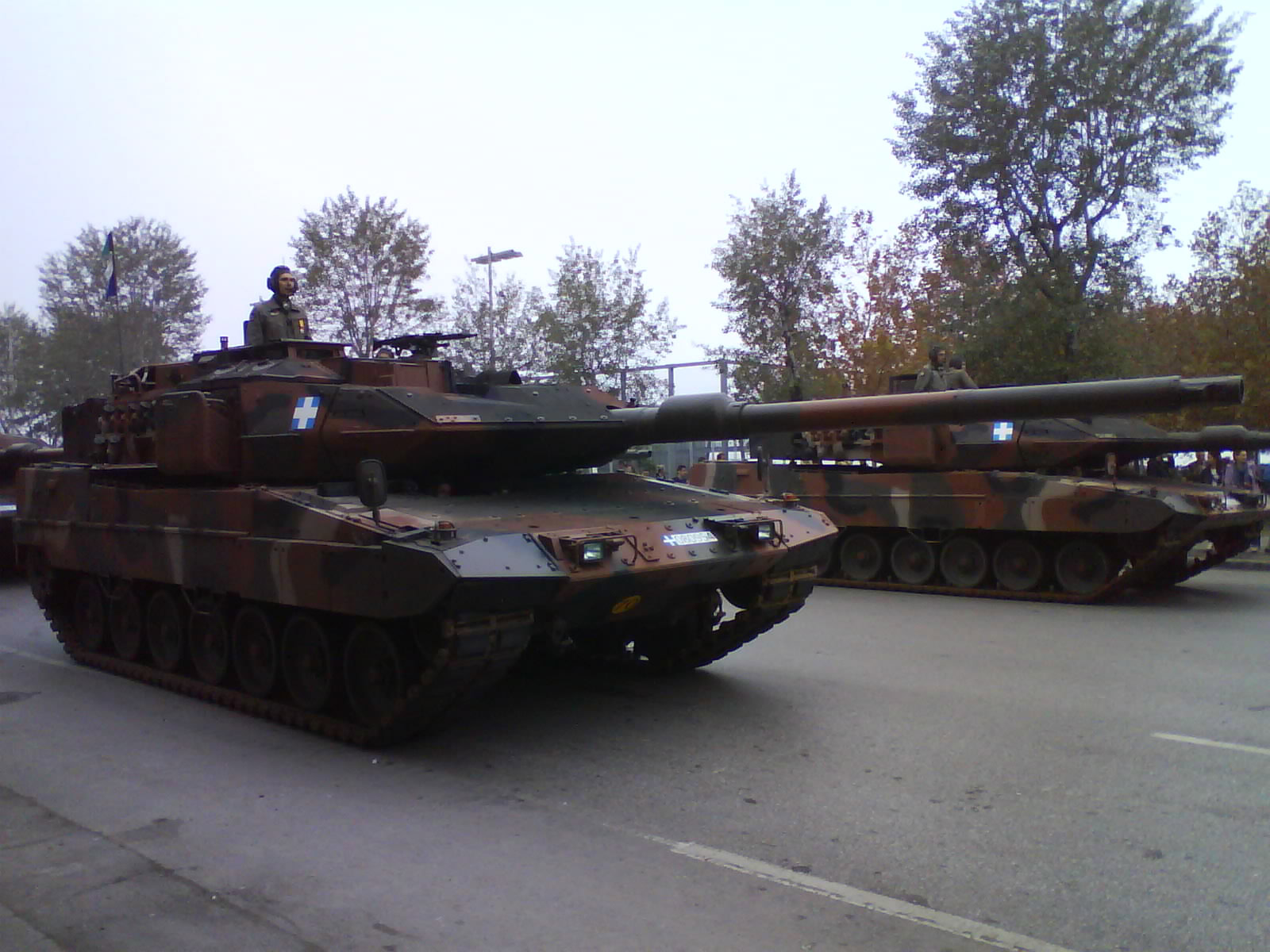
- Country: Greece
- Manufacturer: Krauss‑Maffei Wegmann
- Year introduced to service: 2006
- Main gun: 120mm L55
- Weight: 63 tons
- Top speed: 45 mph
- Key strength: Advanced fire control
- NATO role: Regional armored defense
Greece’s Leopard 2HEL adds a modern, high-end Leopard capability on NATO’s southern flank, and that matters when the alliance must manage multiple pressures at once. The 2HEL’s advanced fire control and protection make it credible in high-intensity combat. If forces need to be repositioned or rotated to support Europe’s main theater, NATO can count on Greek Leopard units to be interoperable and capable.
M60T Sabra
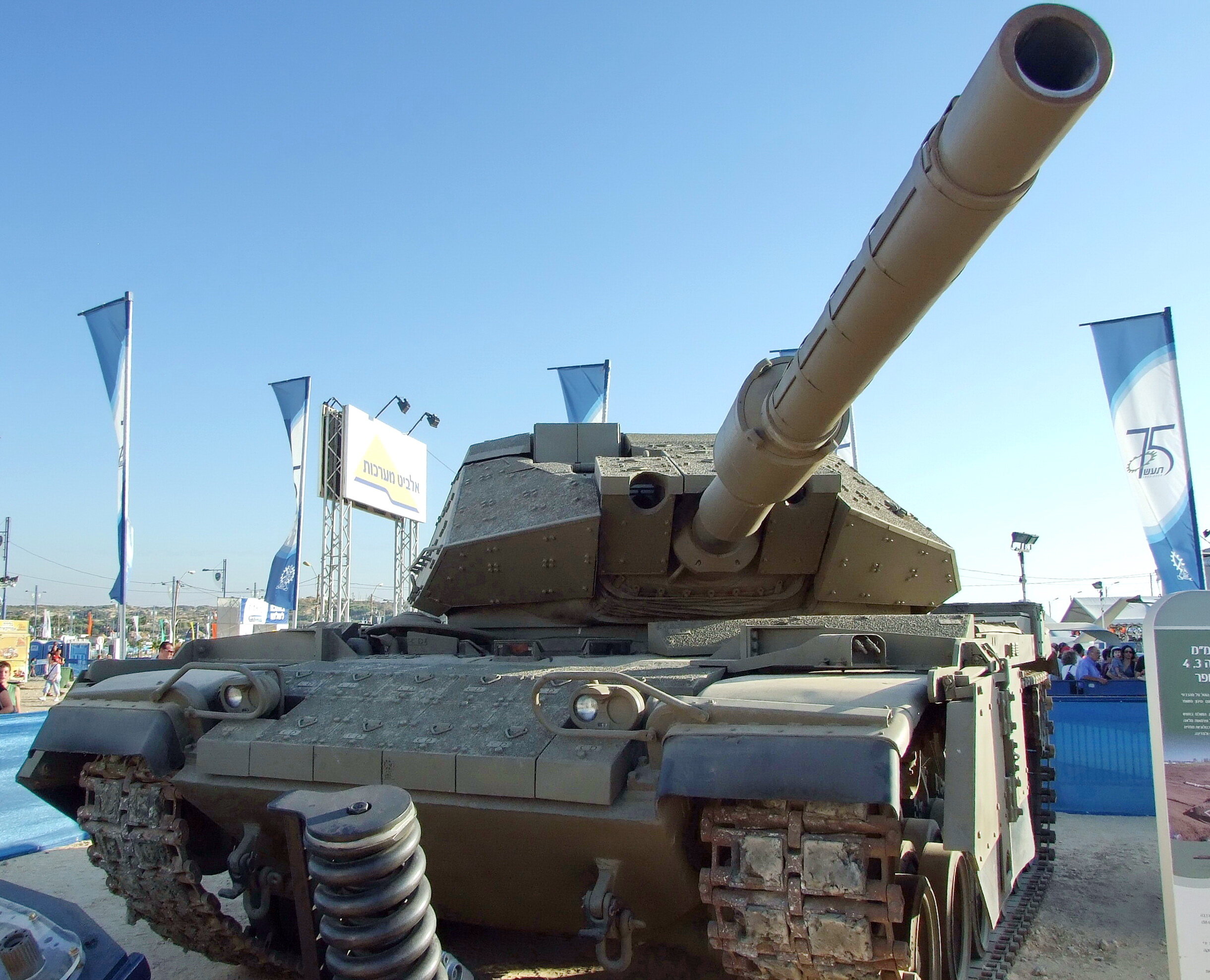
- Country: Turkey
- Manufacturer: IMI / Aselsan
- Year introduced to service: 2007
- Main gun: 120mm
- Weight: 59 tons
- Top speed: 30 mph
- Key strength: Major modernization
- NATO role: Secondary armored support
The M60T Sabra is a bridge capability—an older tank brought closer to modern standards through major upgrades, including improved firepower and protection. In a NATO-wide European conflict, not every armored unit will be top-tier, but upgraded platforms can still defend positions, support infantry, and free modern MBTs for decisive maneuvers. NATO counts on systems like the M60T to provide usable armored mass when forces must scale quickly.
Leopard 2A7+
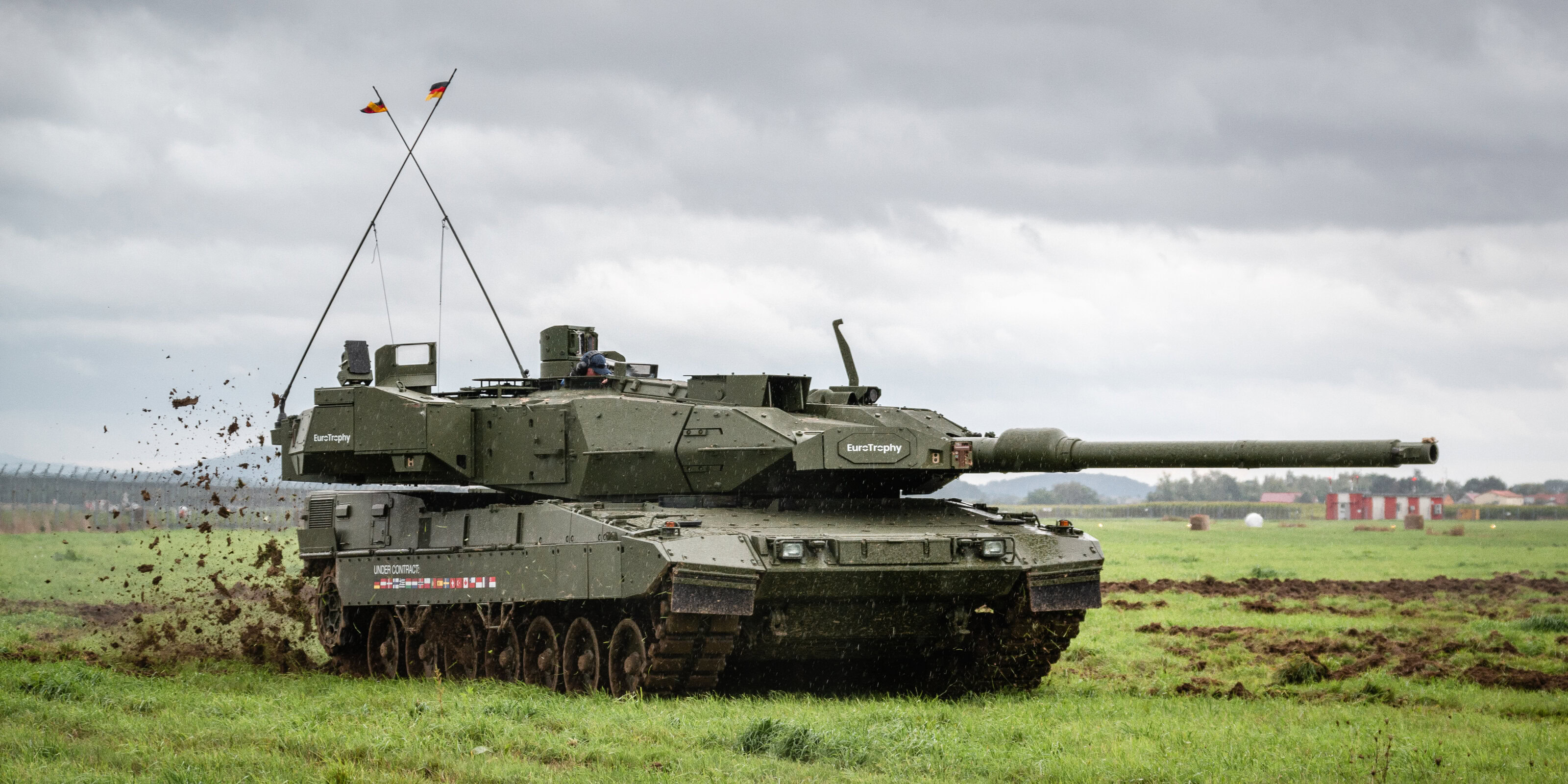
- Country: Germany / Hungary
- Manufacturer: Krauss‑Maffei Wegmann
- Year introduced to service: 2014
- Main gun: 120mm L55
- Weight: 67 tons
- Top speed: 45 mph
- Key strength: Enhanced urban combat systems
- NATO role: Frontline heavy armor
The Leopard 2A7+ matters because it reflects how NATO expects to fight in complex European terrain—open fields, forests, and dense towns. It adds protection and systems suited to urban and close-in combat while keeping the Leopard’s reliable mobility and gun performance. For Germany and Hungary, it’s a frontline option that can plug into NATO operations without friction and bring top-tier survivability.
K2 Black Panther
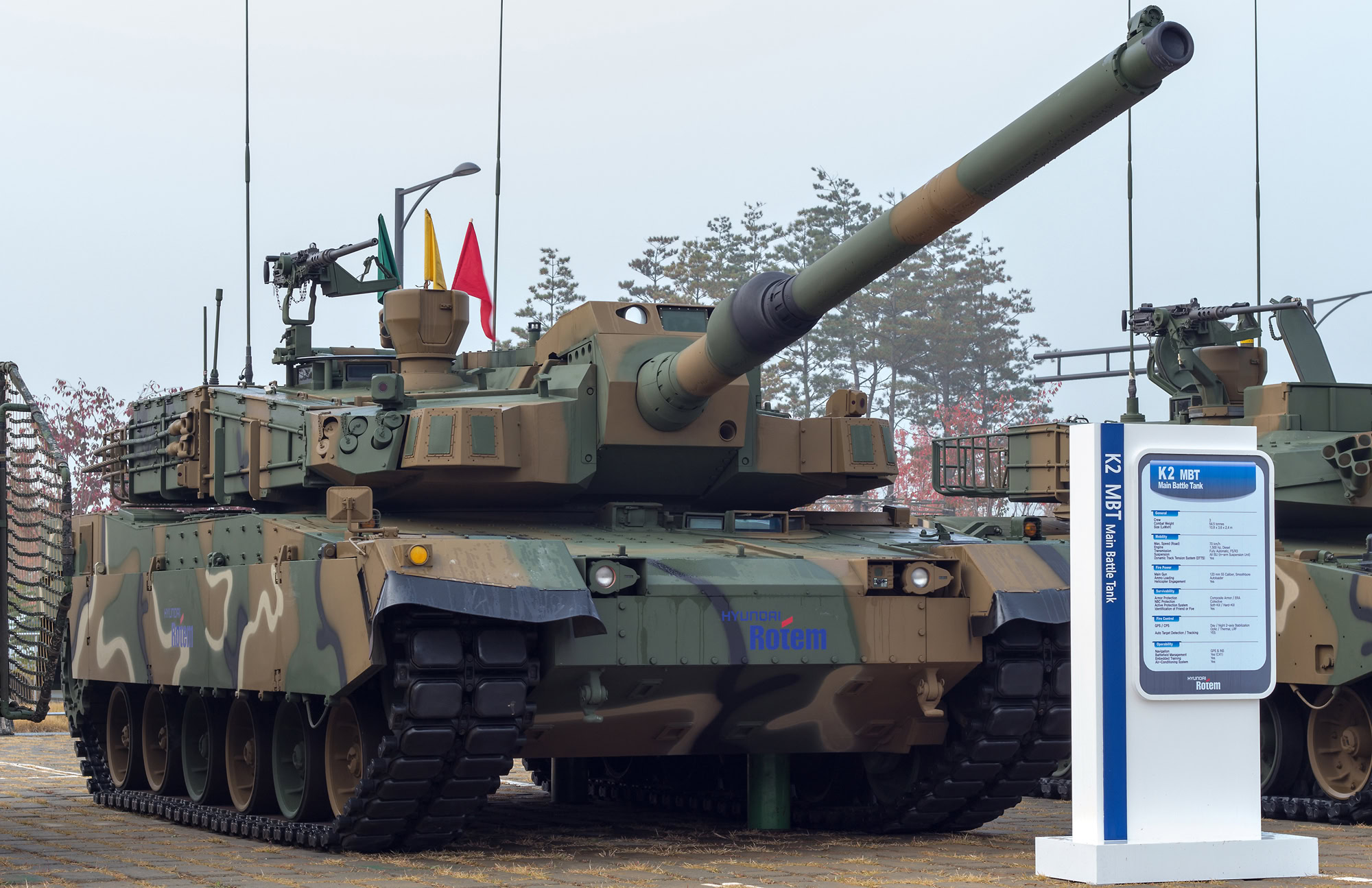
- Country: Poland
- Manufacturer: Hyundai Rotem
- Year introduced to service: 2014
- Main gun: 120mm L55
- Weight: 55 tons
- Top speed: 43 mph
- Key strength: Advanced digital systems
- NATO role: Eastern NATO spearhead
Poland’s move toward the K2 is one of the biggest NATO armor stories in Europe: rapid growth in modern tank numbers on the frontline. The K2 brings strong mobility, advanced fire control, and modern protection in a package suited to Eastern Europe’s terrain and infrastructure. NATO counts on Polish K2 units because they increase credible deterrence where it matters most—close to the likely axis of attack.
M1A2 SEPv3 Abrams
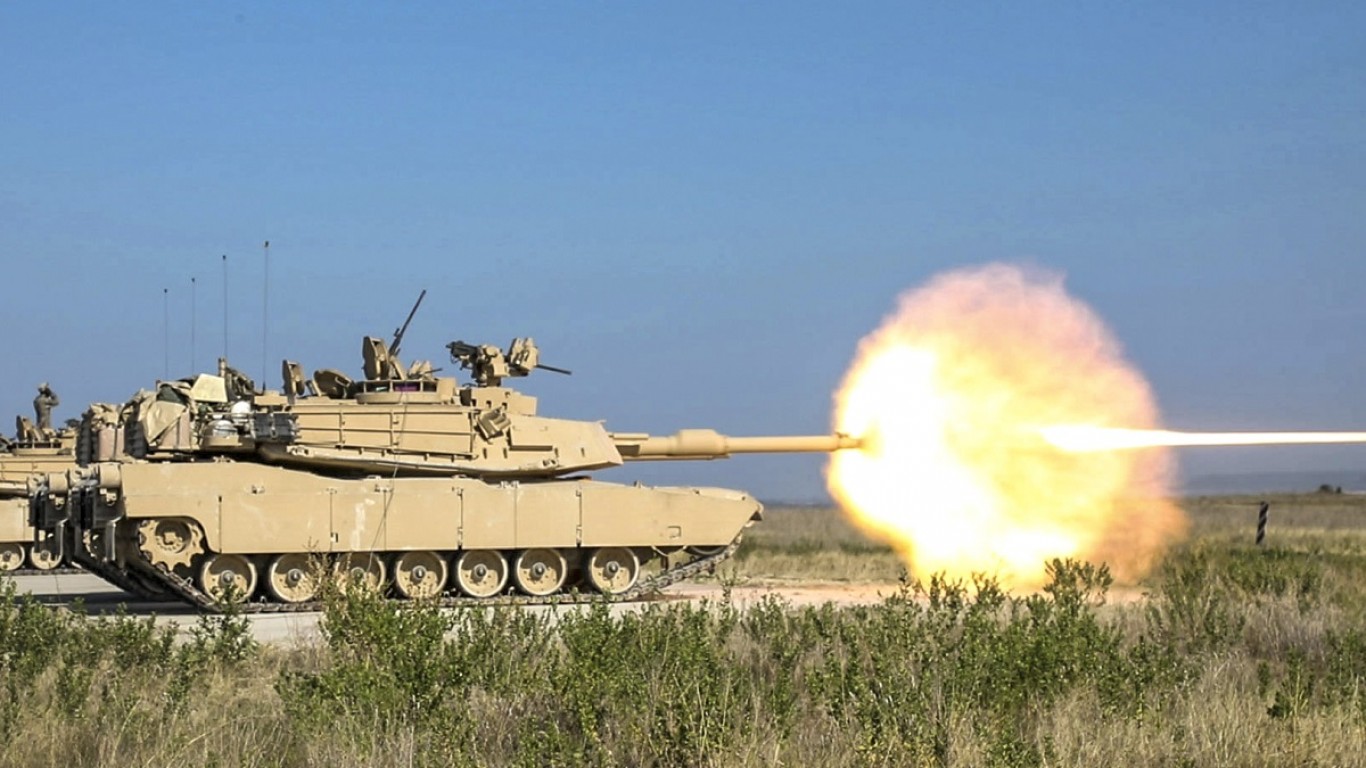
- Country: United States
- Manufacturer: General Dynamics
- Year introduced to service: 2017
- Main gun: 120mm M256
- Weight: 73 tons
- Top speed: 42 mph
- Key strength: Advanced armor & sensors
- NATO role: Frontline heavy armor
In a European fight, the M1A2 SEPv3 is the U.S. Army’s most relevant heavy punch: improved armor, updated power and electronics, and better integration with modern sensors and networks. It’s built for the brutal reality of anti-tank missiles, drones, and artillery. If NATO needs to break a defensive line or counterattack fast, this is the Abrams variant commanders want forward.
Leopard 2A7V
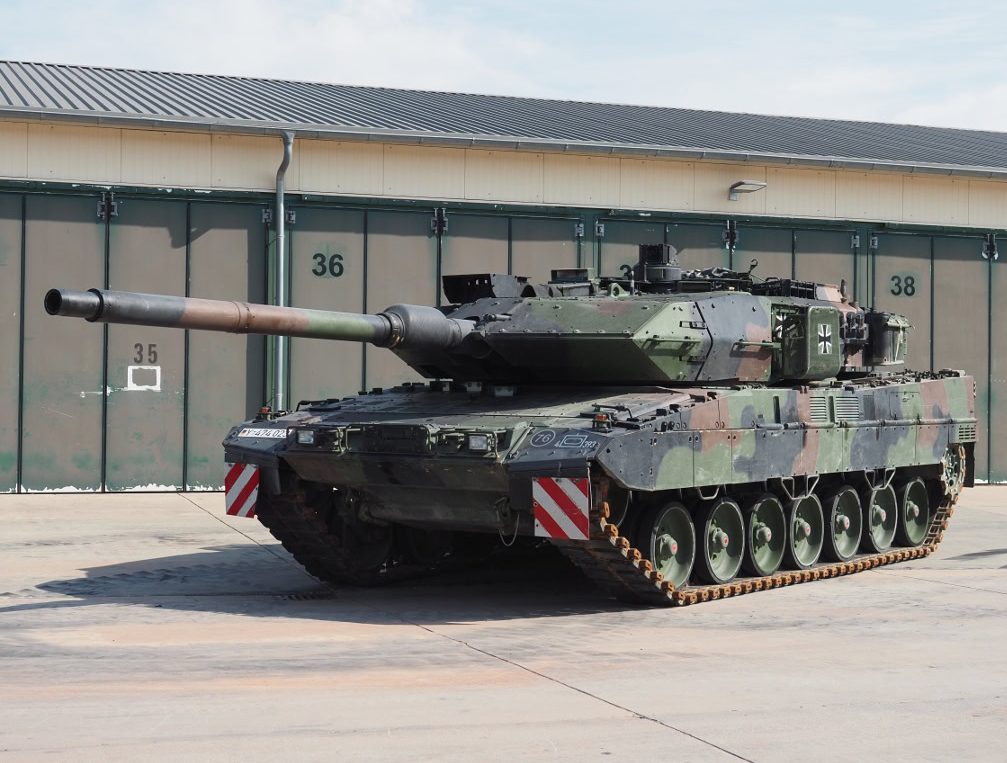
- Country: Germany
- Manufacturer: Krauss‑Maffei Wegmann
- Year introduced to service: 2019
- Main gun: 120mm L55
- Weight: 66 tons
- Top speed: 45 mph
- Key strength: Latest German upgrade
- NATO role: Frontline heavy armor
Germany’s Leopard 2A7V is one of NATO’s most capable European MBTs, combining heavy protection upgrades with modern sights, fire control, and crew survivability improvements. In a major conflict, it would anchor German brigades and strengthen multinational formations on the eastern flank. NATO counts on the 2A7V because it can fight day and night, survive modern threats, and deliver accurate 120mm fire at range.
Leopard 2PL
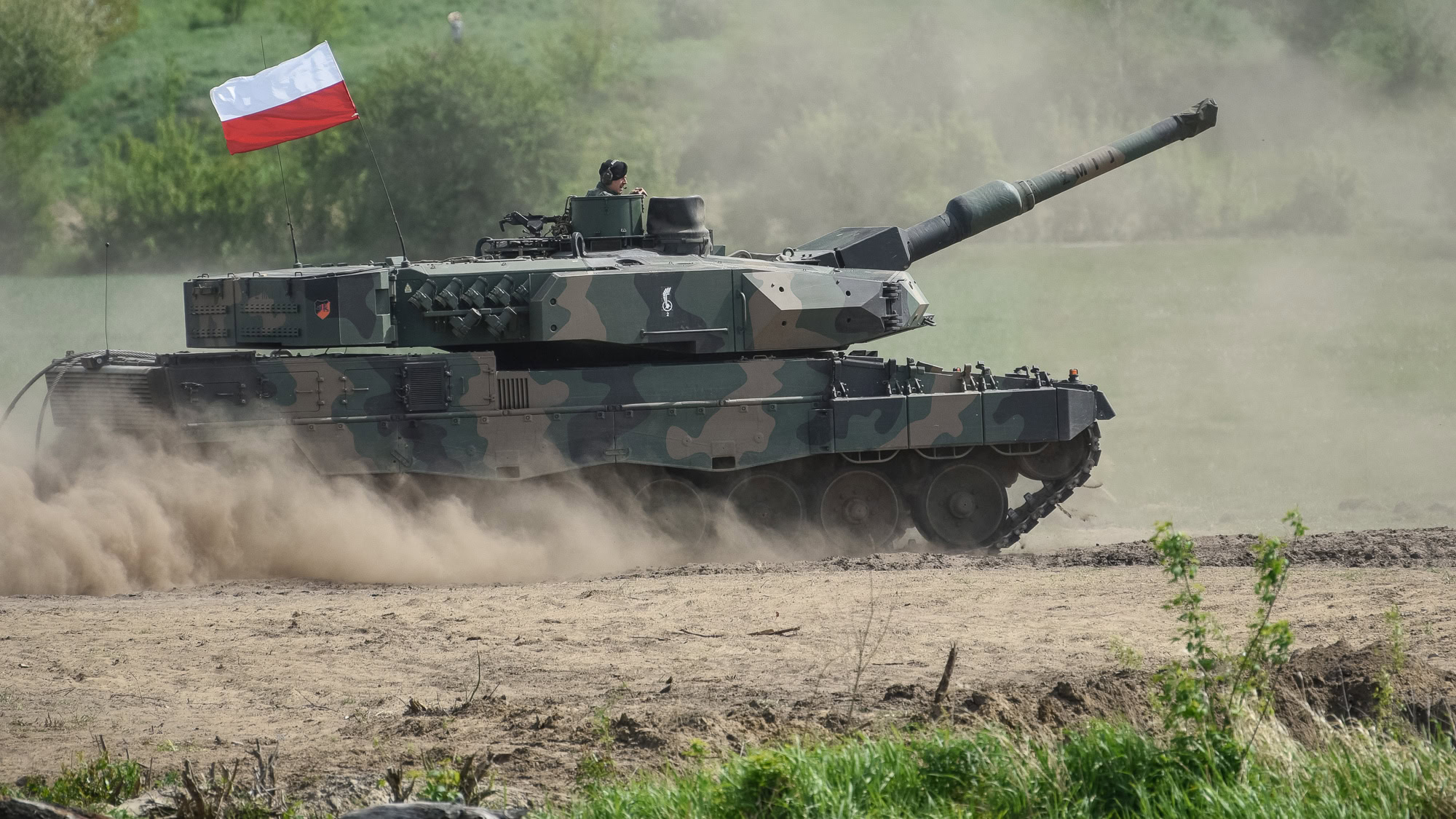
- Country: Poland
- Manufacturer: Krauss‑Maffei Wegmann / PGZ
- Year introduced to service: 2020
- Main gun: 120mm L44
- Weight: 60 tons
- Top speed: 45 mph
- Key strength: Polish modernization program
- NATO role: Eastern flank armor
Poland’s Leopard 2PL shows how frontline NATO states are stretching existing fleets into modern relevance. The upgrade focuses on protection, optics, and electronics—exactly the areas that matter against drones, missiles, and long-range fires. In a European war, Warsaw’s armored brigades would be central to eastern flank defense. NATO counts on the 2PL because it boosts survivability without breaking logistics.
Leclerc XLR
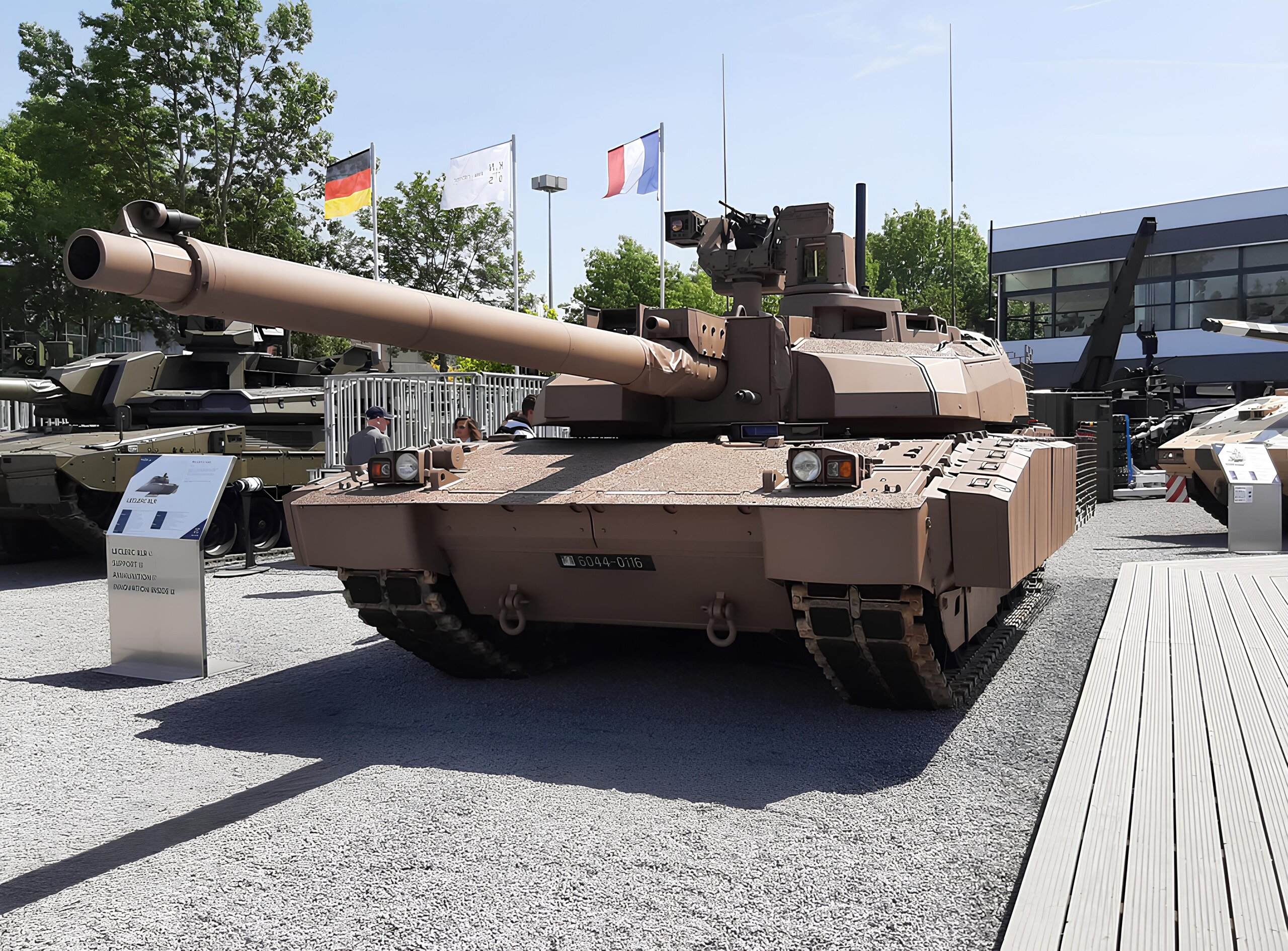
- Country: France
- Manufacturer: Nexter
- Year introduced to service: 2023
- Main gun: 120mm CN120
- Weight: 58 tons
- Top speed: 45 mph
- Key strength: Scorpion network integration
- NATO role: Future frontline armor
The Leclerc XLR upgrade is about modern warfare realities: better networking, improved protection, and integration with France’s Scorpion battlefield architecture. In a European war, that connectivity helps tanks survive and fight alongside drones, artillery, and infantry in a tighter kill chain. NATO counts on XLR-modernized Leclerc units because they’re built to operate in data-heavy combat, not just classic tank duels.
Leopard 2A7HU
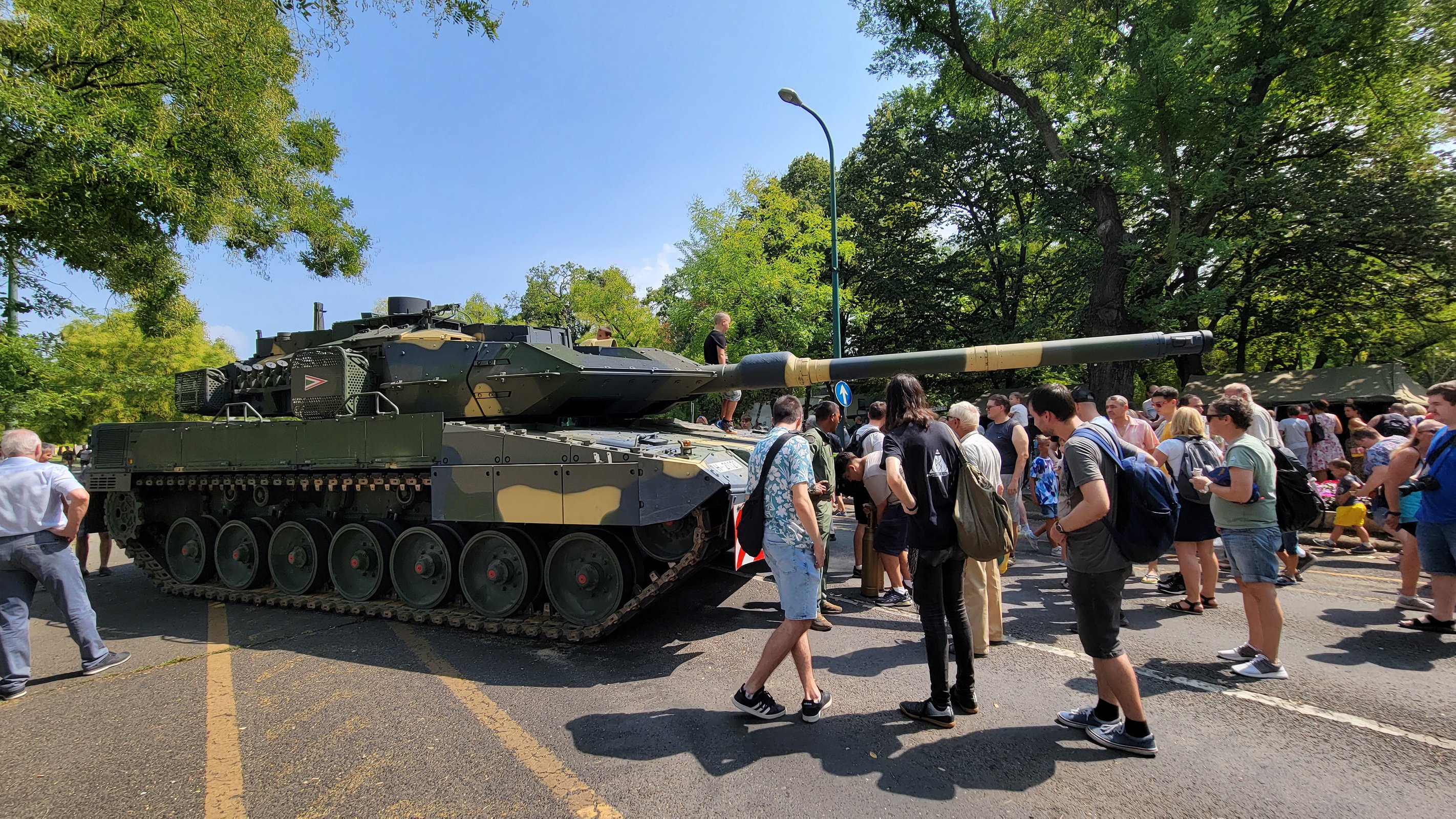
- Country: Hungary
- Manufacturer: Krauss‑Maffei Wegmann
- Year introduced to service: 2023
- Main gun: 120mm L55
- Weight: 67 tons
- Top speed: 45 mph
- Key strength: Newest Hungarian armor
- NATO role: Eastern NATO deterrence
Hungary’s Leopard 2A7HU represents a meaningful upgrade in Central Europe, adding modern Leopard capability in a region that matters for NATO logistics and reinforcement routes. In a European war, maintaining secure corridors and supporting allied deployments is crucial. NATO counts on Hungary’s new Leopard units because they provide a credible, interoperable heavy force that can reinforce neighbors, protect key terrain, and contribute to the alliance’s deterrence posture.
Ariete C2 / AMV
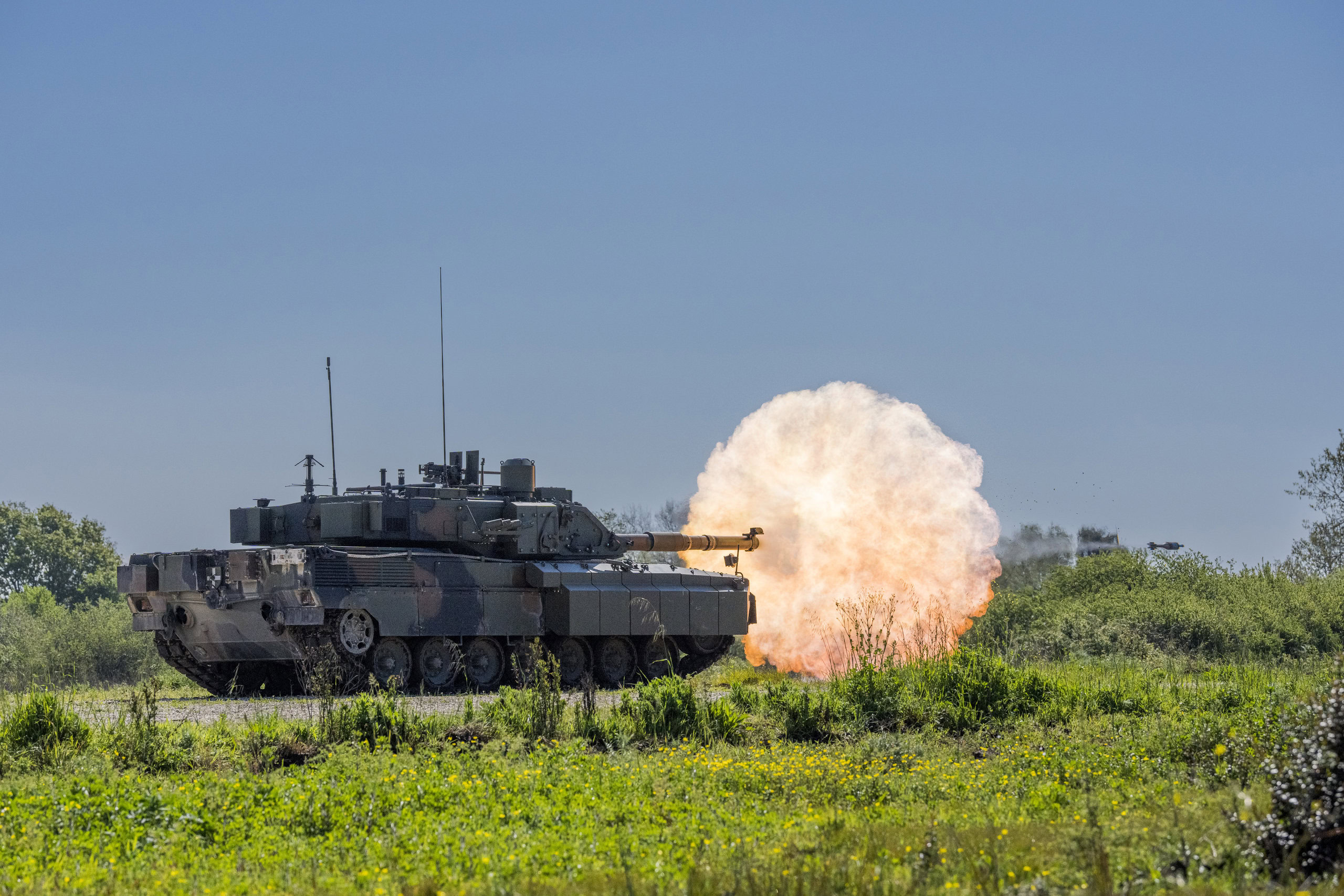
- Country: Italy
- Manufacturer: OTO Melara / Iveco
- Year introduced to service: 2024
- Main gun: 120mm
- Weight: 57 tons
- Top speed: 40 mph
- Key strength: Modernized electronics
- NATO role: Future Italian armor
Italy’s Ariete C2/AMV modernization is designed to keep the platform relevant against modern threats through upgraded optics, electronics, and overall performance. In a European war, even incremental improvements matter when facing drones, long-range fires, and fast-moving combined-arms fights. NATO counts on modernization programs like this because they extend the usable life of existing fleets and increase the number of MBTs that can deploy with confidence.
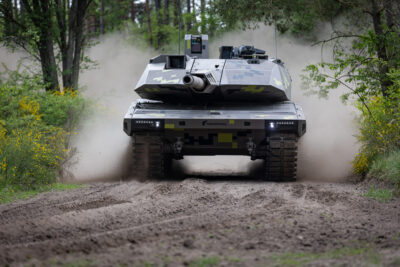
Leopard 2A8
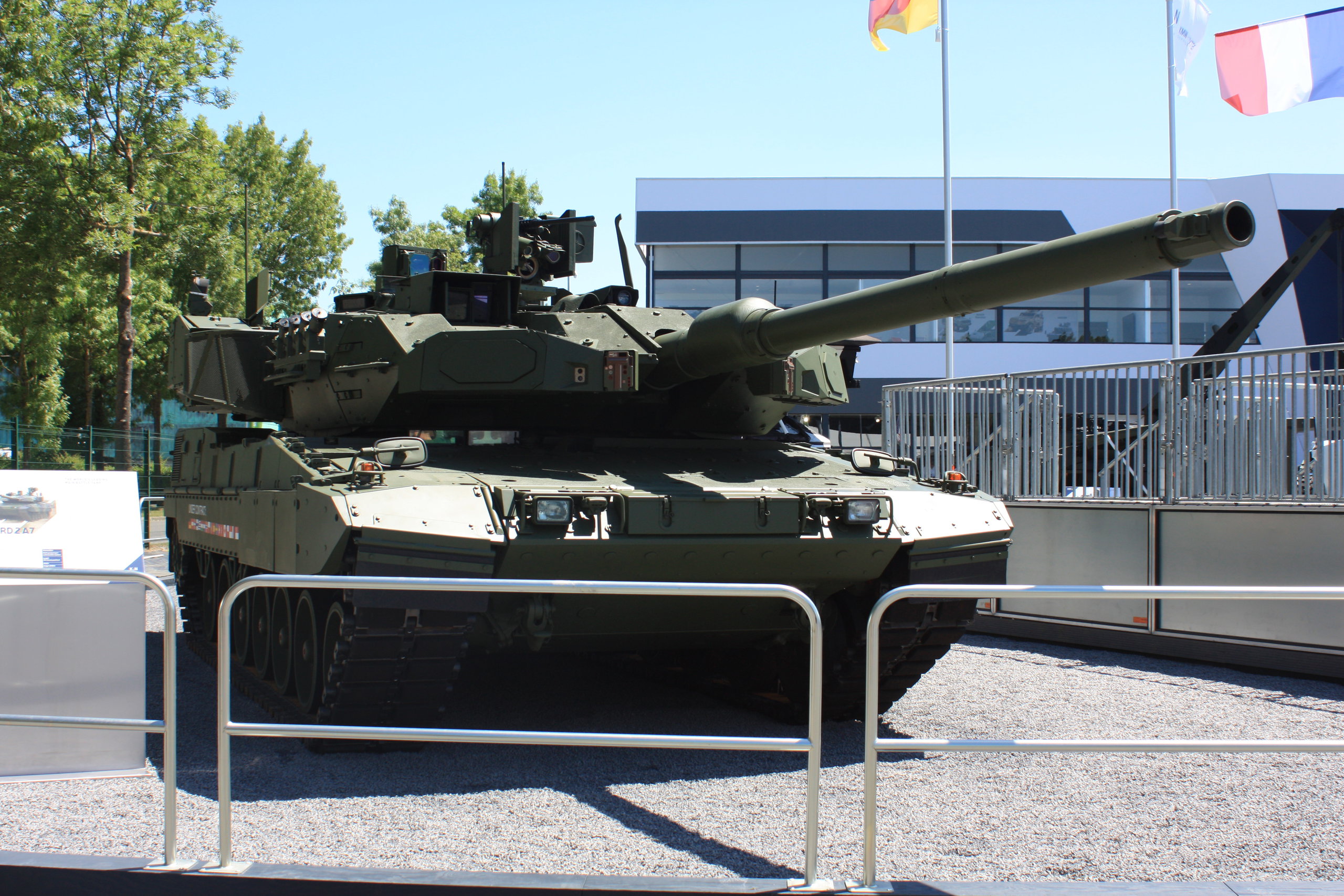
- Country: Germany
- Manufacturer: Krauss‑Maffei Wegmann
- Year introduced to service: 2025
- Main gun: 120mm L55A1
- Weight: 67 tons
- Top speed: 45 mph
- Key strength: Next‑generation protection
- NATO role: Future frontline armor
The Leopard 2A8 represents where NATO’s European tank force is heading: more protection, better sensors, and improved survivability against top-attack munitions and modern anti-tank weapons. As it enters service, it will become a premier frontline asset for Germany and partner users. In a European war scenario, NATO counts on the 2A8 to set the upper benchmark for heavy armor performance in theater.
Altay
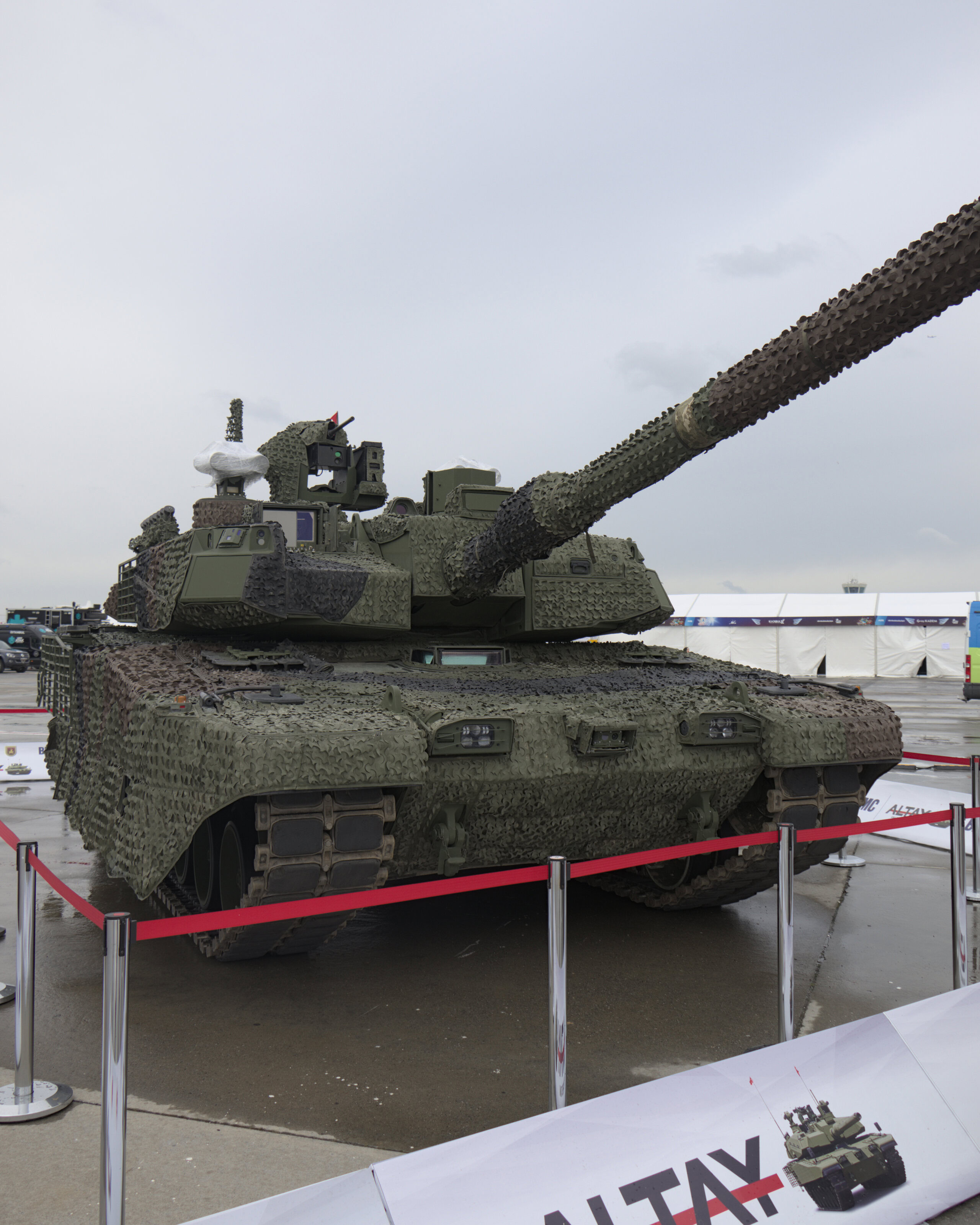
- Country: Turkey
- Manufacturer: BMC
- Year introduced to service: 2025
- Main gun: 120mm
- Weight: 65 tons
- Top speed: 43 mph
- Key strength: New Turkish MBT
- NATO role: Regional armored force
Turkey’s Altay matters because it signals a push toward a modern, domestically supported MBT fleet inside NATO. In a major European war, Turkey’s role could shape alliance posture across multiple fronts, and armored forces remain a key lever. As Altay enters service, it strengthens Turkey’s heavy capability and reduces reliance on aging platforms. NATO counts on credible Turkish armor to help balance commitments and maintain strategic depth.
Challenger 3
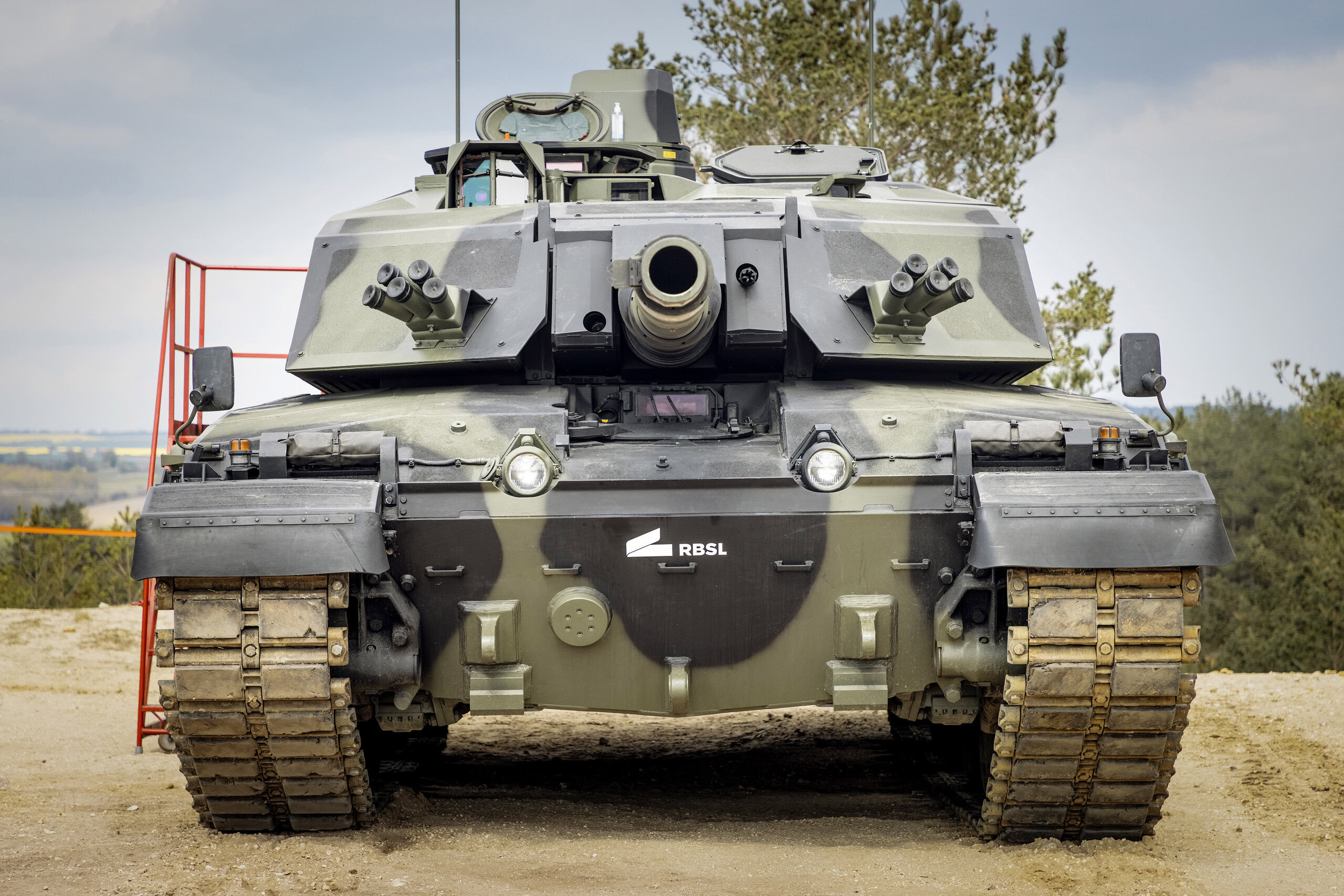
- Country: United Kingdom
- Manufacturer: BAE Systems / Rheinmetall
- Year introduced to service: 2027
- Main gun: 120mm L55A1
- Weight: 66 tons
- Top speed: 40 mph
- Key strength: Next‑gen British upgrade
- NATO role: Future NATO armor
Challenger 3 is the UK’s answer to future European high-intensity combat: a modernized platform with a NATO-standard 120mm smoothbore gun, improved turret systems, and upgraded protection. It matters because it keeps British heavy armor credible against peer adversaries for decades. NATO counts on Challenger 3 not just for the vehicle itself, but for the UK’s ability to field a modern armored brigade that integrates cleanly into alliance operations.







 Top Gaining Stocks
 Top Losing Stocks