


Throughout history, many of the technologies that define modern life began as military innovations. Engineers building weapons and equipment for soldiers often created tools that later found entirely new uses in the civilian world. Vehicles built for wartime mobility, firearms designed for infantry, and navigation systems developed for military precision eventually made their way outside the battlefield. In some cases, these inventions went on to become global icons that are now deeply embedded in everyday life. Here, 24/7 Wall St. is taking a closer look at weapons of war that became civilian icons.
To determine the military weapons or gear that became civilian icons, 24/7 Wall St. reviewed various historical and military sources. We included supplemental information for each entry regarding the coutnry of origin, manufacturer, original military role, civilian adaption, and the overall cultural impact.
Here is a look at weapons of war that became civilian icons:
Why Are We Covering This?
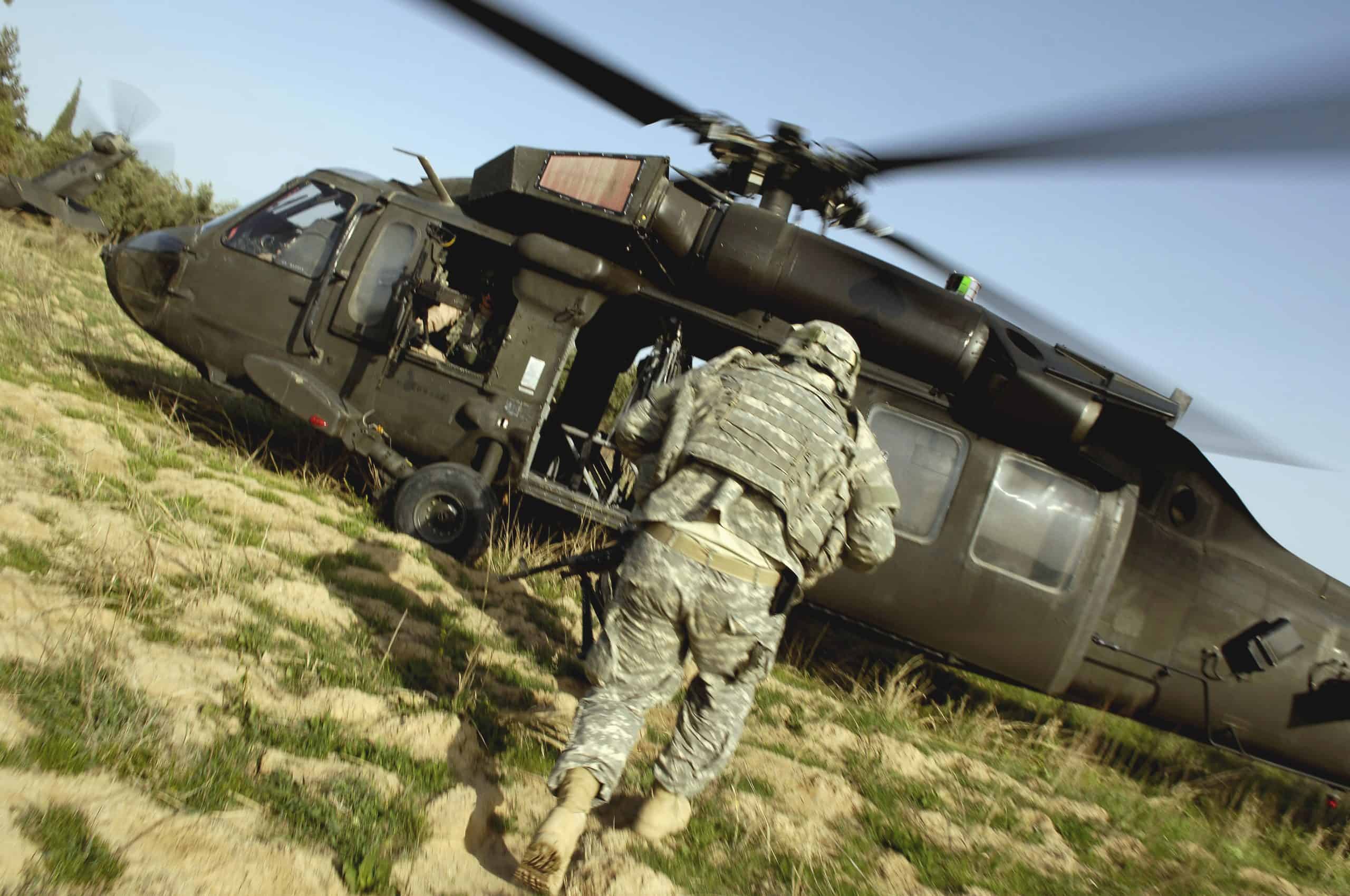
Understanding how weapons designed for war became civilian icons reveals how deeply military innovation has shaped everyday life. Throughout modern history, governments have invested enormous resources into developing new tools for combat, often pushing technology forward at a rapid pace. While these inventions were originally built to solve battlefield problems, many eventually moved into civilian markets where they found entirely new purposes. Vehicles built for soldiers became off-road legends, navigation systems created for precision targeting now guide billions of smartphone users, and military equipment inspired products used by people around the world. By examining these technologies and weapons, it becomes easier to see how innovations born in conflict often leave their most lasting impact far beyond the battlefield.
Many Everyday Technologies Began as Military Weapons
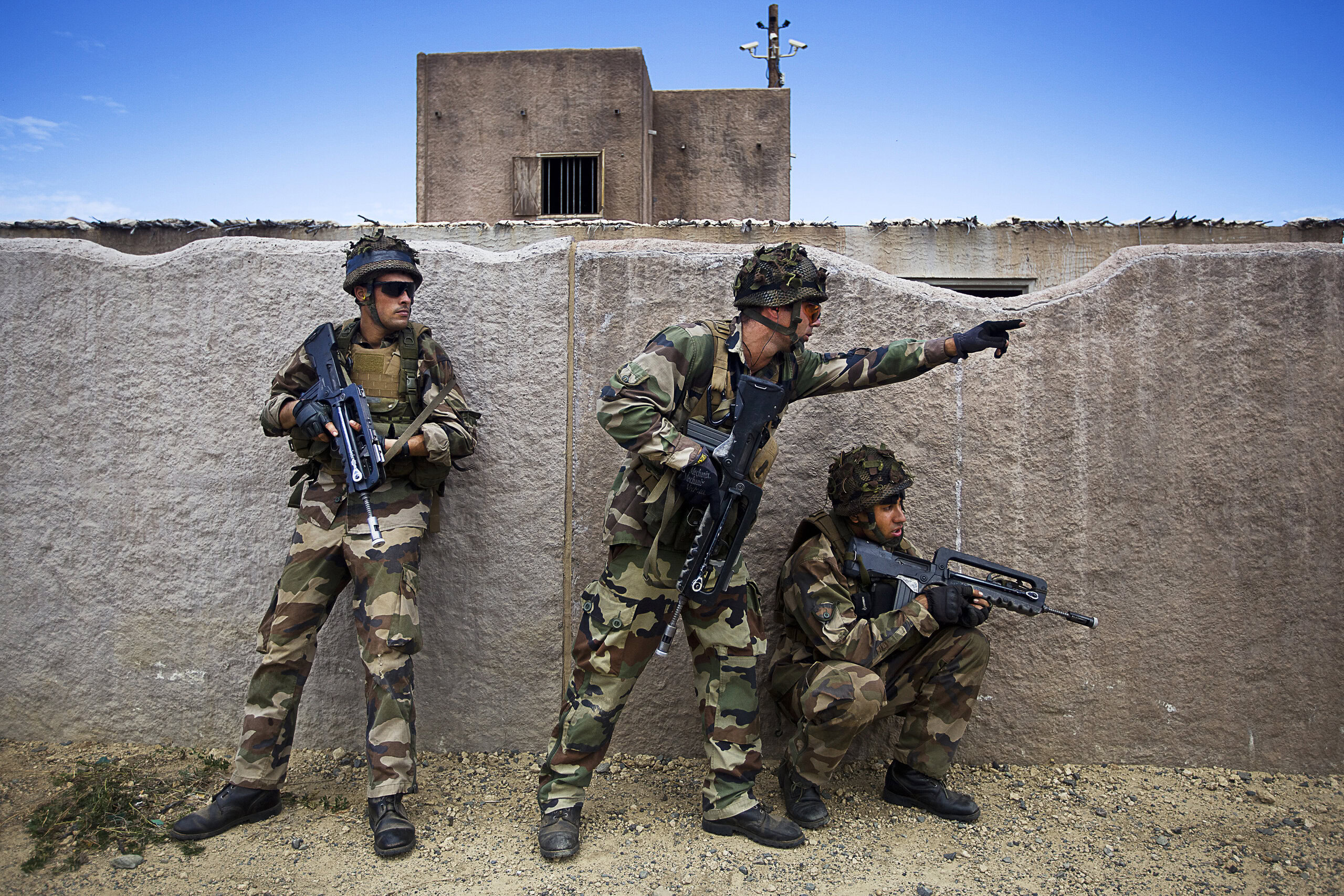
Some of the most recognizable tools, vehicles, and technologies in modern life did not begin as civilian inventions. Many were first created to help militaries gain an advantage in war. From rugged transport vehicles and firearms to navigation systems and communication tools, conflict has often accelerated innovation in ways that later reshape civilian society. What began as battlefield necessity frequently became part of everyday life.
Military Innovation Often Spills Into Civilian Life

Military innovation has long spilled into the civilian world. Engineers solving wartime problems often develop breakthroughs in mobility, protection, communications, and logistics that later find peaceful uses. Once these technologies mature or become commercially viable, they often spread into consumer markets and civilian industries. In many cases, inventions designed for war go on to influence how people travel, communicate, work, and live.
Some Weapons and War Technologies Became Cultural Icons
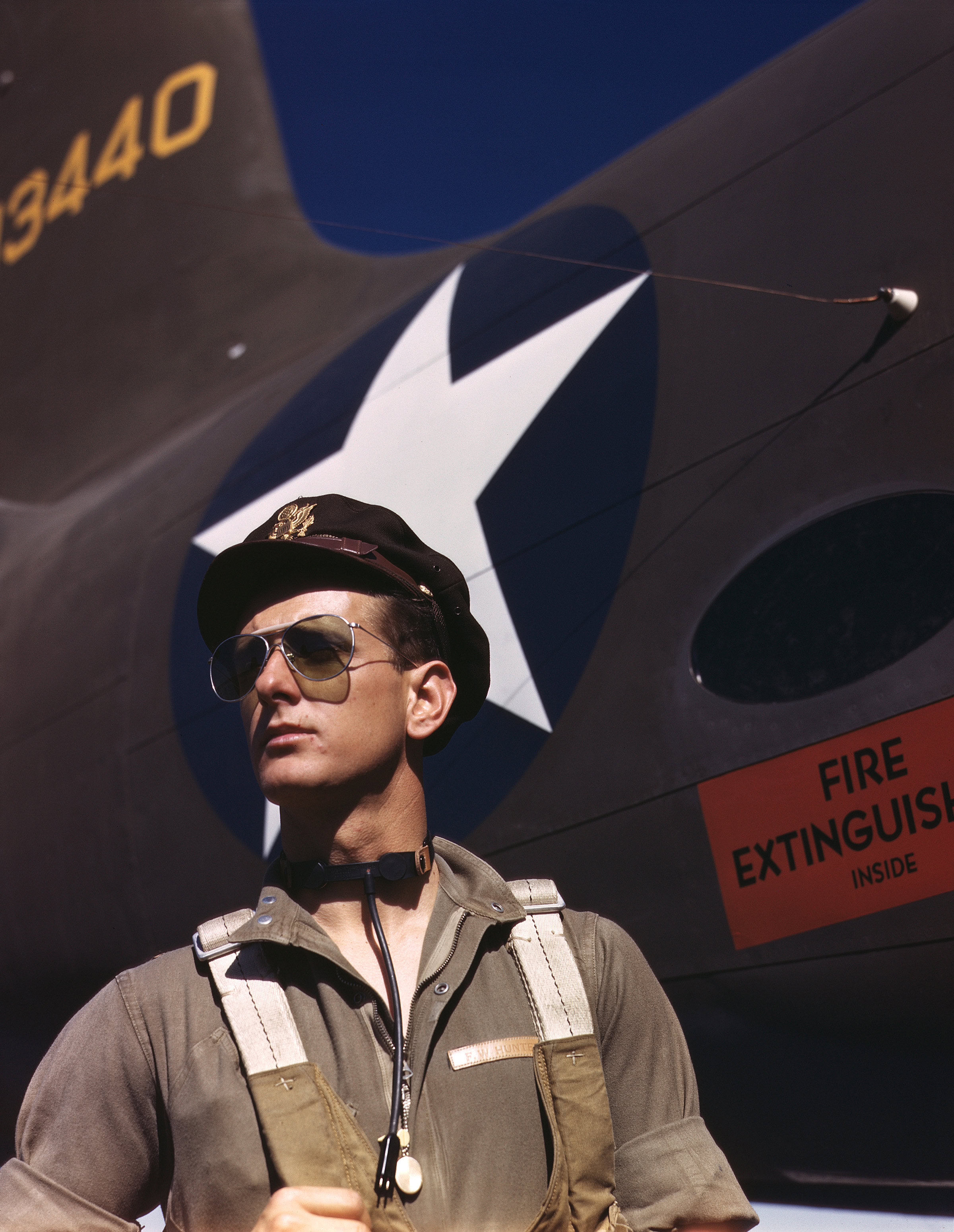
Some military inventions did more than make the jump to civilian use. They became cultural icons in their own right. The Jeep became a symbol of rugged mobility, GPS became essential to modern navigation, and military-derived firearms became major fixtures in civilian shooting culture. Over time, some of these items became so familiar in civilian life that many people barely recognize their wartime origins.
The Line Between Military and Civilian Technology Is Often Thin
The line between military and civilian technology is often thinner than it appears. Systems built for soldiers, pilots, and battlefield planners are frequently adapted for farmers, travelers, homeowners, and consumers. As these technologies move into the civilian world, they often take on entirely new meanings. What was once designed for survival in combat can eventually become a tool of convenience, commerce, recreation, or identity.
These Military Designs Became Civilian Legends
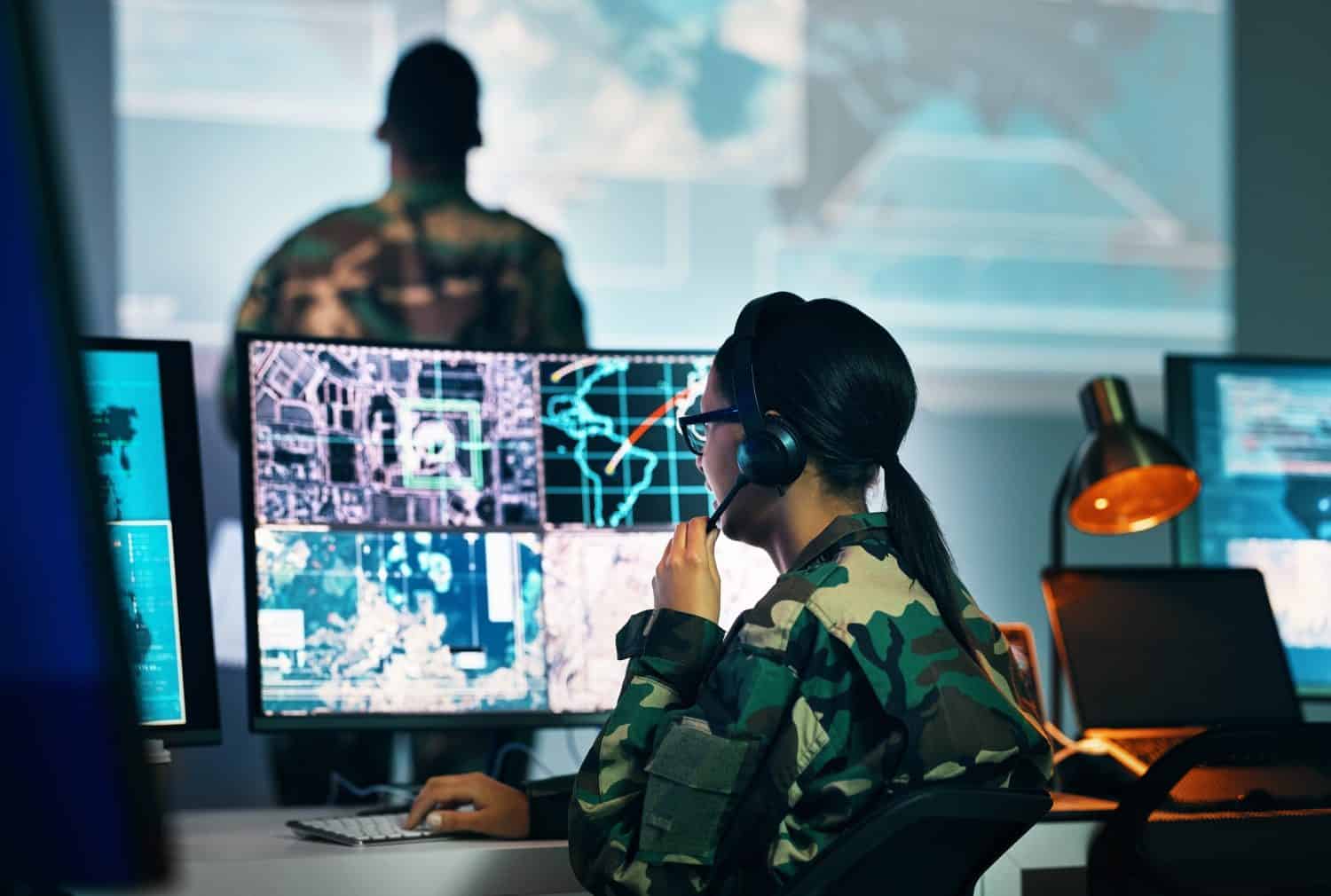
The weapons and military technologies on this list began as tools of war, but their legacy did not end on the battlefield. Many evolved into globally recognized products, iconic civilian platforms, or essential technologies used every day. Together, they show how military innovation can leave a lasting mark on society in ways that are often unexpected, practical, and deeply embedded in civilian culture.
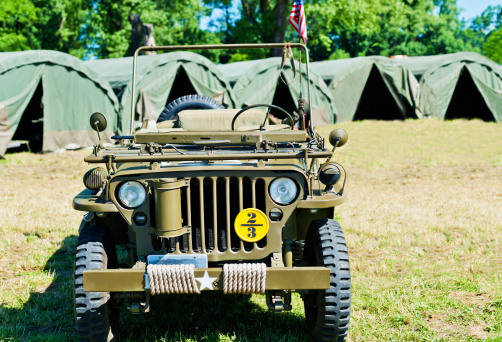
Jeep (Willys MB)
- Country of origin: United States
- Weapon type: Military Vehicle
- Manufacturer: Willys-Overland
- Original Military Role: Light reconnaissance vehicle for WWII troops
- Civilian adaptation: Civilian Jeep off-road vehicles
- Civilian Industry: Automotive
- Cultural impact: Defined the off-road vehicle category worldwide
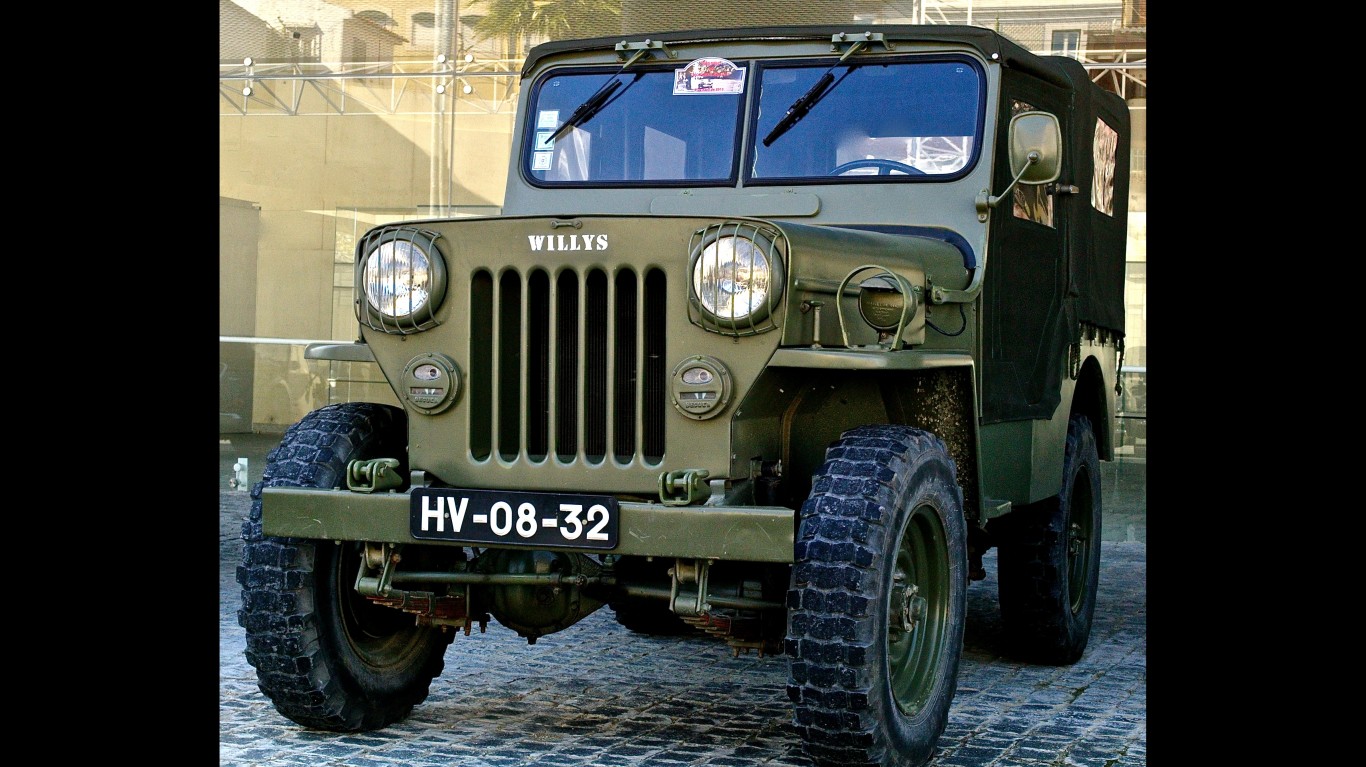
The Jeep began as the Willys MB, a rugged reconnaissance vehicle built for the U.S. Army during World War II. Its ability to handle rough terrain made it indispensable to Allied forces across Europe and the Pacific. After the war, its reputation for durability carried into civilian life, where Jeep became one of the most recognizable off‑road vehicle brands in the world.
AR-15
- Country of origin: United States
- Weapon type: Rifle
- Manufacturer: ArmaLite / Colt
- Original Military Role: Lightweight infantry rifle platform
- Civilian adaptation: Civilian sporting rifle platform
- Civilian Industry: Civilian firearms
- Cultural impact: One of the most recognizable modern rifles
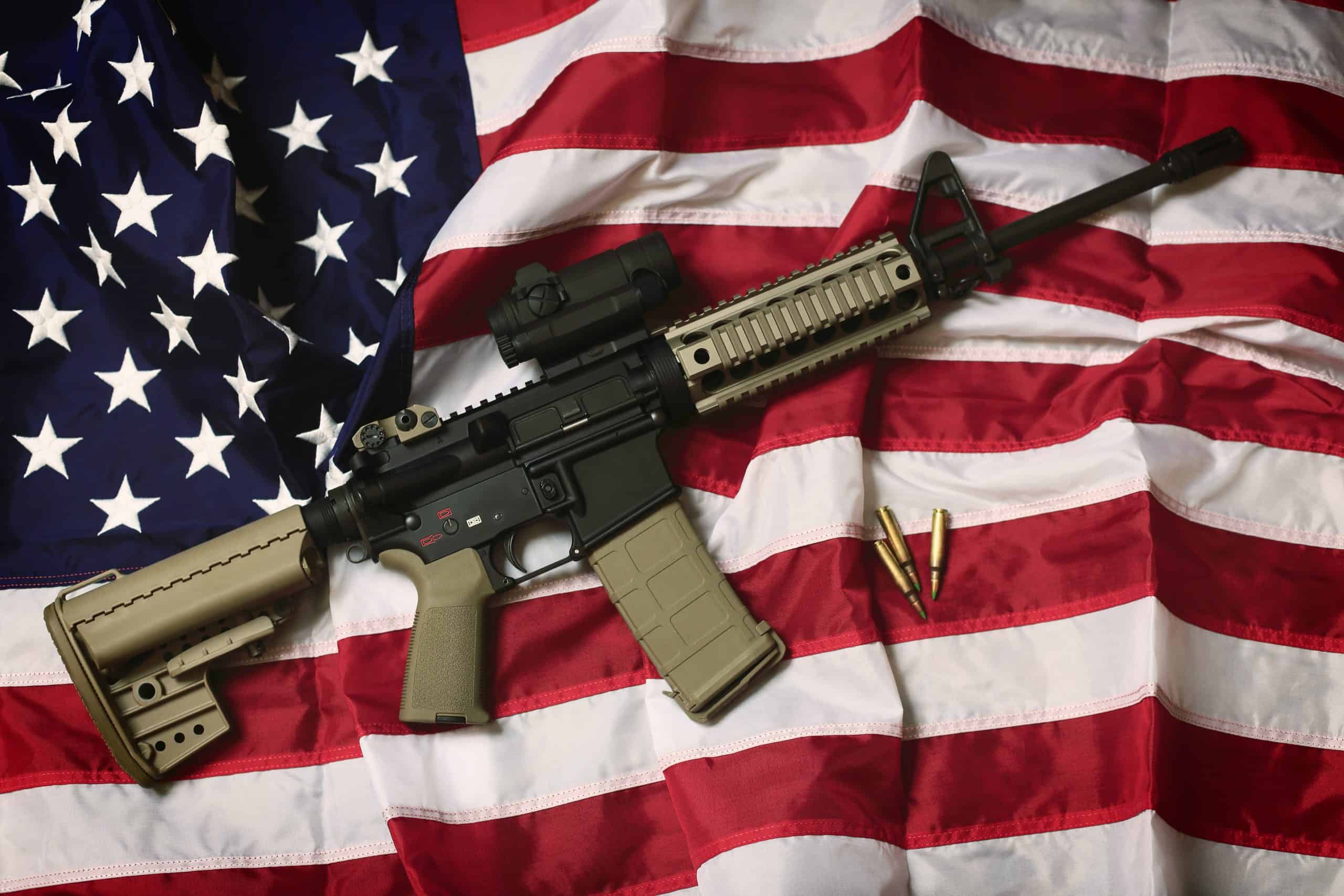
The AR‑15 traces its roots to the ArmaLite rifle platform that evolved into the U.S. military’s M16. Designed as a lightweight, high‑velocity infantry rifle, its modular design proved easy to adapt. Civilian semi‑automatic versions later became widely popular for sport shooting, hunting, and competition, helping make the AR‑15 one of the most recognizable rifle platforms in modern civilian firearms culture.
AK-47 / Kalashnikov
- Country of origin: Soviet Union
- Weapon type: Rifle
- Manufacturer: Mikhail Kalashnikov / Izhevsk
- Original Military Role: Standard infantry rifle
- Civilian adaptation: Civilian sporting and semi-automatic variants
- Civilian Industry: Civilian firearms
- Cultural impact: One of the most recognizable firearms ever produced
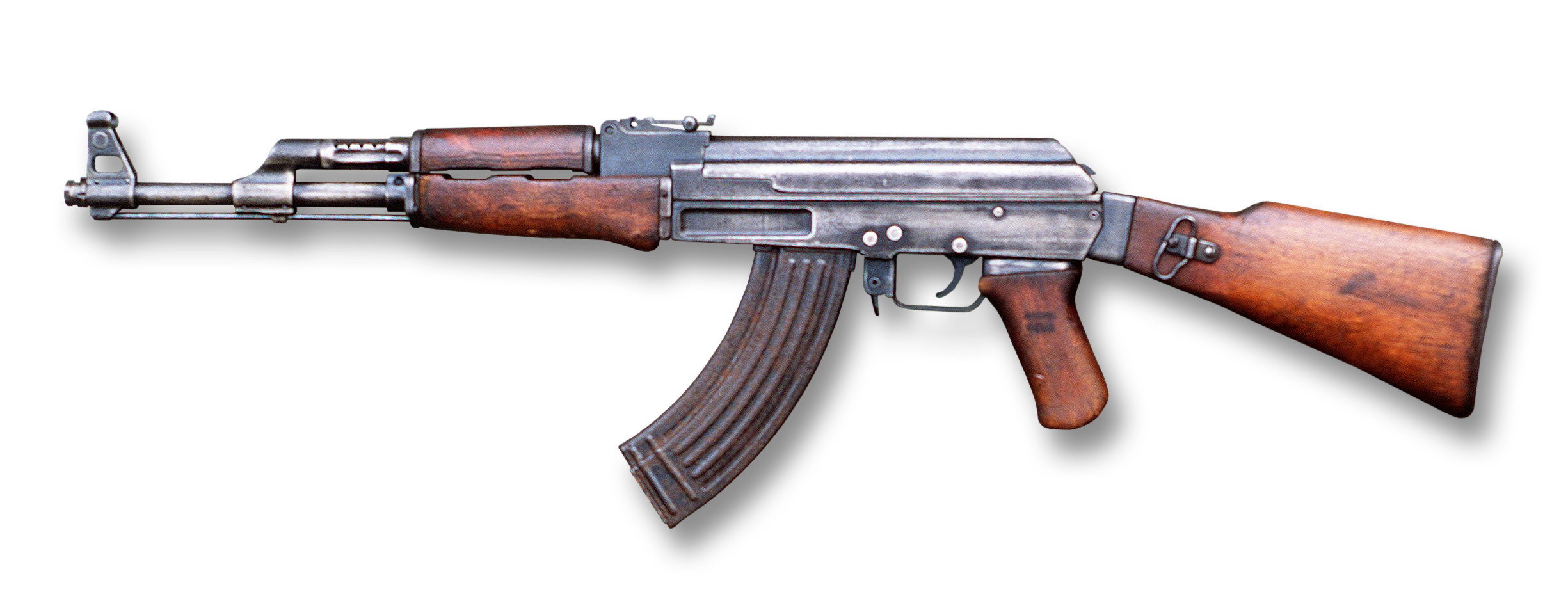
The AK‑47 was designed by Soviet engineer Mikhail Kalashnikov as a rugged infantry rifle capable of operating in harsh conditions. Its simplicity and reliability helped it spread across military forces around the world. Civilian sporting variants eventually followed, and the rifle’s silhouette became one of the most recognizable firearm designs ever produced, symbolizing both military history and global firearms culture.
Colt M1911

- Country of origin: United States
- Weapon type: Pistol
- Manufacturer: Colt / John Browning
- Original Military Role: Military sidearm
- Civilian adaptation: Civilian handgun platform
- Civilian Industry: Civilian firearms
- Cultural impact: Legendary handgun with more than a century of use
The Colt M1911 entered service with the U.S. military in 1911 as a powerful .45‑caliber sidearm. Designed by John Moses Browning, it served American troops through multiple wars including World War I, World War II, and Vietnam. Over time it transitioned into the civilian market, where it remains a favorite among shooters, collectors, and competitive marksmen more than a century after its introduction.
Glock 17

- Country of origin: Austria
- Weapon type: Pistol
- Manufacturer: Glock
- Original Military Role: Military and police sidearm
- Civilian adaptation: Civilian handgun
- Civilian Industry: Civilian firearms
- Cultural impact: One of the most widely owned modern pistols
The Glock 17 was introduced in the early 1980s as a modern polymer‑frame pistol built for military and police forces. Its high capacity, light weight, and simple internal design quickly gained attention. Civilian versions soon followed, and today Glock pistols are among the most widely owned handguns in the world, recognized for their reliability and influence on modern pistol design.
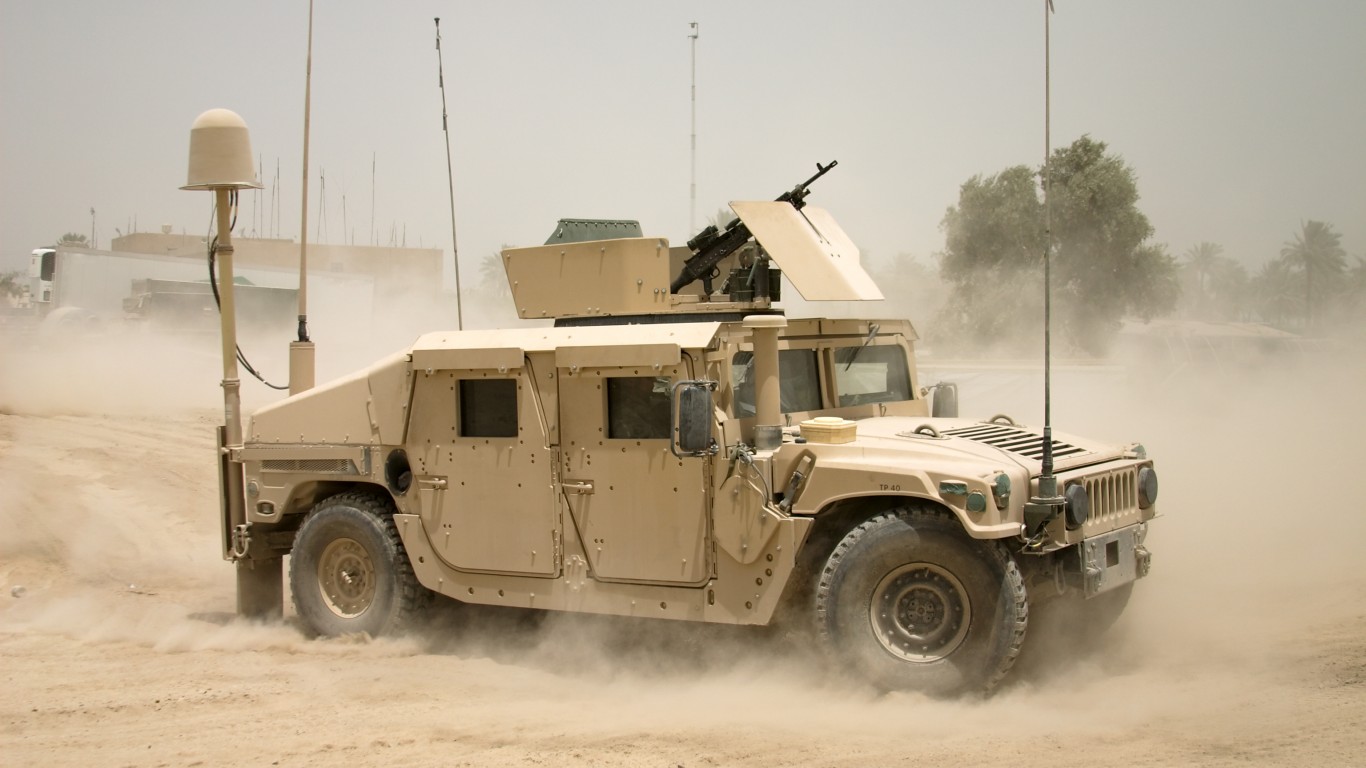
Humvee (HMMWV)
- Country of origin: United States
- Weapon type: Military Vehicle
- Manufacturer: AM General
- Original Military Role: Military transport and utility vehicle
- Civilian adaptation: Hummer civilian SUV line
- Civilian Industry: Automotive
- Cultural impact: Iconic military vehicle turned luxury SUV
The High Mobility Multipurpose Wheeled Vehicle, better known as the Humvee, was designed for the U.S. military as a versatile battlefield transport. Its tough suspension and off‑road capability made it useful in a wide range of military missions. Civilian adaptations eventually appeared as the Hummer line of vehicles, turning a military workhorse into a widely recognized luxury SUV brand.
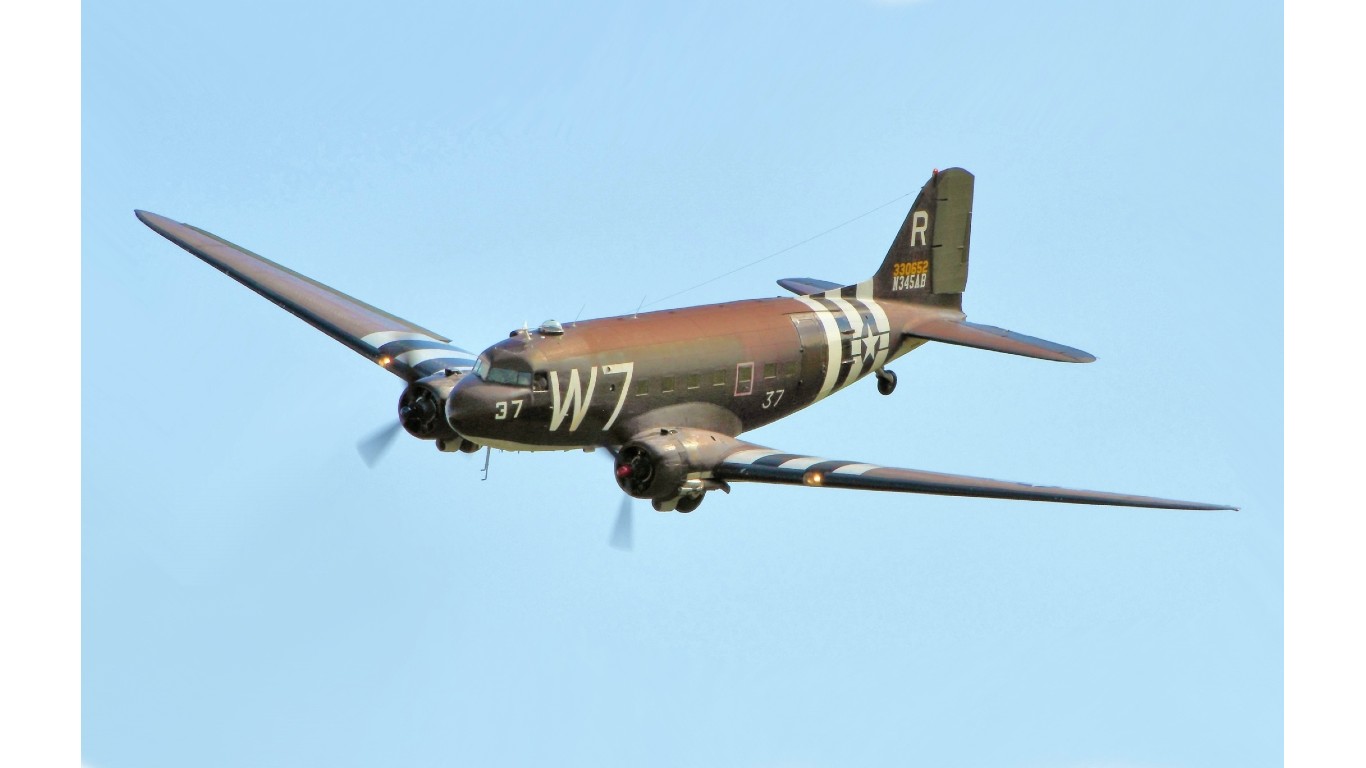
DC-3 / C-47
- Country of origin: United States
- Weapon type: Transport Aircraft
- Manufacturer: Douglas Aircraft Company
- Original Military Role: Military transport aircraft
- Civilian adaptation: Commercial passenger aviation
- Civilian Industry: Aviation
- Cultural impact: Helped shape modern commercial aviation
The Douglas DC‑3 became one of the most influential aircraft ever built, while its military variant, the C‑47 Skytrain, played a major role in World War II troop and cargo transport. After the war, the aircraft’s design helped shape commercial aviation. The DC‑3’s reliability and efficiency made it a symbol of early airline travel and a cornerstone of modern passenger aviation.
GPS Navigation System

- Country of origin: United States
- Weapon type: Navigation Technology
- Manufacturer: U.S. Department of Defense
- Original Military Role: Precision military navigation
- Civilian adaptation: Smartphone and vehicle navigation
- Civilian Industry: Technology / Telecommunications
- Cultural impact: Essential technology used worldwide
The Global Positioning System was created by the U.S. Department of Defense to give military forces precise navigation and targeting capability anywhere on Earth. Once the technology was opened for civilian use, it quickly spread into transportation, aviation, smartphones, and mapping services. Today GPS is one of the most essential everyday technologies, guiding everything from road trips to international shipping.
Internet (ARPANET)
- Country of origin: United States
- Weapon type: Communications Network
- Manufacturer: U.S. Department of Defense / DARPA
- Original Military Role: Military communication network
- Civilian adaptation: Global civilian internet infrastructure
- Civilian Industry: Technology
- Cultural impact: Foundation of modern global communication
The internet traces much of its early development to ARPANET, a U.S. defense research project designed to create a resilient communications network capable of surviving disruptions. What began as a military and academic system eventually evolved into the global internet. Today it connects billions of people worldwide and underpins modern communication, commerce, education, and entertainment.
Duct Tape

- Country of origin: United States
- Weapon type: Military Supply Technology
- Manufacturer: Johnson & Johnson
- Original Military Role: Waterproof sealing tape for military equipment
- Civilian adaptation: Household repair tape
- Civilian Industry: Consumer products
- Cultural impact: One of the most versatile household tools
Duct tape was originally developed during World War II as a durable, waterproof tape used to seal ammunition cases and repair military equipment. Soldiers quickly discovered its versatility in the field. After the war it entered the civilian market, where its strength and ease of use made it a household staple for repairs, construction, and countless improvised fixes.
Microwave Oven

- Country of origin: United States
- Weapon type: Radar Technology
- Manufacturer: Raytheon
- Original Military Role: Radar detection systems
- Civilian adaptation: Household microwave ovens
- Civilian Industry: Consumer appliances
- Cultural impact: Common kitchen appliance derived from radar tech
The microwave oven owes its existence to radar technology developed during World War II. Engineers working on radar systems discovered that microwave radiation could heat food quickly. This discovery eventually led to the development of the household microwave oven. What began as a byproduct of military research is now one of the most common appliances in kitchens worldwide.
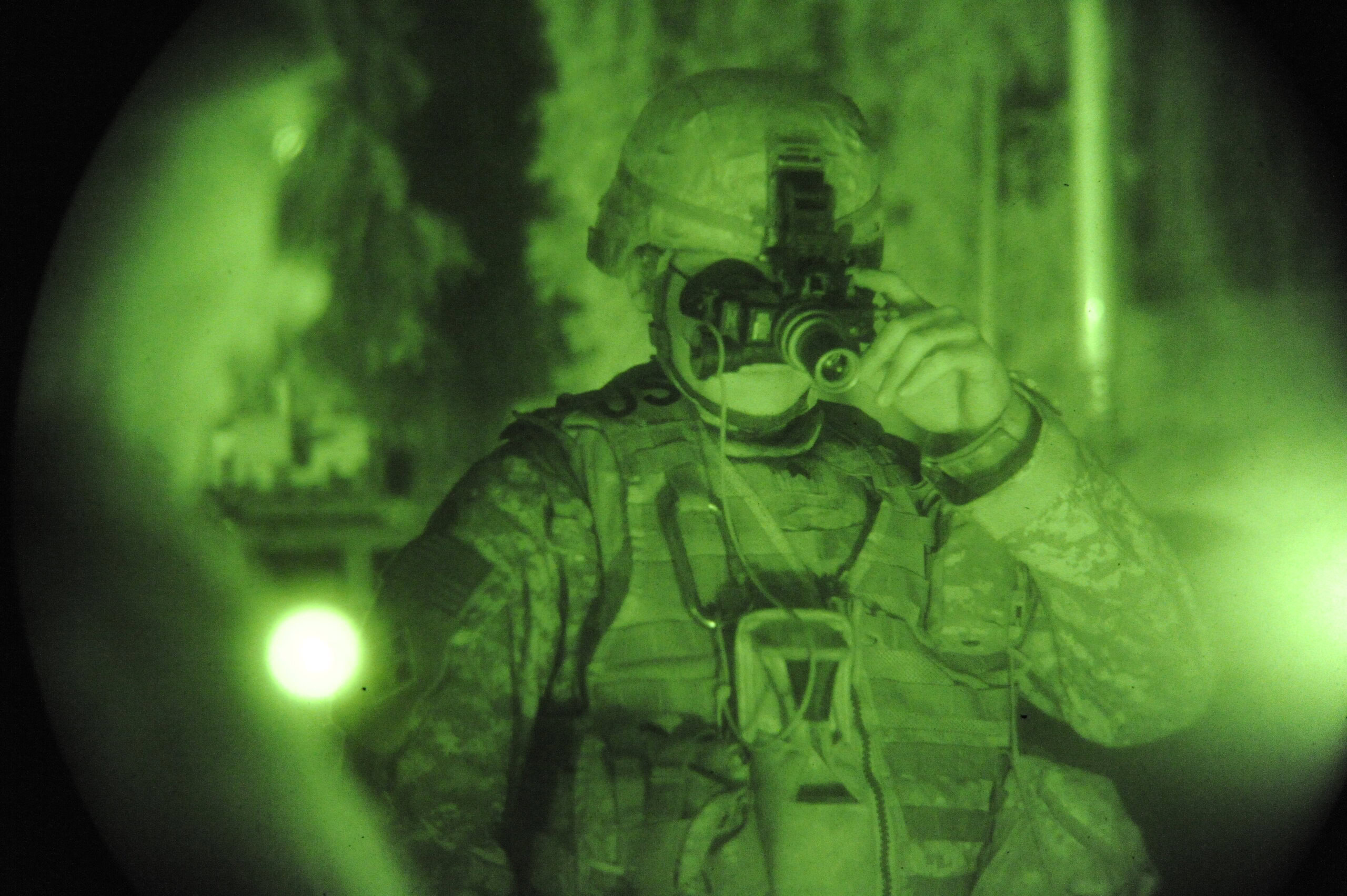
Night Vision
- Country of origin: United States / Germany
- Weapon type: Optical Technology
- Manufacturer: Various defense contractors
- Original Military Role: Night combat operations
- Civilian adaptation: Security and outdoor recreation
- Civilian Industry: Optics / Security
- Cultural impact: Popular in hunting, surveillance, and wildlife observation
Night vision technology was first developed during World War II to allow soldiers to operate in darkness without revealing their positions. Early systems were bulky and experimental, but the concept proved invaluable. Today night vision devices are used in civilian fields ranging from wildlife observation and hunting to security and search‑and‑rescue operations.
Jet Engine

- Country of origin: United Kingdom / Germany
- Weapon type: Aircraft Propulsion
- Manufacturer: Frank Whittle / Hans von Ohain
- Original Military Role: Military fighter aircraft propulsion
- Civilian adaptation: Commercial aviation engines
- Civilian Industry: Aviation
- Cultural impact: Enabled modern commercial jet travel
The jet engine emerged during World War II as engineers searched for faster and more powerful aircraft propulsion systems. Early jet fighters demonstrated speeds far beyond piston‑engine aircraft. After the war, the technology revolutionized civilian aviation. Modern commercial jetliners now rely on jet engines to move millions of passengers across the globe every day.
Kevlar
- Country of origin: United States
- Weapon type: Ballistic Protection
- Manufacturer: DuPont
- Original Military Role: Body armor for soldiers
- Civilian adaptation: Protective civilian equipment
- Civilian Industry: Safety equipment
- Cultural impact: Used in helmets, racing gear, and protection gear
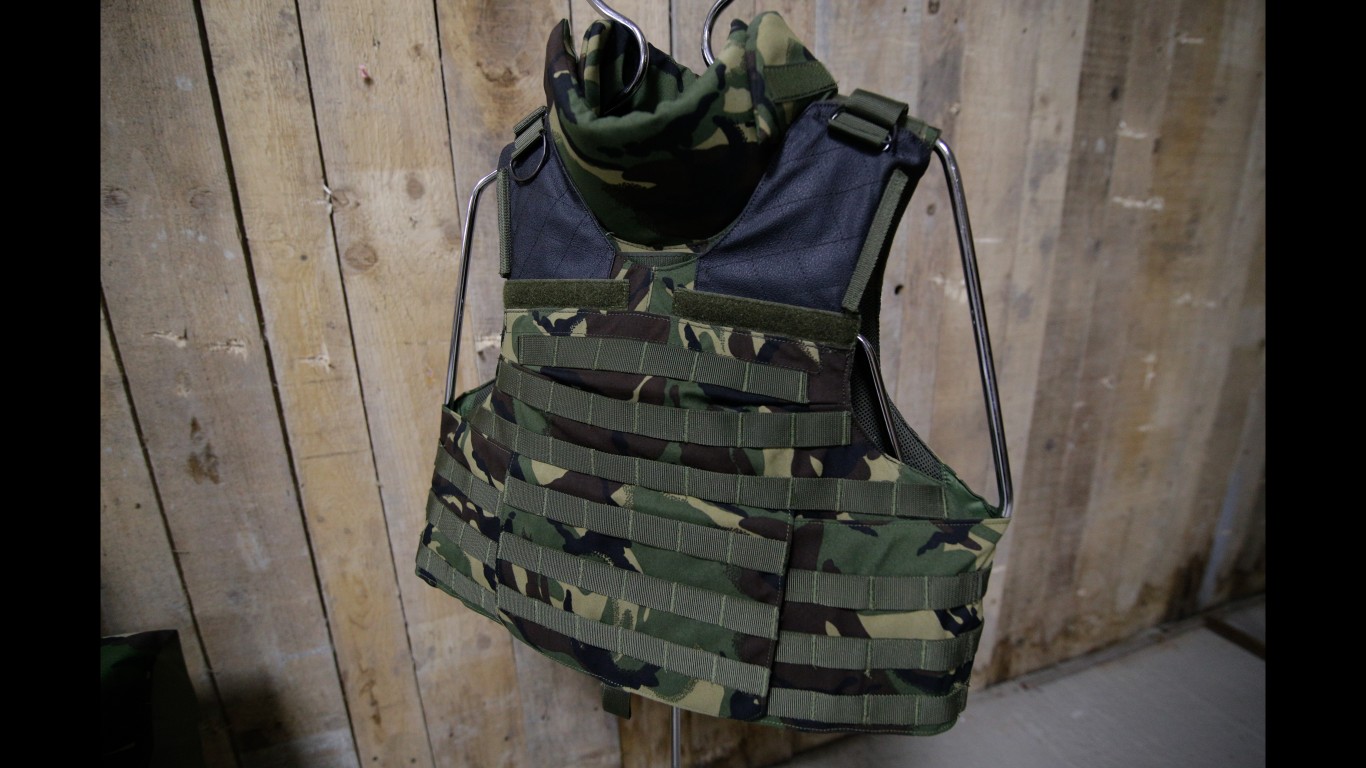
Kevlar was developed by DuPont in the 1960s as a lightweight synthetic fiber with extraordinary strength. It quickly found use in military body armor designed to protect soldiers from ballistic threats. The material later spread into civilian applications, including motorcycle gear, helmets, racing suits, and industrial protection equipment, making it a staple of modern safety technology.
Ray-Ban Aviator Sunglasses
- Country of origin: United States
- Weapon type: Pilot Equipment
- Manufacturer: Bausch & Lomb
- Original Military Role: Eye protection for military pilots
- Civilian adaptation: Fashion sunglasses
- Civilian Industry: Fashion / Consumer goods
- Cultural impact: One of the most recognizable sunglasses designs
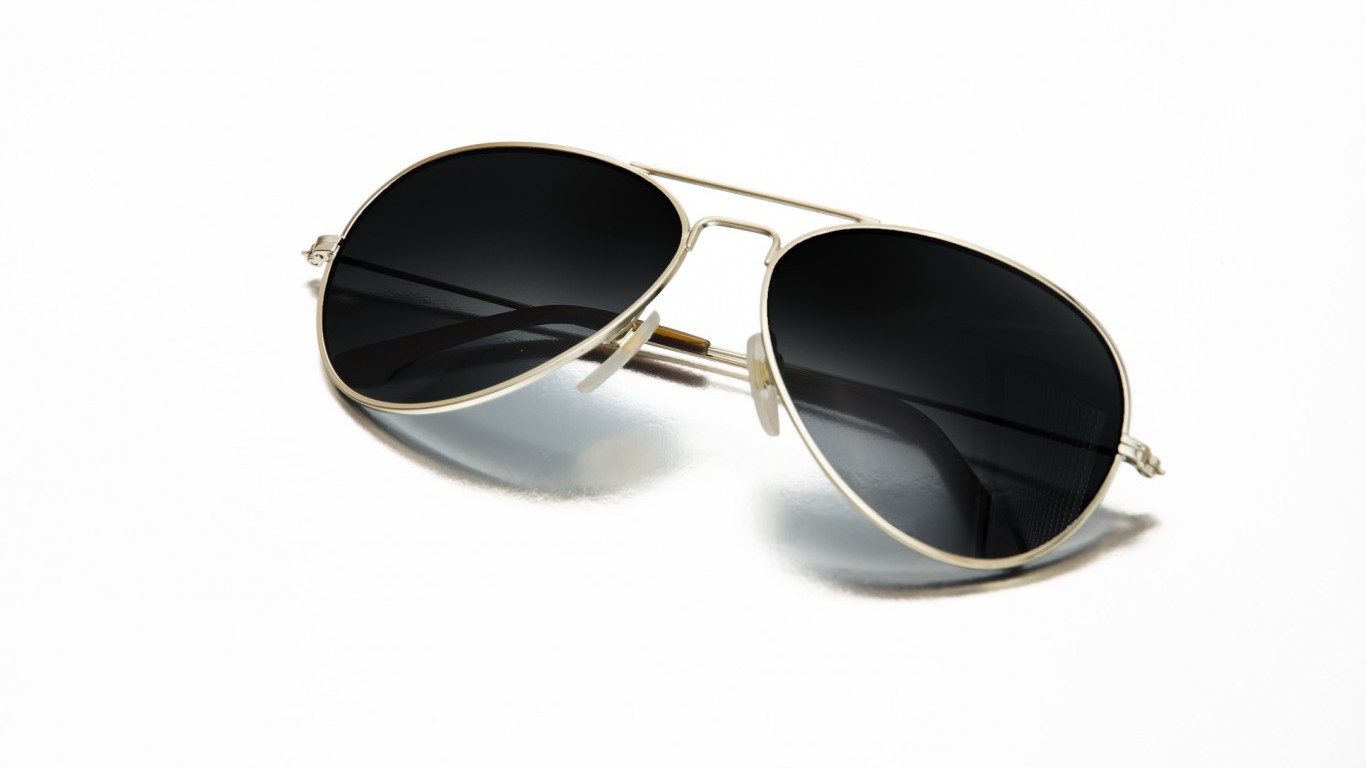
Ray‑Ban Aviator sunglasses were originally designed for U.S. military pilots who needed protection from intense sunlight at high altitude. Their large lenses and thin metal frames improved visibility while reducing glare. After the war, the design entered the civilian market and eventually became one of the most recognizable sunglasses styles in the world.
Zippo Lighter
- Country of origin: United States
- Weapon type: Field Utility Tool
- Manufacturer: Zippo Manufacturing Company
- Original Military Role: Reliable lighter for soldiers
- Civilian adaptation: Collectible and everyday lighter
- Civilian Industry: Consumer goods
- Cultural impact: Iconic lighter associated with WWII soldiers
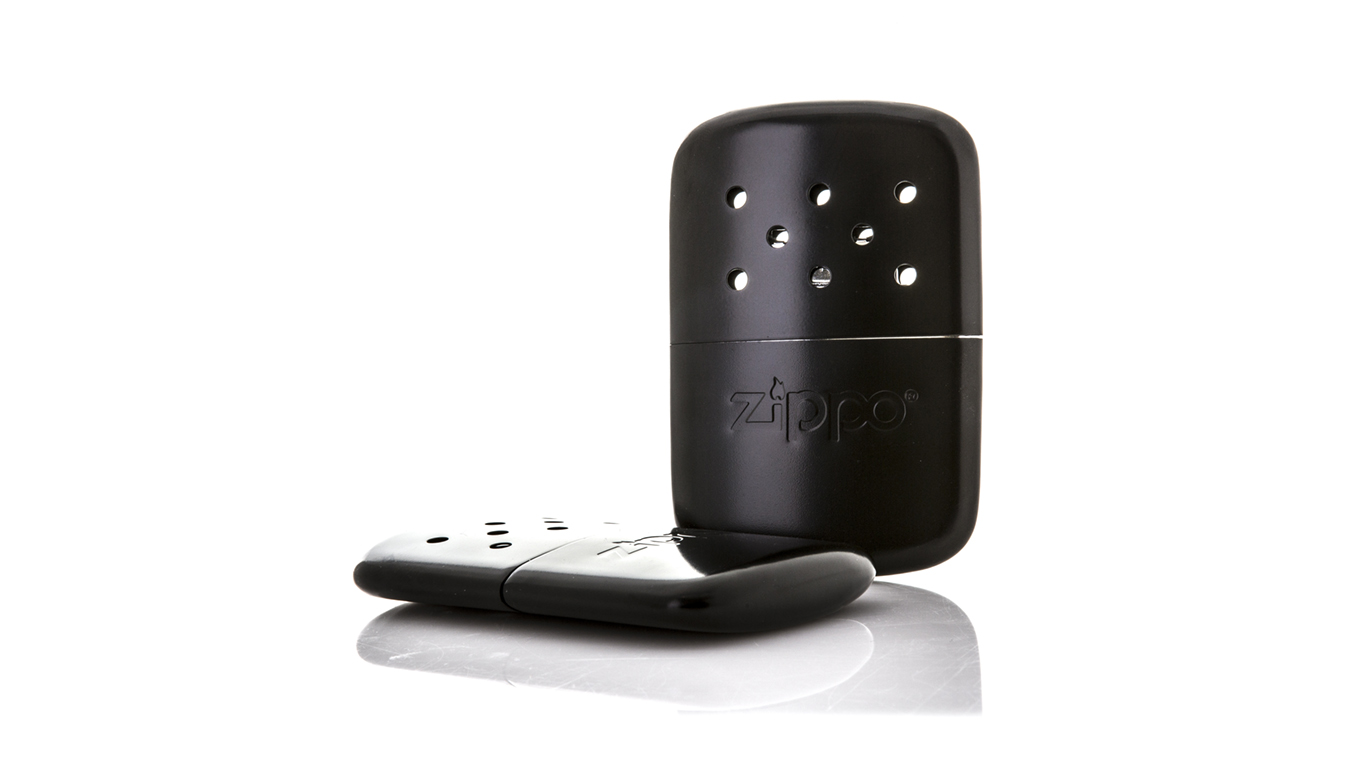
The Zippo lighter gained fame during World War II when American soldiers carried it in large numbers because of its windproof design and reliability. Soldiers often engraved their lighters with personal messages and memories from the front lines. After the war, Zippo lighters became collectible items and everyday tools recognized for their distinctive click and durable construction.
Land Rover

- Country of origin: United Kingdom
- Weapon type: Utility Vehicle
- Manufacturer: Rover Company
- Original Military Role: Vehicle inspired by military Jeep design
- Civilian adaptation: Civilian off-road vehicle
- Civilian Industry: Automotive
- Cultural impact: Legendary off-road vehicle used worldwide
The Land Rover was inspired in part by the rugged military Jeep used during World War II. British engineers designed it as a durable utility vehicle capable of operating in rough terrain. Civilian versions quickly gained popularity with farmers, explorers, and off‑road enthusiasts. Over time the Land Rover became one of the most iconic off‑road vehicle brands in the world.
Toyota Land Cruiser

- Country of origin: Japan
- Weapon type: Utility Vehicle
- Manufacturer: Toyota
- Original Military Role: Military and police vehicle platform
- Civilian adaptation: Civilian SUV
- Civilian Industry: Automotive
- Cultural impact: One of the most respected off-road SUVs
The Toyota Land Cruiser began as a military‑inspired utility vehicle developed for Japan’s defense and law enforcement needs in the early 1950s. Its durability and off‑road capability quickly earned a strong reputation. Civilian versions became widely respected across the globe, especially in remote regions where reliability and rugged engineering were essential.
Bell UH-1 Huey
- Country of origin: United States
- Weapon type: Helicopter
- Manufacturer: Bell Helicopter
- Original Military Role: Utility helicopter for military transport
- Civilian adaptation: Influenced civilian helicopter designs
- Civilian Industry: Aviation
- Cultural impact: One of the most iconic helicopters ever built
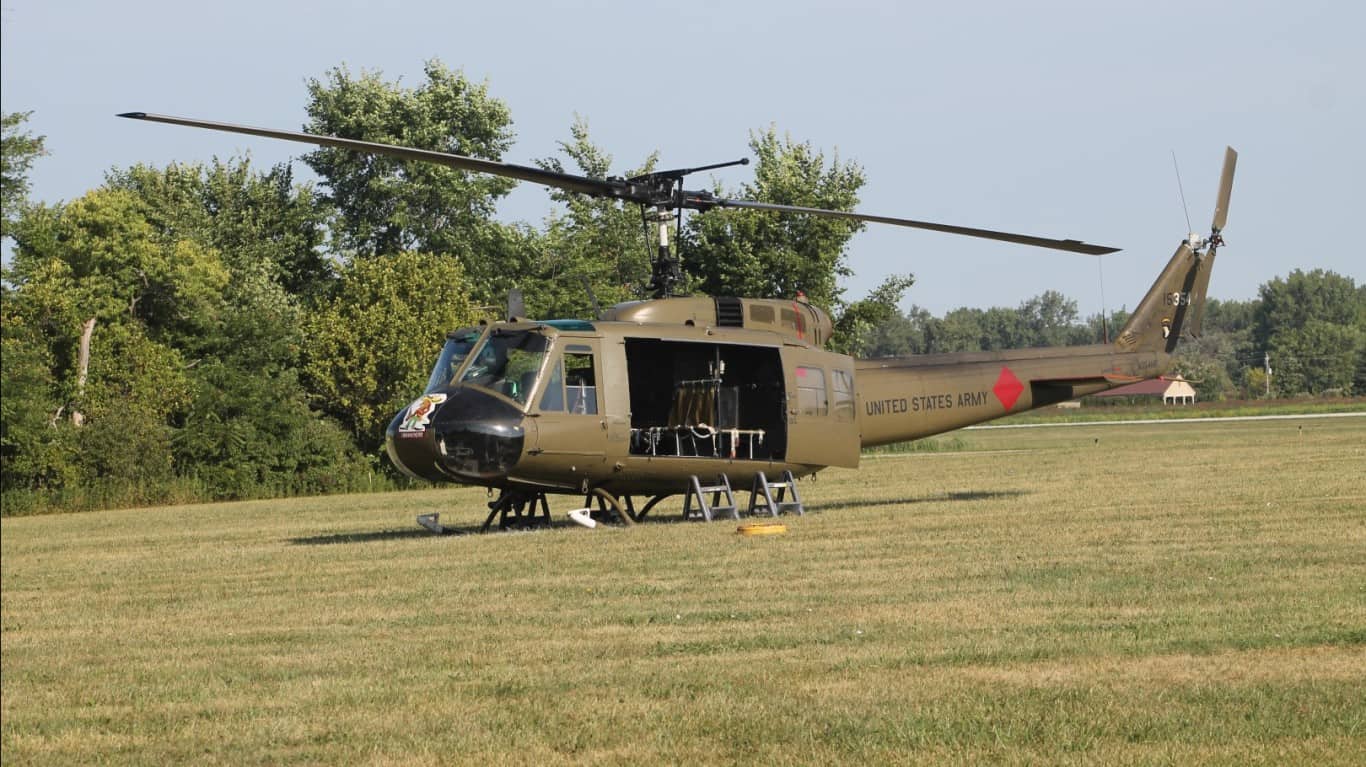
The Bell UH‑1 Huey helicopter became one of the most recognizable aircraft of the Vietnam War, transporting troops, supplies, and wounded soldiers. Its versatility helped demonstrate the value of helicopters in modern warfare. The aircraft’s design and operational success influenced civilian helicopter development, helping expand helicopter use in emergency services, news gathering, and transport.
M1 Carbine
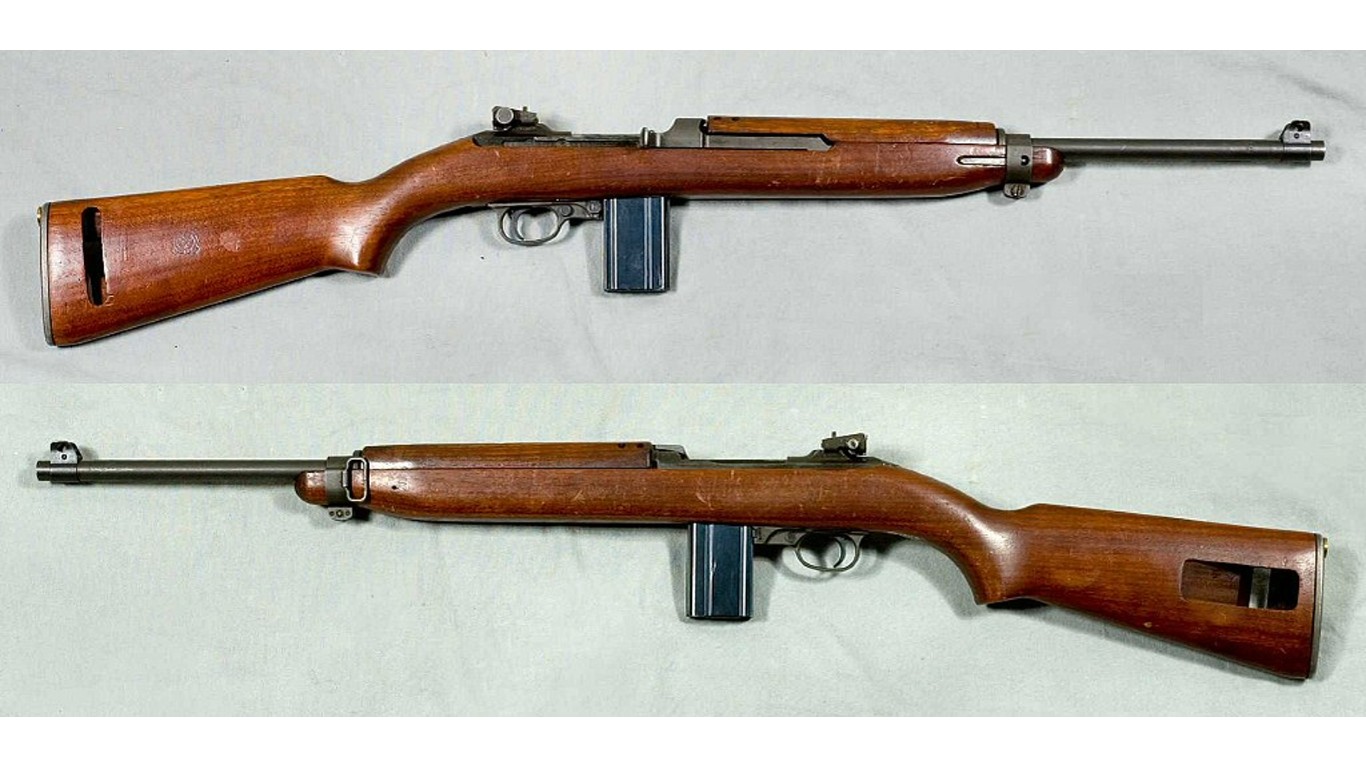
- Country of origin: United States
- Weapon type: Rifle
- Manufacturer: Winchester / Inland
- Original Military Role: Light rifle for support troops
- Civilian adaptation: Civilian sporting rifle
- Civilian Industry: Civilian firearms
- Cultural impact: Popular historic rifle among collectors
The M1 Carbine was introduced during World War II as a lightweight rifle intended for support troops who needed more firepower than a pistol but less weight than a full rifle. After the war it entered the civilian market, where collectors and shooters embraced it as an important piece of American firearms history.
Remington Model 700

- Country of origin: United States
- Weapon type: Rifle
- Manufacturer: Remington Arms
- Original Military Role: Basis for military sniper rifles
- Civilian adaptation: Civilian hunting rifle
- Civilian Industry: Civilian firearms
- Cultural impact: One of the most widely used hunting rifles
The Remington Model 700 began as a civilian bolt‑action rifle, but its design became the foundation for several U.S. military sniper systems, including the M24 and M40. Its accuracy and reliability helped make it popular among hunters and competitive shooters. Today it remains one of the most widely used hunting rifles in North America.
Microprocessors

- Country of origin: United States
- Weapon type: Electronics Technology
- Manufacturer: Defense research programs / Intel
- Original Military Role: Advanced military computing
- Civilian adaptation: Personal computers and electronics
- Civilian Industry: Technology
- Cultural impact: Core component of modern computing
Microprocessors emerged from advanced computing research driven in part by defense and aerospace needs. Early integrated circuits helped power military guidance systems and space programs. As the technology matured, microprocessors became the brains of modern electronics. Today they power personal computers, smartphones, and countless devices that define modern life.
Civilian AK Sporting Rifles
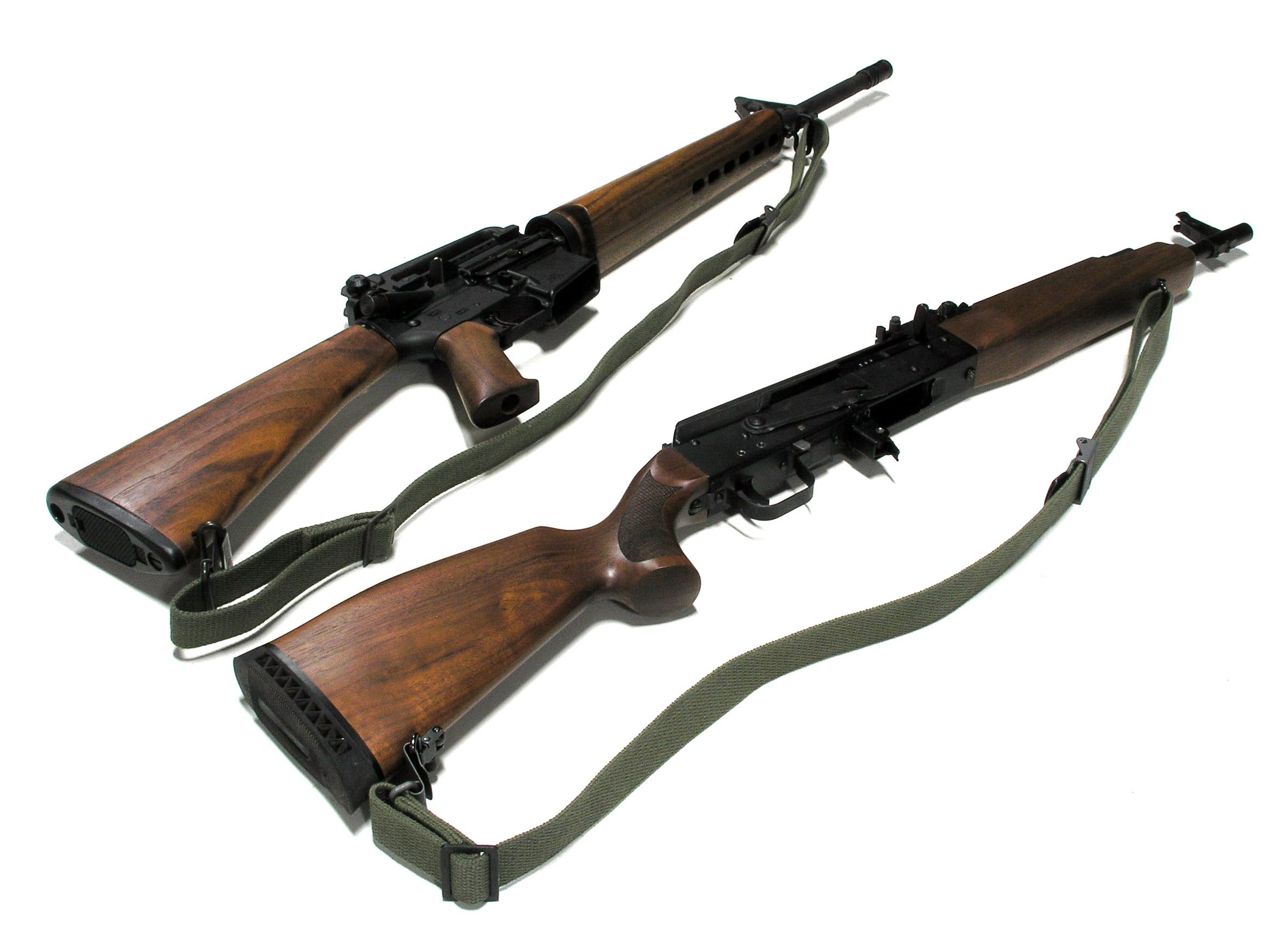
- Country of origin: Global
- Weapon type: Rifle Platform
- Manufacturer: Various manufacturers
- Original Military Role: Derived from AK military rifles
- Civilian adaptation: Civilian sporting rifles
- Civilian Industry: Civilian firearms
- Cultural impact: Global civilian adoption of the AK platform
Civilian sporting rifles based on the AK platform evolved from the original Soviet military design. Manufacturers around the world adapted the rifle into semi‑automatic versions suitable for civilian ownership. These variants maintained the rugged reputation of the original design while becoming widely recognized in civilian shooting sports and firearm collections.
Colt Single Action Army
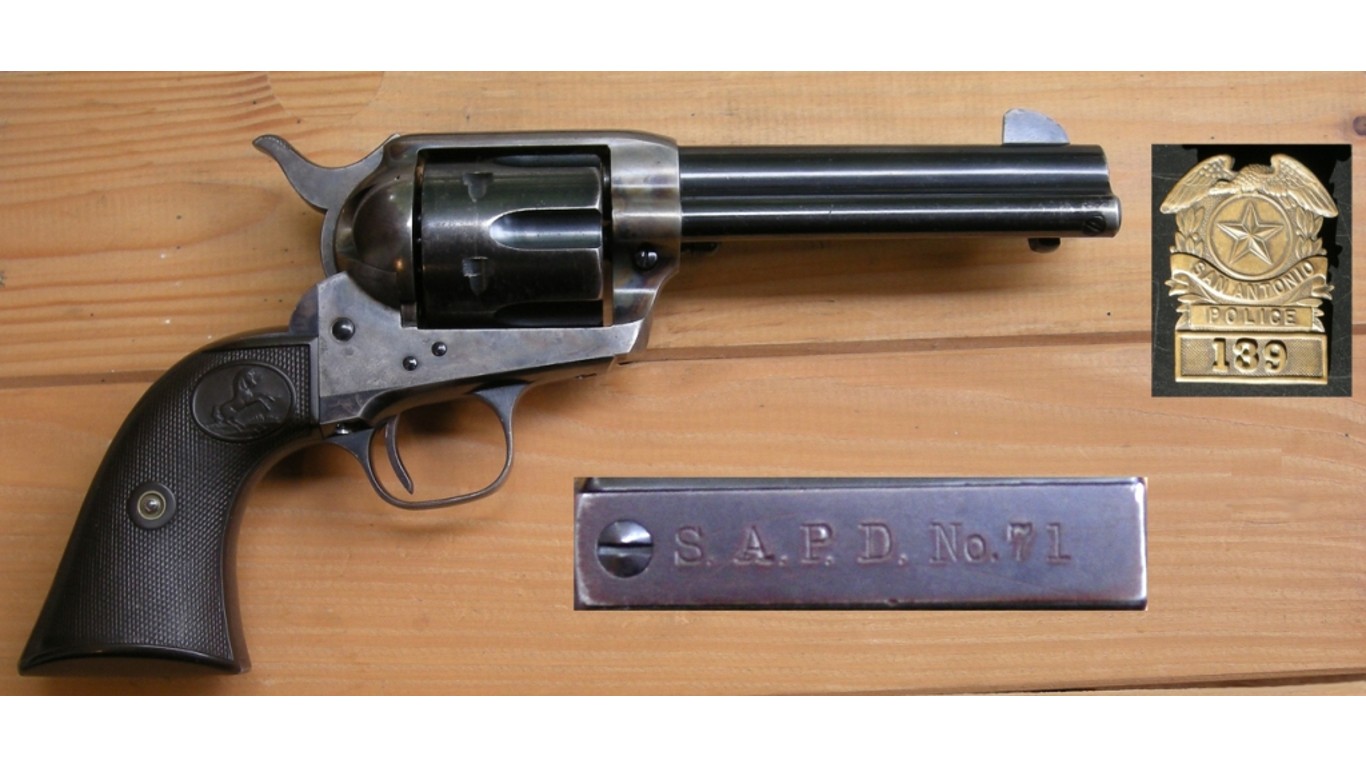
- Country of origin: United States
- Weapon type: Revolver
- Manufacturer: Colt
- Original Military Role: Military sidearm
- Civilian adaptation: Civilian revolver of the American West
- Civilian Industry: Civilian firearms
- Cultural impact: Iconic revolver of frontier history
The Colt Single Action Army revolver was originally adopted by the U.S. military in 1873 as a standard sidearm for cavalry units. Its rugged construction and powerful cartridge made it effective in frontier conditions. Over time it became deeply associated with the American West, eventually becoming one of the most iconic revolvers in civilian firearms history.
Springfield M1A
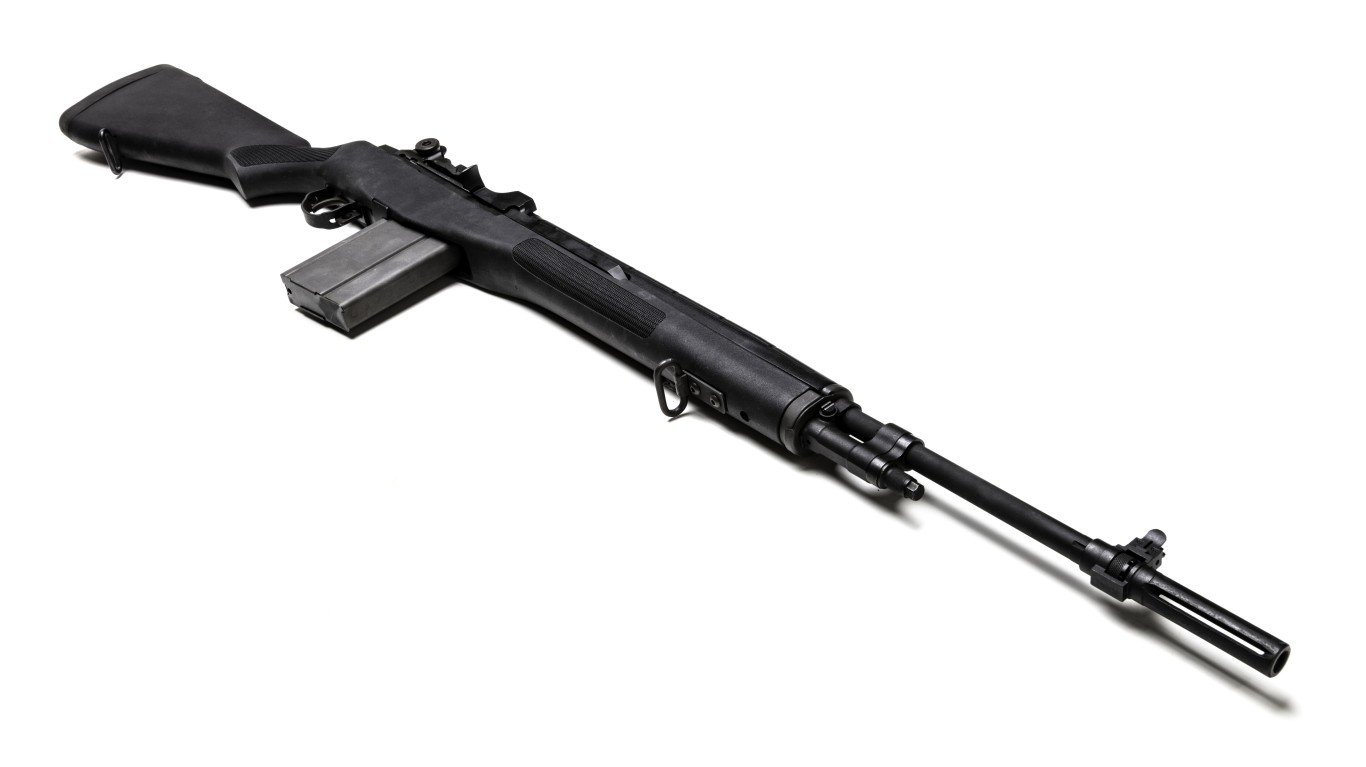
- Country of origin: United States
- Weapon type: Rifle
- Manufacturer: Springfield Armory
- Original Military Role: Civilian version of M14 battle rifle
- Civilian adaptation: Civilian sporting rifle
- Civilian Industry: Civilian firearms
- Cultural impact: Popular semi-automatic rifle derived from military platform
The Springfield M1A is the civilian version of the U.S. military’s M14 battle rifle. Introduced in the 1970s, it preserved the design and feel of the military rifle while complying with civilian regulations. The M1A remains popular among target shooters and collectors who appreciate its connection to Cold War‑era American military firearms.









 Top Gaining Stocks
 Top Losing Stocks