


24/7 Wall St. Key Takeaways:
- Converting IRA funds to a Roth account sooner rather than later can be useful, especially if you’re currently in a favorable tax bracket.
- By converting to Roth accounts now, your investments can continue to grow tax-free for a long period.
- Also: Take this quiz to see if you’re on track to retire (Sponsored)
As you approach retirement, decisions about tax-efficient strategies suddenly become very important. I discovered a recent Reddit post in which a user shared their experience with a Roth conversion tool, which revealed contributing insights about when they should convert IRA funds to a Roth account.
Conventional wisdom suggests waiting until the age of 65 to 70 to take advantage of the lower tax bracket. However, the poster found recommendations advocating for conversions within their current 24% tax bracket.
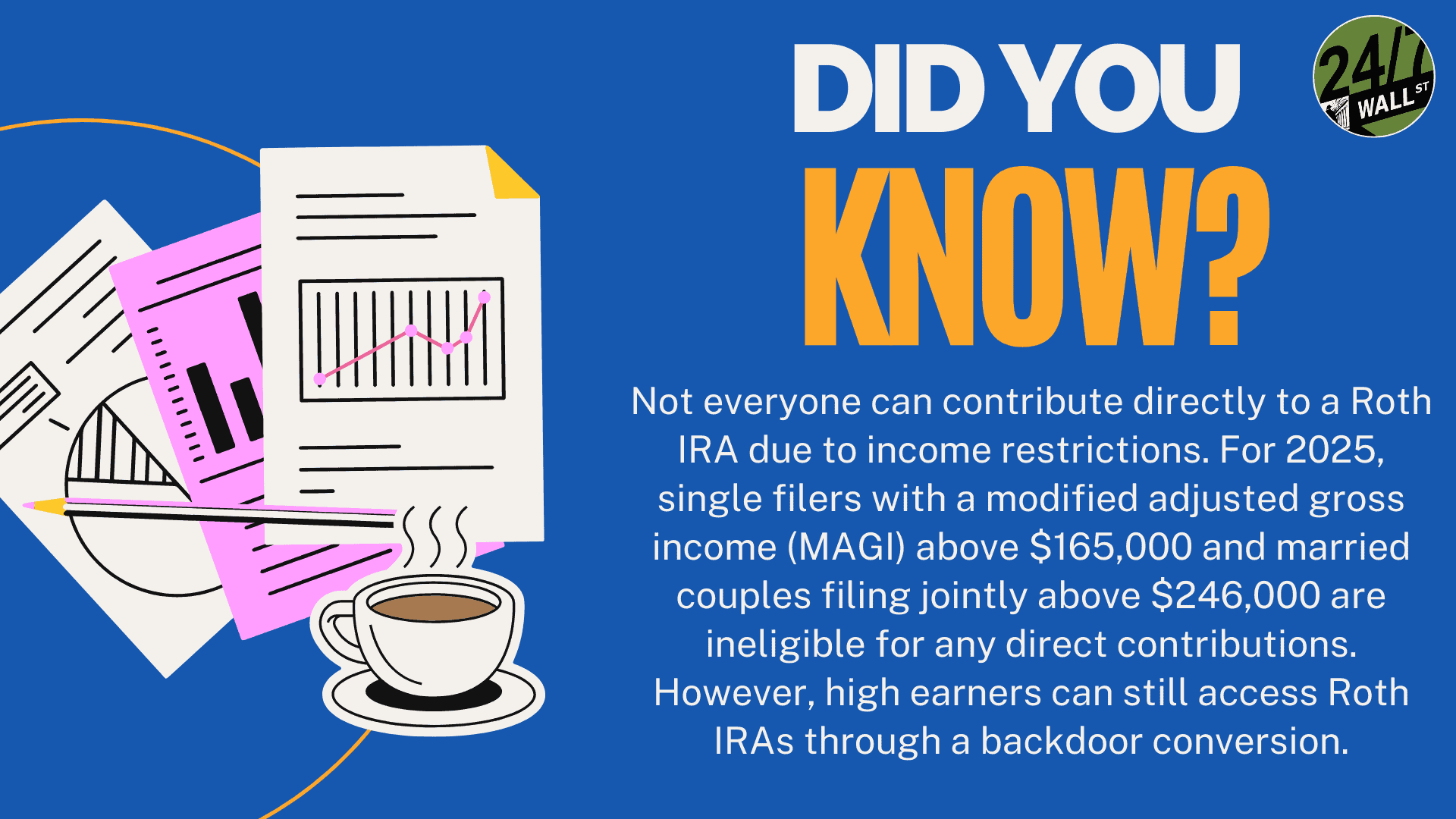
(I’ve also covered backdoor Roth IRAs, if you’re interested in reading more about this tax strategy.)
With tax implications looming, this discussion prompted my interest in how to maximize retirement savings and minimize tax burdens. Let’s explore key considerations that can help you navigate this critical decision and enhance your financial strategy as you approach retirement.
Understanding Tax Brackets
The common wisdom of converting between ages 65 and 70 is largely due to tax brackets. During these years, you’re likely making less, so the money will be taxed at a lower tax bracket.
However, there is also an argument for converting to the top of the 24% bracket, as there is a potential for tax hikes in the future. You have to consider that future taxes may be more than 24%, even after retirement.
Maximizing Estate Value
Most Roth conversion tools (including the one mentioned in the post) emphasize maximizing estate value, which considers how tax-efficient your assets will be when your heirs inherit. Converting now can reduce the tax burden on your beneficiaries, who would otherwise face potential taxes on a large IRA balance upon your passing.
This proactive approach can outweigh the conventional wisdom of waiting until you’re closer to retirement, especially if you have declining health.
Growth Potential of Roth Accounts
By converting your traditional IRA funds to Roth accounts sooner rather than later, you allow those assets to grow tax-free for a longer period. This can be a huge advantage if your investments are expected to grow substantially in the years leading up to retirement.
Flexibility in Retirement Withdrawals
Having a healthy balance in Roth accounts provides flexibility when it comes time to pull the money out of your accounts. This allows you to manage your income in retirement strategically in a way that lowers your taxes.
By depleting your traditional IRA first through conversions, you can potentially keep your taxable income lower during your retirement years.
Tax Diversification
Maintaining a mix of tax-deferred (traditional IRA) and tax-free (Roth) accounts can be a solid strategy. This diversification allows you to optimize your tax situation annually. You could adapt to changes in tax laws or your income needs.
Consulting a Professional
Given the complexities of tax strategies, it’s wise to consult a tax professional or financial advisor before making a decision. Your specific financial situation is unique, and you need a personalized plan that considers your local laws and future needs.










 Top Gaining Stocks
 Top Losing Stocks