



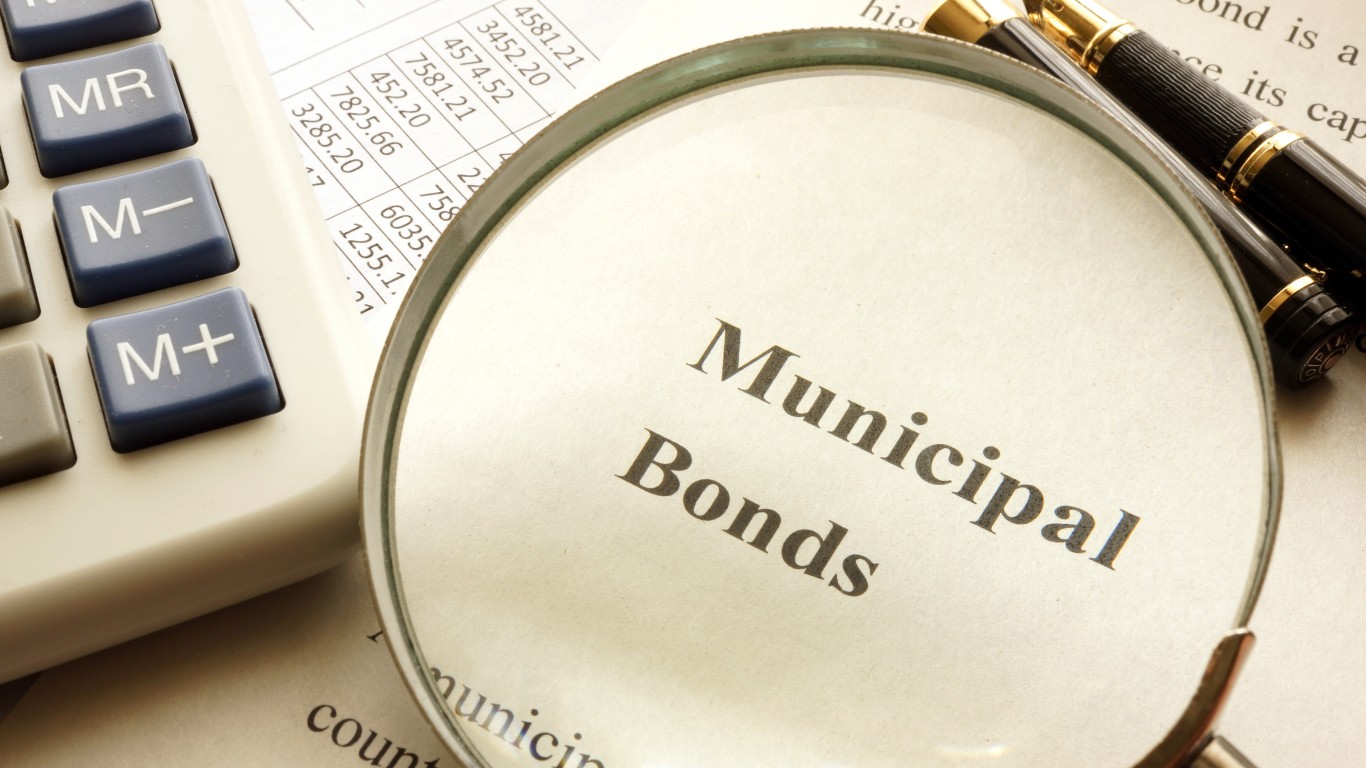
Retirees often seek out stable investments, and ones that generate steady income they can use to cover their expenses. And municipal bonds fit the bill nicely in both regards.
Municipal bonds, or munis, as they’re often called, are bonds issued by municipalities to fund public projects. Some municipal bonds are of the general obligation variety, while others are used to pay for specific revenue-generating projects. For example, a city might issue municipal bonds to pay for a new toll road, and then use the proceeds from the tolls it collects to repay the money it borrowed.
Key Points from 24/7 Wall St.
- Municipal bonds are issued to raise money for public initiatives.
- These bonds are a stable investment offering the benefit of federally tax exempt interest payments.
- Though municipal bonds carry a low risk of default, there’s interest rate risk to consider.
- Also: Take this quiz to see if you’re on track to retire (Sponsored)
You may find that municipal bonds work well within your retirement portfolio from a tax perspective. Not only are munis typically a source of steady income, but the interest they pay is always federally tax-exempt. And you can avoid taxes, period, if you buy bonds issued by your state of residence.
But there are a few pitfalls you should know about in the context of municipal bonds, too.
Risks to be aware of
Any time you buy bonds, even highly rated ones, there’s always the risk of the issuer defaulting on its obligations. Historically, municipal bonds have a very low default rate, especially general obligation bonds. But the risk exists nonetheless.
Similarly, when you hold bonds, their price can fluctuate based on changes in the broad market and changes in interest rates. Municipal bonds aren’t immune in this regard.
Also, many municipal bonds allow issuers the option to redeem, or call, the bonds prior to maturity. This commonly happens when interest rates fall. You may not get as much long-term income as expected in this situation.
Finally, there’s the risk of not meeting your retirement income goals due to the fact that municipal bonds commonly have lower yields than corporate bonds. They do, however, offer tax-free interest payments, which corporate bonds don’t. If you work with a financial advisor to buy municipal bonds, have them calculate your tax-equivalent yield so you can decide if corporate bonds are a better choice.
Options and factors to consider
If you like the idea of owning municipal bonds in retirement, you have several options. You could buy munis individually through a broker or financial advisor. Or, you can buy into a municipal bond ETF, which gives you more liquidity and an easier exit than individual bonds.
One thing to think about when considering municipal bonds is what your expenses and income goals look like. And also, think about how much of your retirement income is subject to taxes.
If you have the bulk of your savings in a Roth account, you may not need the additional tax break municipal bonds offer. And in that case, you may decide to seek out higher returns elsewhere.












 Top Gaining Stocks
 Top Losing Stocks