


The path to retirement requires a long-term commitment. At some point, the power of compounding can take over and exceed your contributions. However, it takes a while to reach that point, and it can feel like a crawl during the early stages.
A Redditor recently published a post in the Middle Class Finance subreddit about his progress toward retirement. The individual earns $80,000 per year and has $140,000 in his 401(k) plan as a 40-year-old. The Redditor started saving 10 years ago when they had kids.
I will share some thoughts on when the Redditor may get ahead and how to achieve financial goals sooner. These are my opinions, and it is always good to speak with a financial advisor if you can.
How Much Do You Need to Retire?

Setting a goal will help you determine how much you need. It can also keep you motivated during the long journey of building up a nest egg. Each person has a different amount they need in their retirement portfolio. One way to gauge how much you need is to estimate your annual expenses during retirement and apply the 4% rule.
The 4% rule states that you withdraw 4% of your portfolio funds each year to cover expenses. For instance, someone who has a $1 million portfolio would withdraw $40,000 each year. This rule only matters when estimating how much you need if you know your annual expenses. If you expect to spend $50,000 per year in retirement and want to use the 4% rule, you would need $1.25 million saved up.
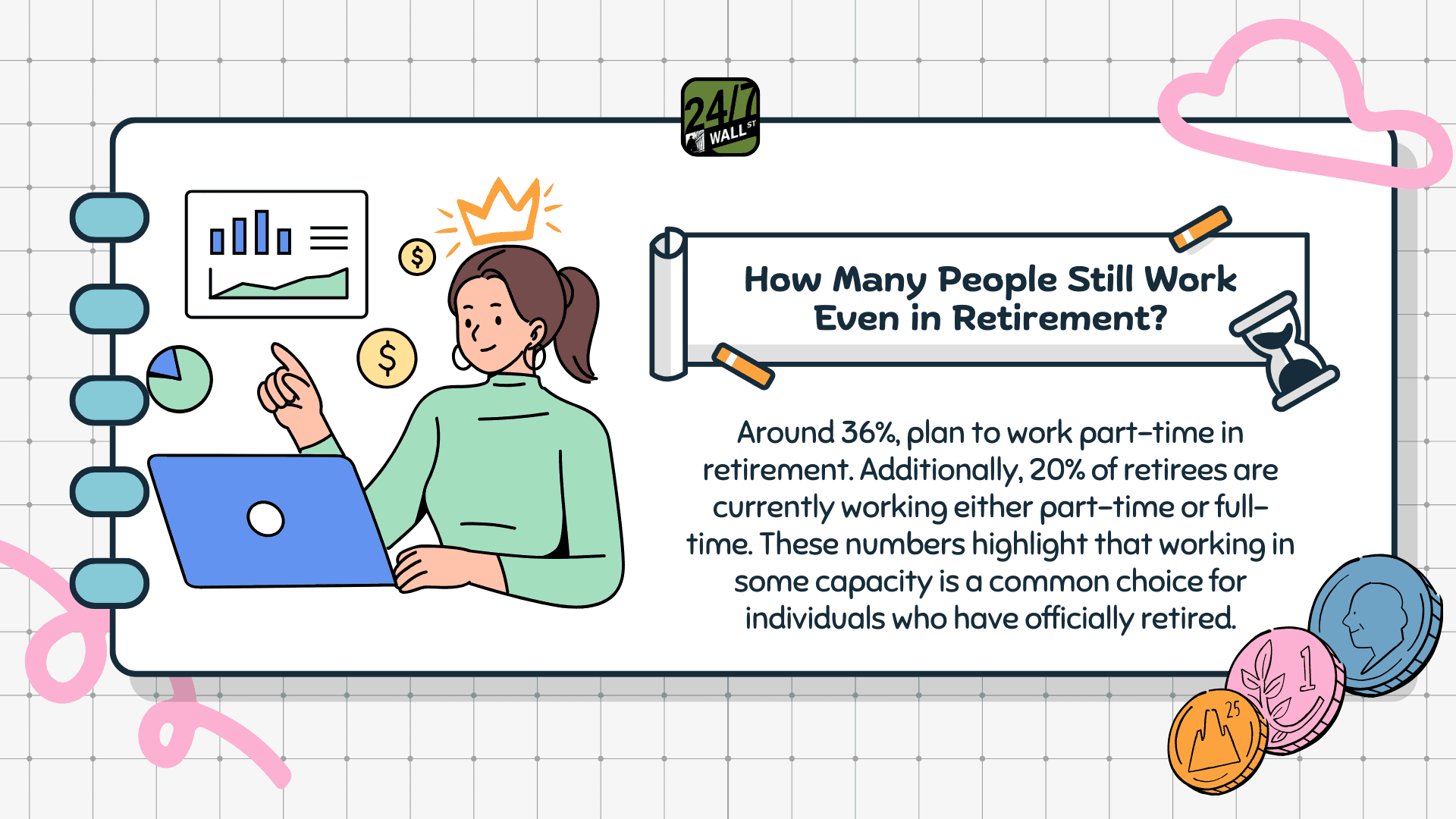
Of course, you will be collecting some Social Security by the time you retire. Those payouts will reduce how much you have to take out of your portfolio. You can also work a part-time job when you’re older, so you’re still making money but have more flexibility. Even if you have enough money to retire, a part-time job is still a good option since it makes you a part of a community and gives you a purpose.
The First $100k Is the Hardest

Saving up the first $100,000 in your portfolio is an uphill battle since you’re doing almost all of the work. While your investments can generate positive returns, your contributions make up almost all of the first $100,000.
However, the Redditor has made it past the critical 6-figure mark. At this point, their portfolio starts to work for them, and it gets even better from there. It’s much easier to reach $200,000 than it is to reach $100,000. Then, it’s even easier to go from $200,000 to $300,000. Each time your portfolio grows by $100,000, it becomes easier to add an additional $100,000 to your portfolio.
It’s still important to regularly contribute to your portfolio, as more contributions lead to higher compounded returns. Eventually, your portfolio’s returns exceed your annual contributions. This may start to happen once your portfolio exceeds $500,000, but it depends on several factors, such as your income and annualized returns.
Boosting Your Income
You can boost your annual portfolio contributions by increasing your income or minimizing your expenses. While cost-cutting and setting a budget are valuable tactics, they both have limits. Furthermore, you don’t want to make too many sacrifices that affect you and your family, such as forgoing vacations entirely.
That’s why it is better to seek ways to boost your income. Picking up a side hustle, asking for a raise, and developing new career skills that introduce higher-paying jobs can move you closer to your goals.
It takes extra time to grow your income, but you’ll end up with more time in the long run. Your portfolio will have more years to compound and multiply, thanks to the additional contributions you make early in the process.
Reaching a 7-Figure Portfolio
The Redditor has to stay patient and look for ways to boost their income. Having $140,000 saved up at this stage and continuing to contribute can still result in a 7-figure portfolio by the time they turn 60.
An annualized 8% return on $140,000 results in a $652,534 portfolio in 20 years. That doesn’t even include contributions or their annualized returns. Not everyone reaches a 7-figure portfolio when they are young, but time, patience, and hard work can result in a 7-figure portfolio when it’s time to retire.















 Top Gaining Stocks
 Top Losing Stocks