



The start of a new year is a good time to do a financial checkup. And that holds true no matter what stage of life you’re in. Now that we’re into January, here are some key financial moves to make.
Key Points from 24/7 Wall St.
- The start of a new calendar year is a good time to review your finances.
- Make sure you’re set for emergencies and on track for retirement.
- Create a debt payoff plan and make sure your portfolio is property balanced.
- Retiring early is possible, and may be easier than you think. Click here now to see if you’re ahead, or behind. (Sponsor)
1. Assess (and boost) your emergency fund
Will the economy take a dive in 2025? Nobody knows. But the reality is that even in a great economy, no one is immune to financial upheaval.
You could lose your job as a result of downsizing at your firm, or end up with a busted roof or a sick cat whose vet bills creep upward into the thousands. So it’s important to have solid cash reserves on hand at all times.
Do an assessment of your emergency fund to see how many months of essential bills you can cover. If it’s not at least three, ramp up. And if you’re self-employed or in an industry that’s seeing its share of shakeups, you may want to aim for a six- to nine-month emergency fund for solid protection.
Set up an automatic contribution to your savings so more money lands there each month. And while you’re at it, shop around for a great high-yield savings account to make sure you’re earning a nice return on your money.
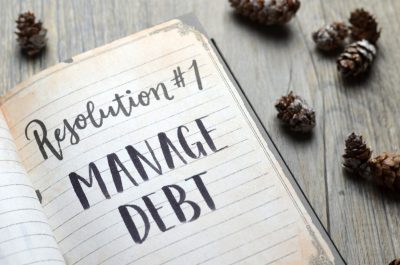
2. Work your way out of debt
Starting the year off with expensive credit card debt isn’t great. The same holds true if you’ve got a nagging personal loan balance you want to shed, or a car loan with an exorbitant interest rate attached to it.
Now’s a good time to examine your debt load and figure out a payoff plan. That could mean boosting your income with a side hustle or scaling back your spending to free up cash.
And also, figure out your order of operations. A credit card balance with a 20% APR is something you should aim to tackle before working on a personal loan charging you 8%.
3. Send money (or more money) into a retirement plan
If you haven’t started funding an IRA or 401(k), or your contributions have been minimal to date, then now’s a good time to get on a better path. If your salary recently went up but you’re not yet used to your larger paycheck, send that extra money into whatever retirement account you’re saving in. That way, you won’t miss the money.
While you’re at it, make sure your retirement plan is meeting your needs. If you’ve been pumping money into your employer’s 401(k) but hate the investment choices, it’s a good time to look at IRAs. And if you’ve been sticking to a traditional retirement plan for the up-front tax break, it may be time to consider a Roth for the long-term benefits, like tax-free gains and withdrawals.
4. Rebalance your portfolio
The stock market had a strong year in 2024. But as a result, some of your specific investments may be taking up too much real estate in your portfolio. And your asset allocation may no longer be as appropriate as you think it is for your age.
Take a close look at your portfolio in the coming days and see if any changes are in order. If you’re nearing retirement and see that stocks now comprise 80% of your portfolio, it could be a good time to sell off some stocks strategically, take your gains, and put some cash into a CD or bond ladder.
Similarly, if there’s a given stock in your portfolio whose value has soared so it now consists of 20% of your total assets, you may want to sell some shares while they’re up and replace them with shares from another company. You could even diversify with a broad market or income-producing ETF.













 Top Gaining Stocks
 Top Losing Stocks