


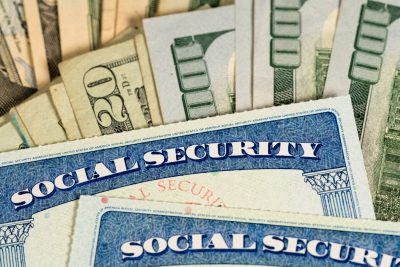
There are many retired Americans today who get a good chunk of their income from Social Security. But unfortunately, they don’t necessarily get to keep those benefits in full. That’s because laws created decades ago have made it so that Social Security benefits are subject to federal taxes (and there are even some states that tax Social Security, too).
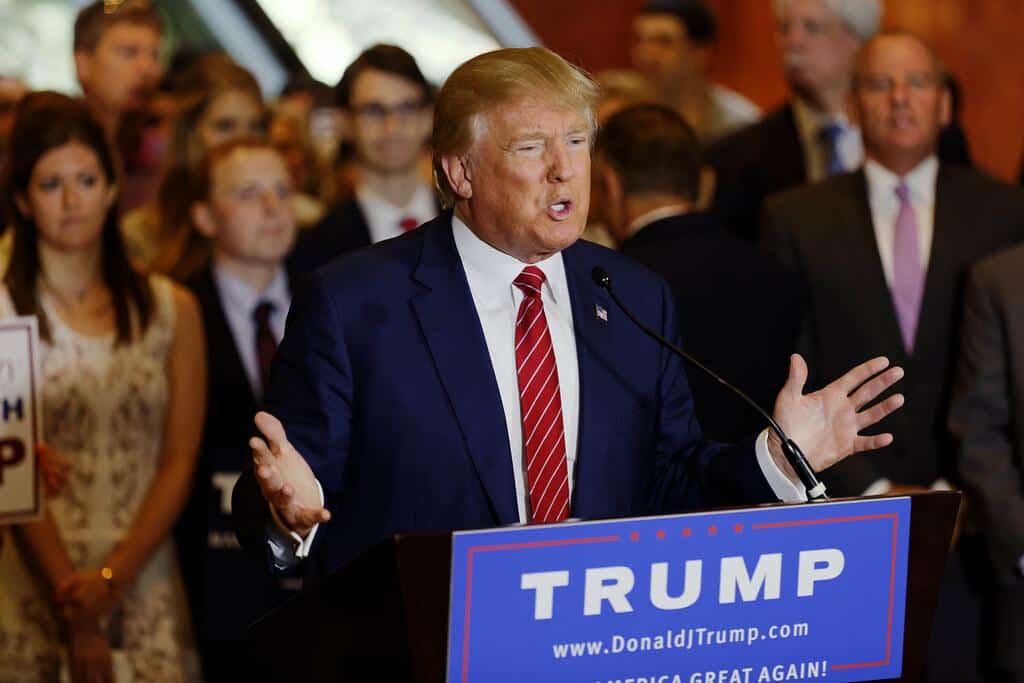
But taxes on benefits hurt seniors who need every penny of their Social Security just to get by. So as part of his campaign, President Trump pledged to eliminate taxes on Social Security benefits. He also promised not to cut Social Security, either.
Unfortunately, though, eliminating taxes on benefits could end up forcing Social Security to make cuts — even if that’s not Trump’s intention.
The problem with getting rid of taxes on Social Security
Workers qualify for Social Security benefits in retirement by paying into the system throughout their careers. So for many seniors, having to then pay taxes on their retirement benefits feels like a slap in the face. Losing that money is also a financial hardship for a large number of seniors who rely on that income tremendously.
President Trump recognizes this and wants to see taxes on Social Security go away. Bu there’s a big problem with eliminating taxes on benefits.
Social Security gets most of its funding from payroll tax revenue. But it also gets a portion of its funding from the taxes seniors pay on their benefits.
If those taxes go away, Social Security will find itself even more squeezed financially. And that’s not a good thing.
As it is, Social Security is already at risk of having to cut benefits in about a decade from now. And the reason is that the program’s main revenue source, payroll taxes, is expected to shrink as baby boomers retire in droves in the coming years.
The good news is that Social Security can tap its trust funds to keep up with its benefit obligations for a period of time. But once those trust funds run out of money, the program may have to implement cuts of more than 20%. That could be catastrophic for the millions of seniors who need their complete benefits to cover their basic expenses.
Recent projections put Social Security’s trust fund depletion date at 2035. But if taxes on benefits are eliminated, that date could get pushed up.
We’ll need to wait and see
Although Trump may have good intentions in lifting the burden of Social Security taxes for seniors, the reality is that the program cannot afford to lose out on any more revenue. Because of this, his proposal may not move forward, as lawmakers on both sides of the political spectrum may be hesitant to strip Social Security of revenue.
If it does move forward, seniors should recognize that while they might enjoy some near-term financial relief, there’s also the possibility of benefit cuts in the not-so-distant future. And now’s the time to come up with a backup plan in case those cuts end up becoming reality.










 Top Gaining Stocks
 Top Losing Stocks