


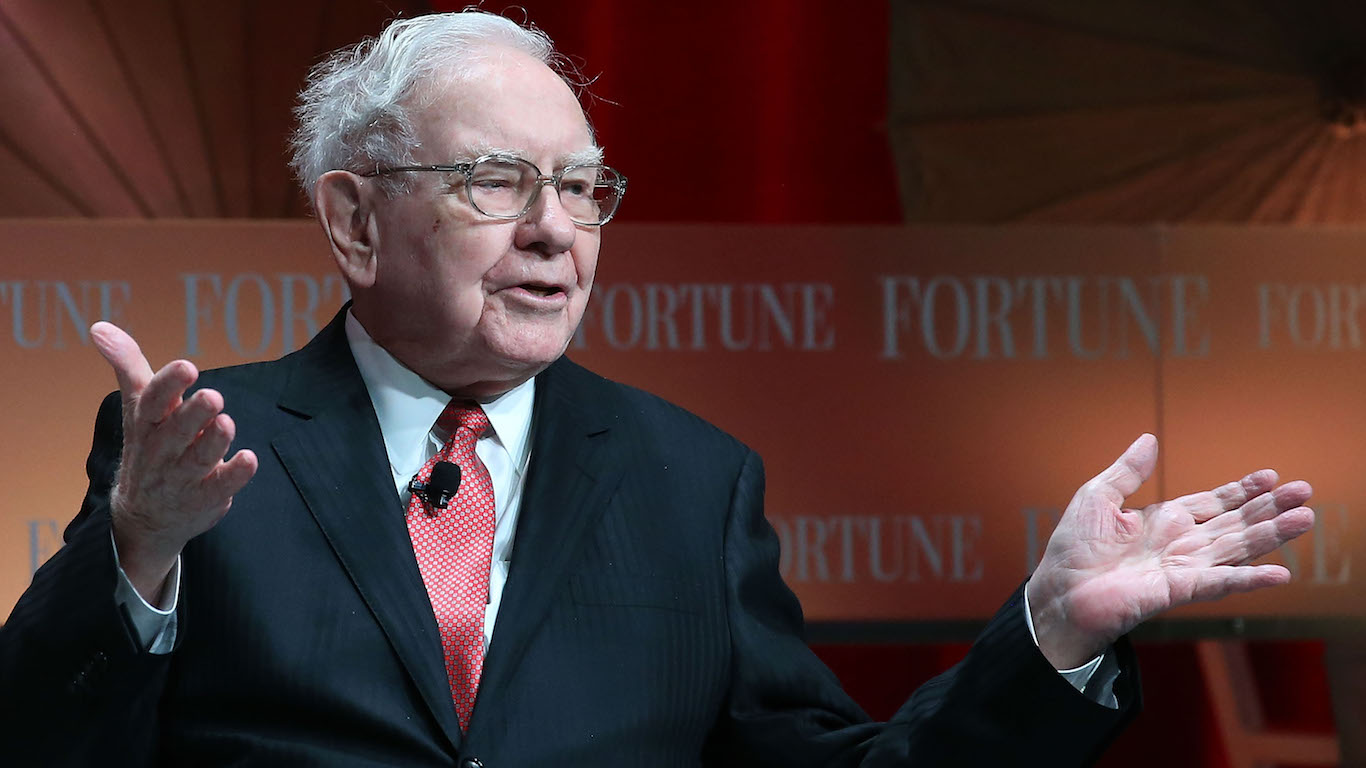
There’s a reason why so many people flock to Omaha every year to attend the Berkshire Hathaway (NYSE:BRK-B | BRK-B Price Prediction) shareholders meeting to watch the great Warren Buffett speak. A lucky few have the chance to ask the Oracle of Omaha a question about investing, markets, or just life in general. While every shareholders meeting is packed with knowledge and invaluable insights, you really don’t need to fly out to Omaha every year to absorb the invaluable wisdom.
A lot of the best advice delivered from prior shareholders meetings still applies to this day. And given their timeless nature, they’ll probably still apply many decades after Buffett leaves the Berkshire Hathaway CEO’s office. In any case, I think it’s a must for new investors to check out previous meetings for commentary on how investors should approach investing.
Warren Buffett’s tips can help you be a better risk manager
Undoubtedly, Buffett encourages investors to think of stocks, not as mere tickers going up and down by some percentage point in any given day, but as small pieces of businesses.
He thinks that investors should treat such “pieces of businesses” as they would a more tangible, real asset like a farm — something not to be bought and sold day by day based on macro forecasts or some unexpected event. Indeed, given how easy it is to buy and sell stocks at high frequency, it can be tough to sit on shares in your portfolio when there’s so much market action in any given day.
Indeed, there’s more to investing than merely buying low and selling high. For long-term investors aiming to follow in Buffett’s footsteps, it all comes down to evaluating risks before even thinking about buying a single share. Indeed, many investors may be inclined to view implied volatility as risk. But that’s just not the case.
I’d say that a violently choppy stock that’s trading at a massive discount to its intrinsic value is less risky than a less-volatile, low-beta stock that’s trading at a hefty premium to the peer group and to its historical averages.
Risk is more than just volatility
Though many hyper-volatile stocks can also be extremely risky, it helps to view risk in a different light so that you’re not under the impression that everything is too risky to buy once the stock markets fall into a correction, bear market, or something worse.
Indeed, “risk” is something that new investors may get wrong. So, how does Buffett view risk?
“Risk comes from not knowing what you’re doing” Buffett once said.
Undoubtedly, this could apply to just about anything. Whether you’re getting in a boxing ring without the basic foundations of footwork and defense, or you’re buying stocks without checking the financials (income statement, balance sheet, and cash flow statement) or even knowing what the business even does, the potential to take a massive hit to the chin is there. And while even seasoned investors can get knocked down, the important thing is being able to get back up after taking a big hit.
How not knowing what you’re doing can set you back in retirement
By taking on too much risk, whether it be by chasing what’s “hot” in markets with zero understanding of the underlying business or setting a withdrawal rate on your nest egg that’s too high (let’s say 6% or more), your retirement may struggle to get back up after it takes a nasty left hook to the chin, whether it be via a financial market sell-off or a huge healthcare expense that puts your retirement on the ropes.
The key is not to put yourself in such a position to begin with. And it all starts with knowing what you’re doing. Indeed, not every retiree is a financial guru by the time they hit Social Security age. That’s why a financial advisor is such an asset.
They know what they’re doing and can help teach you the basics so that you can discover your risk tolerance and make the right, informed move. Indeed, retirees unsure of how to approach investments in retirement should actively seek out the blessing of an advisor.
They can help you keep your nest egg safe and steer clear of mishaps such as overly-aggressive speculation on hot stocks or setting too high of a withdrawal rate, both of which could run the risk of you running short of cash in the middle of retirement.












 Top Gaining Stocks
 Top Losing Stocks